

The Man-Made World or, Our Androcentric Culture
- New York: Charlton Company, 1911
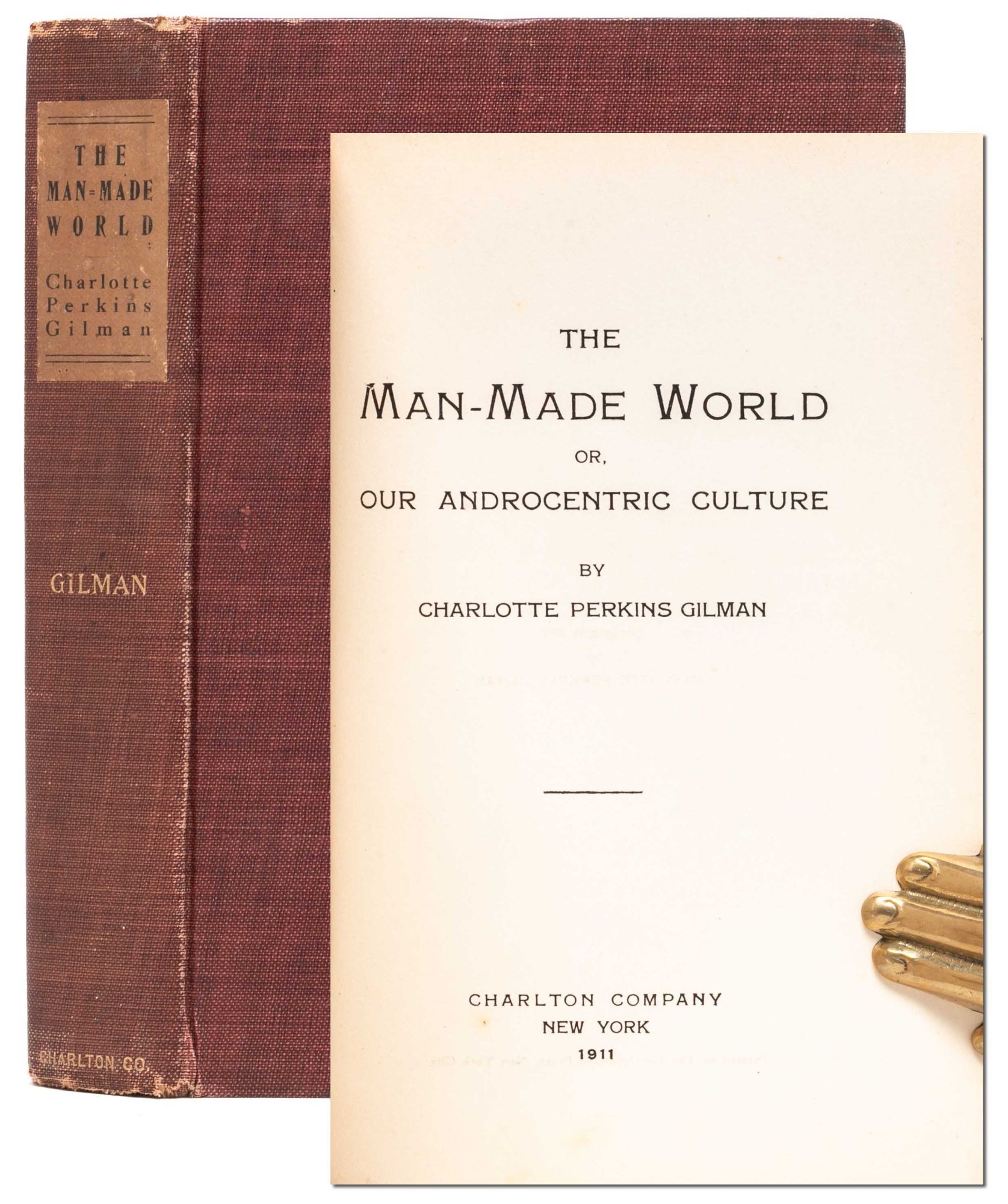
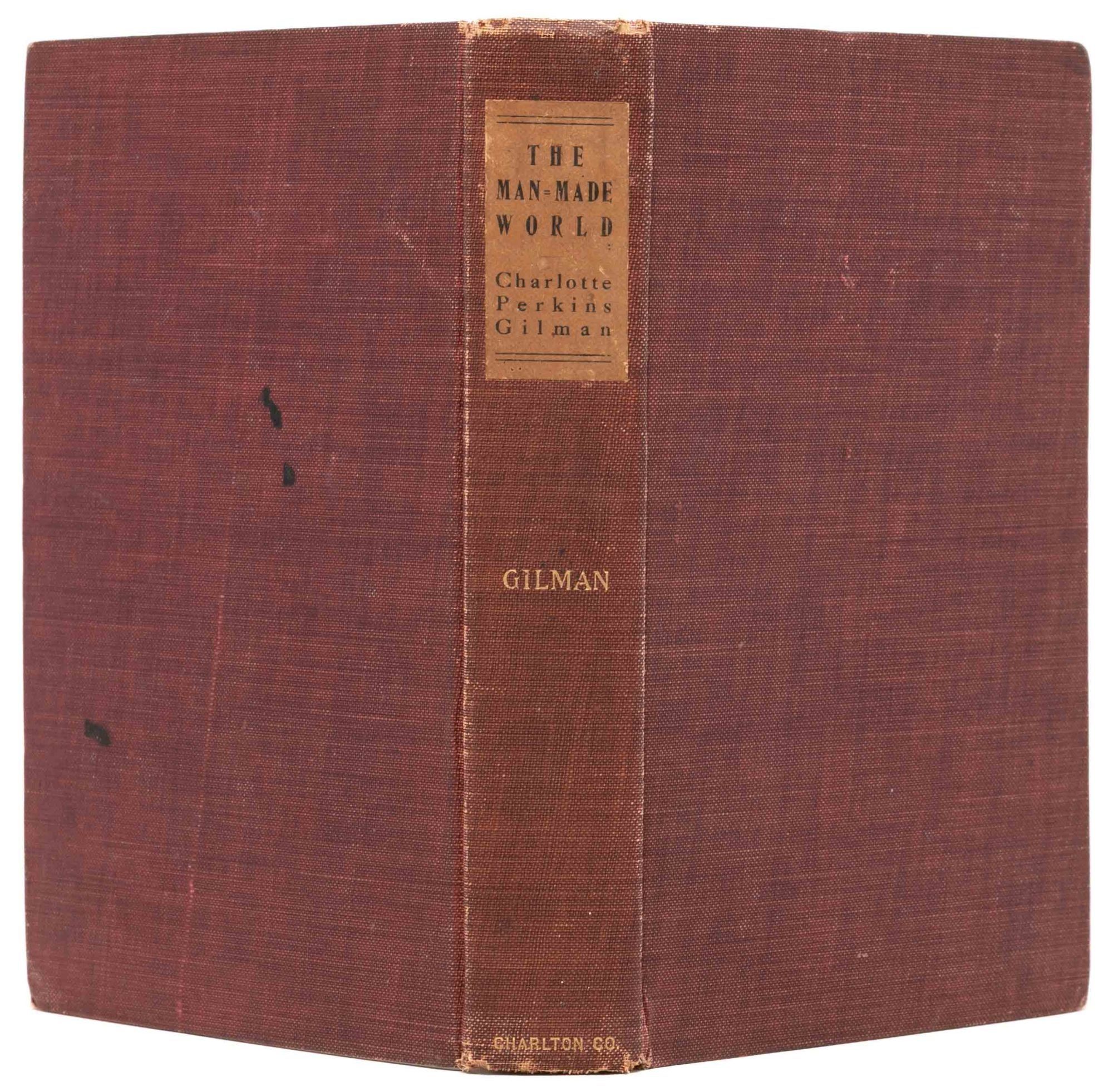
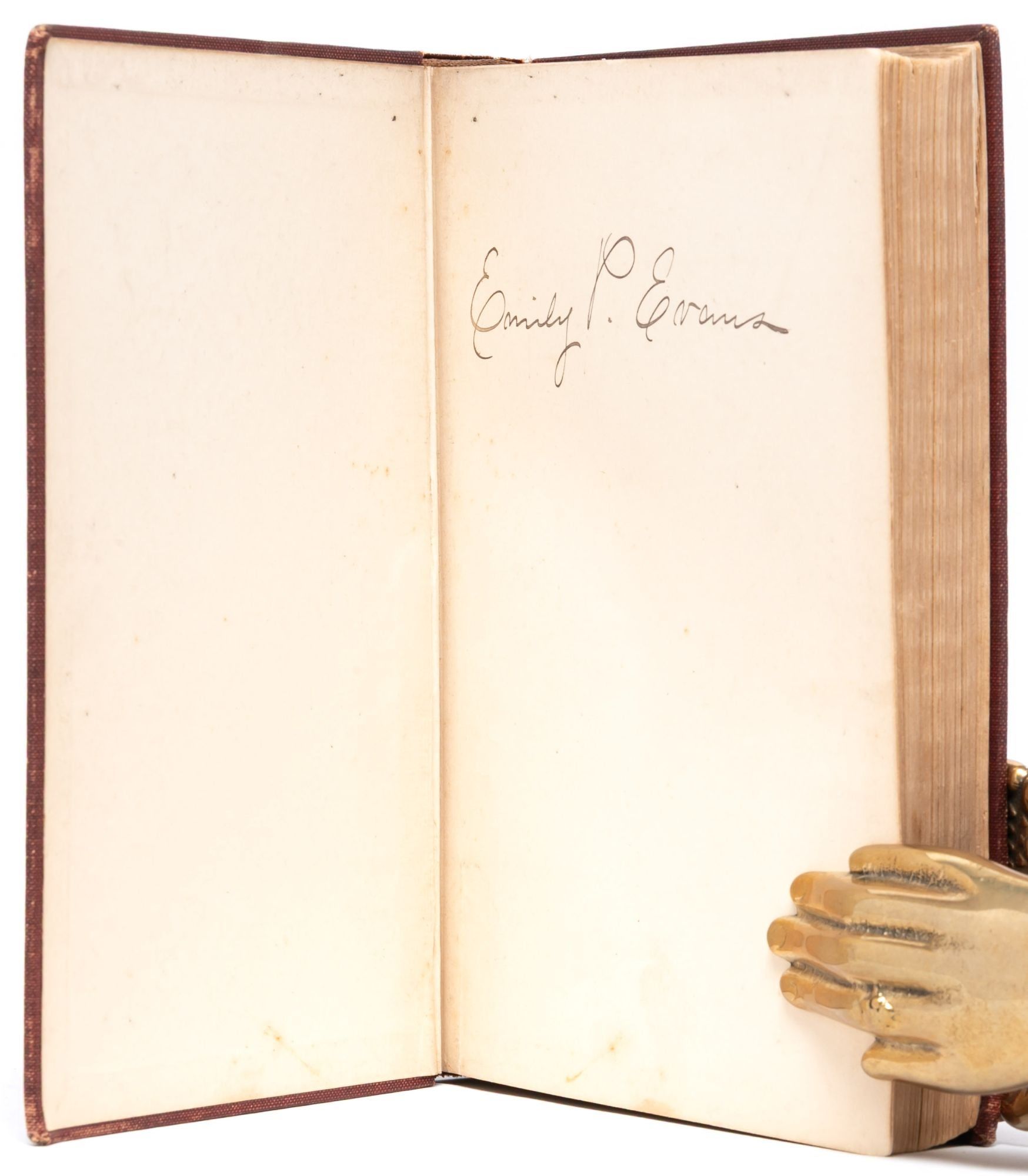
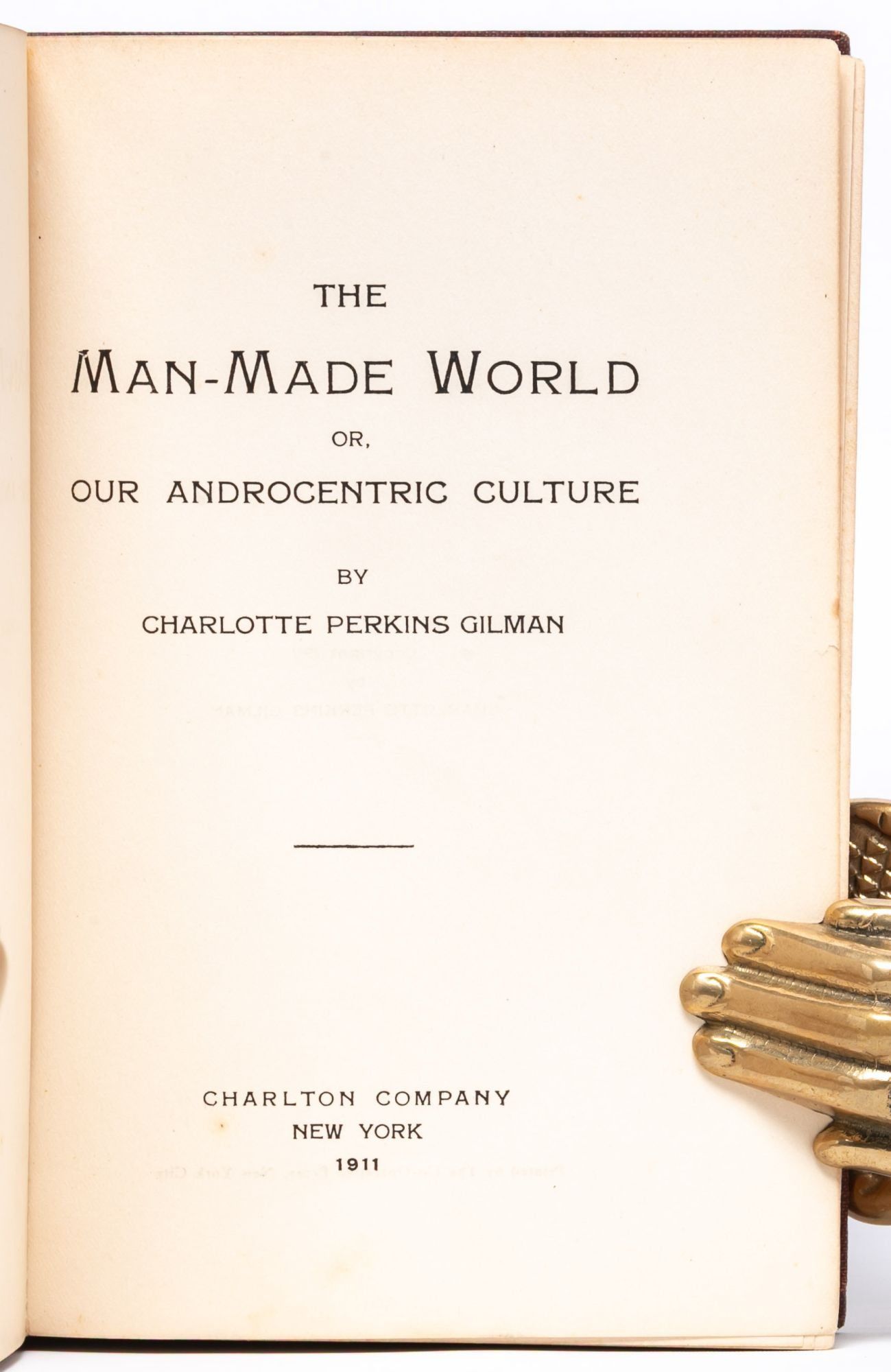
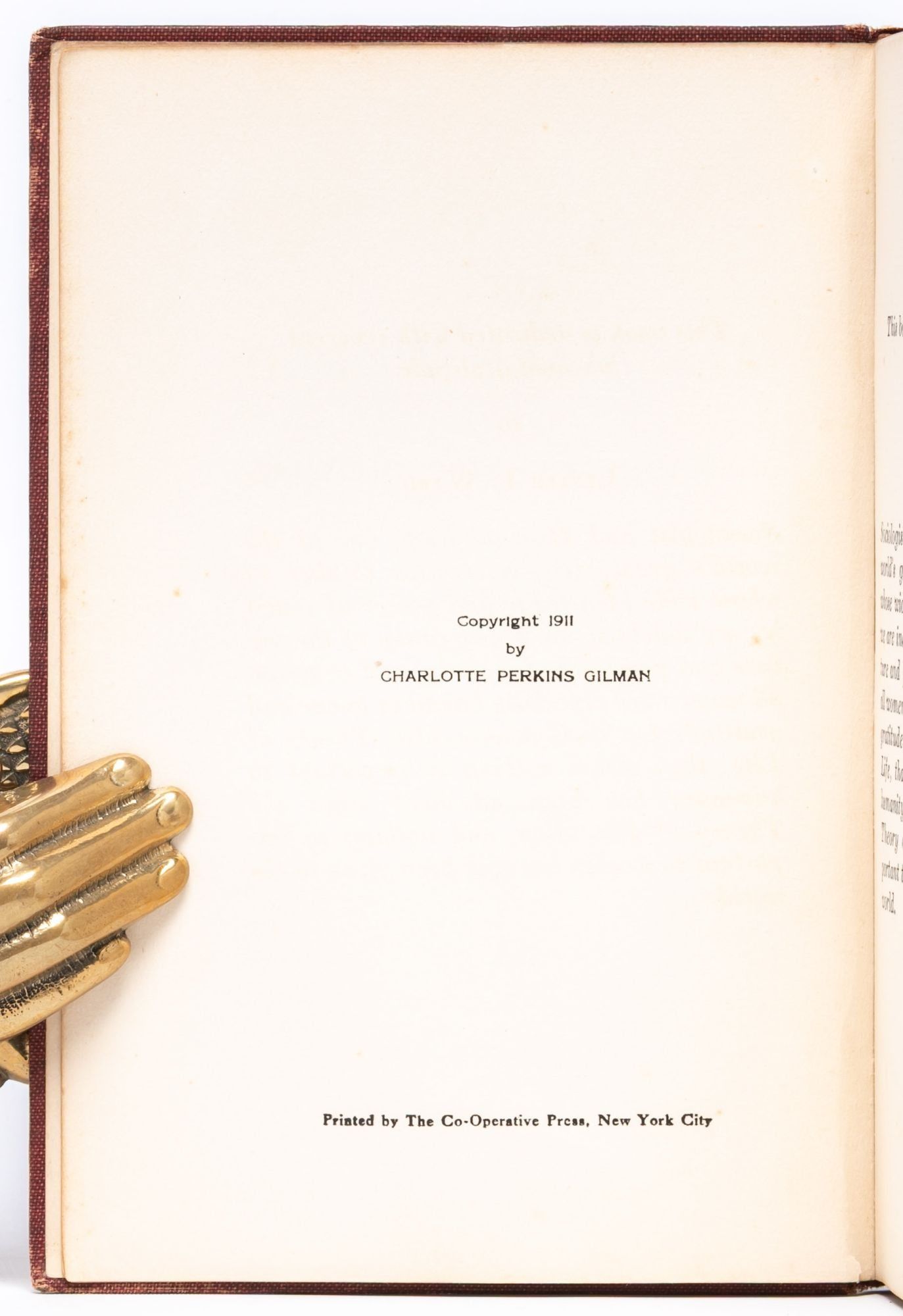
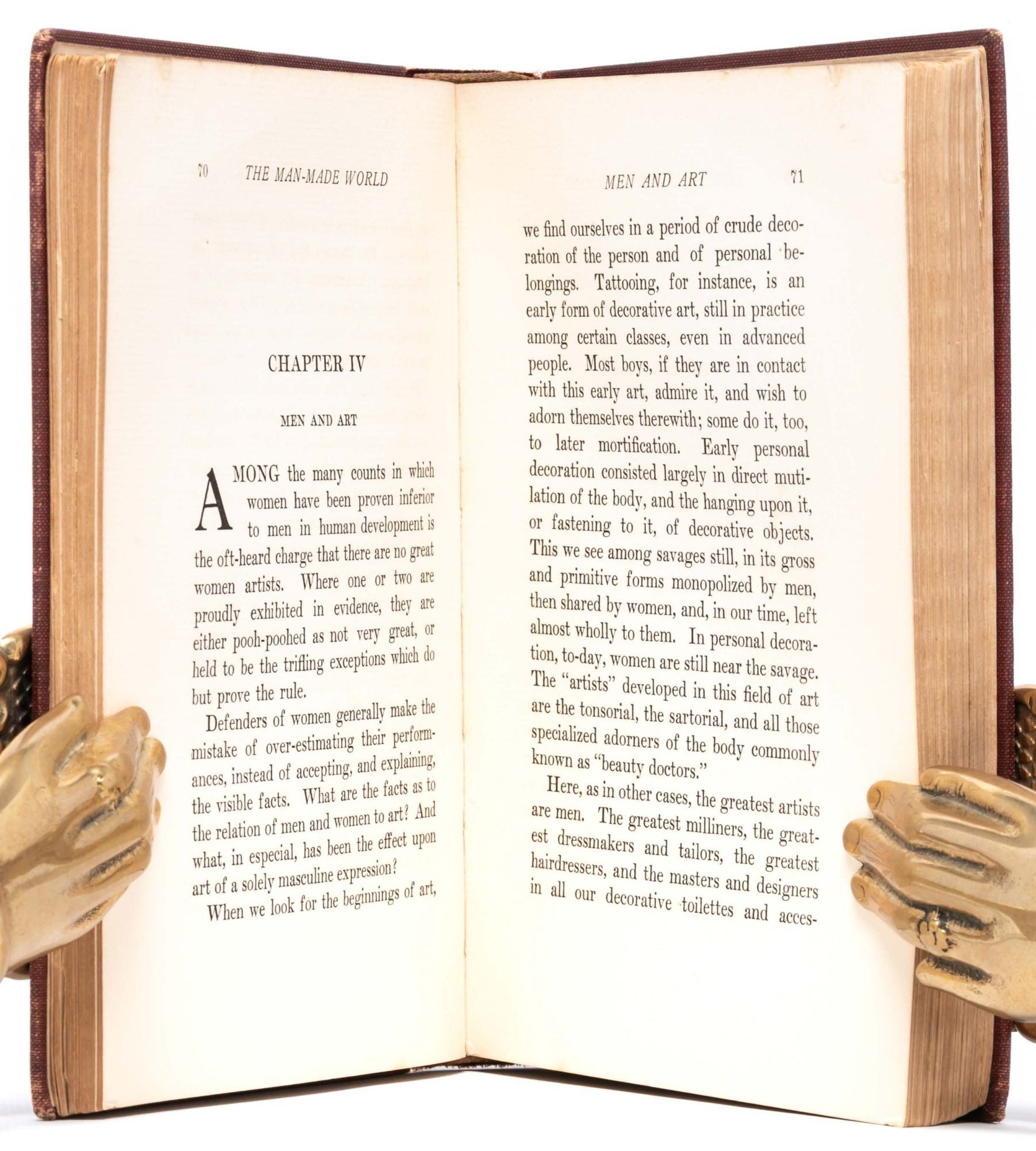
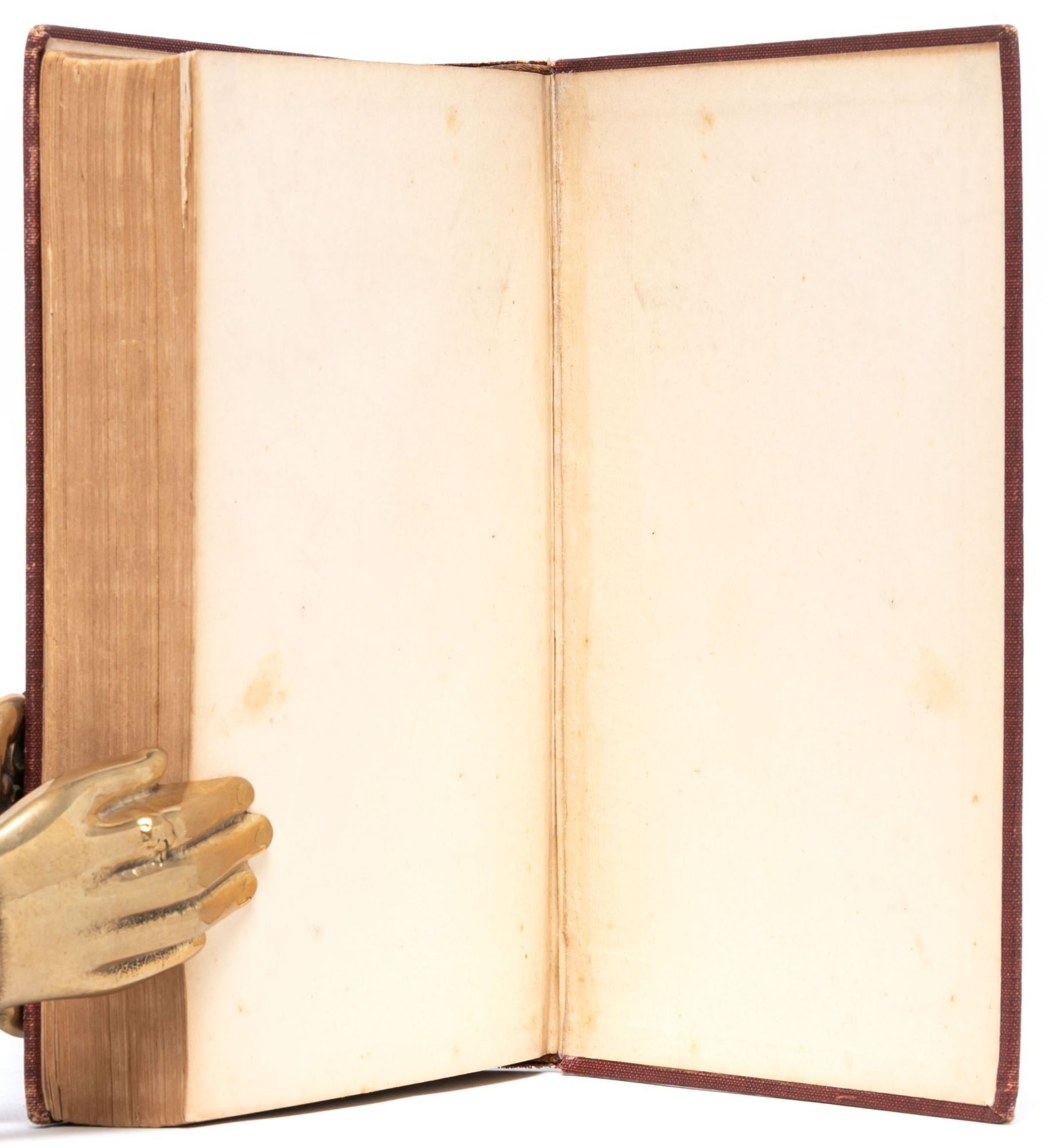
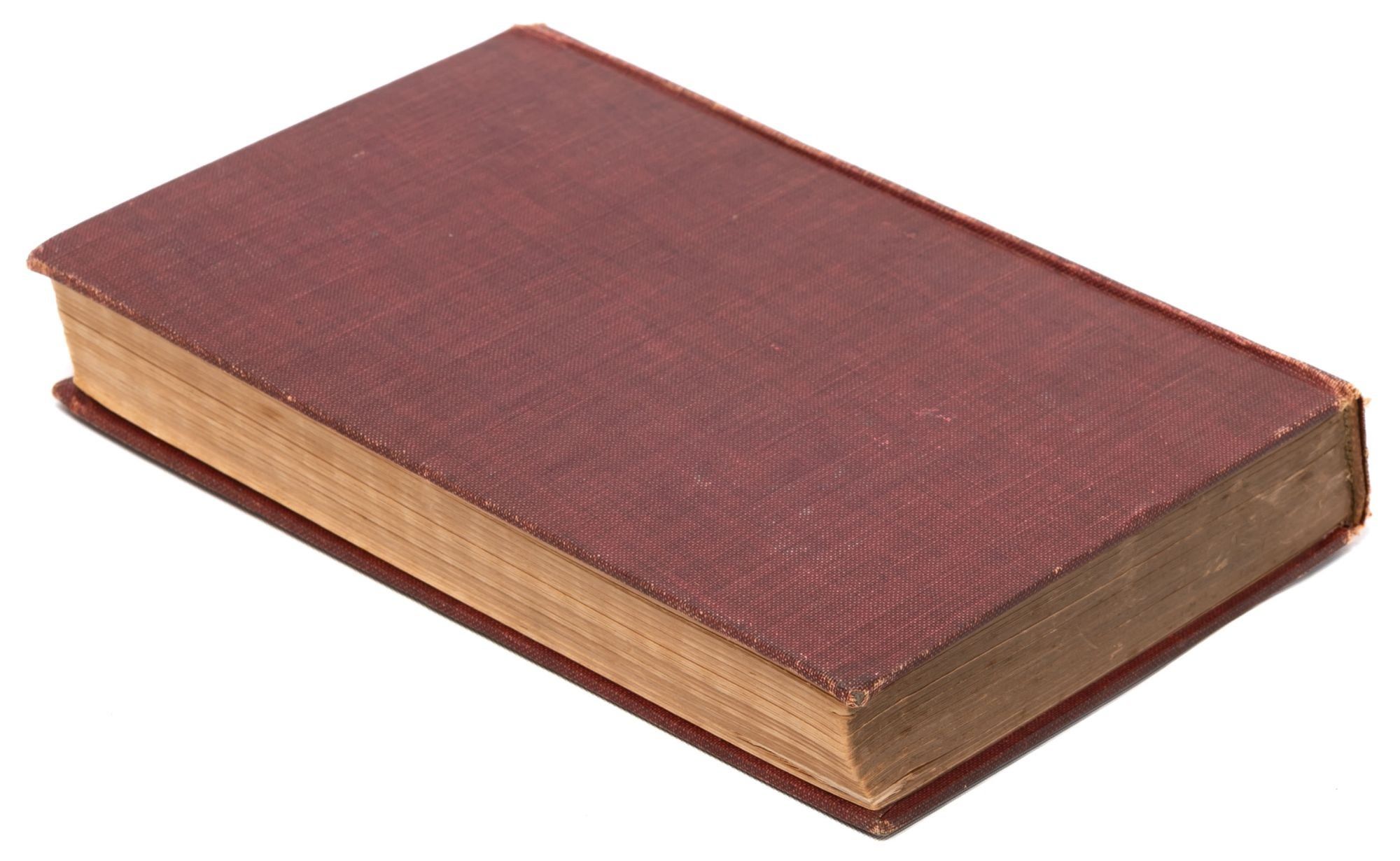
New York: Charlton Company, 1911. First edition. Publisher's burgundy cloth with brown paper spine label. A bit of soiling to lower board and some rubbing to head and tail of spine. Contemporary ink ownership inscription (Emily P. Evans) to preliminary blank. A bit of foxing. A Very Good copy.
In Gilman’s words, the Androcentric Theory supposes that men are the true form of humanity and women developed from men (e.g., Eve from Adam’s rib). In contrast, Gilman proposes the “Gynæcocentric Theory,” which supposes that “the female is the race type, and the male, originally but a sex type, reached a later equality with the female, and, in the human race, became her master for a considerable historic period,” (pp. 7-8). Gilman writes, “When we learn to differentiate between humanity and masculinity, we shall give honor where honor is due,” (p. 8).
Charlotte Perkins Gilman (1860 - 1935) was one of the most important feminist voices and one of the most widely read woman authors of her day. Gilman’s best-known literary work was The Yellow Wallpaper, which portrays a woman’s psychological breakdown after she is unwillingly confined to her home (supposedly for her own wellbeing) after a difficult pregnancy. Her non-literary works are characterized by a wit and clarity that is more frequently associated with poets and fiction writers (Lester F. Ward said she had a “cosmological perspective on society”). Her other works include Women and Economics (1898), Human Work (1904), and Concerning Children (1910).
ANB. Blain, Feminist Companion, 427. Flexner, Century of Struggle (Harvard University Press, 1968).
In Gilman’s words, the Androcentric Theory supposes that men are the true form of humanity and women developed from men (e.g., Eve from Adam’s rib). In contrast, Gilman proposes the “Gynæcocentric Theory,” which supposes that “the female is the race type, and the male, originally but a sex type, reached a later equality with the female, and, in the human race, became her master for a considerable historic period,” (pp. 7-8). Gilman writes, “When we learn to differentiate between humanity and masculinity, we shall give honor where honor is due,” (p. 8).
Charlotte Perkins Gilman (1860 - 1935) was one of the most important feminist voices and one of the most widely read woman authors of her day. Gilman’s best-known literary work was The Yellow Wallpaper, which portrays a woman’s psychological breakdown after she is unwillingly confined to her home (supposedly for her own wellbeing) after a difficult pregnancy. Her non-literary works are characterized by a wit and clarity that is more frequently associated with poets and fiction writers (Lester F. Ward said she had a “cosmological perspective on society”). Her other works include Women and Economics (1898), Human Work (1904), and Concerning Children (1910).
ANB. Blain, Feminist Companion, 427. Flexner, Century of Struggle (Harvard University Press, 1968).