

Oliver Twist. By Charles Dickens (in 3 vols.)
- London: Richard Bentley, 1838
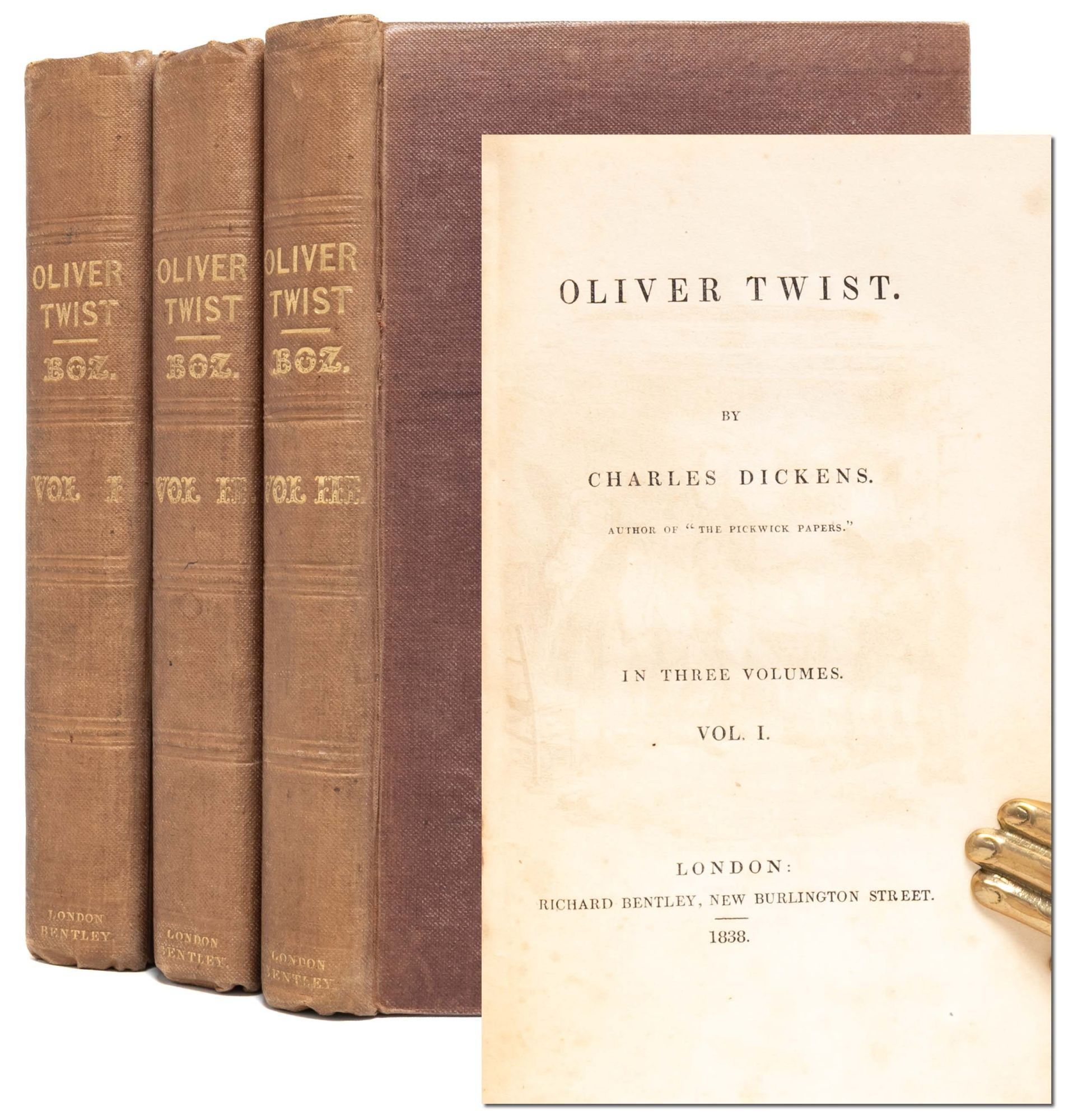
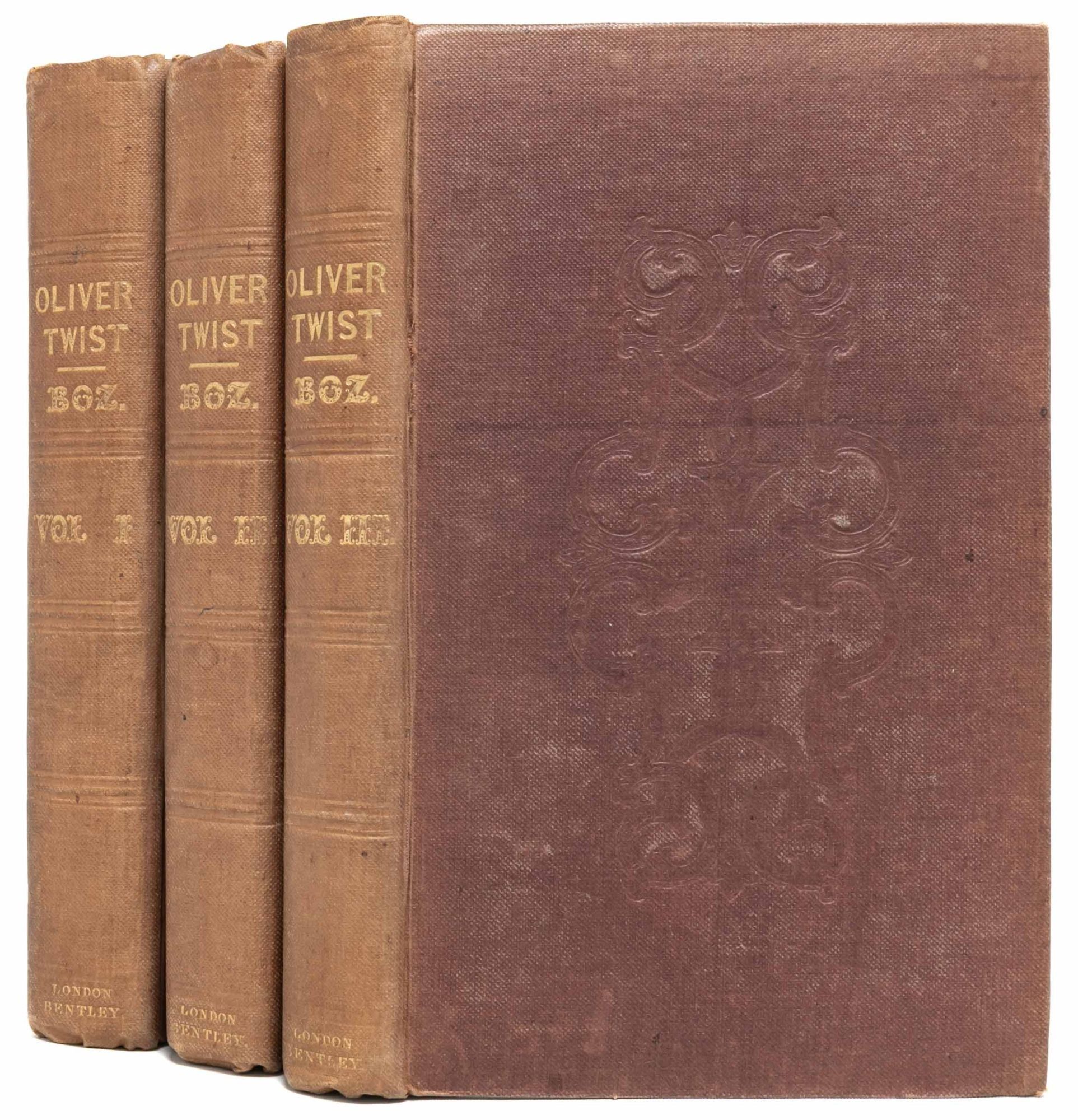
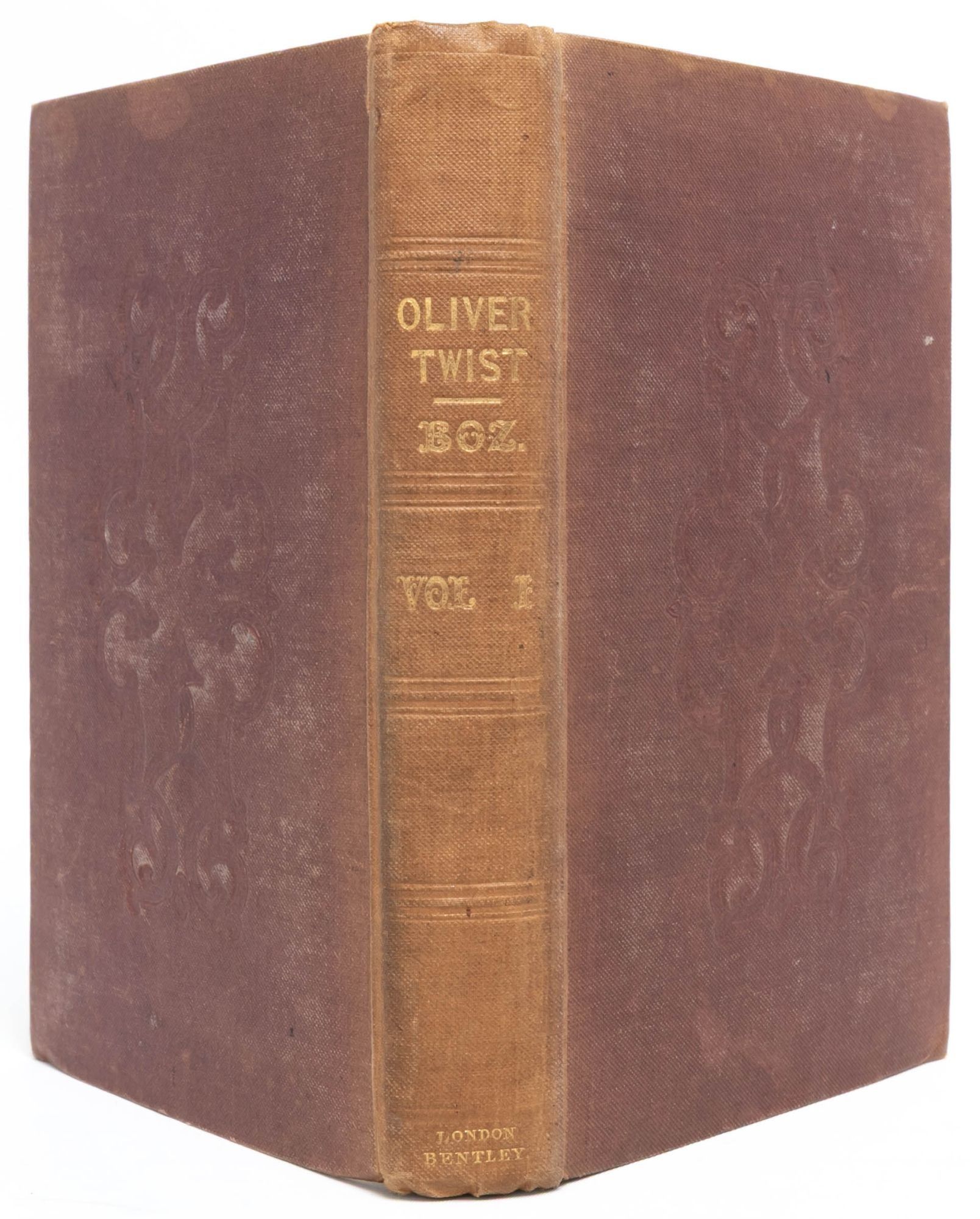
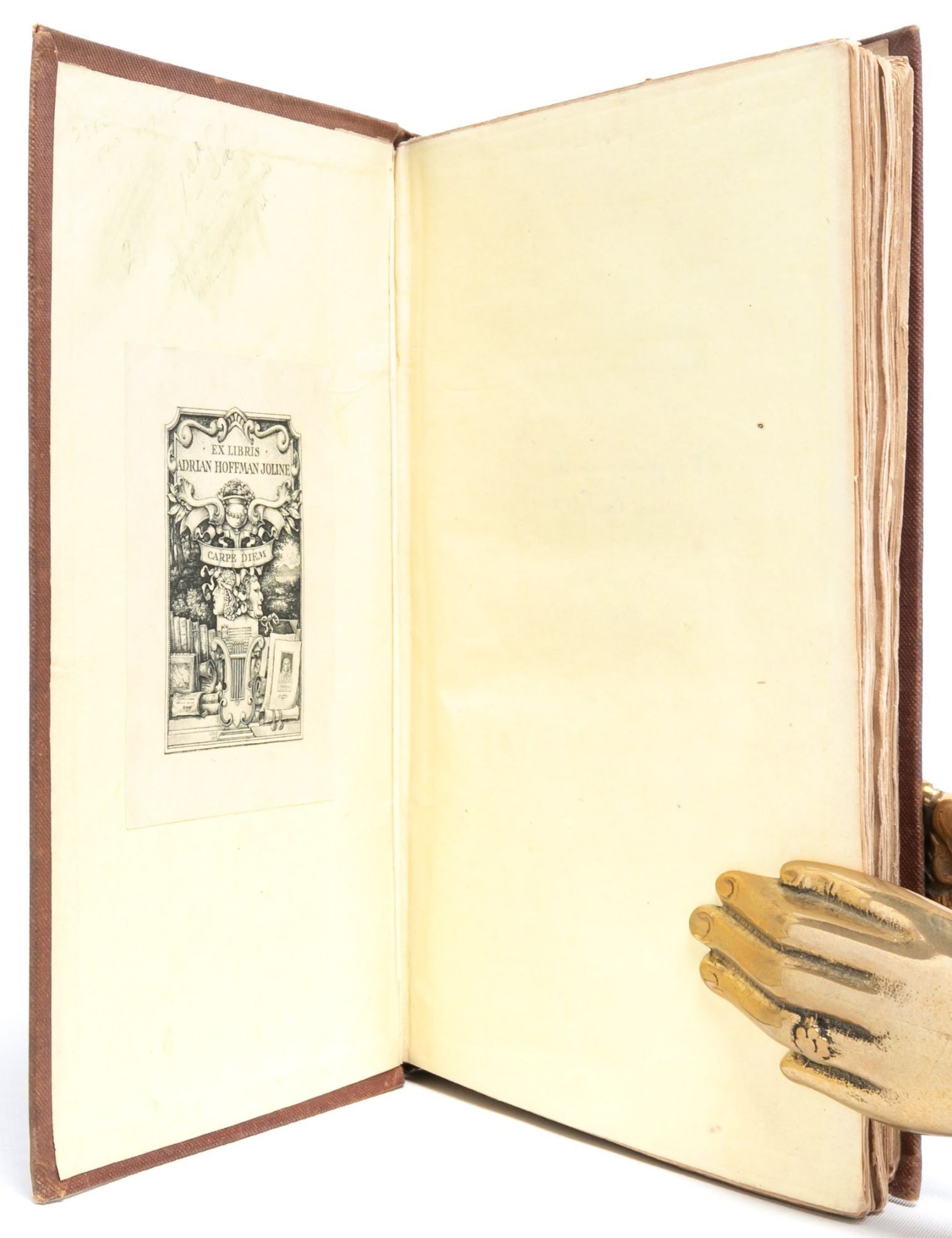
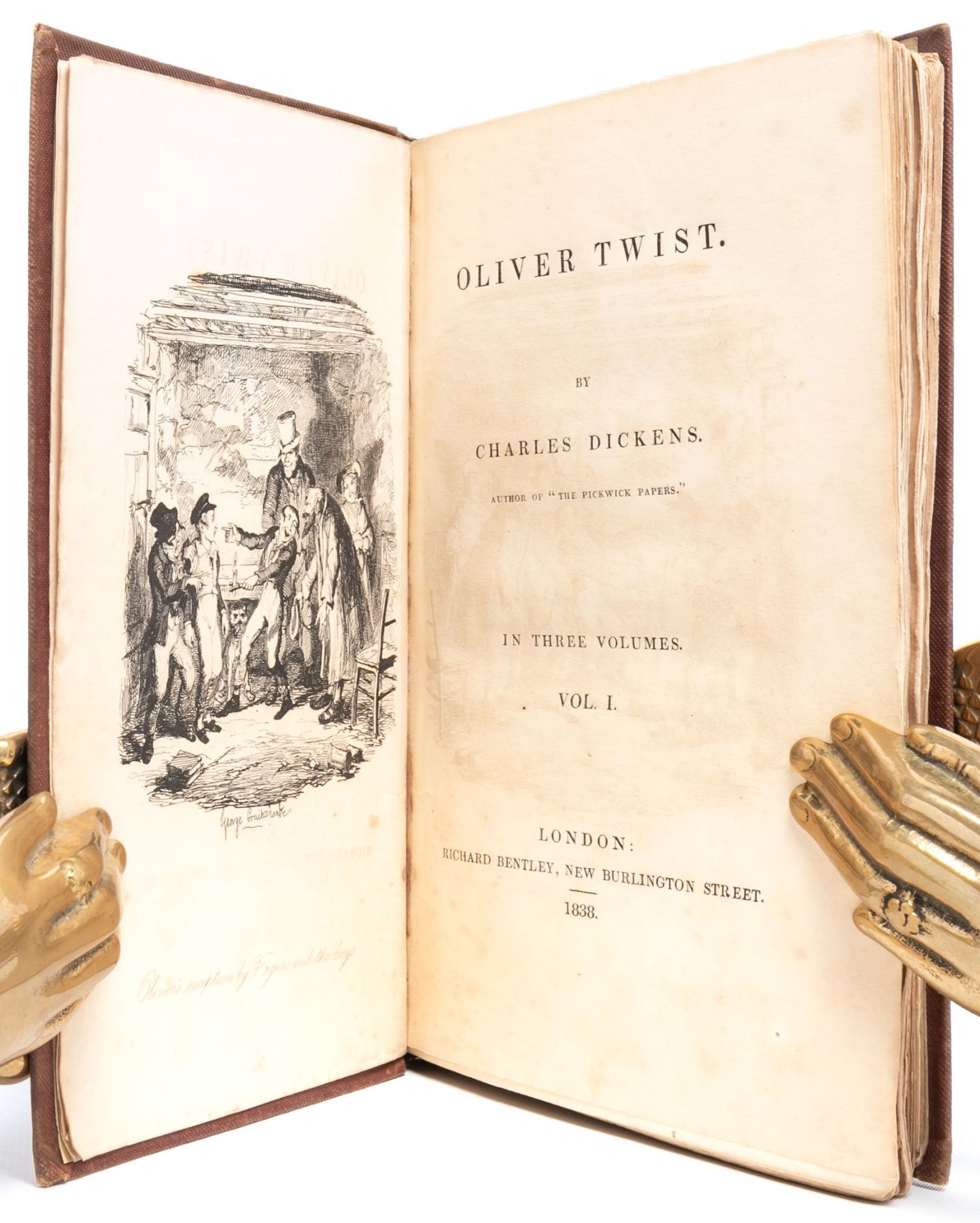
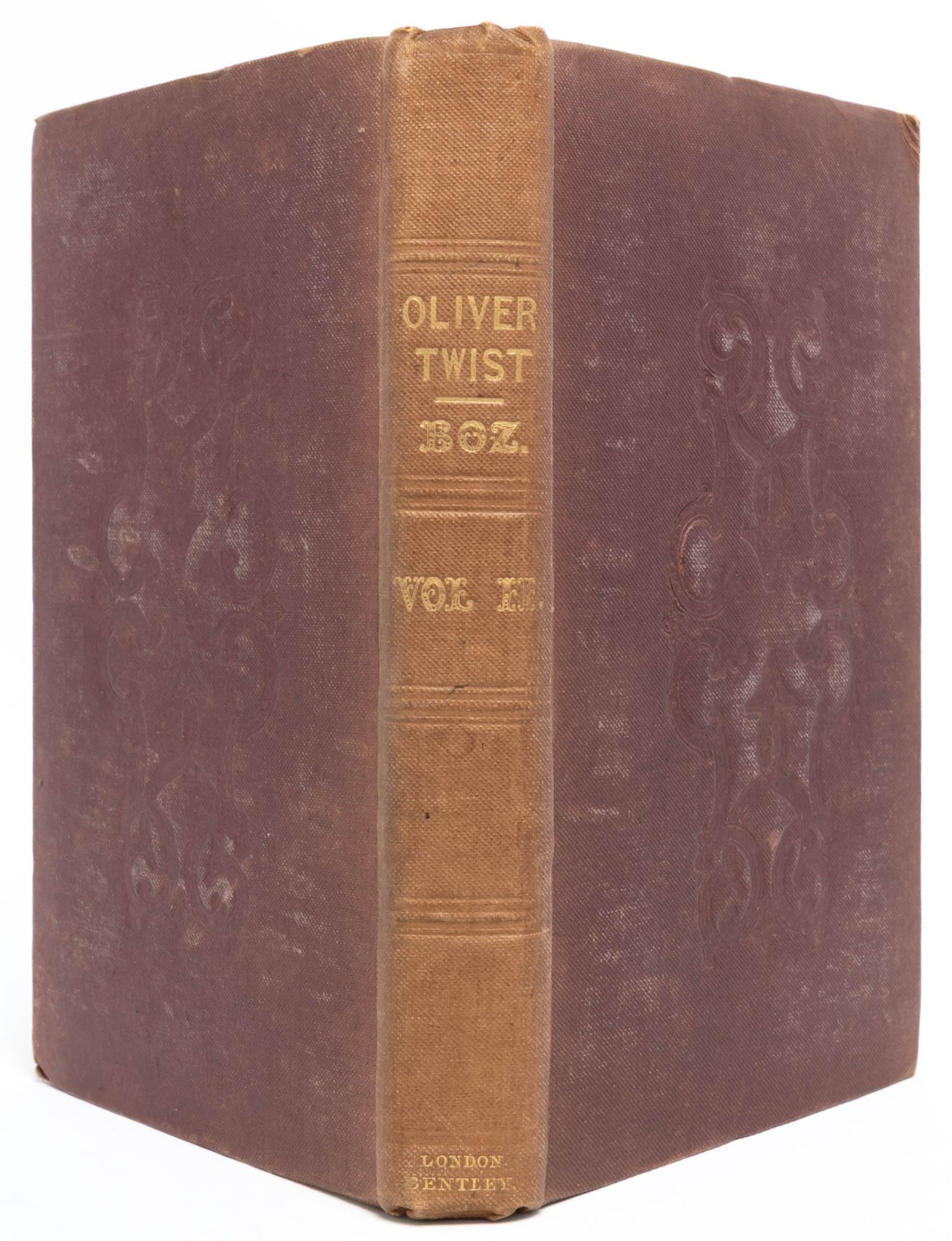
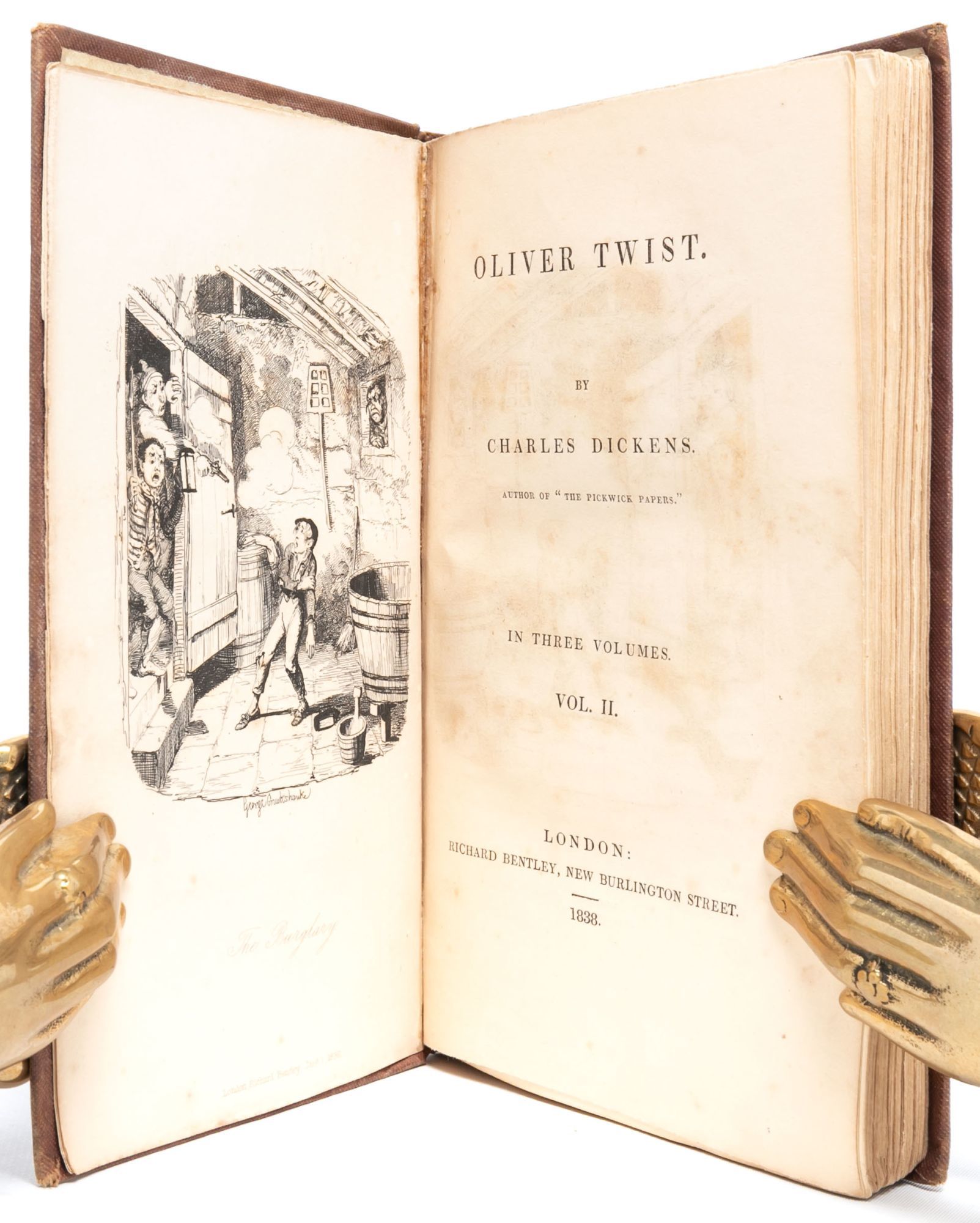
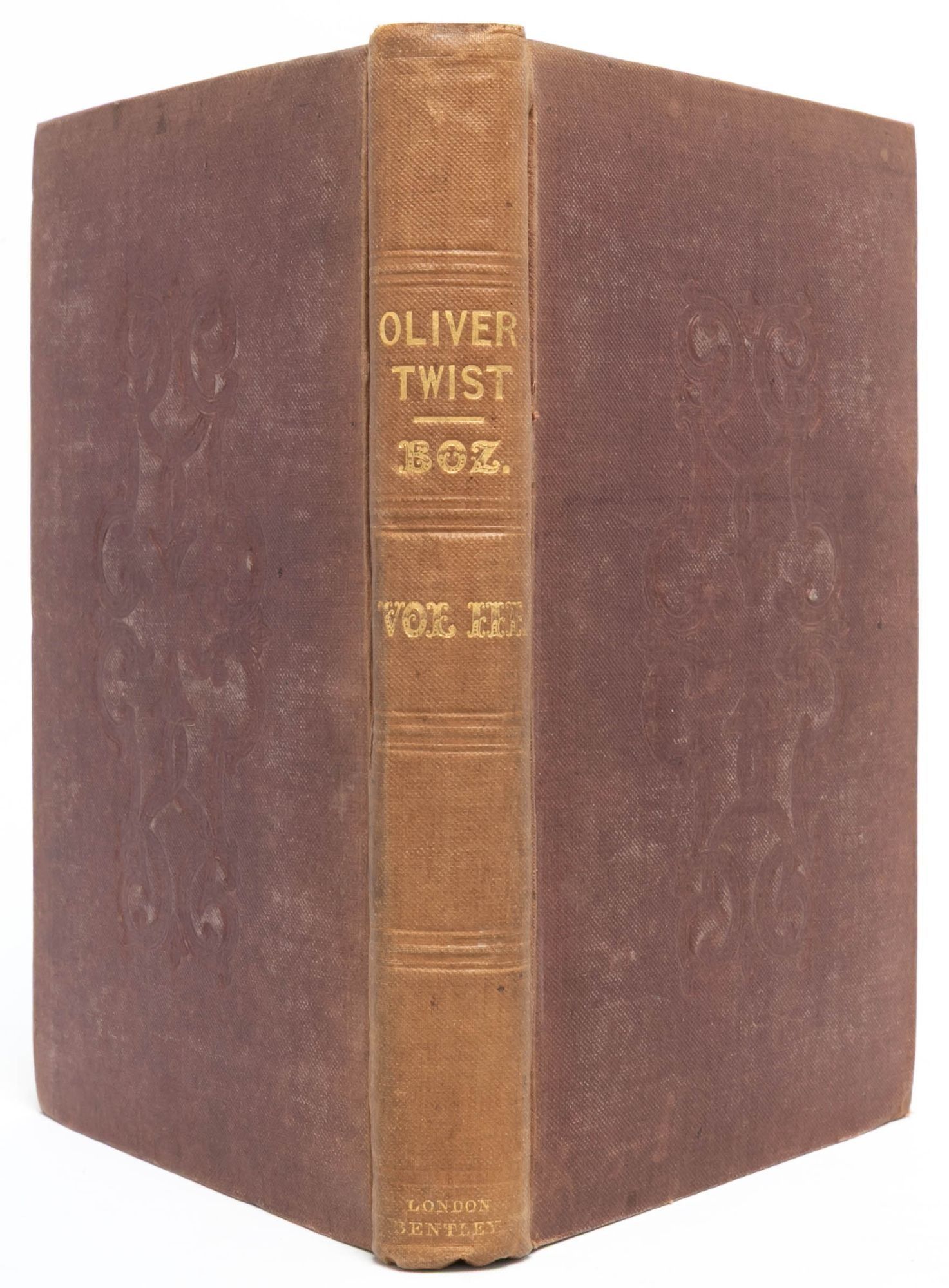
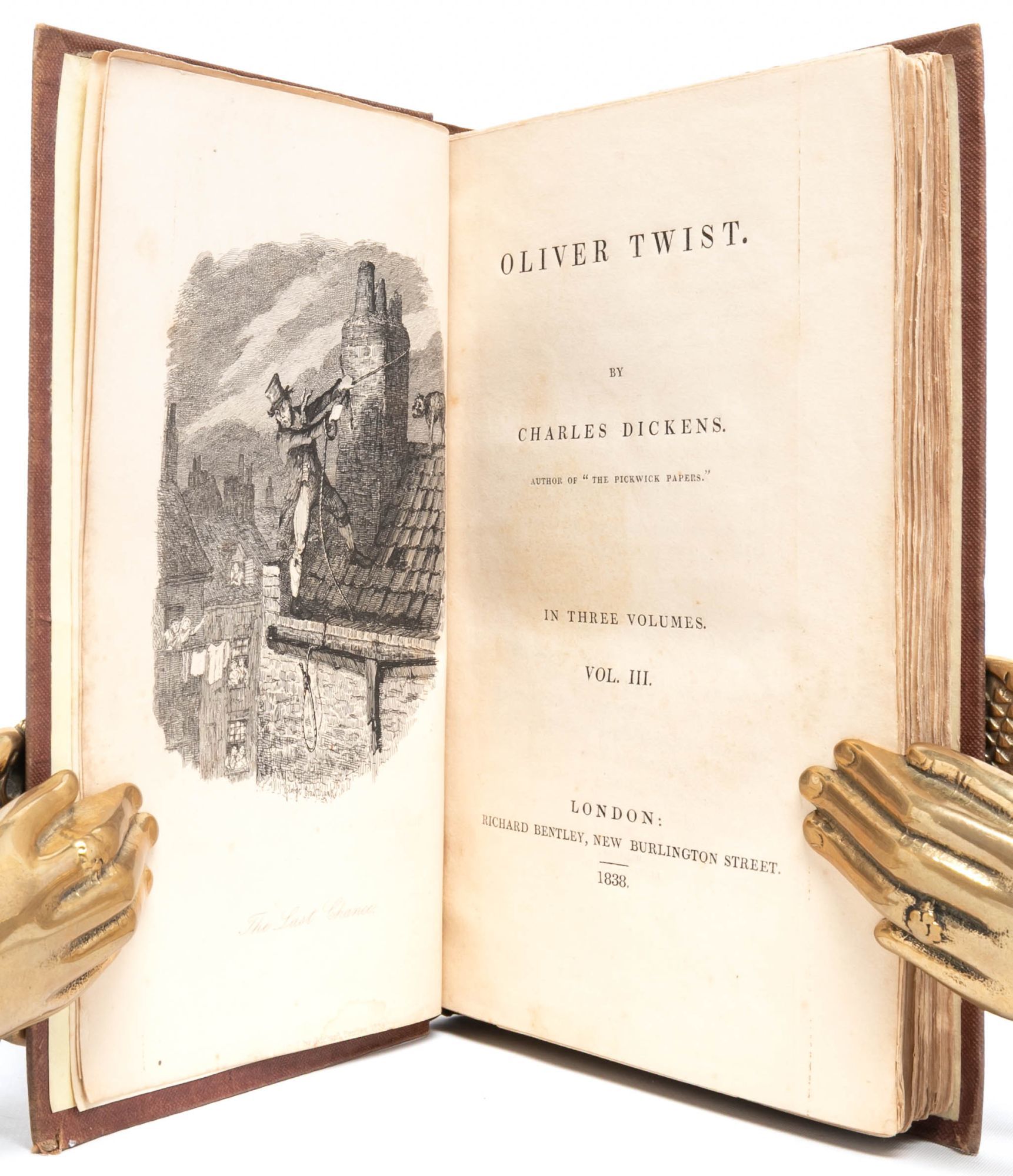
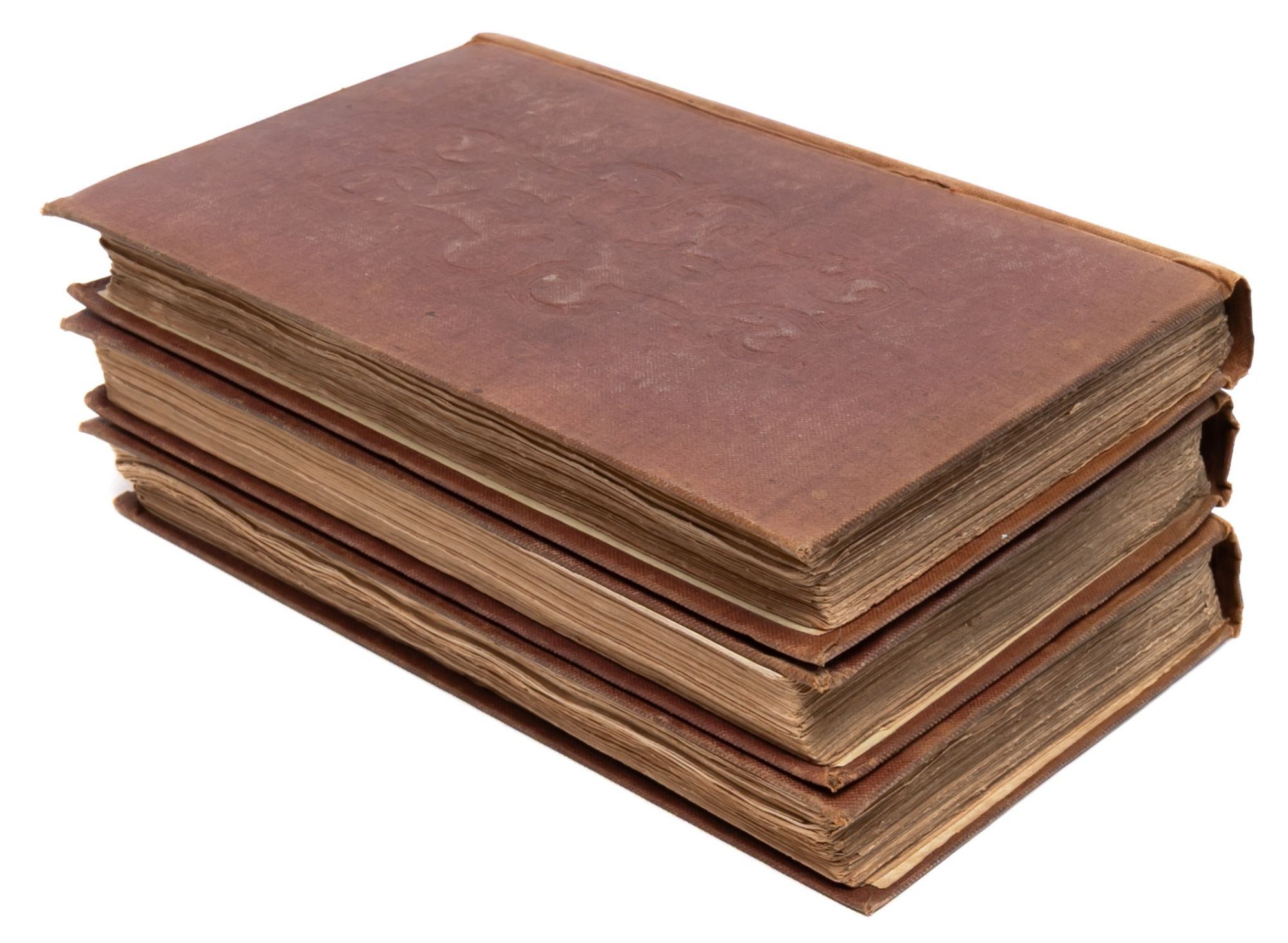
London: Richard Bentley, 1838. First edition. Near Fine. Second issue, with the title-page authorship credit to Charles Dickens instead of "Boz" and with the “Church” version of the final plate. First state of volume III with "pilaster" instead of "pier" or "pedestal" on page 164. Almost all the internal flaws according to Smith present. Three octavo volumes (7 15/16 x 4 7/8 inches; 202 x 124 mm.). Volumes I and III in twelves, volume II in eights. [iv], [1]2-331, [1, blank], [4, advertisements]; [iv], [1]2-307, [1, blank]; [iv], [1]2-315, [1, blank] pp. No half-title called for in Volume III. Twenty-four engraved plates by George Cruikshank. Small piece (3/4 x 3/8 inch) torn away from upper corner of second plate in volume II, repaired tear to top margin of following pages (61/62; E7). Original (Smith primary binding; Carter binding variant B) reddish brown fine-diaper cloth, front and back covers stamped in blind with an arabesque design, spines ruled in blind and lettered in gilt, original pale yellow coated endpapers. Some light foxing to plates as usual, some light occasional marginal soiling. Spine ends and inner hinges of volume three expertly and almost invisibly repaired, spines very slightly faded but gilt still bright. Armorial bookplate of Adrian Hoffman Joline on front paste-downs (bookplate for volume two removed). Housed in a quarter brown morocco clamshell case. An excellent and very attractive set, Near Fine.
For this novel, Dickens's first in the standard three-volume form, Bentley divided the printing task between two firms: Volume I was printed in a twelvemo format by Samuel Bentley; Volume II in octavo format by Whiting; and Volume III preliminaries and signatures A-F and probably G by Whiting with the remaining text by Samuel Bentley, again in twelvemo format. The three-decker publication date was 9 November 1839, and within a week, at Dickens's insistence, the title-pages were changed to include his name, and the “Church” version of the final plate was substituted for the “Fireside” version.
Oliver Twist, Dickens' second novel, is a dark and biting work, but one that is balanced with Oliver's indefatigable innocence and charm. Often cited as the first Victorian novel to feature a child protagonist, it was developed as a social commentary and a call for improving the conditions of London's destitute and orphan children. In recent scholarship, critics have noted that Dickens also sought to find balance, as many of his contemporaries did, between Darwin's theories about human nature and those from the Christian tradition; as the characters make their way through a seemingly uncaring world, they are ultimately drawn back to reward or retribution based on their individual level of goodness. The story was immensely successful, both as a novel filled with memorable characters and also as a work prompting much needed reform. Today it remains high within the pantheon of Victorian literature and is a work that has been successfully adapted to both the stage and screen.
Smith I, 4. Near Fine.
For this novel, Dickens's first in the standard three-volume form, Bentley divided the printing task between two firms: Volume I was printed in a twelvemo format by Samuel Bentley; Volume II in octavo format by Whiting; and Volume III preliminaries and signatures A-F and probably G by Whiting with the remaining text by Samuel Bentley, again in twelvemo format. The three-decker publication date was 9 November 1839, and within a week, at Dickens's insistence, the title-pages were changed to include his name, and the “Church” version of the final plate was substituted for the “Fireside” version.
Oliver Twist, Dickens' second novel, is a dark and biting work, but one that is balanced with Oliver's indefatigable innocence and charm. Often cited as the first Victorian novel to feature a child protagonist, it was developed as a social commentary and a call for improving the conditions of London's destitute and orphan children. In recent scholarship, critics have noted that Dickens also sought to find balance, as many of his contemporaries did, between Darwin's theories about human nature and those from the Christian tradition; as the characters make their way through a seemingly uncaring world, they are ultimately drawn back to reward or retribution based on their individual level of goodness. The story was immensely successful, both as a novel filled with memorable characters and also as a work prompting much needed reform. Today it remains high within the pantheon of Victorian literature and is a work that has been successfully adapted to both the stage and screen.
Smith I, 4. Near Fine.