

Sixteen Photographs of African Americans in Kansas, Missouri, and Indian Territory, 1890–1930s
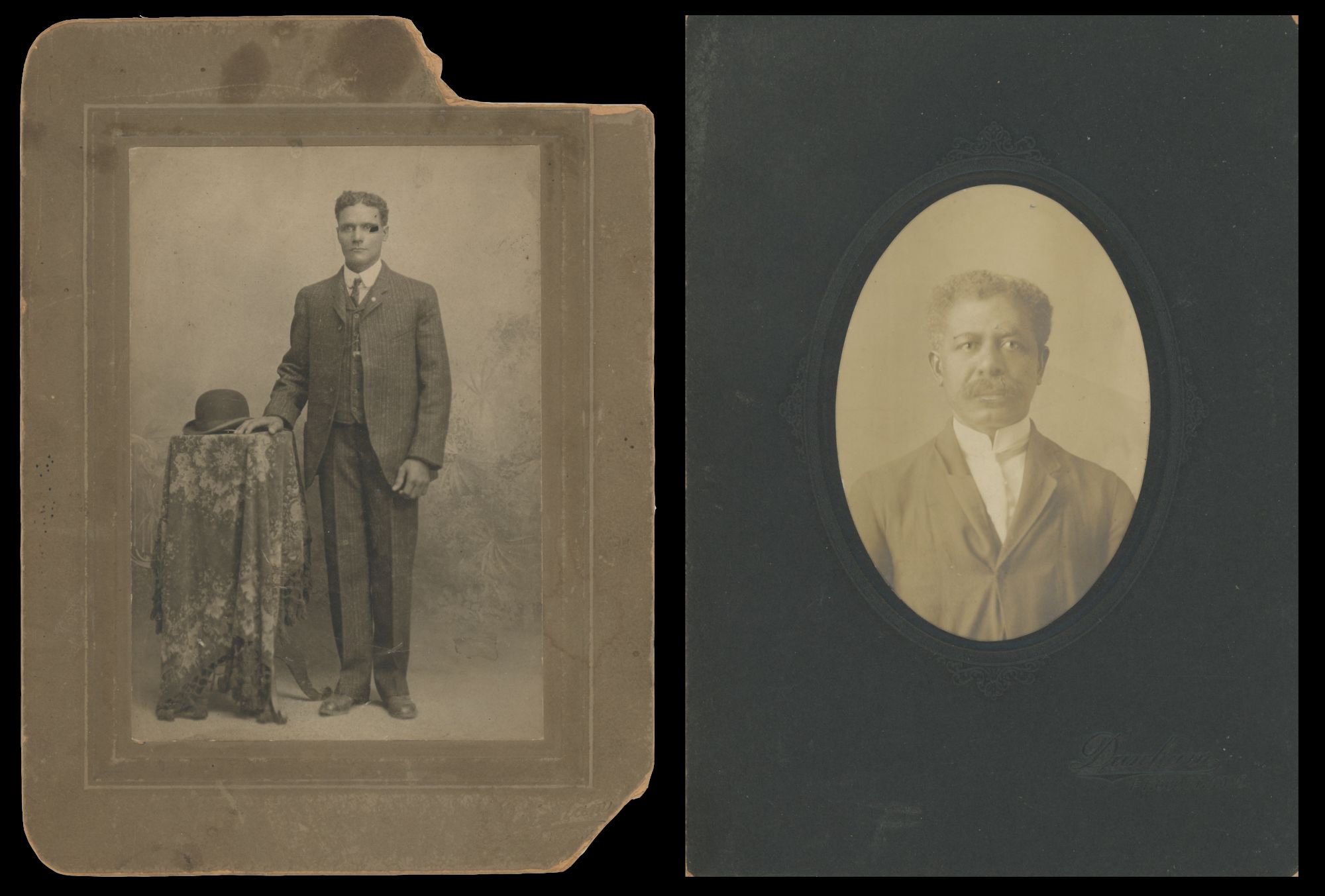
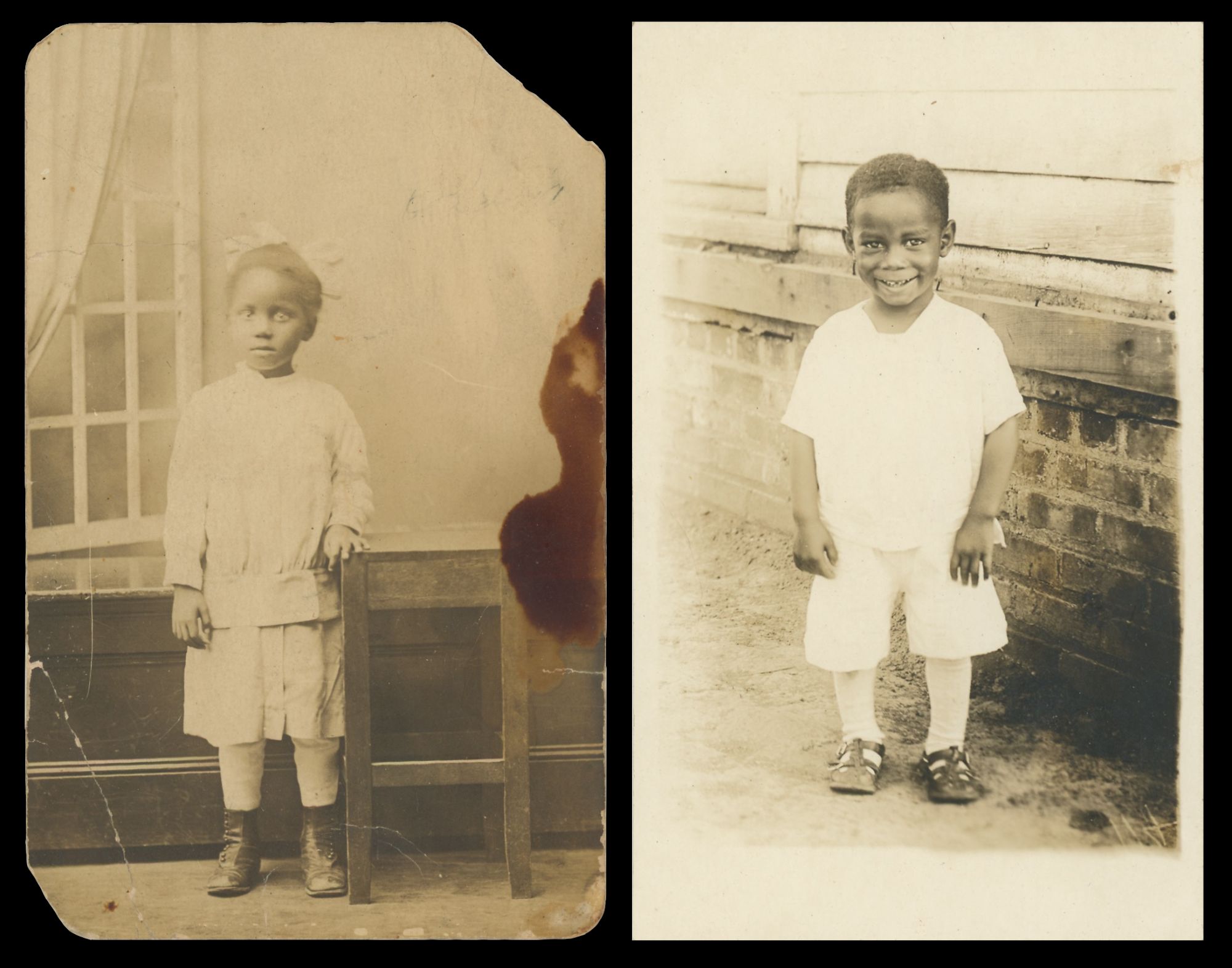
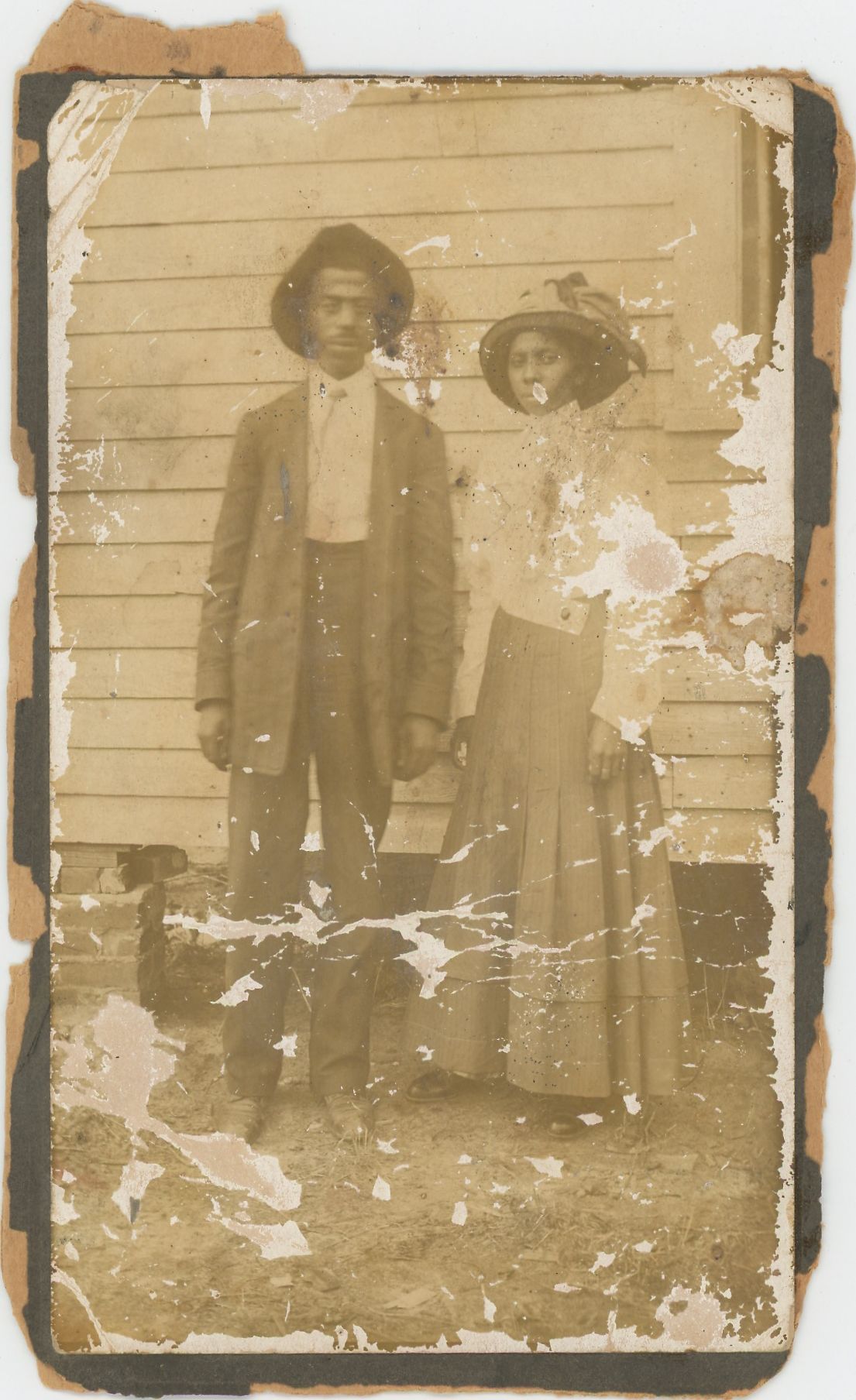
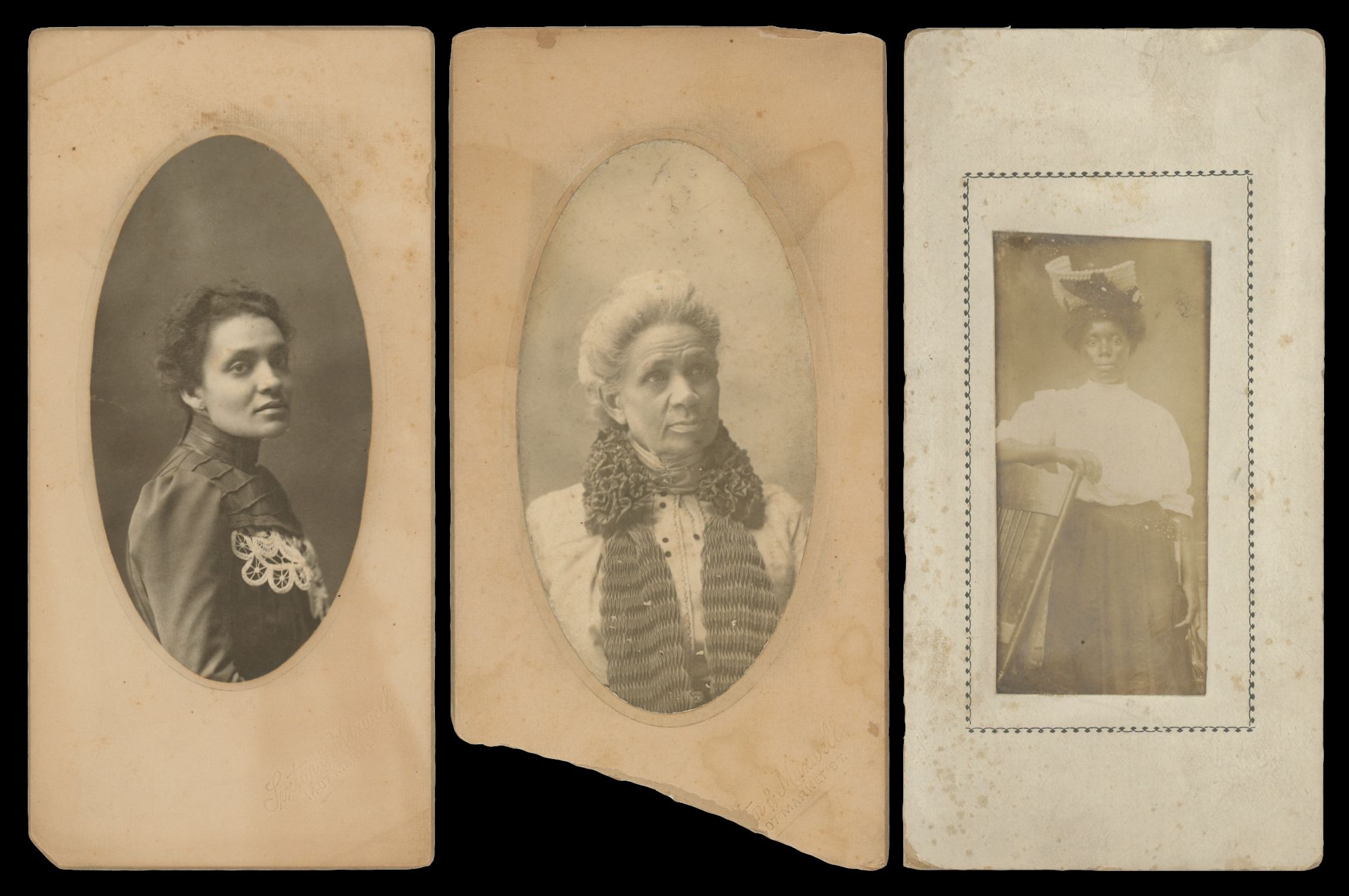
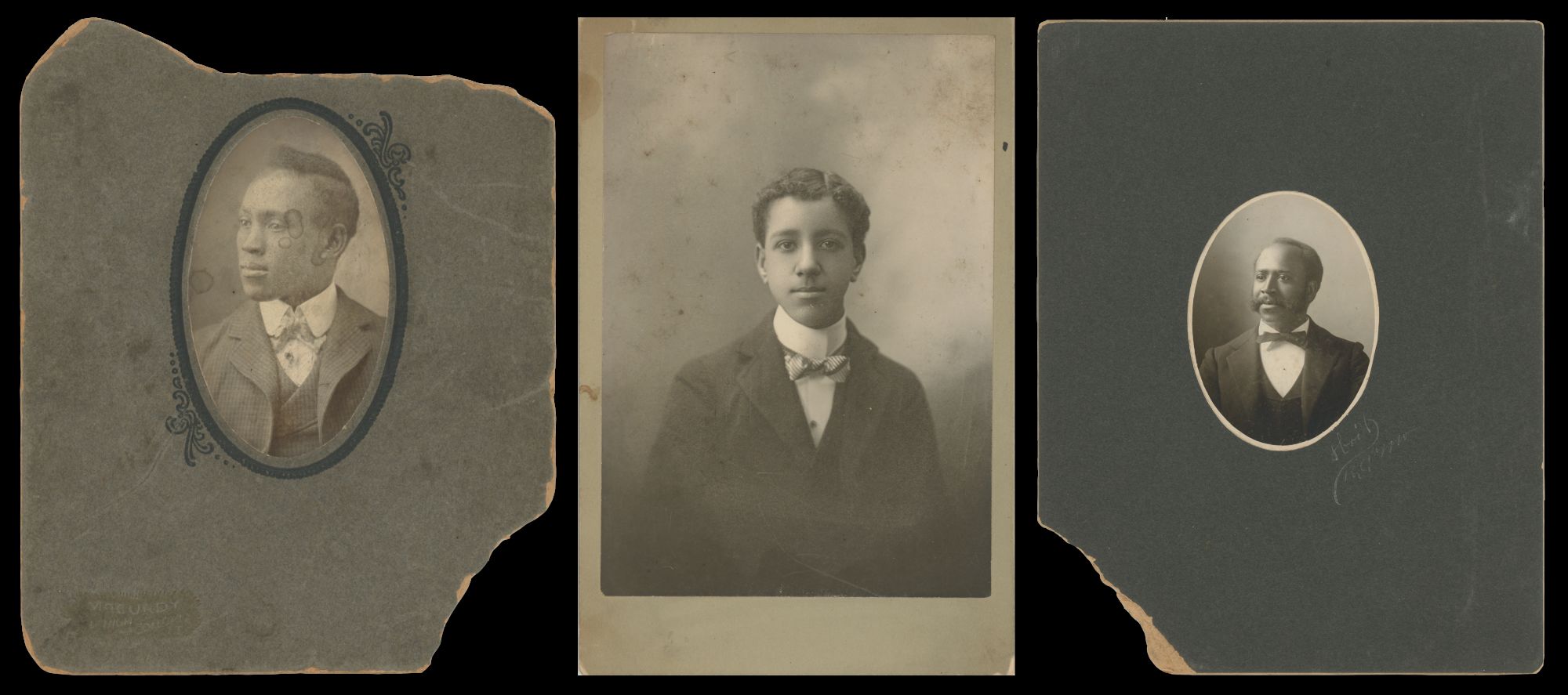
- Fourteen cabinet cards of various sizes, measuring 7 x 8 ½ inches and smaller, and two real photo postcards. Photos with wear;
- Indian Territory, Missouri, and Kansas: Macurdy, Hoit, Dunham, Brigham, and other studios, 1930
Indian Territory, Missouri, and Kansas: Macurdy, Hoit, Dunham, Brigham, and other studios, 1930. Fourteen cabinet cards of various sizes, measuring 7 x 8 ½ inches and smaller, and two real photo postcards. Photos with wear; generally excellent. Cards with significant wear and some missing corners; very good minus. Overall very good.. Sixteen photographs of African American men and women, possibly a family. Most are formal portraits taken in photography studios, though one shows a group of men at work at what seems to be a printing operation and another shows a man posing in front of a building’s porch. Identified locations are Lehigh or Coalgate, Indian Territory (Macurdy’s photographic studio); Kansas City (Hoit) and St. Louis (Sexton & Maxwell), Missouri; and Fort Scott (Dunham), Iola (Brigham), and Leavenworth (Bauer), Kansas. The one identifiable name on the photos is H. I. White, who lived in Indian Territory (later Oklahoma). Earlier photos include one dated to 1898 and one captioned “Remember the Maine!”, indicating a similar time period. On the later end, stampboxes date the post cards to between 1918 and 1930. More research is needed to identify these individuals.
The “Kansas Exodus,” which began in the late 1870s, was the first planned mass migration of African Americans following the Civil War and the failures of Reconstruction. A decade later would come the “great black march westward” to Oklahoma.[1]
Overall the group offers an uncommon collection of images of an African American likely family group in the post-’Exoduster’ era.
[1] Daniel M. Johnson, Black Migration in America: A Social Demographic History (Duke University Press, 1981).
The “Kansas Exodus,” which began in the late 1870s, was the first planned mass migration of African Americans following the Civil War and the failures of Reconstruction. A decade later would come the “great black march westward” to Oklahoma.[1]
Overall the group offers an uncommon collection of images of an African American likely family group in the post-’Exoduster’ era.
[1] Daniel M. Johnson, Black Migration in America: A Social Demographic History (Duke University Press, 1981).