

Collection of Documents, Mainly Payrolls, from the Utica Mining Company, 1889–1898
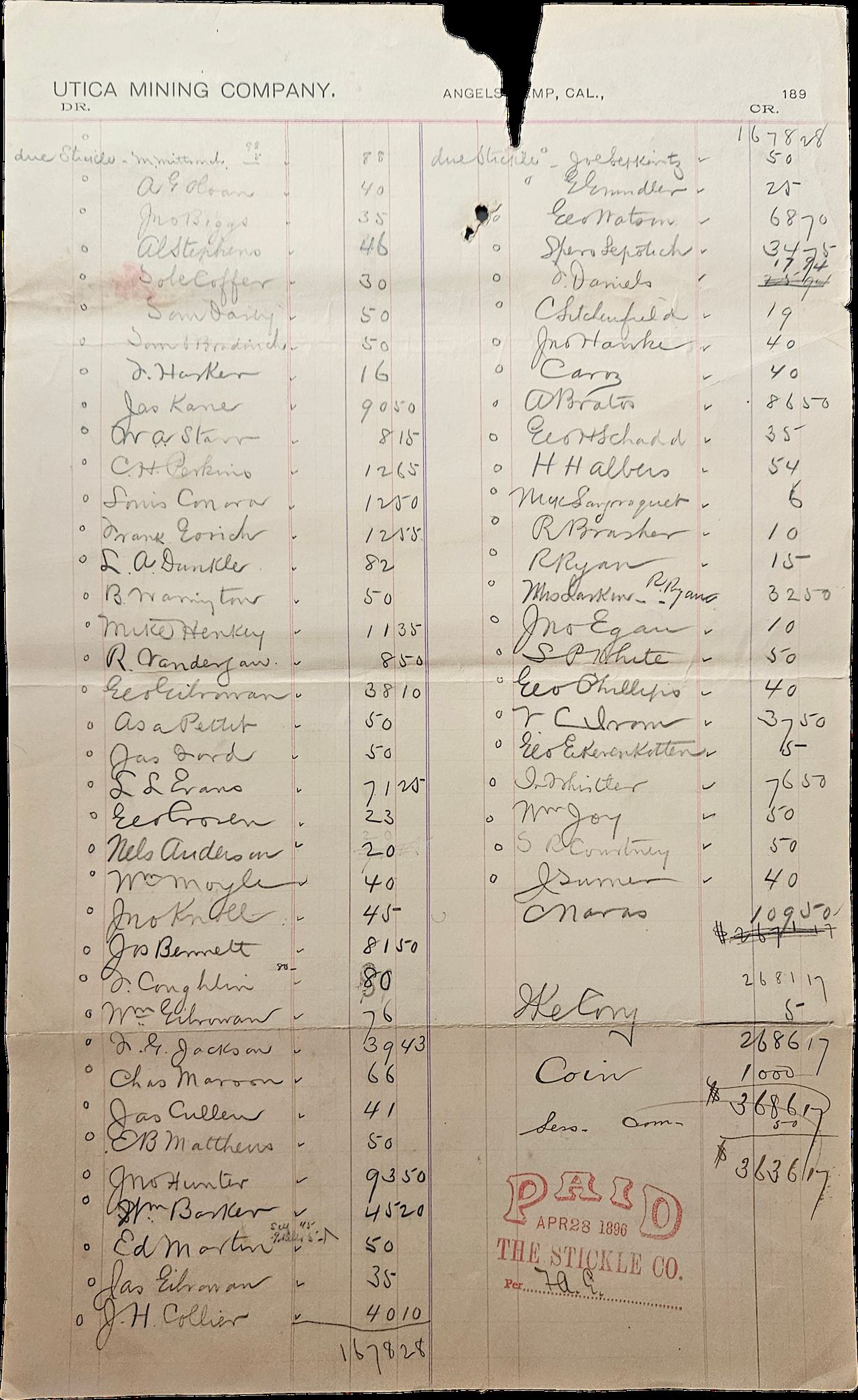
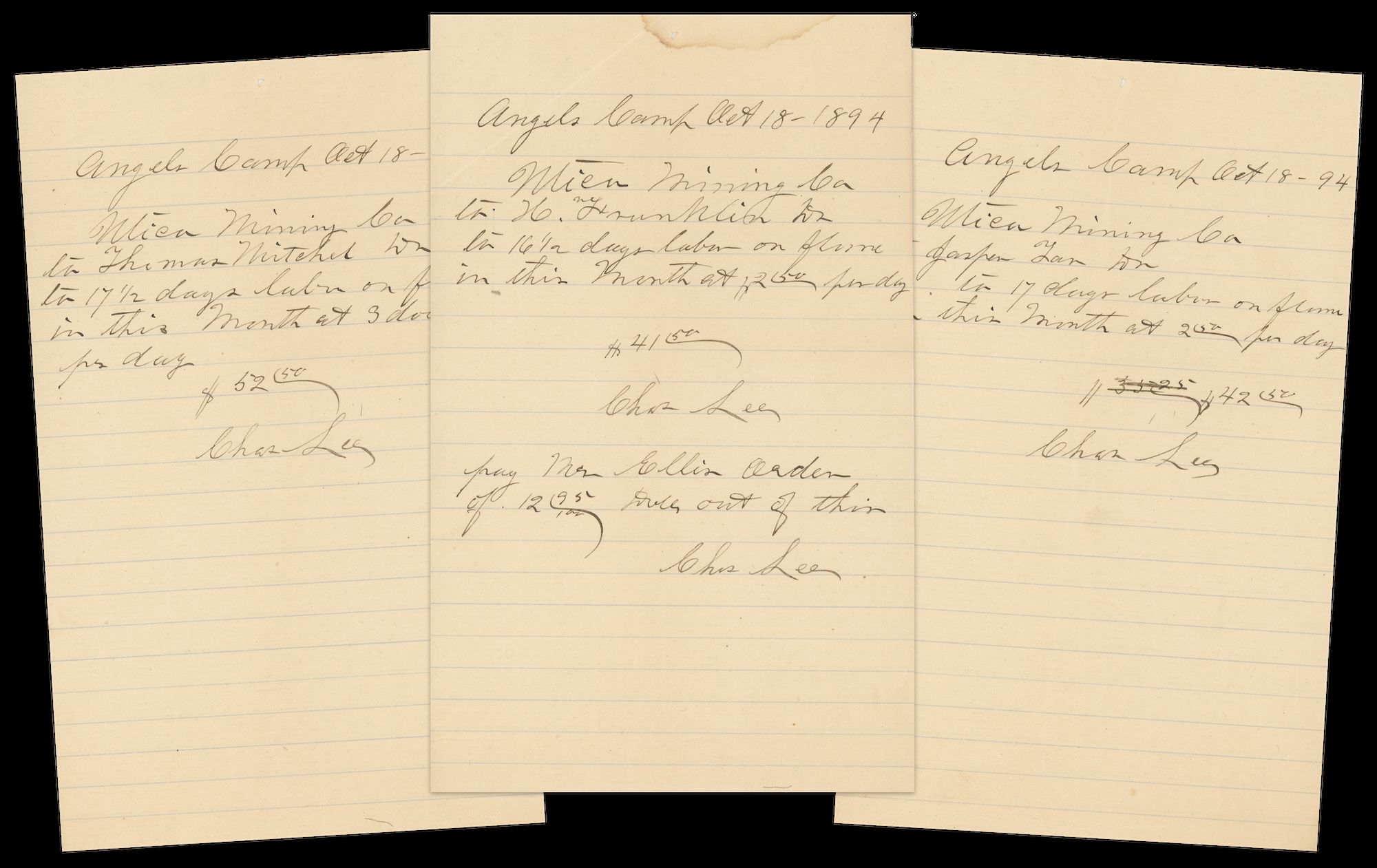
- Seventy-two documents. Most sheets measure about 14 x 16 inches and are folded in half
- Calaveras County, California , 1898
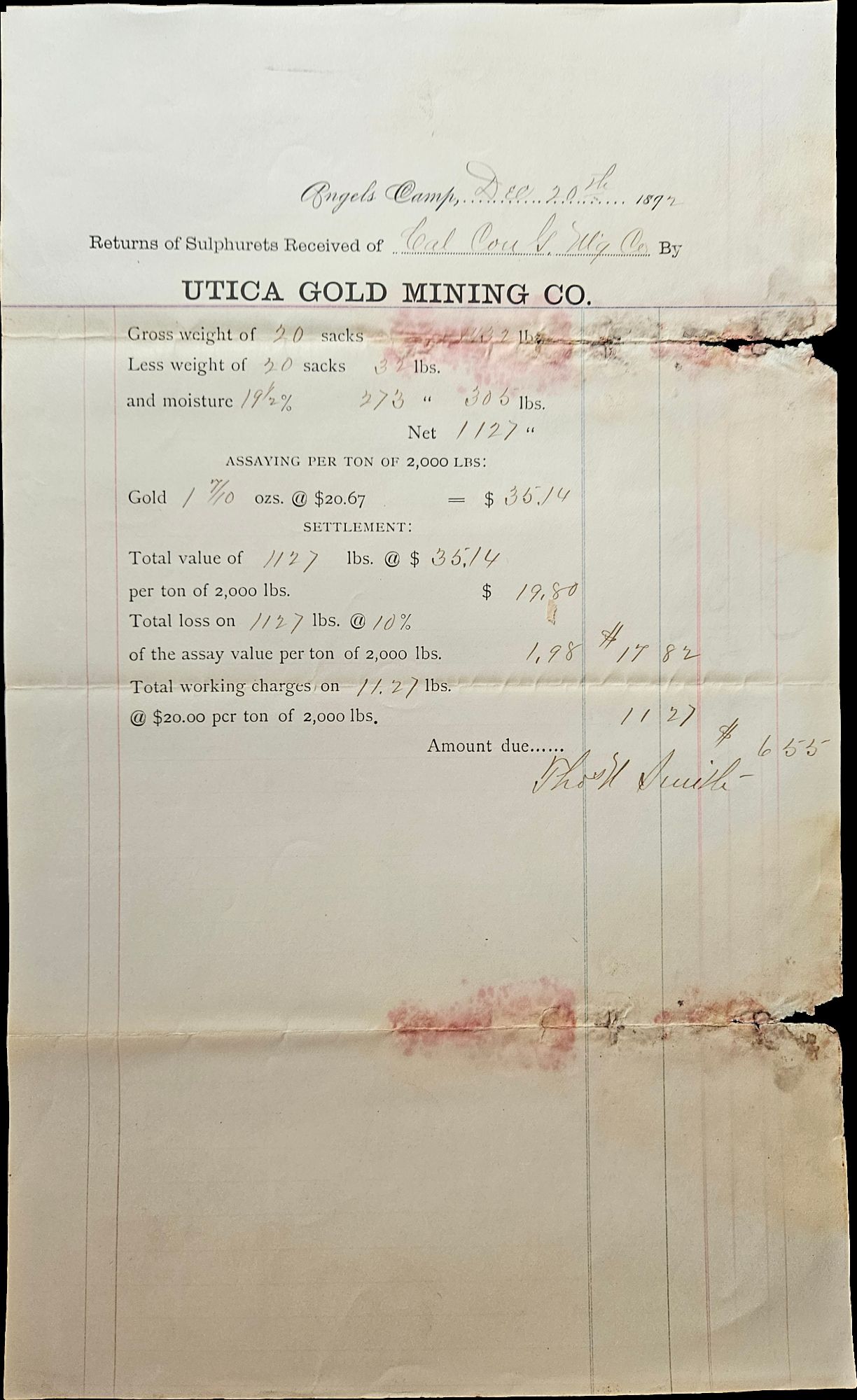
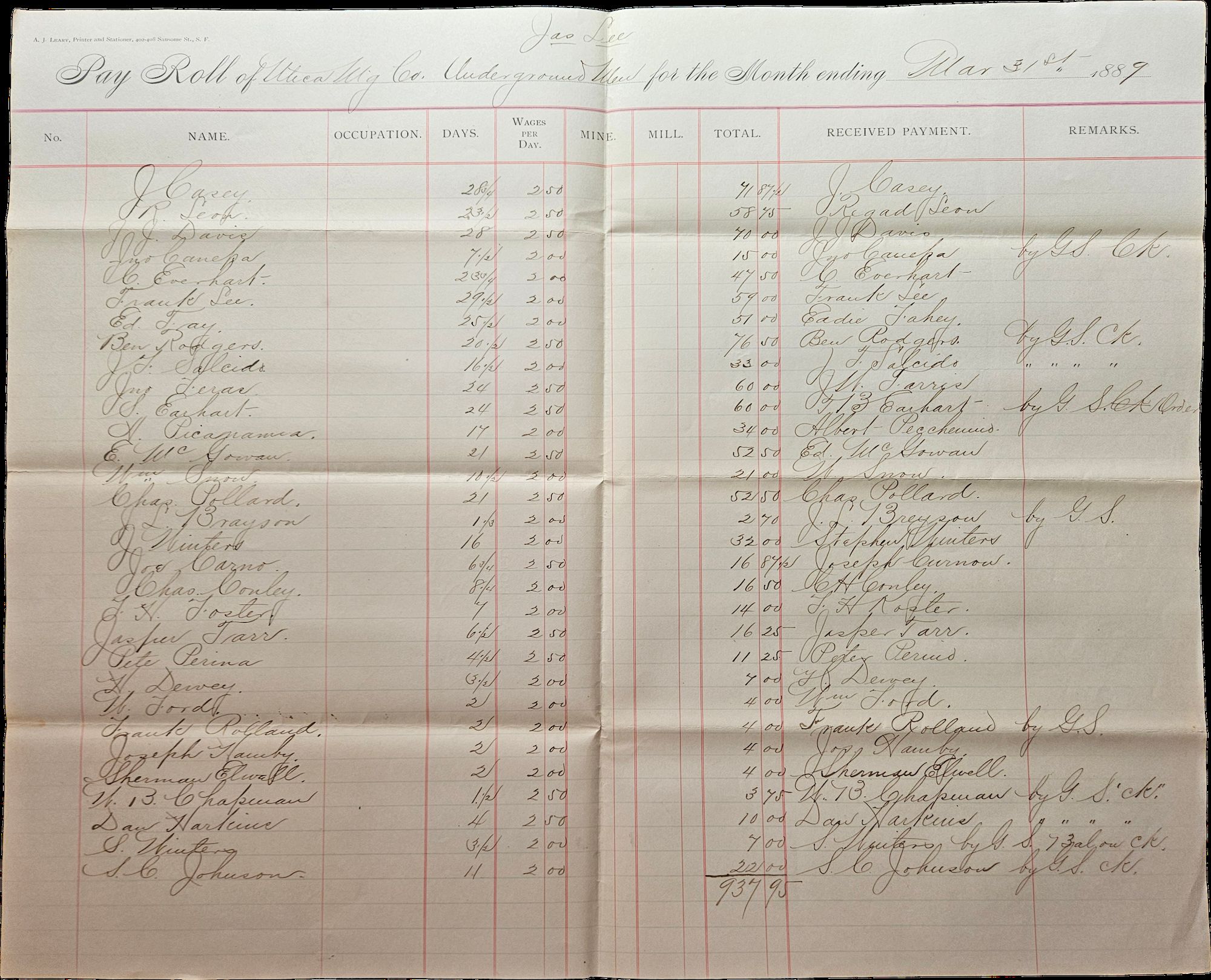
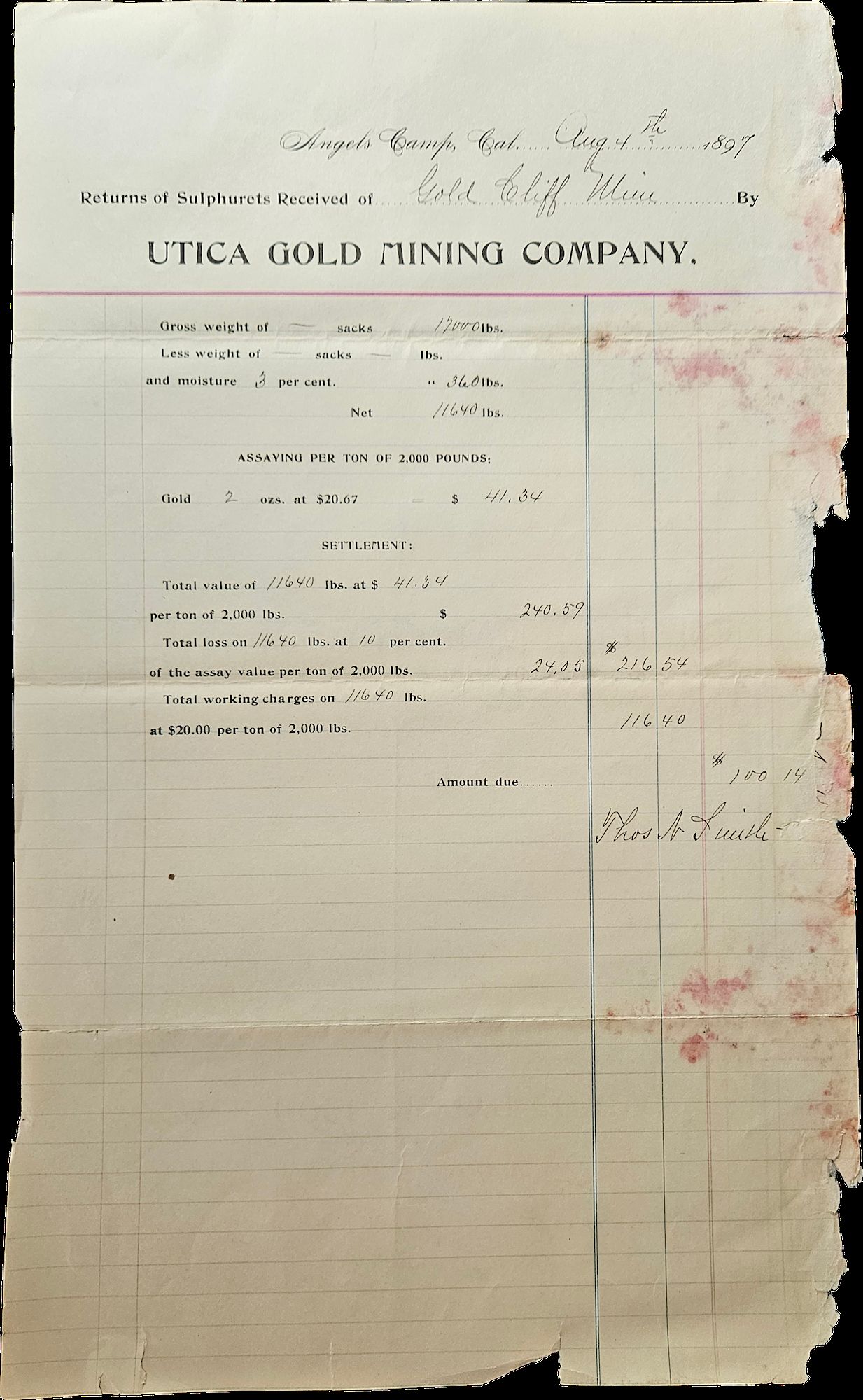
Calaveras County, California, 1898. Seventy-two documents. Most sheets measure about 14 x 16 inches and are folded in half. Folded, some with tears and water damage; overall very good to excellent.. The Utica Mining Company was owned by mining moguls Alvinza Hayward, Charles D. Lane, and W.S. Hobart, and ran mines in Calaveras County, California. This area, located on a portion of the Mother Lode, had been an exceptionally productive gold mining district; its productivity declined in the latter half of the 19th century until new techniques, especially in hard rock mining, created a “Second Gold Rush” in the late 1880s that lasted until World War I.[1] The Utica company owned two mines with nine claims—the Utica mine and the Gold Cliff mine—and employed about 250 men at its peak. It also owned the water source in the town of Angels Camp and, some claimed, essentially ran a company town there.[2] Among multiple other accidents and controversies, it was alleged after a cave-in that killed seventeen miners that Utica’s owners had known that a disaster was likely and had failed to act.[3]
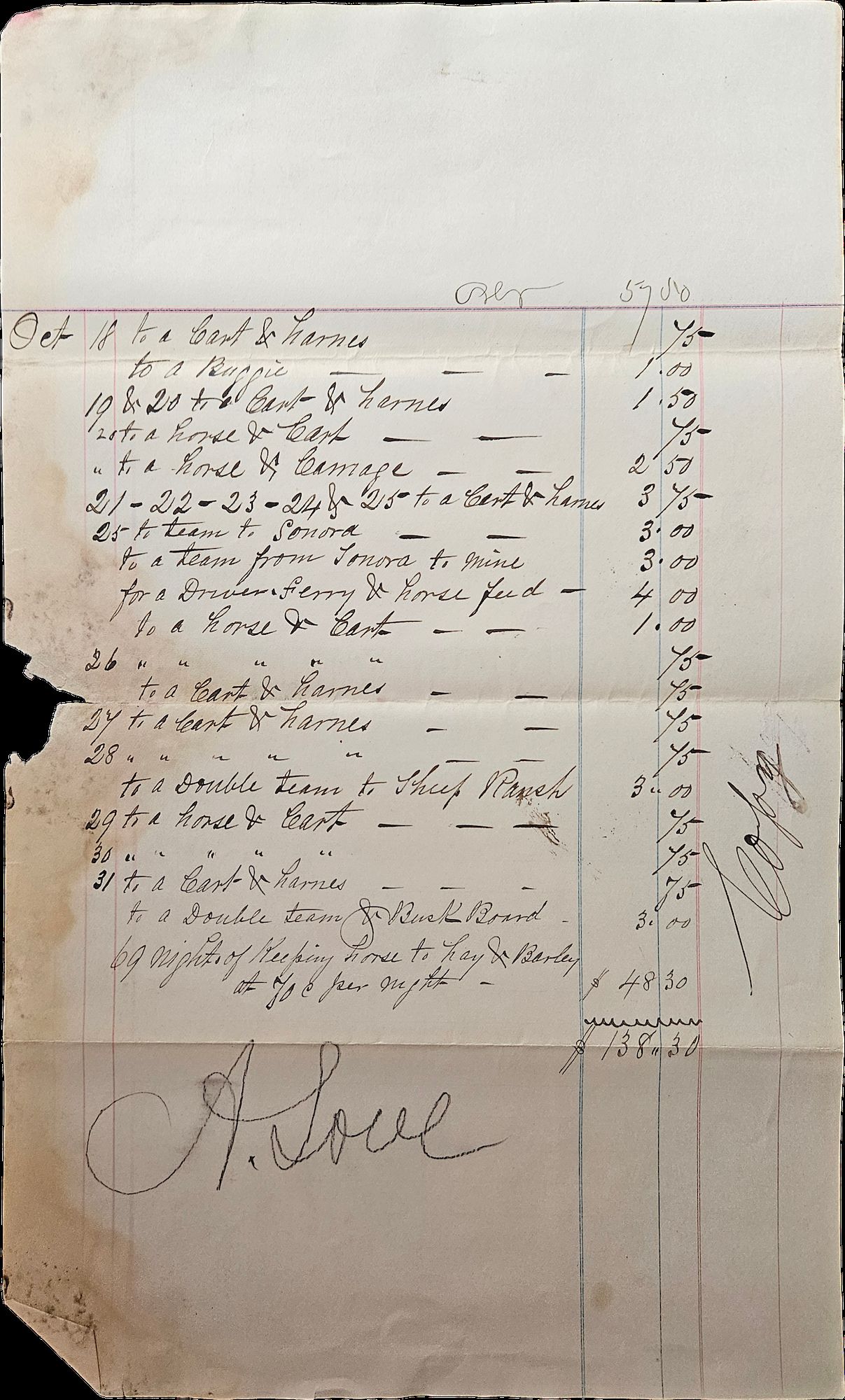
Offered here is a collection of documents, mainly payrolls, of the Utica Mining Company, dating between 1889 and 1898. There are also receipts for goods and services including from D. D. Demarest, who owned the Altaville Foundry, and reports on sulphurets. Payrolls are organized by which jobs the men worked (milling, ditch work, etc.). Employees are identified mostly by full names except for one: “Chinaman,” who appears on several early 1889 documents. However, the company seemed to have hired a second Chinese laborer by July of that year, as he and his compatriot are identified by name: Ah Fun and Ah Sing. According to the Calaveras Heritage Council, there was a lively community of Chinese miners just outside Angels Camp in the midcentury, though it declined precipitously as the century went on, particularly following the 1882 Chinese Exclusion Act.[1]
Of interest to historians of mining in central California.
[1] Judith Marvin, “Angels Camp,” Calaveras History, https://www.calaverashistory.org/angels-camp, 2011.
[2] “C.D. Lane’s Address,” Daily Miner-Transcript, September 8, 1896, 2.
[3] “Entombed Alive. Dreadful Disaster in a California Quartz Mine,” The El Paso Journal, December 28, 1889, 6.
Offered here is a collection of documents, mainly payrolls, of the Utica Mining Company, dating between 1889 and 1898. There are also receipts for goods and services including from D. D. Demarest, who owned the Altaville Foundry, and reports on sulphurets. Payrolls are organized by which jobs the men worked (milling, ditch work, etc.). Employees are identified mostly by full names except for one: “Chinaman,” who appears on several early 1889 documents. However, the company seemed to have hired a second Chinese laborer by July of that year, as he and his compatriot are identified by name: Ah Fun and Ah Sing. According to the Calaveras Heritage Council, there was a lively community of Chinese miners just outside Angels Camp in the midcentury, though it declined precipitously as the century went on, particularly following the 1882 Chinese Exclusion Act.[1]
Of interest to historians of mining in central California.
[1] Judith Marvin, “Angels Camp,” Calaveras History, https://www.calaverashistory.org/angels-camp, 2011.
[2] “C.D. Lane’s Address,” Daily Miner-Transcript, September 8, 1896, 2.
[3] “Entombed Alive. Dreadful Disaster in a California Quartz Mine,” The El Paso Journal, December 28, 1889, 6.