

The Observator, in Dialogue. The First Volume (Nos. 1-470)
- London: Printed by J. Bennett, for William Abington, 1684
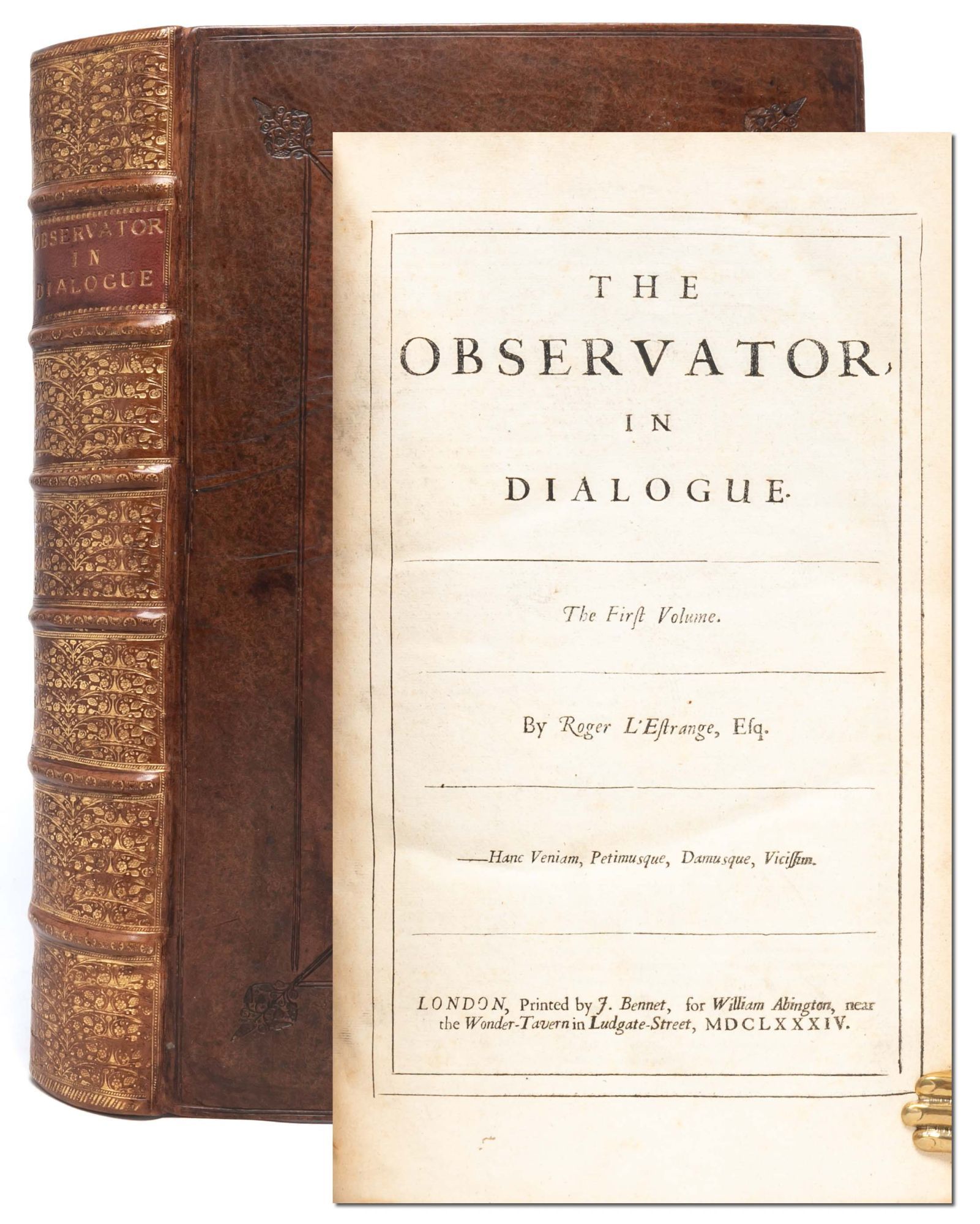
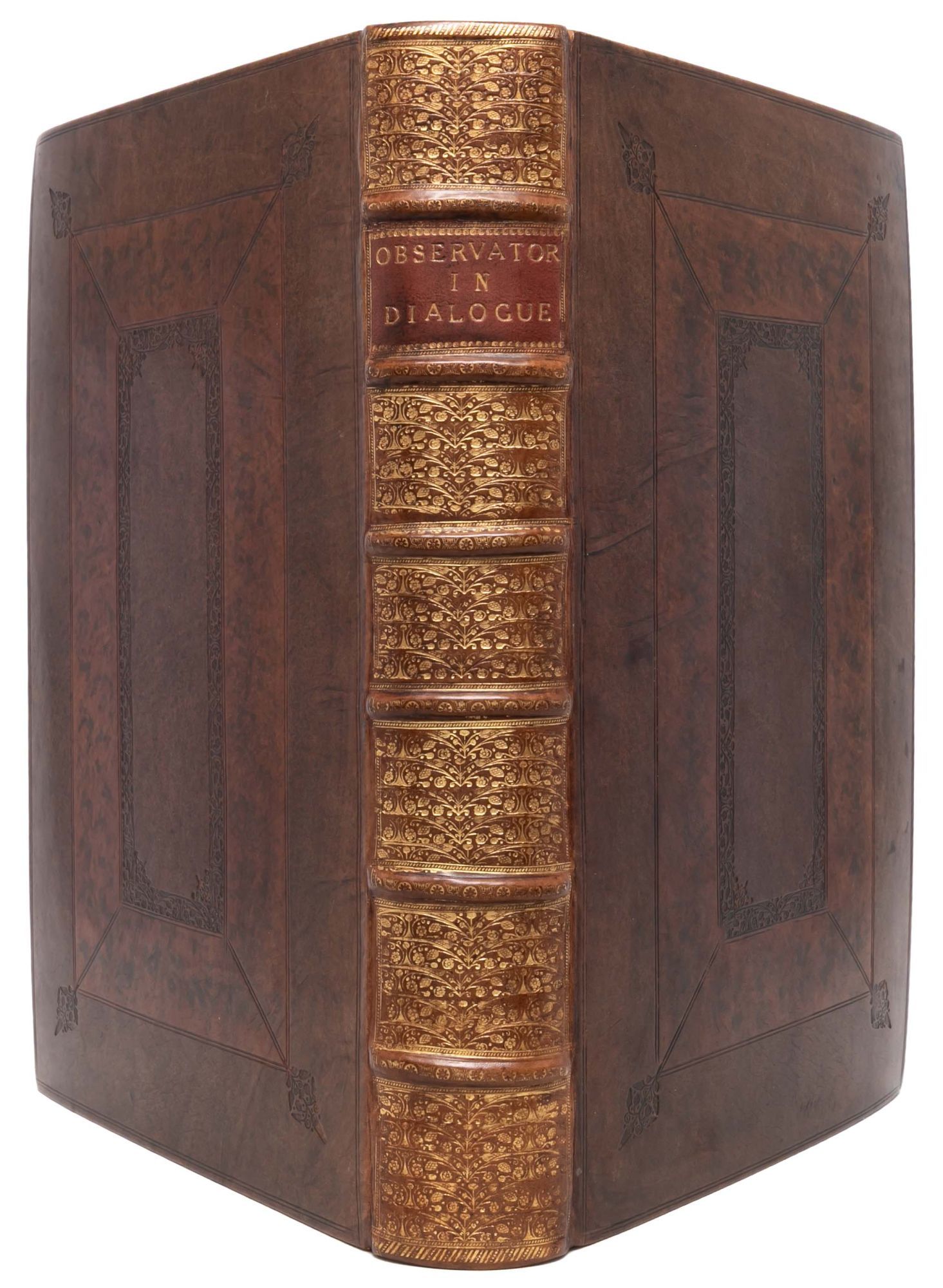
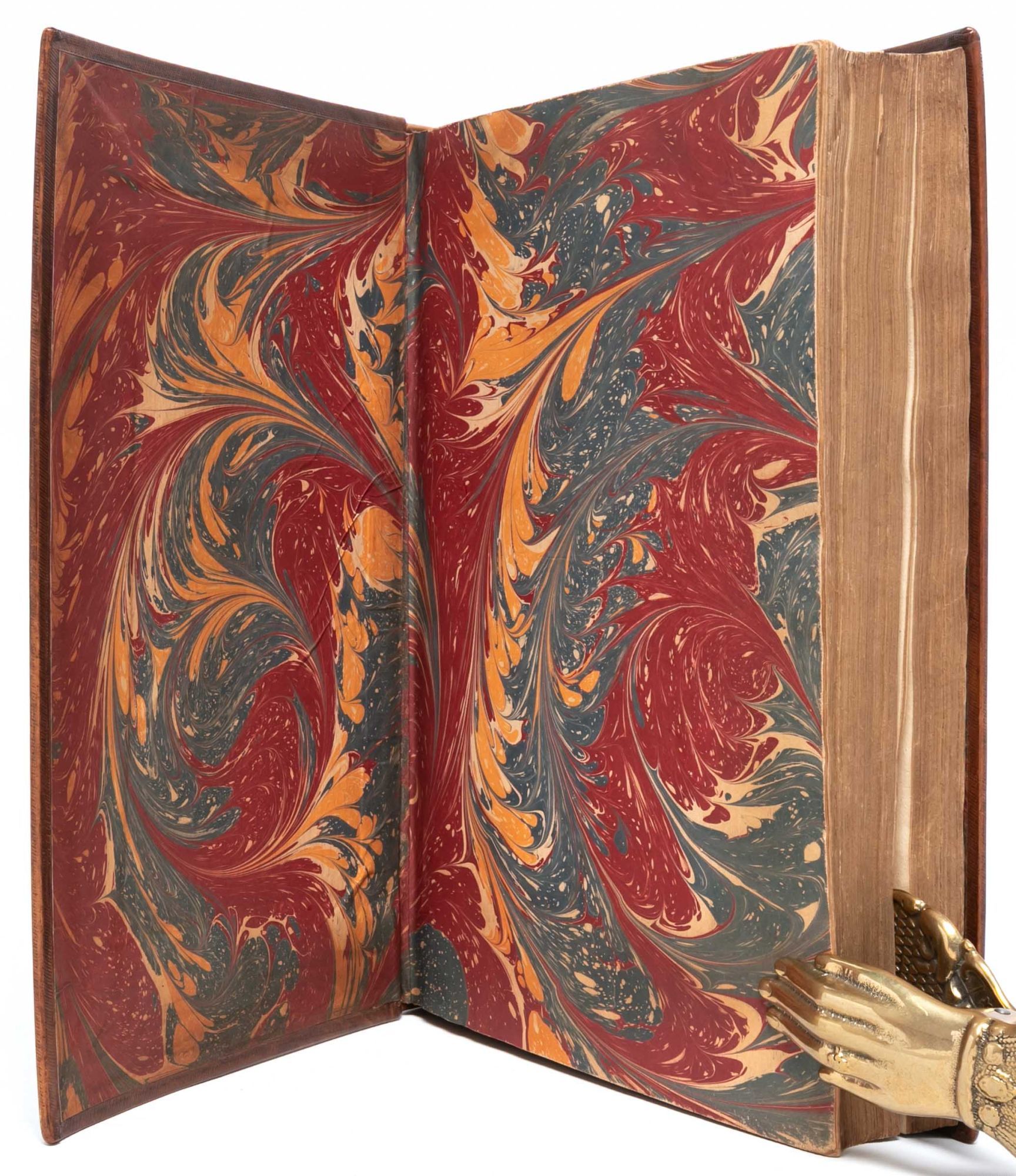
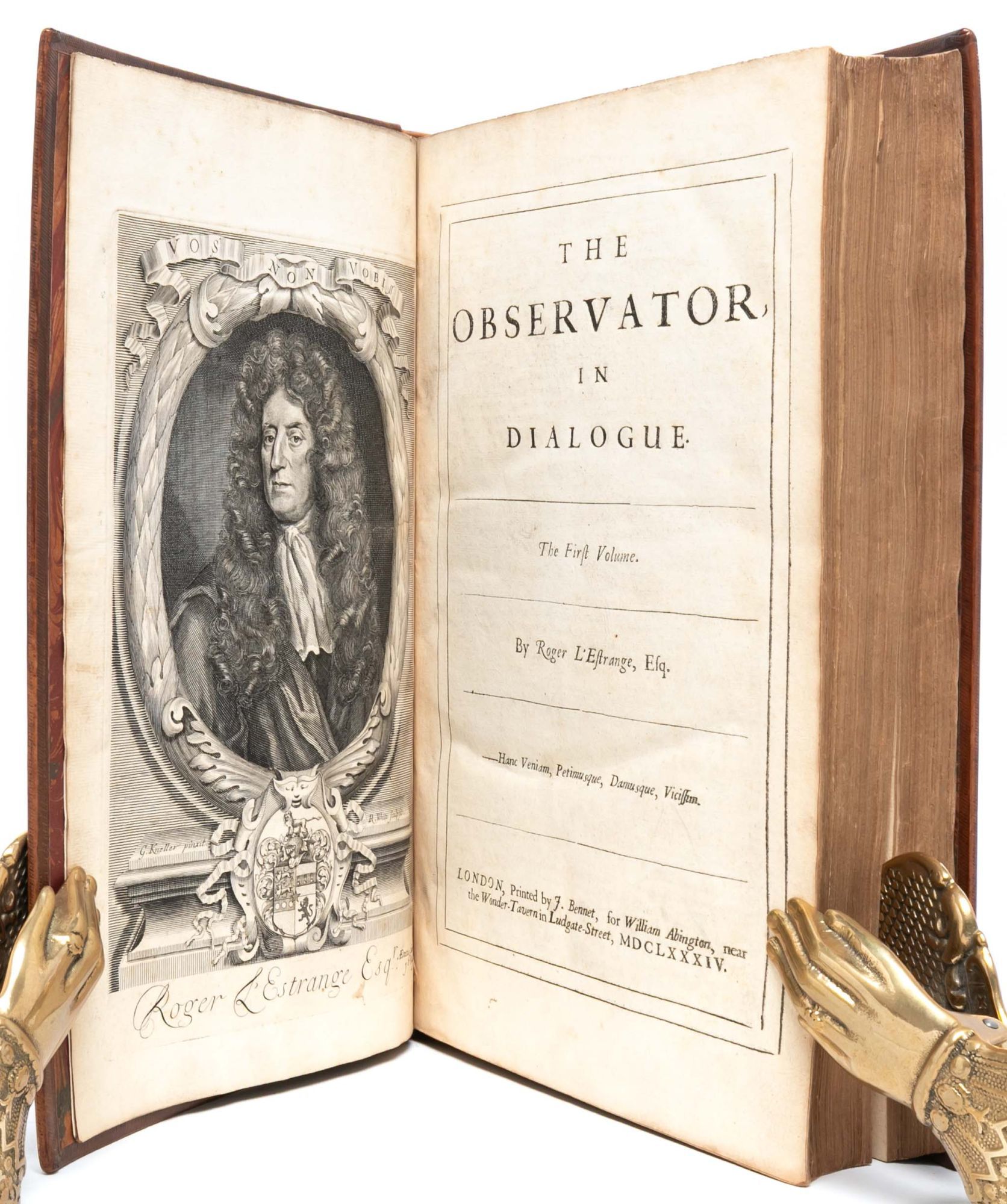
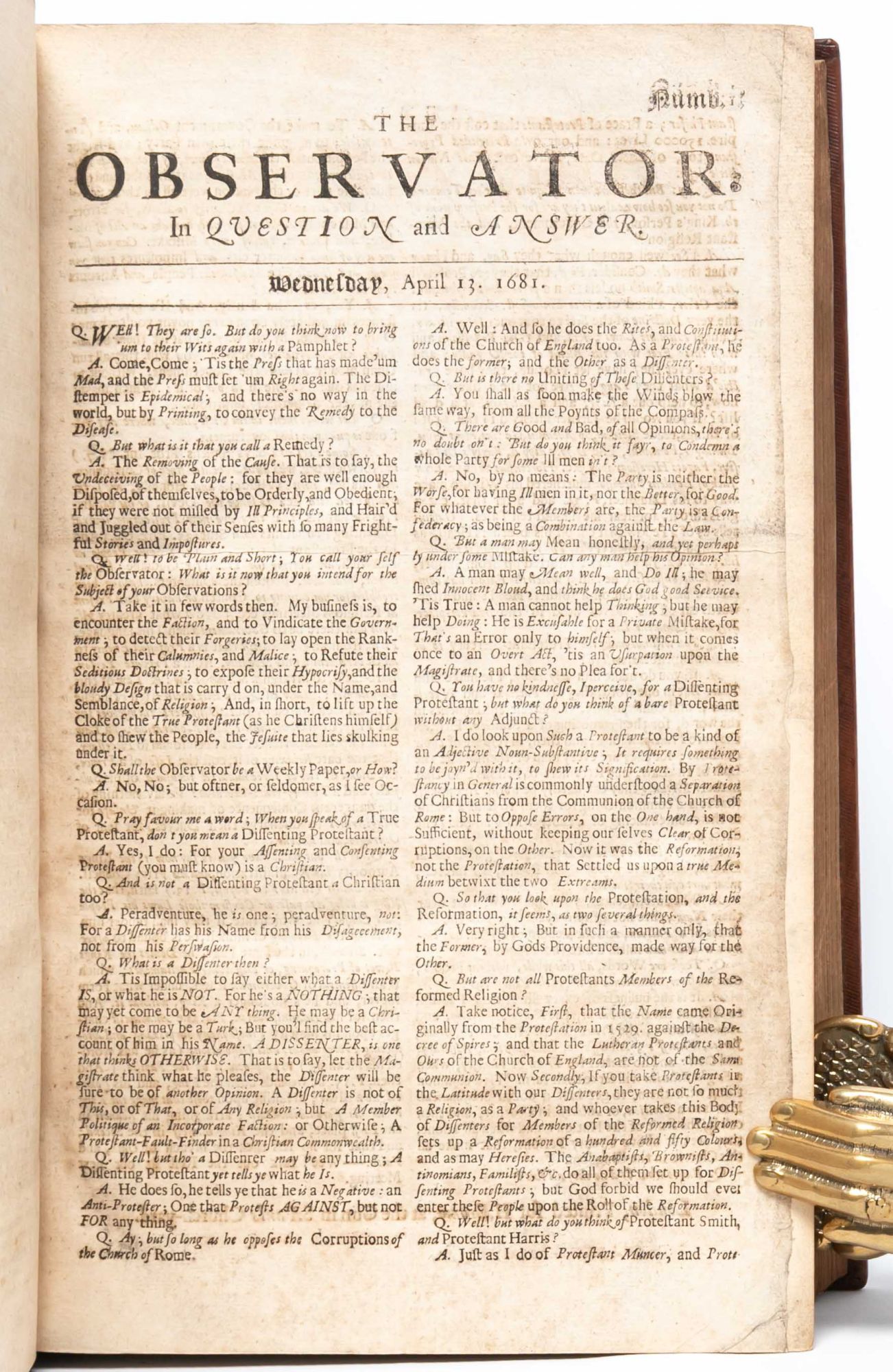
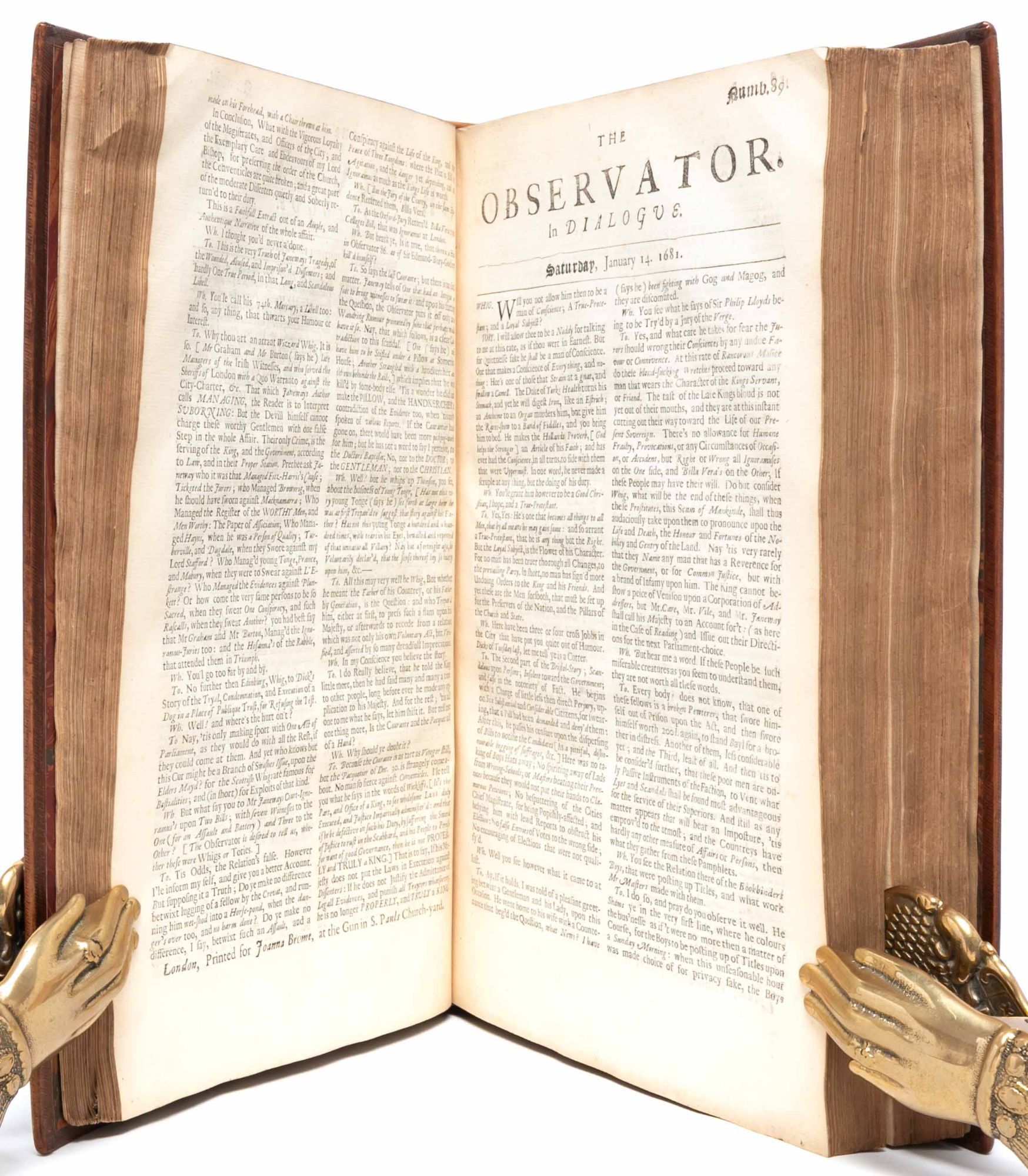
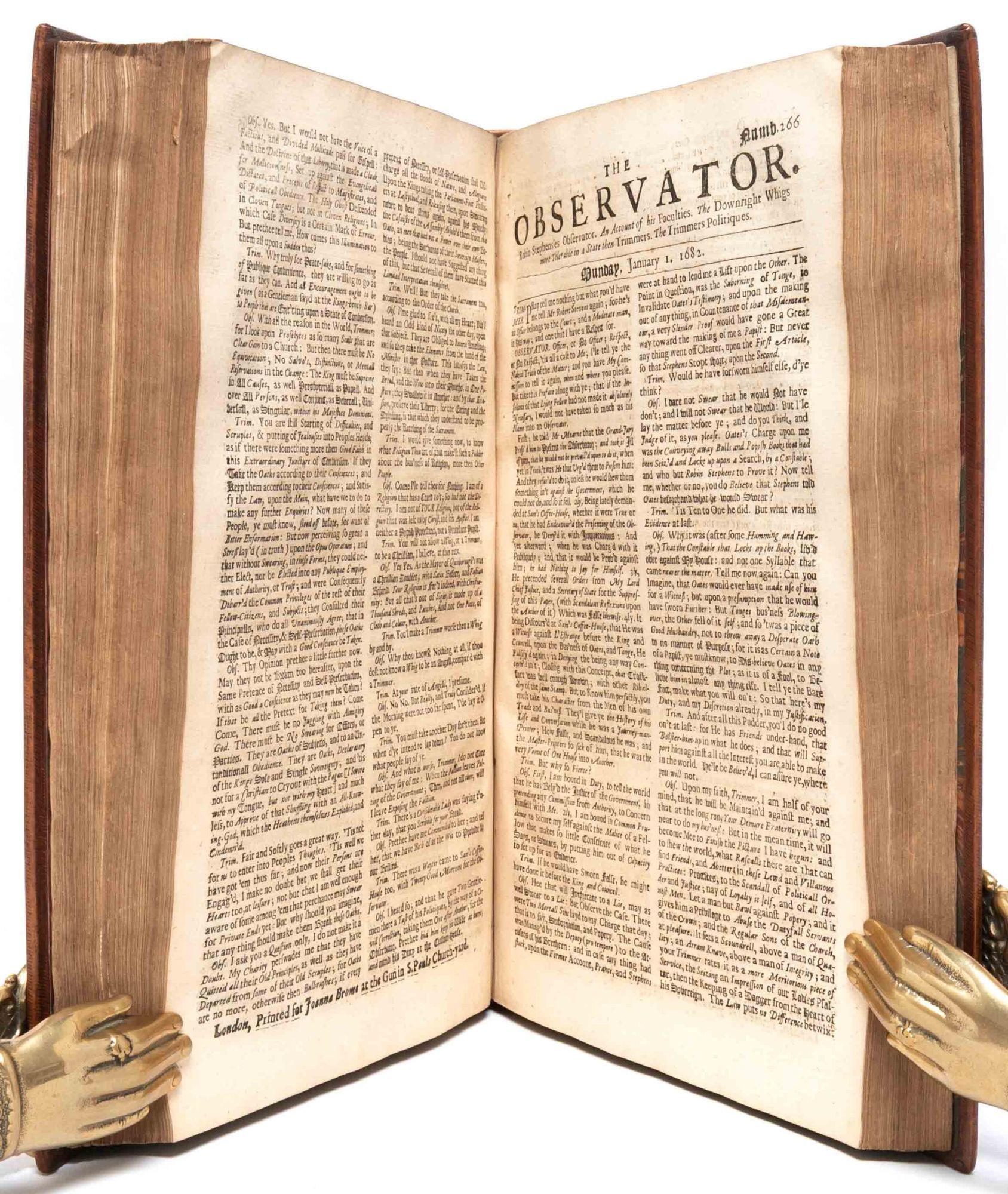
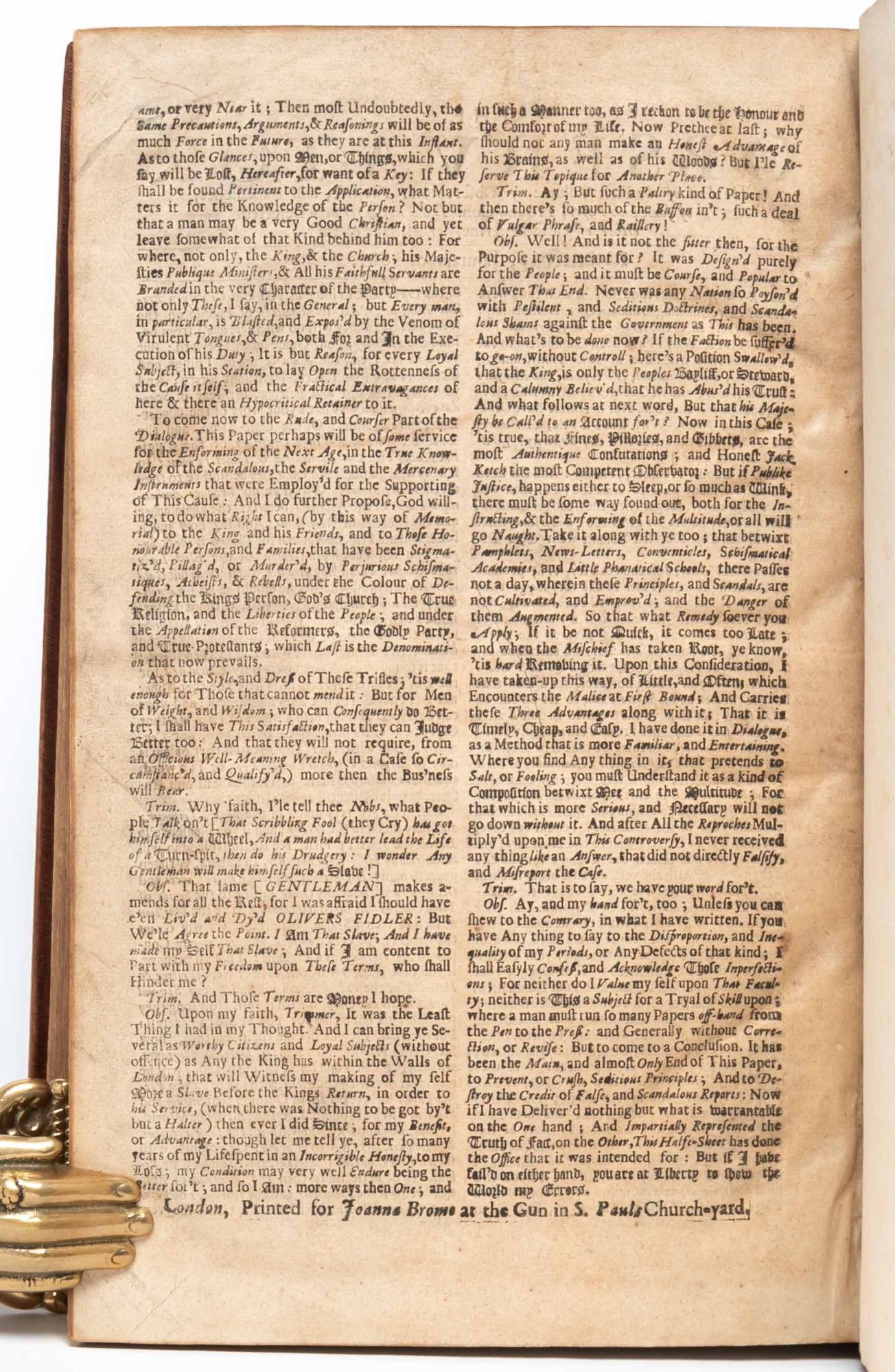
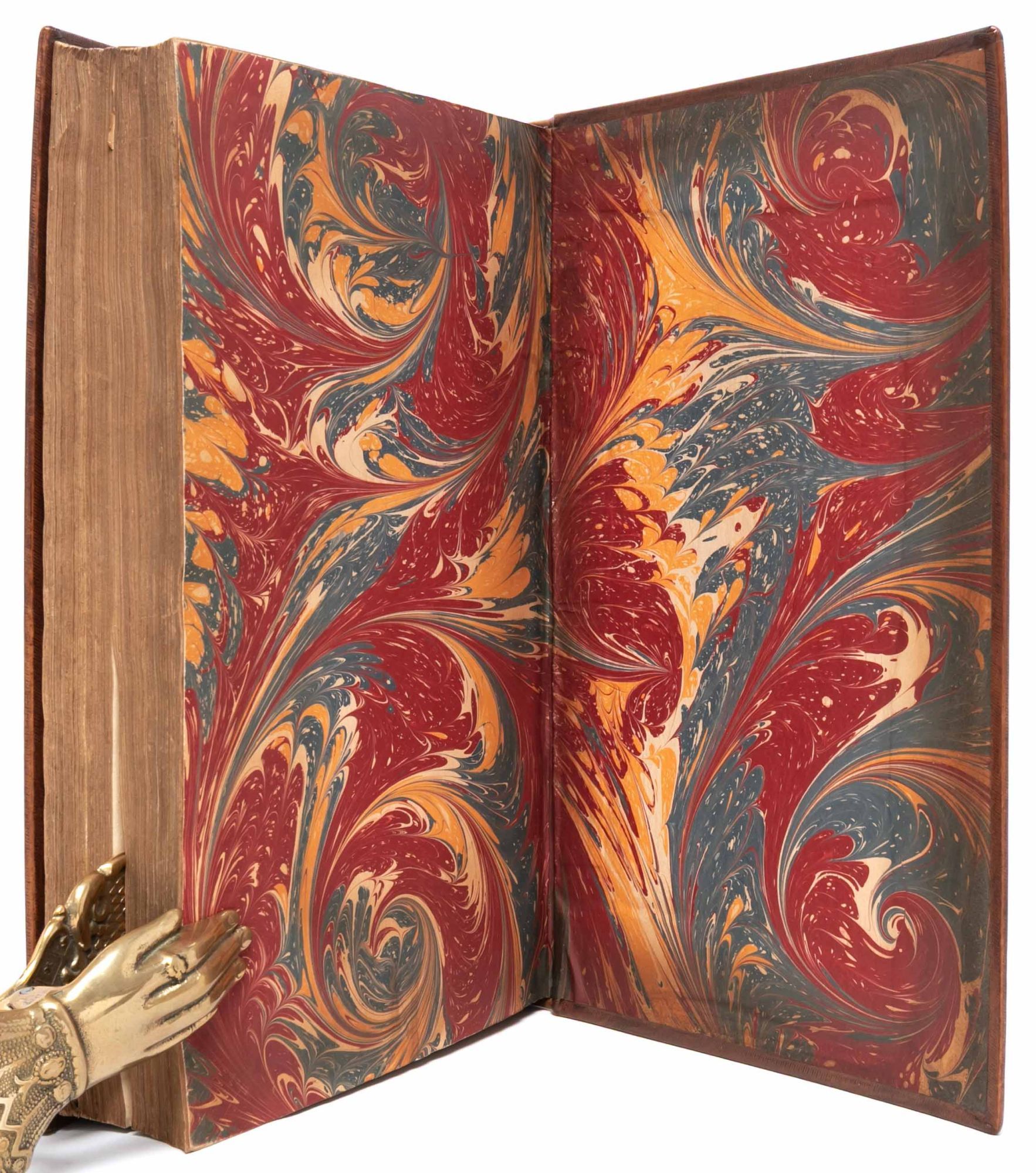
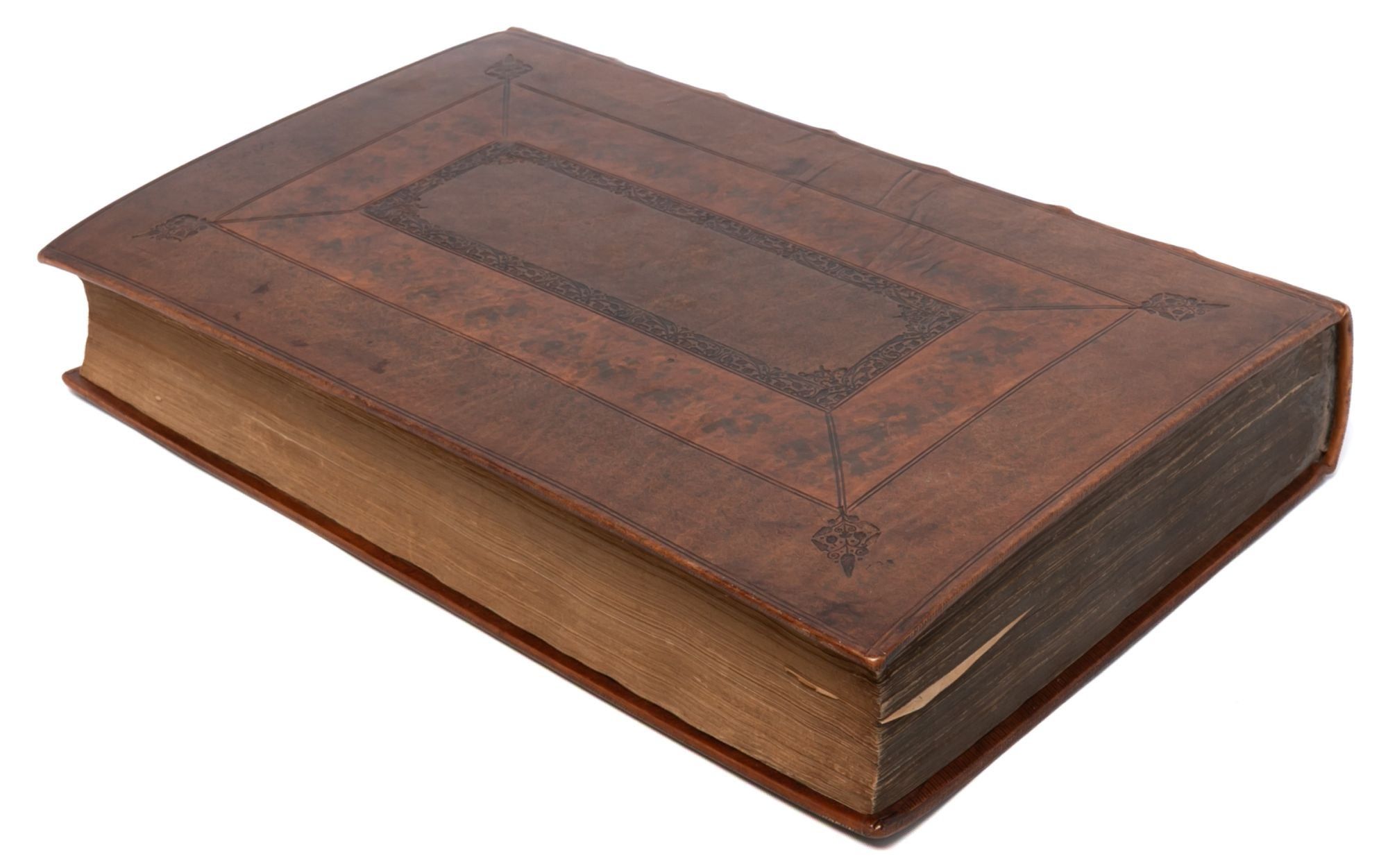
London: Printed by J. Bennett, for William Abington, 1684. First edition. Very Good +. Volume I (of 3) of the first collected edition of The Observator, Nos. 1 (Wednesday, April 13, 1681) to 470 (Wednesday, January 9, 1683). Folio (13 1/8 x 8 1/8 inches; 333 x 207 mm). [2], [4, “To the Reader”], [8, “The Table”], [3, contents], [1, blank] pp. followed by The Observator Nos. 1-470 (unpaginated). Engraved frontispiece portrait of Roger L’Estrange, dated 1684, by R. White after G. Kneller. Handsomely rebound in antique Cambridge-style paneled calf. Covers decoratively ruled and tooled in blind, spine richly tooled in gilt in compartments with six raised bands and red morocco gilt lettering label, board edges and turn-ins decoratively tooled in blind, marbled endpapers. An excellent copy.
The Observator was a newspaper written in the form of a dialogue by Roger L'Estrange, and published from April 13, 1681 to March 9, 1687. There were 470 issues in the first volume (as offered here), 215 issues in the second volume, and 246 issues in the third and last volume. "Rumbustious and vitriolic, satiric and savage, week after week for six years and through two million words, Roger L'Estrange's newspaper, The Observator, corroded the foundations of Whiggery…The Observator was the work of a compulsive writer, a feat of literary endurance…L'Estrange was, said his enemies, the 'scribbler-general of Tory-land'…Its prose hectic, its thoughts haphazard, the Observator lay, its author admitted, somewhere 'betwixt fooling and philosophizing.' It transposed to print the Restoration's fondest verbal facility, raillery, delivering a cascade of libel and abuse, tempered by seriocomic moralizing, and philosophy and political theory reduced to epithets and exclamations...Its deliberate coarseness puts it at an arresting remove from the high eloquence of Dryden. Polite it was not. The Observator was Toryism at its most unbuttoned and vulgar. It was routinely scatological, or, more precisely, urological...The relentless repetitiveness of the Observator is half-redeemed by its inventiveness. The Whigs are not just a faction: they are a 'cabal,' 'consult,' consistory,' 'confederacy,' conspiracy,…' This was politics by thesaurus" (Goldie, in Roger L'Estrange and the Making of Restoration Culture, pp. 67-68).
Roger L'Estrange (1616 - 1704) fought on the Royalist side in the English Civil War. In 1644 he led a conspiracy to deliver the town of Lynn to the king and was sentenced to death as a spy. He escaped and took refuge in Holland. In 1653, he returned to England, and by 1659 he was making his presence as a Royalist known by printing several pamphlets supporting the return of Charles II. As a reward for his propaganda, L'Estrange was appointed Surveyor of the Imprimery (Printing Press) in 1663. Thereafter, also appointed Licenser of the Press, he retained both positions until the lapse of the Licensing of the Press Act in 1679. As Licenser and Surveyor, L’Estrange was charged with the prevention of the publication of dissenting writings, and authorized to search the premises of printers and booksellers on the merest suspicion of dissension. L’Estrange excelled at this, hunting down hidden presses and enlisting peace officers and soldiers to suppress their activities. He soon came to be known as the “Bloodhound of the Press.” He succeeded not only in checking allegedly seditious publications but also in limiting political controversy and reducing debate. Toward the end of 1680, he was forced to flee the country by the political opposition but on his return in 1681 he established The Observator, a single sheet printed in double columns on both sides. It was written in the form of a dialogue between a Whig and a Tory (later Trimmer and Observator), with the bias on the side of the latter. During the six years of its existence, L'Estrange wrote with a consistent fierceness, meeting his enemies with personal attacks characterized by sharp wit. The Glorious Revolution (1688 - 89), in which King James II lost the throne, cost L’Estrange his official post. Accomplished in languages, he afterward supported his wife and himself chiefly by translations of many standard authors, including the lively Fables of Aesop, and other Eminent Mythologists: with Morals and Reflexions (1692). Very Good +.
The Observator was a newspaper written in the form of a dialogue by Roger L'Estrange, and published from April 13, 1681 to March 9, 1687. There were 470 issues in the first volume (as offered here), 215 issues in the second volume, and 246 issues in the third and last volume. "Rumbustious and vitriolic, satiric and savage, week after week for six years and through two million words, Roger L'Estrange's newspaper, The Observator, corroded the foundations of Whiggery…The Observator was the work of a compulsive writer, a feat of literary endurance…L'Estrange was, said his enemies, the 'scribbler-general of Tory-land'…Its prose hectic, its thoughts haphazard, the Observator lay, its author admitted, somewhere 'betwixt fooling and philosophizing.' It transposed to print the Restoration's fondest verbal facility, raillery, delivering a cascade of libel and abuse, tempered by seriocomic moralizing, and philosophy and political theory reduced to epithets and exclamations...Its deliberate coarseness puts it at an arresting remove from the high eloquence of Dryden. Polite it was not. The Observator was Toryism at its most unbuttoned and vulgar. It was routinely scatological, or, more precisely, urological...The relentless repetitiveness of the Observator is half-redeemed by its inventiveness. The Whigs are not just a faction: they are a 'cabal,' 'consult,' consistory,' 'confederacy,' conspiracy,…' This was politics by thesaurus" (Goldie, in Roger L'Estrange and the Making of Restoration Culture, pp. 67-68).
Roger L'Estrange (1616 - 1704) fought on the Royalist side in the English Civil War. In 1644 he led a conspiracy to deliver the town of Lynn to the king and was sentenced to death as a spy. He escaped and took refuge in Holland. In 1653, he returned to England, and by 1659 he was making his presence as a Royalist known by printing several pamphlets supporting the return of Charles II. As a reward for his propaganda, L'Estrange was appointed Surveyor of the Imprimery (Printing Press) in 1663. Thereafter, also appointed Licenser of the Press, he retained both positions until the lapse of the Licensing of the Press Act in 1679. As Licenser and Surveyor, L’Estrange was charged with the prevention of the publication of dissenting writings, and authorized to search the premises of printers and booksellers on the merest suspicion of dissension. L’Estrange excelled at this, hunting down hidden presses and enlisting peace officers and soldiers to suppress their activities. He soon came to be known as the “Bloodhound of the Press.” He succeeded not only in checking allegedly seditious publications but also in limiting political controversy and reducing debate. Toward the end of 1680, he was forced to flee the country by the political opposition but on his return in 1681 he established The Observator, a single sheet printed in double columns on both sides. It was written in the form of a dialogue between a Whig and a Tory (later Trimmer and Observator), with the bias on the side of the latter. During the six years of its existence, L'Estrange wrote with a consistent fierceness, meeting his enemies with personal attacks characterized by sharp wit. The Glorious Revolution (1688 - 89), in which King James II lost the throne, cost L’Estrange his official post. Accomplished in languages, he afterward supported his wife and himself chiefly by translations of many standard authors, including the lively Fables of Aesop, and other Eminent Mythologists: with Morals and Reflexions (1692). Very Good +.