

The Czarina; An Historical Romance of the Court of Russia (in 3 vols.)
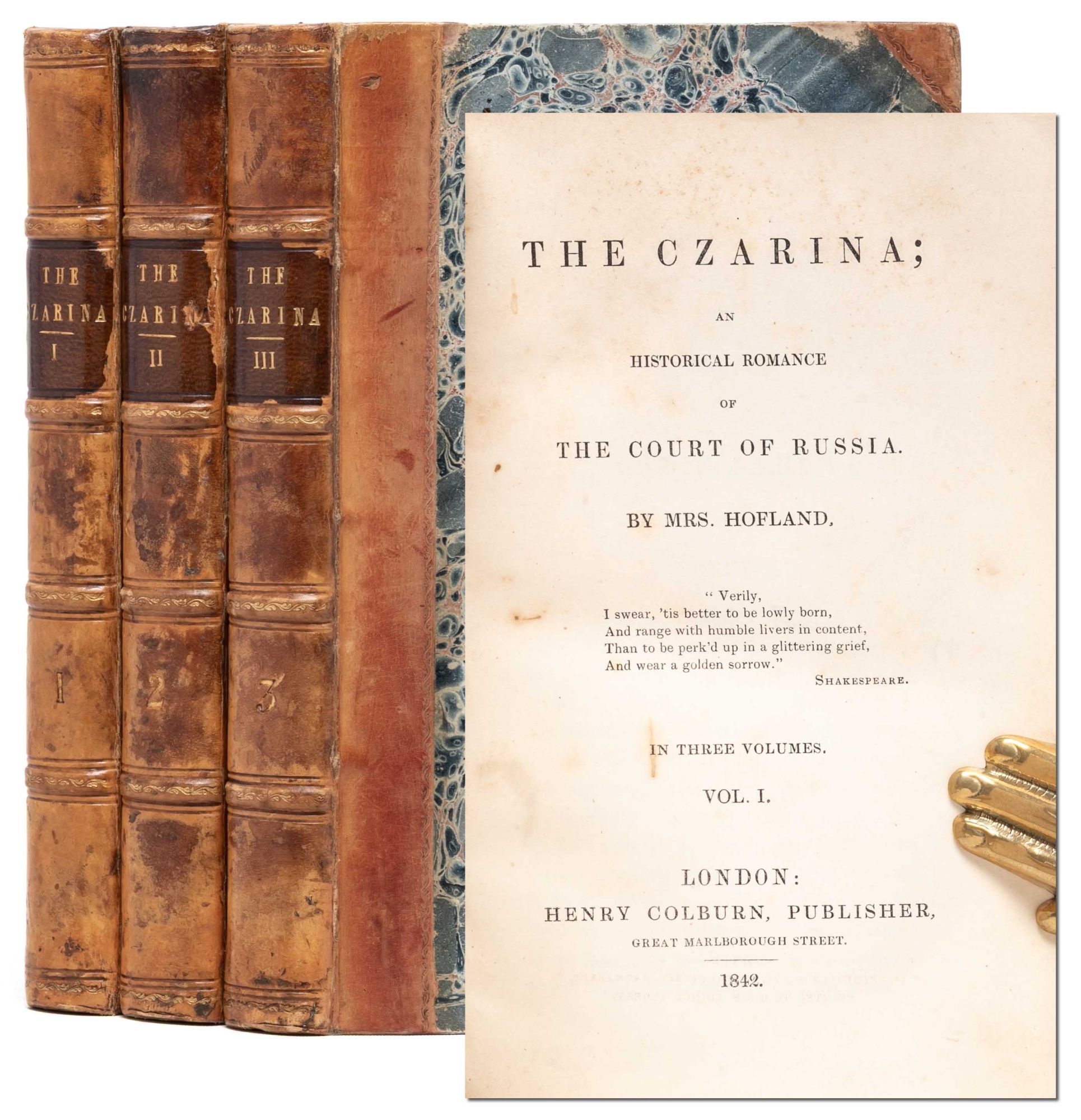
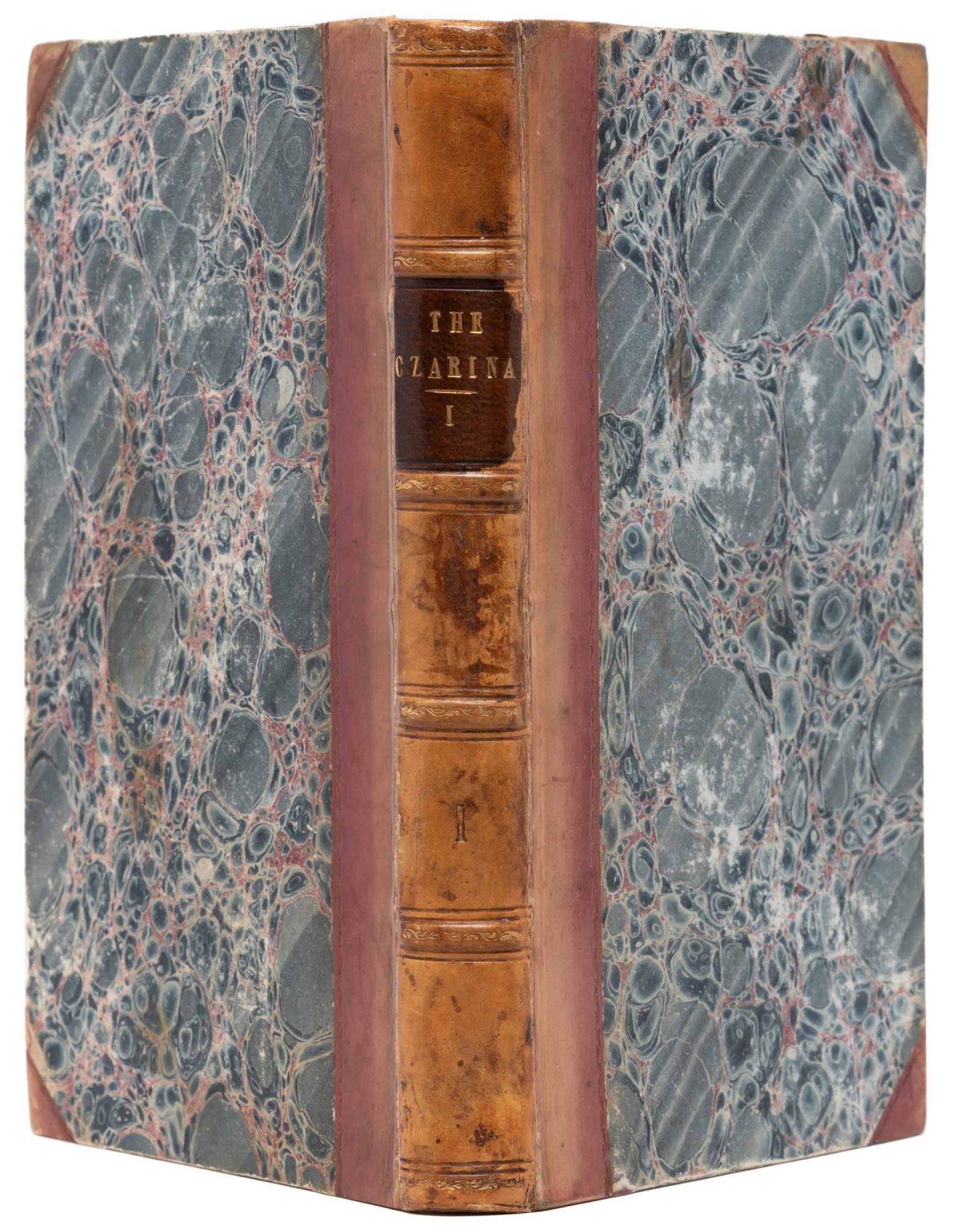
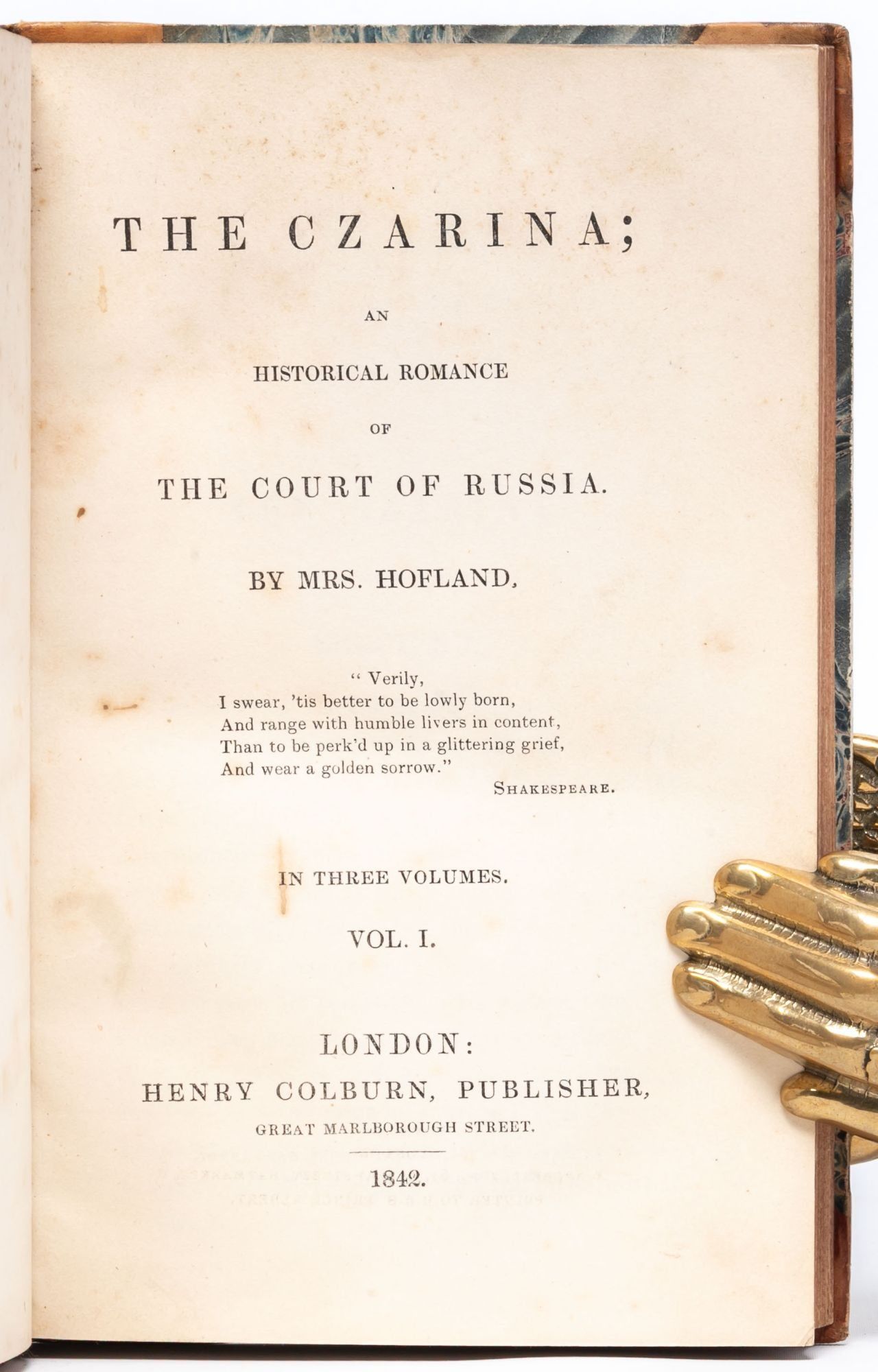
- London: Henry Colburn, 1842
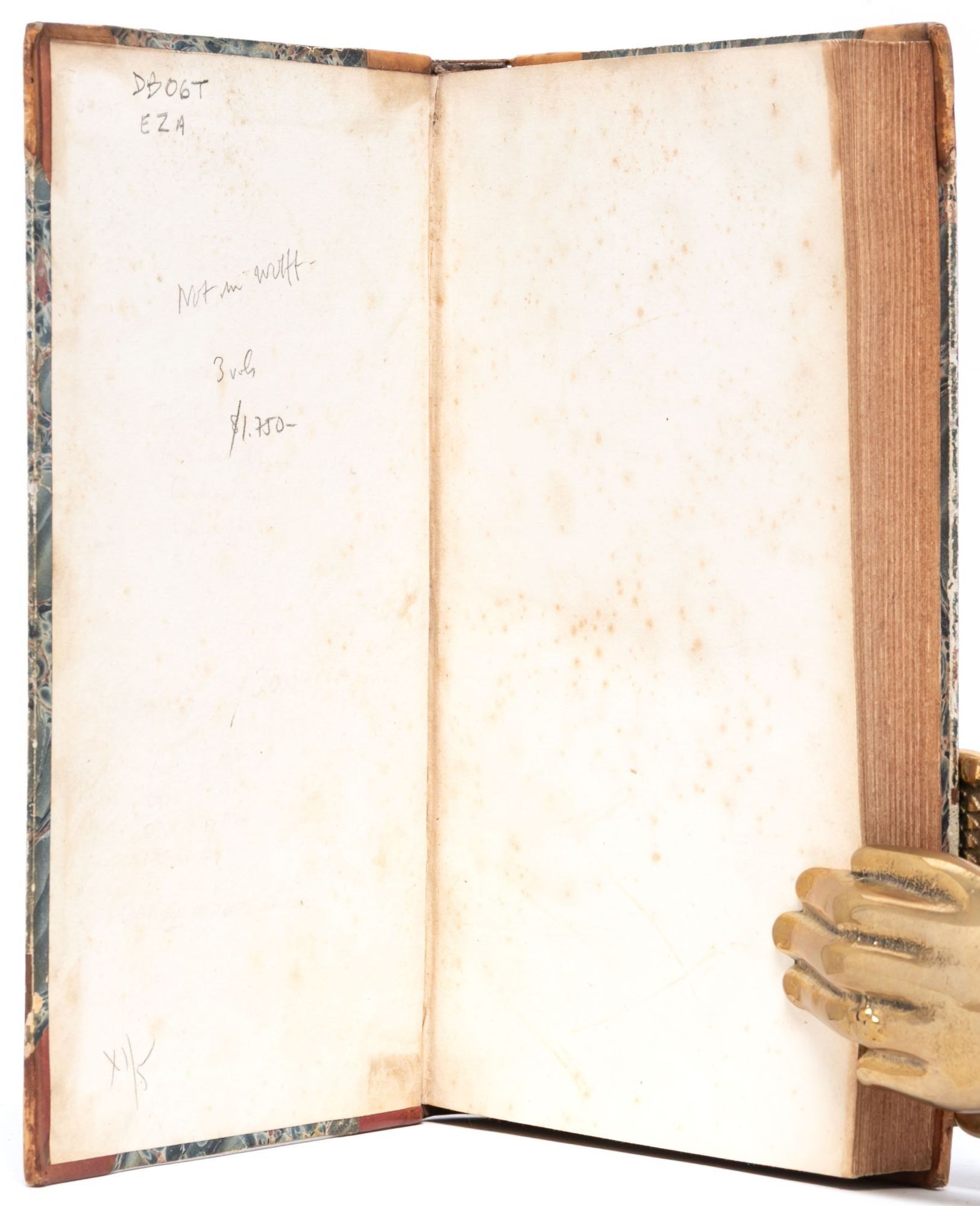
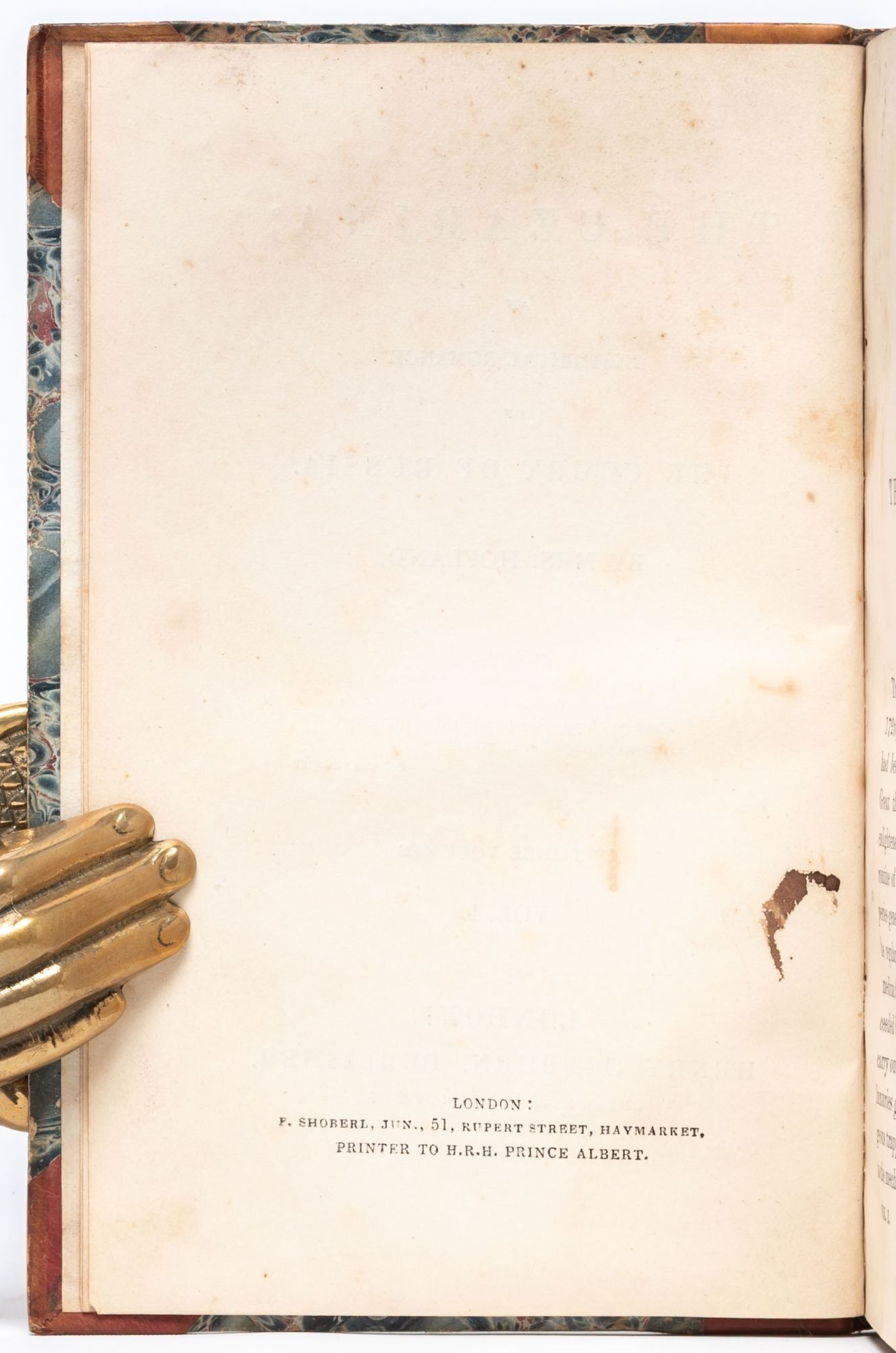
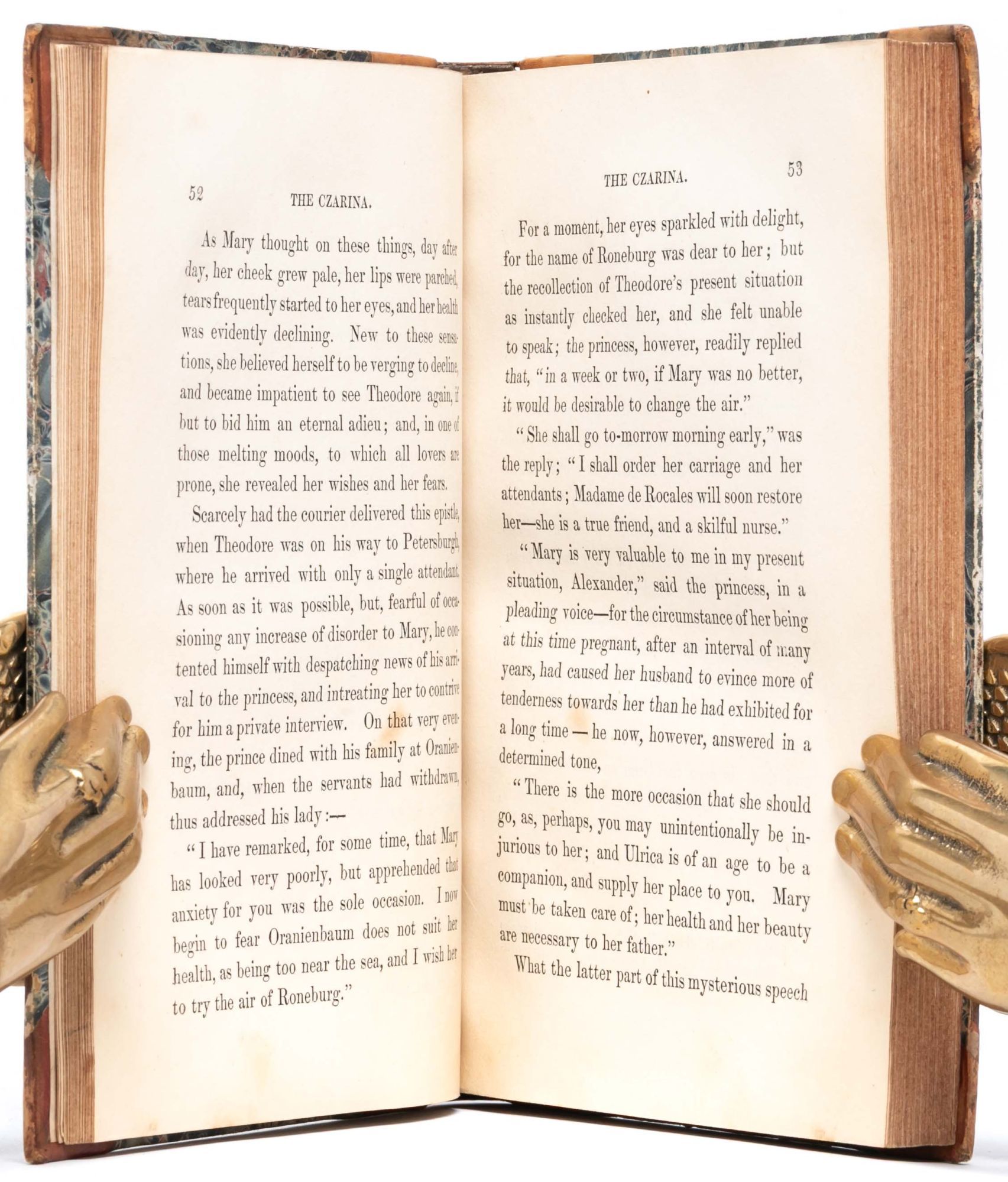
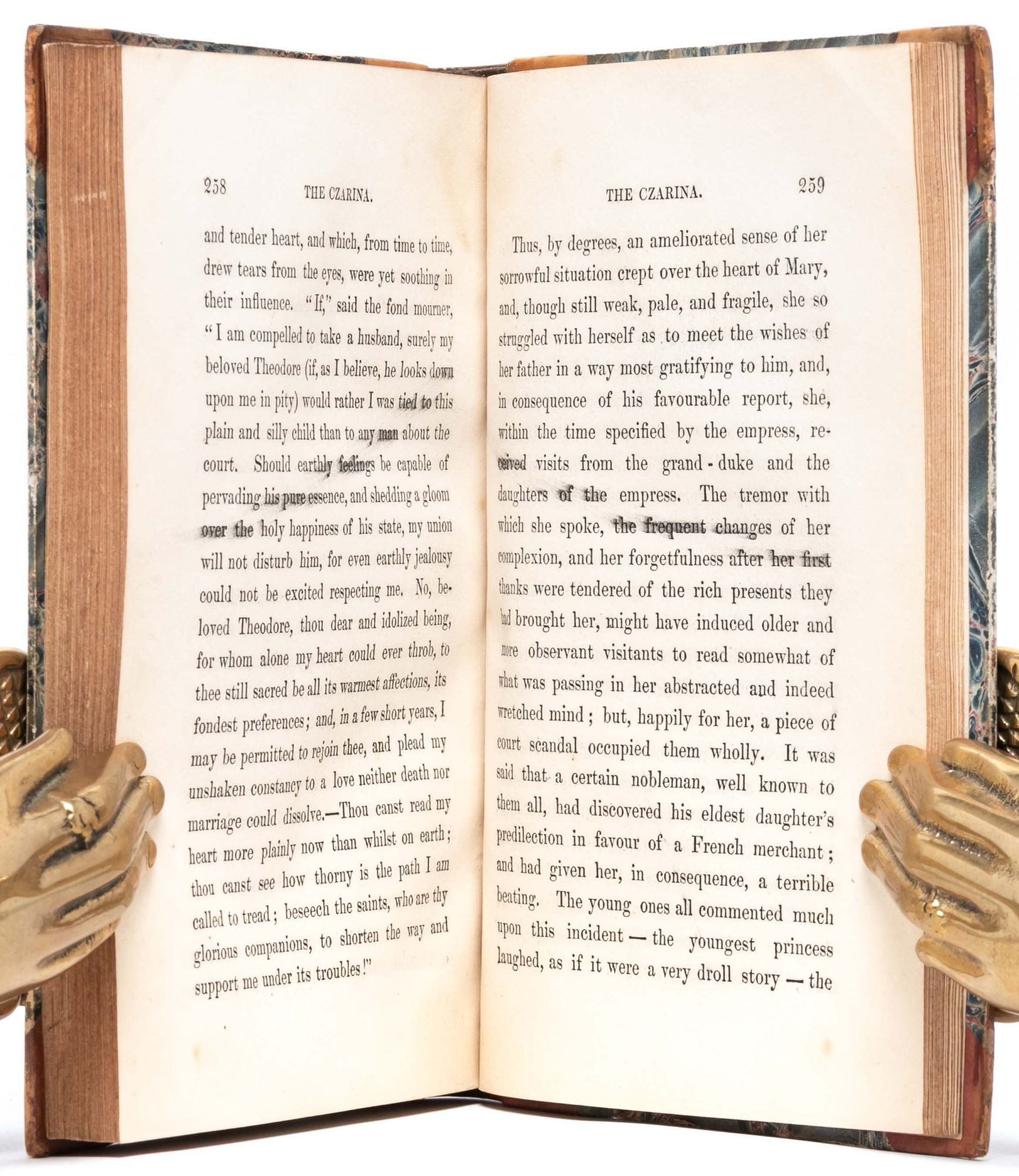
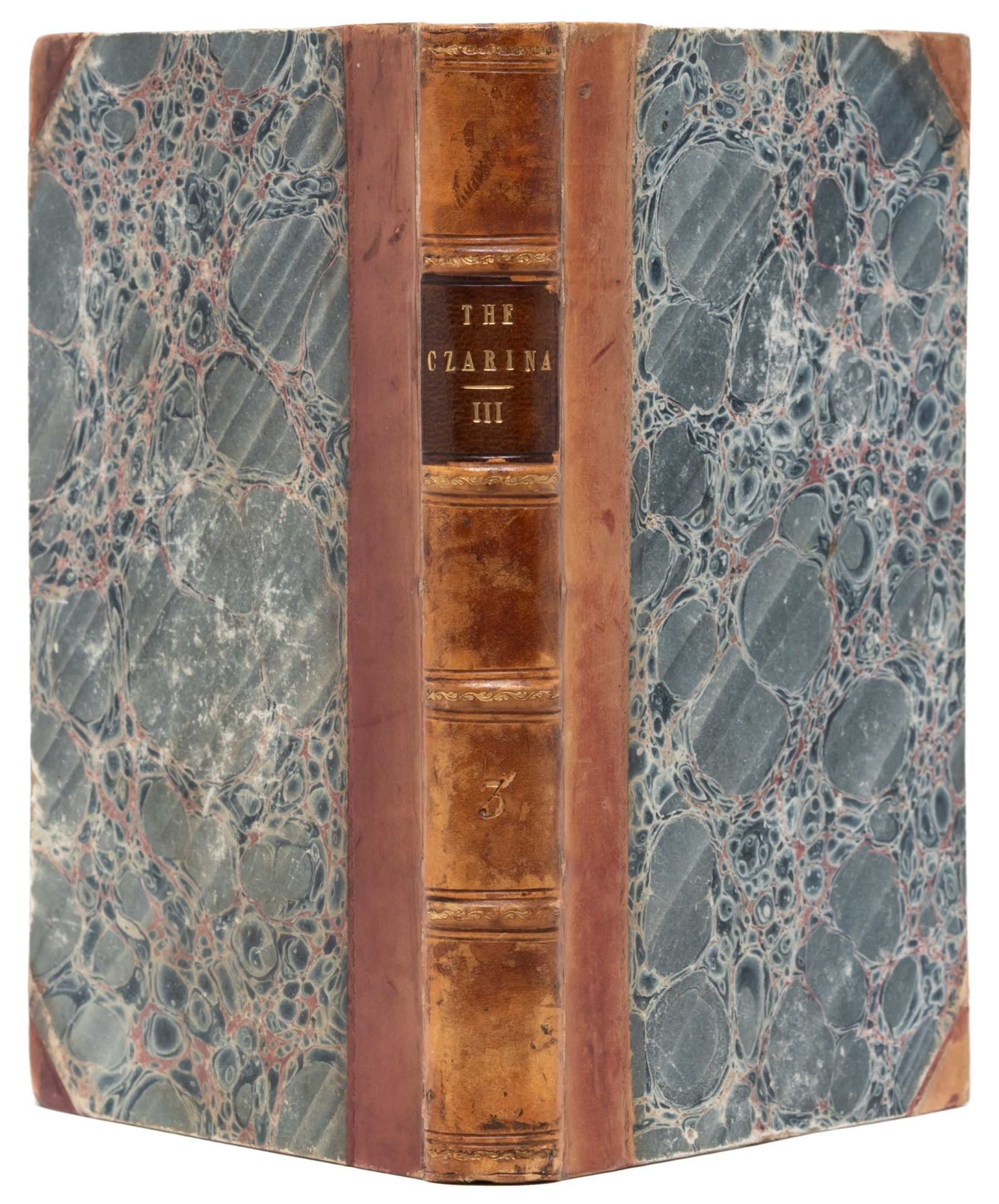
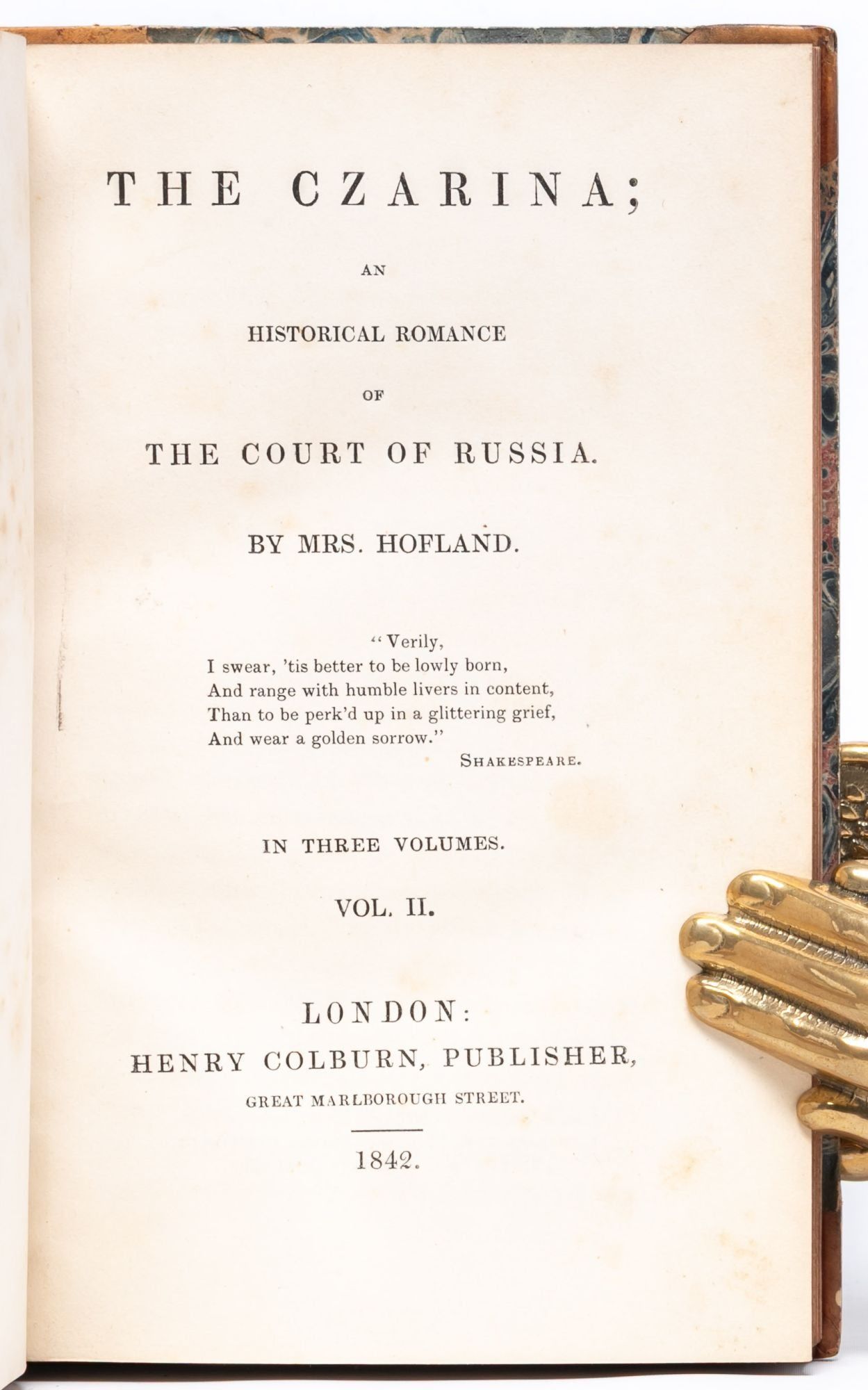
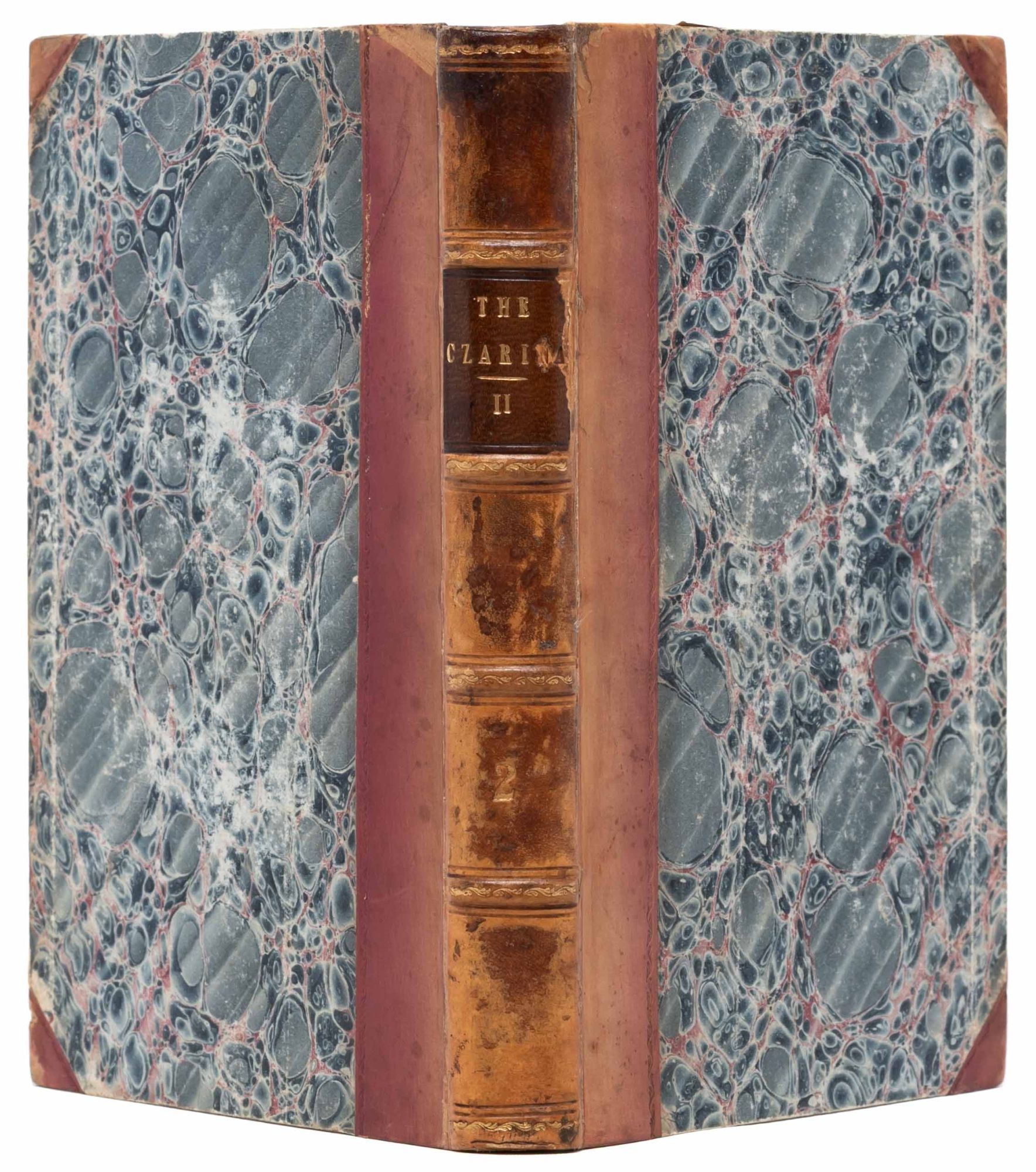
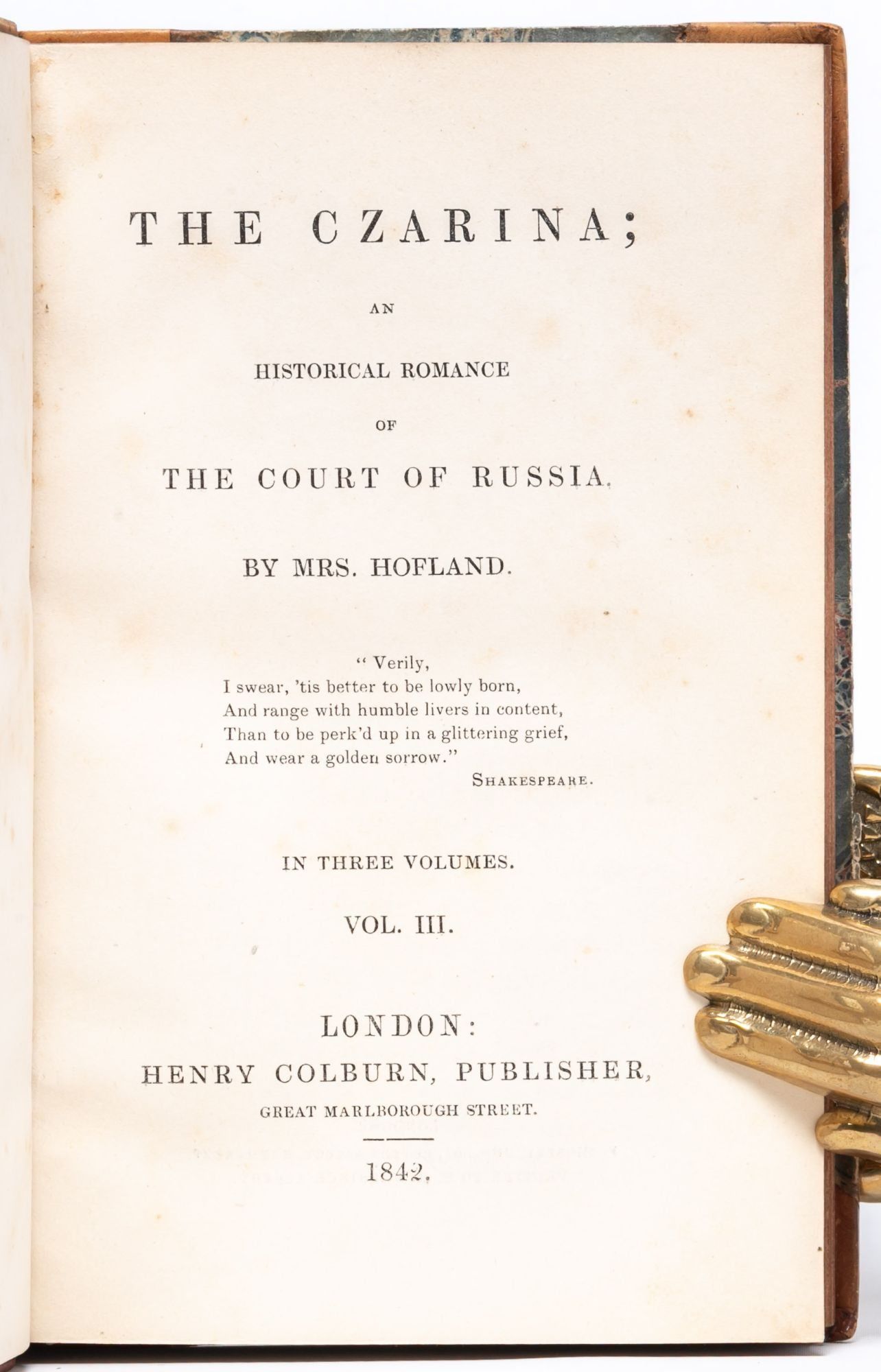
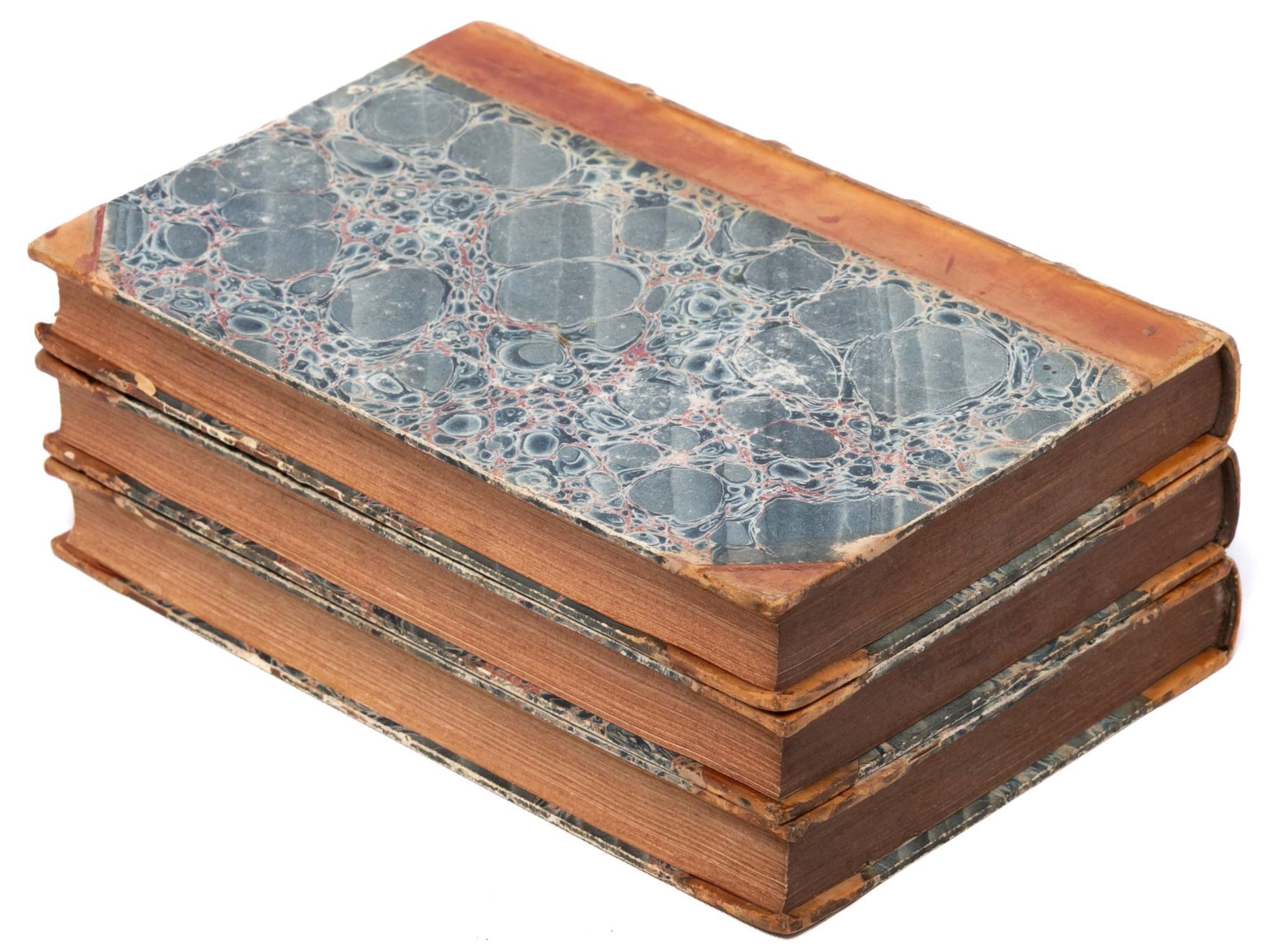
London: Henry Colburn, 1842. First edition. Three twelvemo volumes (7 5/16 x 4 5/8 inches; 186 x 118 mm.). [2], 302; [2], 317, [1, blank]; [2], 325, [1, blank] pp. Contemporary half plum calf, decoratively ruled in blind, over marbled boards. Spines decoratively ruled and numbered in gilt and ruled in blind with four raised bands and brown morocco gilt lettering labels, edges sprinkled red. Spines faded to brown, corners lightly rubbed, spine labels a tiny bit chipped. Some light foxing and browning. Volume I with a few ink smudges on the verso of the title and on the first page of text and a printing flaw (slight ink smear to a few words) on pp. 258 and 259. A Very Good set.
Prolific novelist and poet Barbara Hofland's (1770 - 1844) life was shaped by tragedy and resilience, which were closely tied to her writings. Orphaned at three, widowed twice, and predeceased by her only child, she nevertheless determined to support herself through education and publication. The founder of the girls' boarding school Grove House, Harrogate (a forerunner to Harrogate College), she also turned out children's books and triple-decker Evangelical romances at a fantastic rate. Both her youth and adult fiction had in common an emphasis on Christian people learning to find their place in the world in order to earn their just rewards. Among her later works was the present, a historical romance set in the eighteenth-century reign of Catherine the Great. It is a work that notably praises the joy and good judgement that Catherine infused into the court as a new monarch; and it places an Evangelical emphasis on every citizen knowing their role, doing their duty as that position prescribes, and thus contributing to the continued balance of life. "Catherine well knew that the rich man's luxuries give the poor man bread; that the gorgeous trappings of the great furnish the necessities to the mechanic's cottage; that the inventions of Genius adorning palaces...at once add refinement to wealth and give reward to merit." Hofland was, through works like this, among the significant 19th century women popularizing the Evangelical novel, which "sold hundred of thousands of copies, were widely reviewed and read on both sides of the Atlantic and translated into multiple languages" despite being less studied or read today (Tucker). The work of Hofland and her sister writers Hannah More, Charlotte Elizabeth Tonna, and Mary Martha Sherwood has recently "been criticized for reproducing patriarchal power schemes and knowingly or unknowingly working hand-in-hand with dominant political and economic interests to keep women, children, and the poor in their place" (Tucker); but this belies the critical role Evangelism played in making women's writing and publication possible. Thus, The Czarina is more than a historical romance, where marriage plots help individuals find their social, economic, and religious places. It is also a document of a complex, contradictory, and important historical moment for women writers.
Block, pp. 109-110. CBEL III, 734. CBEL (3) IV, 934. Not in Sadleir or in Wolff.
Prolific novelist and poet Barbara Hofland's (1770 - 1844) life was shaped by tragedy and resilience, which were closely tied to her writings. Orphaned at three, widowed twice, and predeceased by her only child, she nevertheless determined to support herself through education and publication. The founder of the girls' boarding school Grove House, Harrogate (a forerunner to Harrogate College), she also turned out children's books and triple-decker Evangelical romances at a fantastic rate. Both her youth and adult fiction had in common an emphasis on Christian people learning to find their place in the world in order to earn their just rewards. Among her later works was the present, a historical romance set in the eighteenth-century reign of Catherine the Great. It is a work that notably praises the joy and good judgement that Catherine infused into the court as a new monarch; and it places an Evangelical emphasis on every citizen knowing their role, doing their duty as that position prescribes, and thus contributing to the continued balance of life. "Catherine well knew that the rich man's luxuries give the poor man bread; that the gorgeous trappings of the great furnish the necessities to the mechanic's cottage; that the inventions of Genius adorning palaces...at once add refinement to wealth and give reward to merit." Hofland was, through works like this, among the significant 19th century women popularizing the Evangelical novel, which "sold hundred of thousands of copies, were widely reviewed and read on both sides of the Atlantic and translated into multiple languages" despite being less studied or read today (Tucker). The work of Hofland and her sister writers Hannah More, Charlotte Elizabeth Tonna, and Mary Martha Sherwood has recently "been criticized for reproducing patriarchal power schemes and knowingly or unknowingly working hand-in-hand with dominant political and economic interests to keep women, children, and the poor in their place" (Tucker); but this belies the critical role Evangelism played in making women's writing and publication possible. Thus, The Czarina is more than a historical romance, where marriage plots help individuals find their social, economic, and religious places. It is also a document of a complex, contradictory, and important historical moment for women writers.
Block, pp. 109-110. CBEL III, 734. CBEL (3) IV, 934. Not in Sadleir or in Wolff.