

The Sweet Flypaper of Life
- New York: Simon and Schuster, 1955
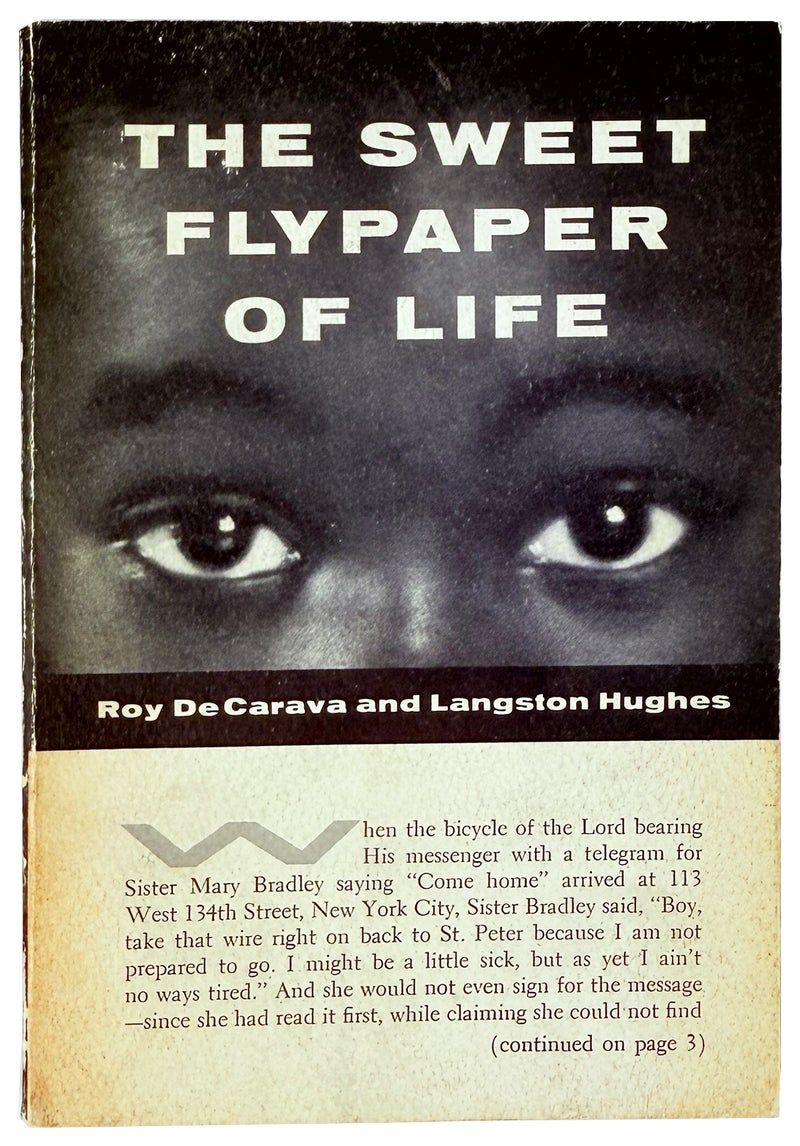
New York: Simon and Schuster, 1955. Very Good. New York: Simon and Schuster, 1955. First Edition, Wrapper Issue. 12mo (18cm.); publisher's photo-illustrated card wrappers; 98pp.; photographic illus. throughout. Light wear along edges and spine with some general rubbing. Binding sound; pages unmarked; a Very Good copy.
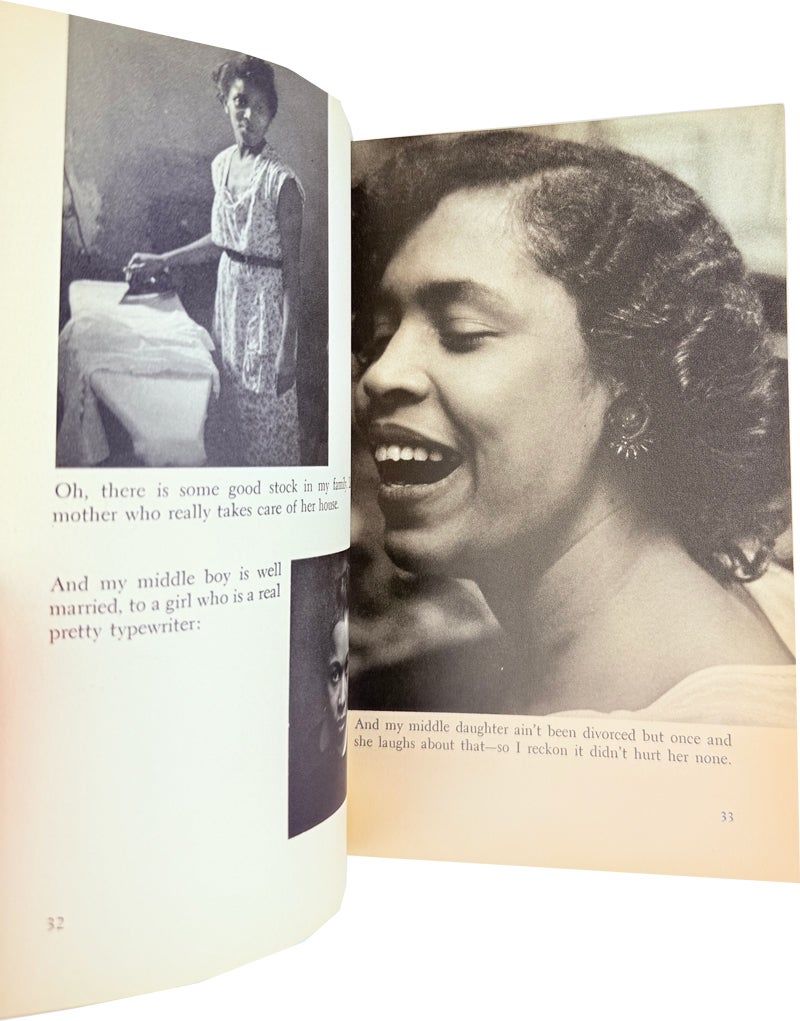
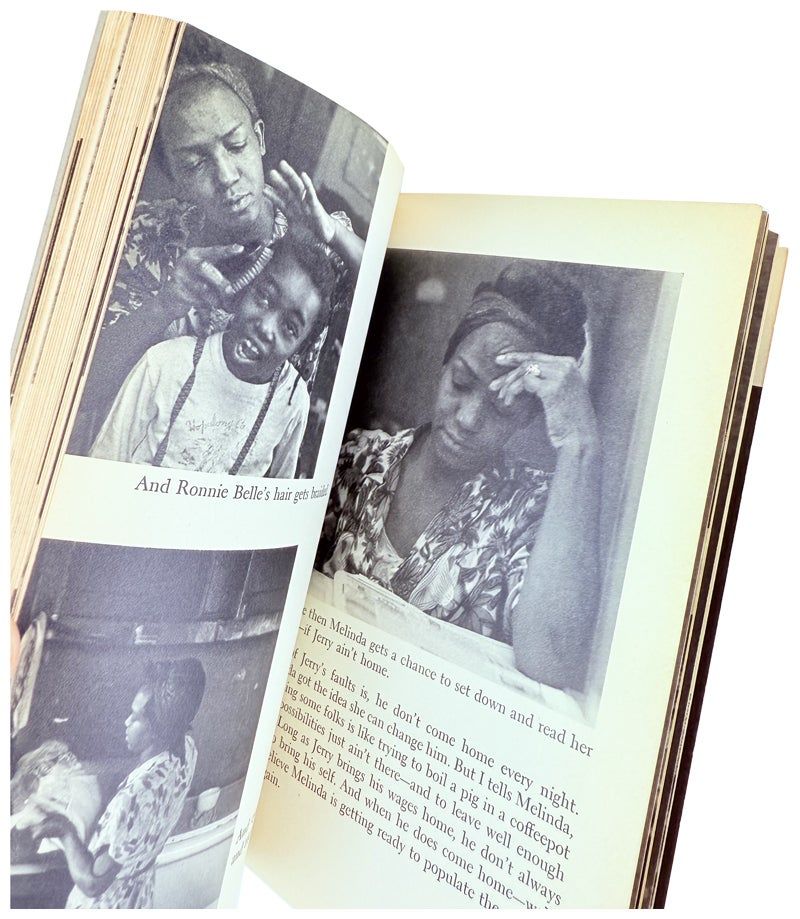
Despite the misleadingly poor print quality, "The Sweet Flypaper of Life" has gained canonical status as one of the great photo book collaborations of the 20th century. In the early 1950s DeCarava was the first Black photographer awarded a Guggenheim Fellowship, spending the year in his childhood home of Harlem capturing its inhabitants both in the private and public sphere.
In 1954 he brought a portfolio of examples from this project to the more established poet Langston Hughes, who would provide the accompanying text for this collaborative work. Langston's piece adopts the point of view of the fictitious Sister Mary Bradley, an elderly Black grandmother of ten living in Harlem in the wake of the Brown v. Board of Education Supreme Court decision. Her stream-of-consciousness thoughts on her immediate surroundings, married with DeCarava's photographs, proved an instant commercial and critical success.
In the earliest review from the "New York Times" Gilbert Millstein argued "It is probably hortatory to say so, but the chances are it could accomplish a lot more about race relations than many pounds of committee reports." Orville Prescott's Christmas Eve eve review similarly extolled the publication, concluding "I cannot recall any other book in which the two elements of pictures and words were so artfully mixed." Unsurprisingly the commercial success of this small work allowed DeCarava to quit his job for good and devote the rest of his career to photography, much to our lasting benefit.
Reference: Langston Hughes: The Contemporary Reviews (1997), pp. 466 & 472.
Despite the misleadingly poor print quality, "The Sweet Flypaper of Life" has gained canonical status as one of the great photo book collaborations of the 20th century. In the early 1950s DeCarava was the first Black photographer awarded a Guggenheim Fellowship, spending the year in his childhood home of Harlem capturing its inhabitants both in the private and public sphere.
In 1954 he brought a portfolio of examples from this project to the more established poet Langston Hughes, who would provide the accompanying text for this collaborative work. Langston's piece adopts the point of view of the fictitious Sister Mary Bradley, an elderly Black grandmother of ten living in Harlem in the wake of the Brown v. Board of Education Supreme Court decision. Her stream-of-consciousness thoughts on her immediate surroundings, married with DeCarava's photographs, proved an instant commercial and critical success.
In the earliest review from the "New York Times" Gilbert Millstein argued "It is probably hortatory to say so, but the chances are it could accomplish a lot more about race relations than many pounds of committee reports." Orville Prescott's Christmas Eve eve review similarly extolled the publication, concluding "I cannot recall any other book in which the two elements of pictures and words were so artfully mixed." Unsurprisingly the commercial success of this small work allowed DeCarava to quit his job for good and devote the rest of his career to photography, much to our lasting benefit.
Reference: Langston Hughes: The Contemporary Reviews (1997), pp. 466 & 472.