

The Time Machine

- vii, 216, [2, blank], [6, ads] pp. 1 vols. 12mo
- New York: Holt, 1895
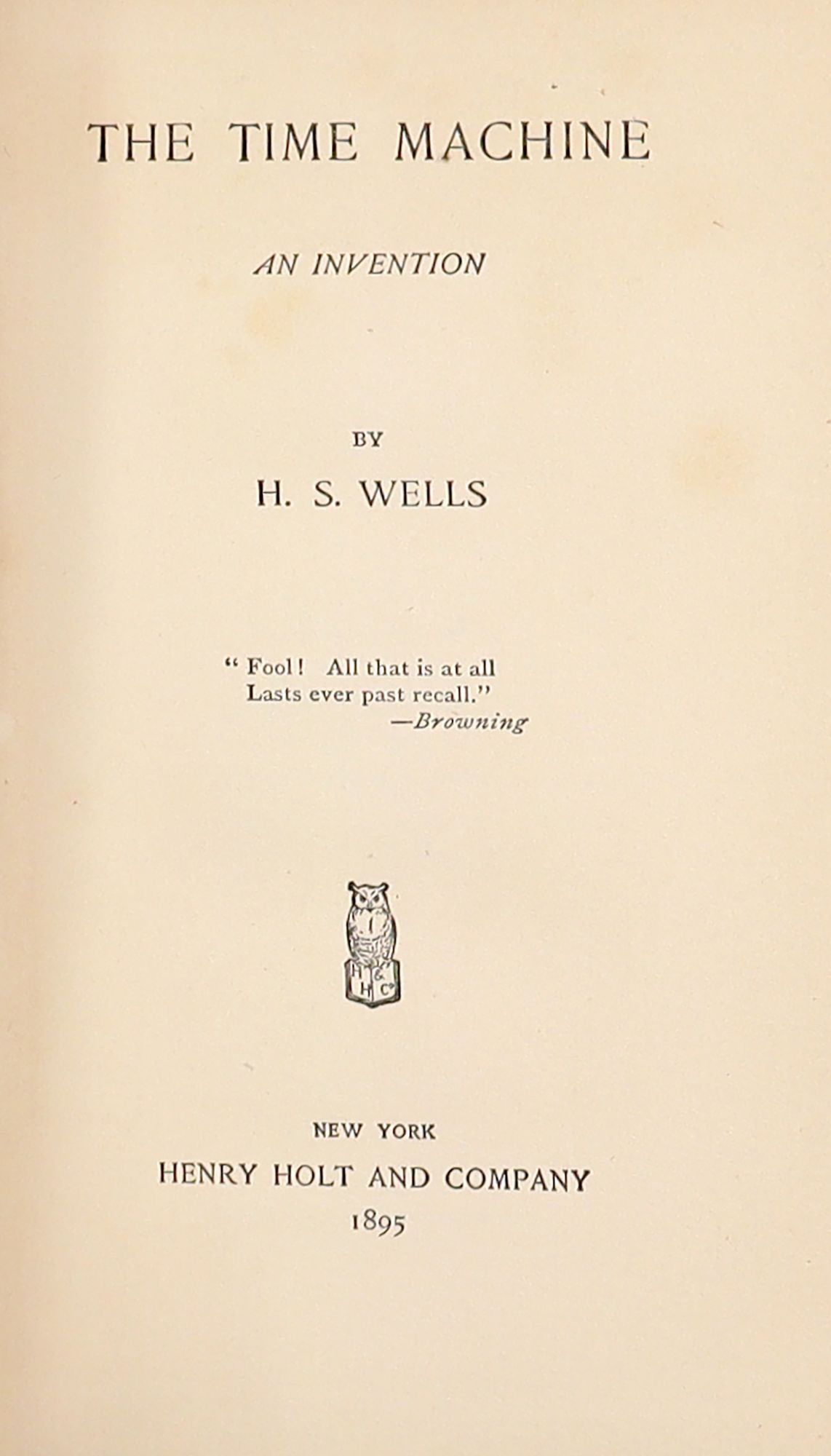
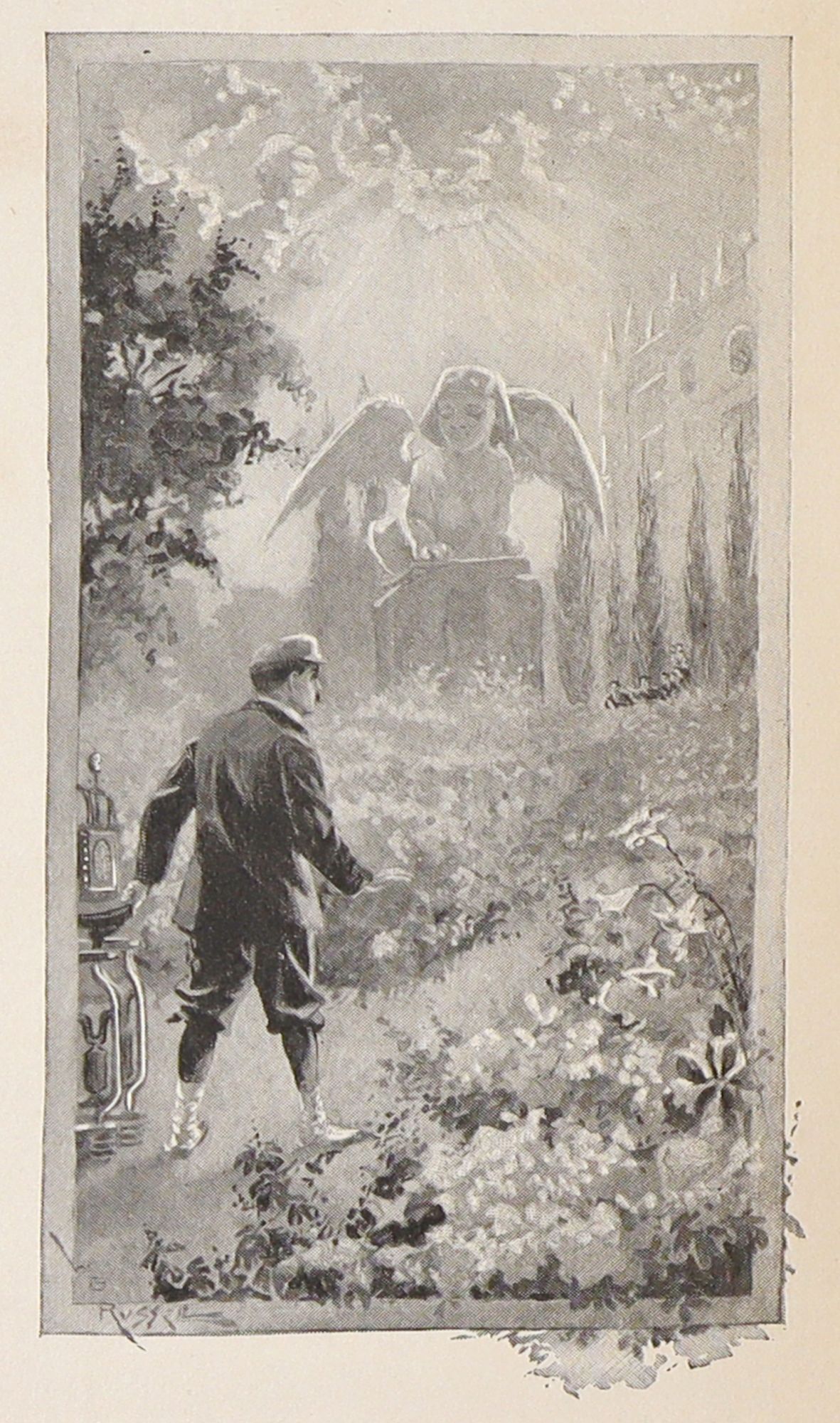
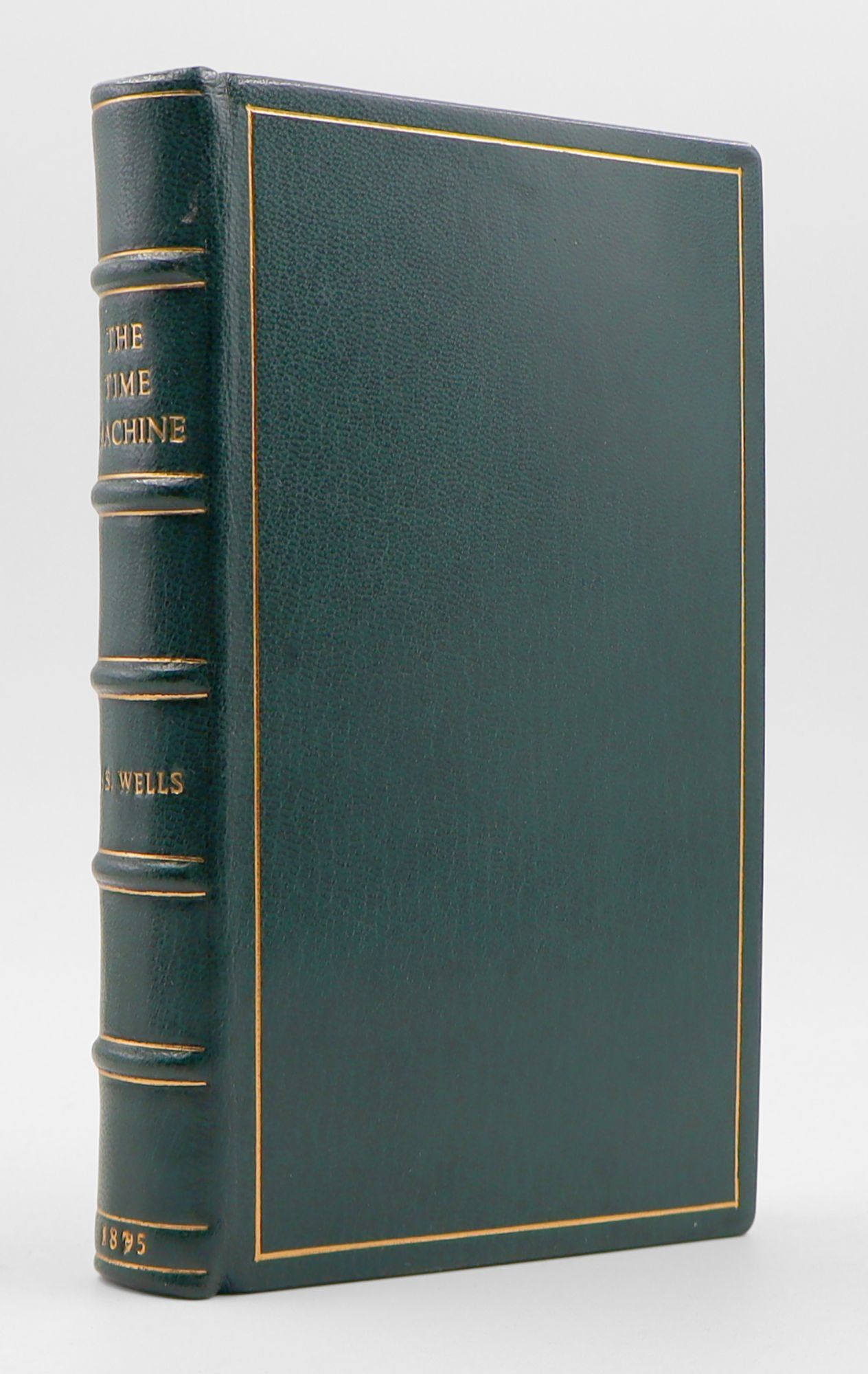
New York: Holt, 1895. First edition, first issue, with the author’s name printed H.S. Wells on title page. vii, 216, [2, blank], [6, ads] pp. 1 vols. 12mo. Full green crushed levant with gilt borders and spine titling, and marbled endpapers. A few spots of foxing to tissue guard over frontispiece, otherwise near fine. First edition, first issue, with the author’s name printed H.S. Wells on title page. vii, 216, [2, blank], [6, ads] pp. 1 vols. 12mo. In The Time Machine, H.G. Wells' time traveler visits the distant future and brings back a report that human society has diverged into the Eloi, who appear to live an idle, pastoral existence, and the Morlocks, who dwell underground; he then voyages further into the future where all signs of intelligent life have perished and a round thing hops fitfully beside a blood red ocean.
The early novels of Wells, including The War of the Worlds and The Island of Doctor Moreau, display a remarkable capacity for extrapolation, but it is his first, The Time Machine, which establishes Wells as one of the most important precursors of what would soon be called science fiction. "Like Joseph Conrad's similarly ominous Heart of Darkness, The Time Machine is told as a Club Story, and dramatically prefigures the profound anxieties and dislocations about to afflict the Western World […] each tale inescapably conveys a profound unease about the future" (SFE). Currey, p. 524
The early novels of Wells, including The War of the Worlds and The Island of Doctor Moreau, display a remarkable capacity for extrapolation, but it is his first, The Time Machine, which establishes Wells as one of the most important precursors of what would soon be called science fiction. "Like Joseph Conrad's similarly ominous Heart of Darkness, The Time Machine is told as a Club Story, and dramatically prefigures the profound anxieties and dislocations about to afflict the Western World […] each tale inescapably conveys a profound unease about the future" (SFE). Currey, p. 524