

Maggie, a Girl of the Streets

- New York: D. Appleton and Company, 1896
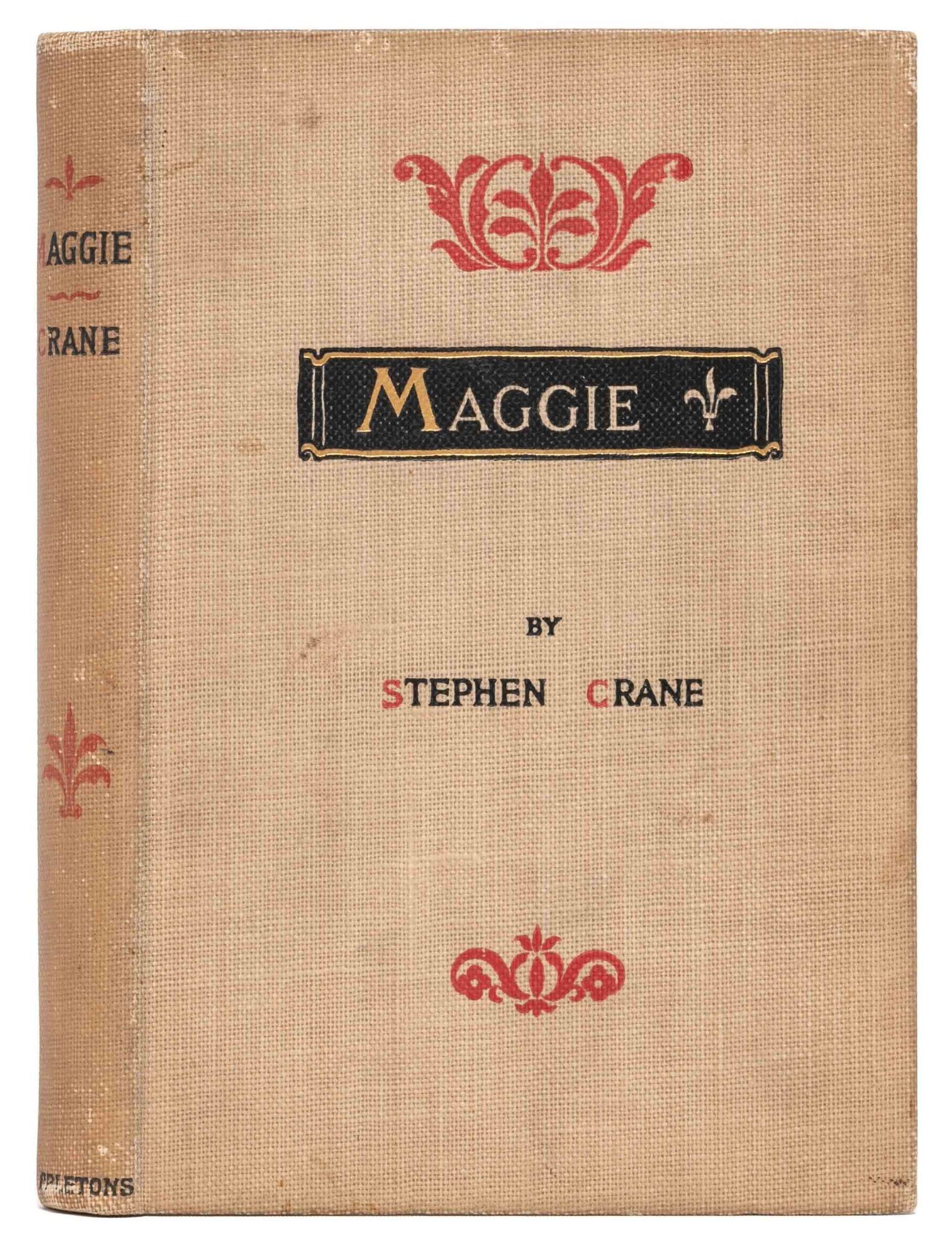
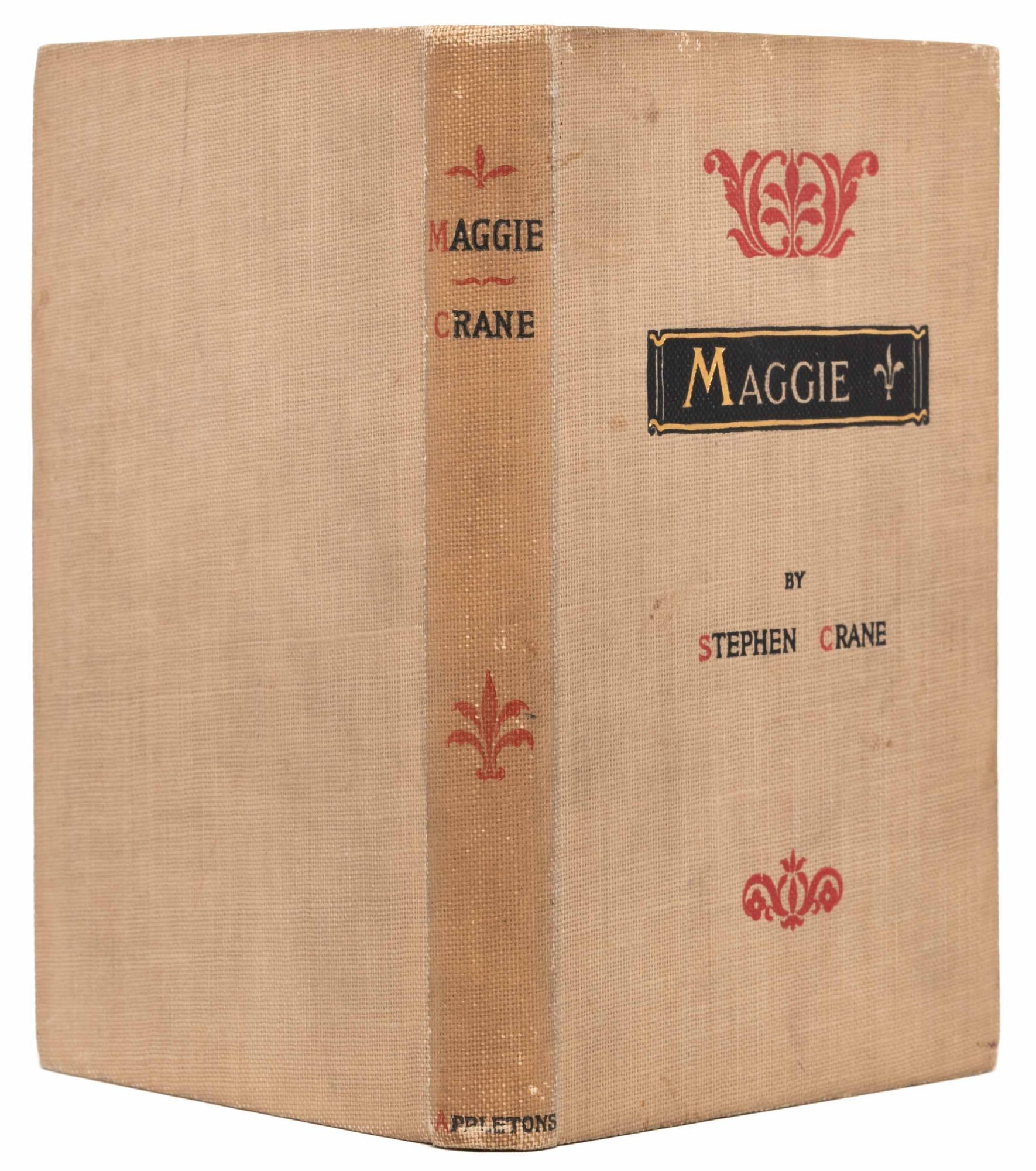
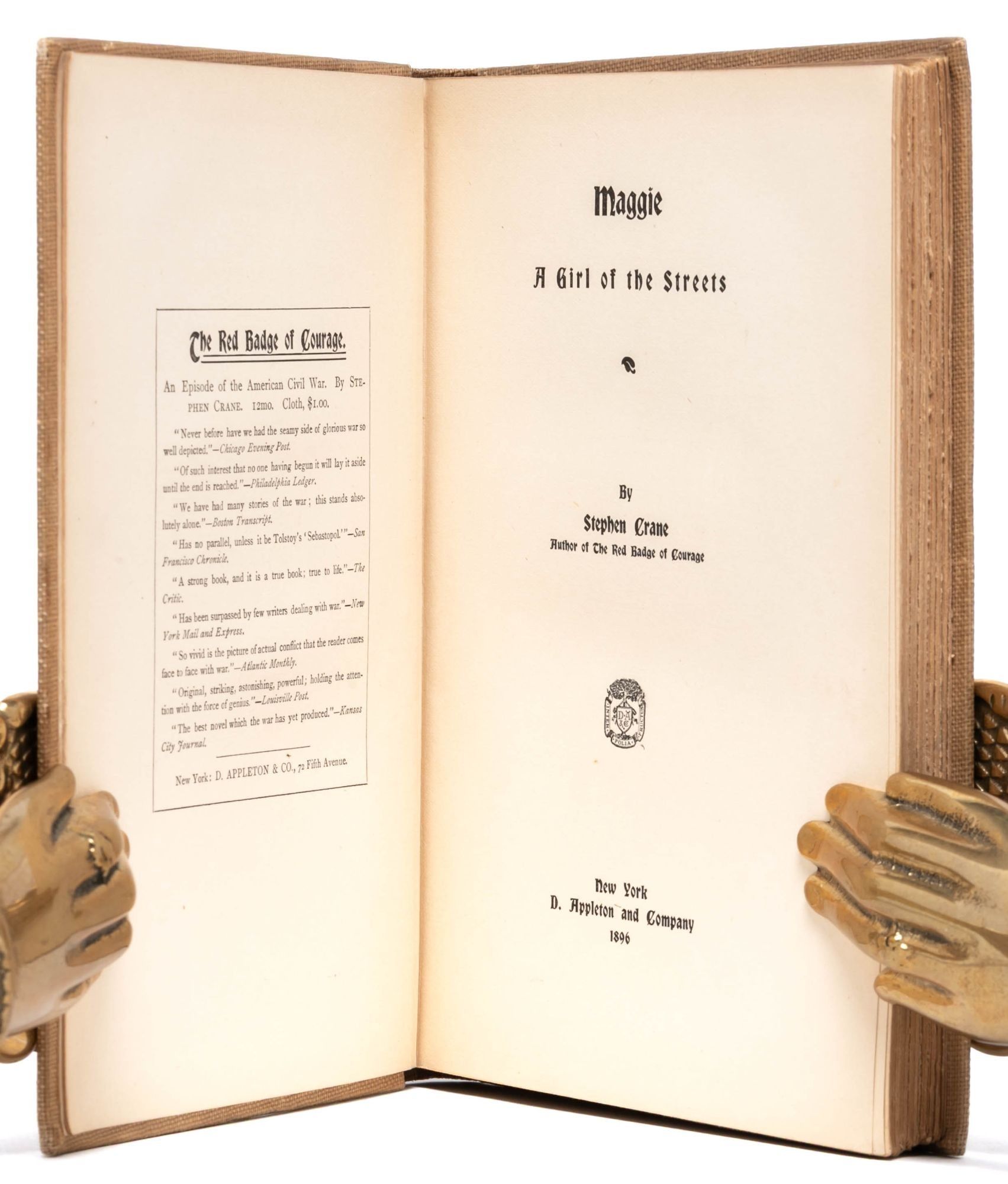
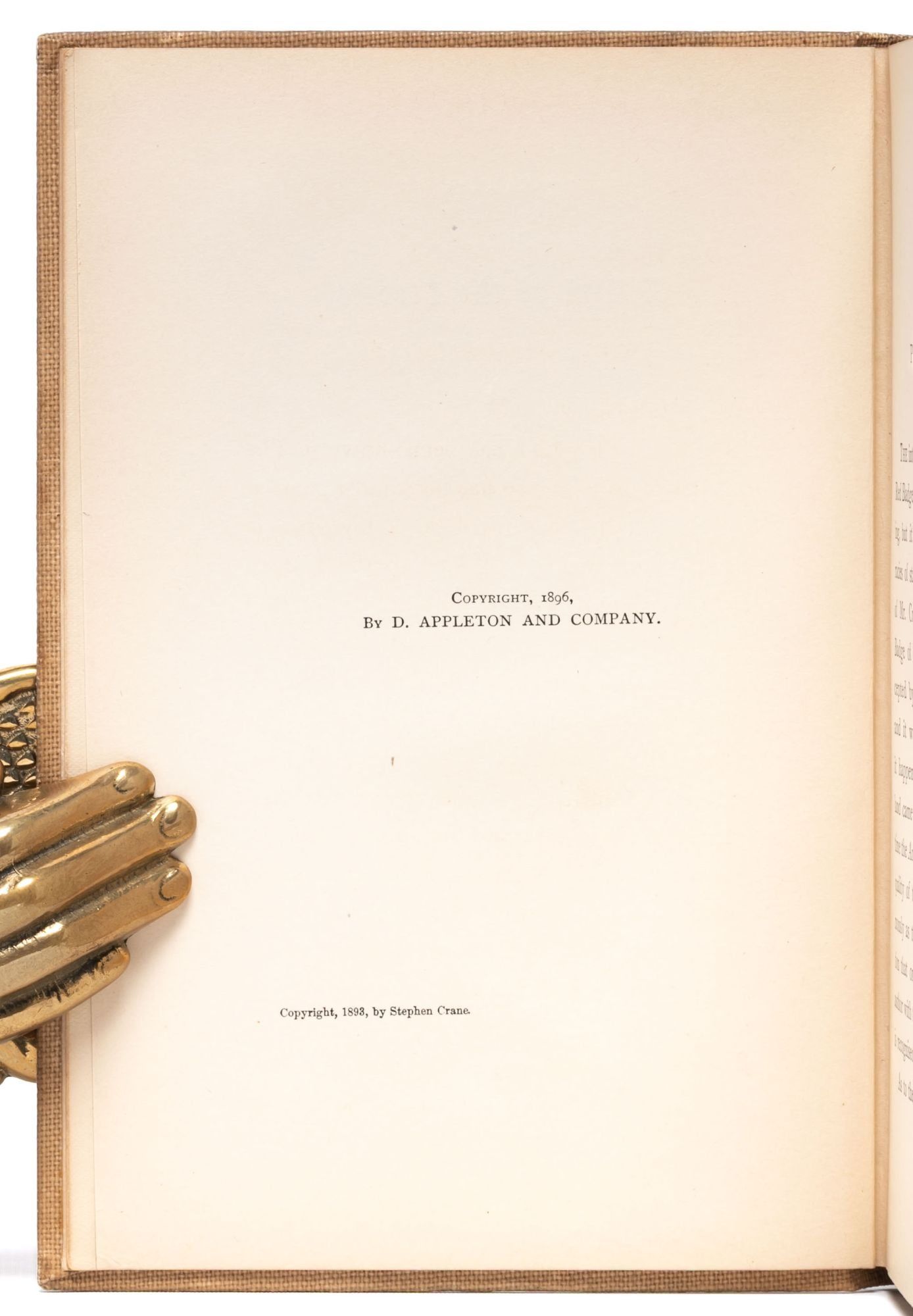
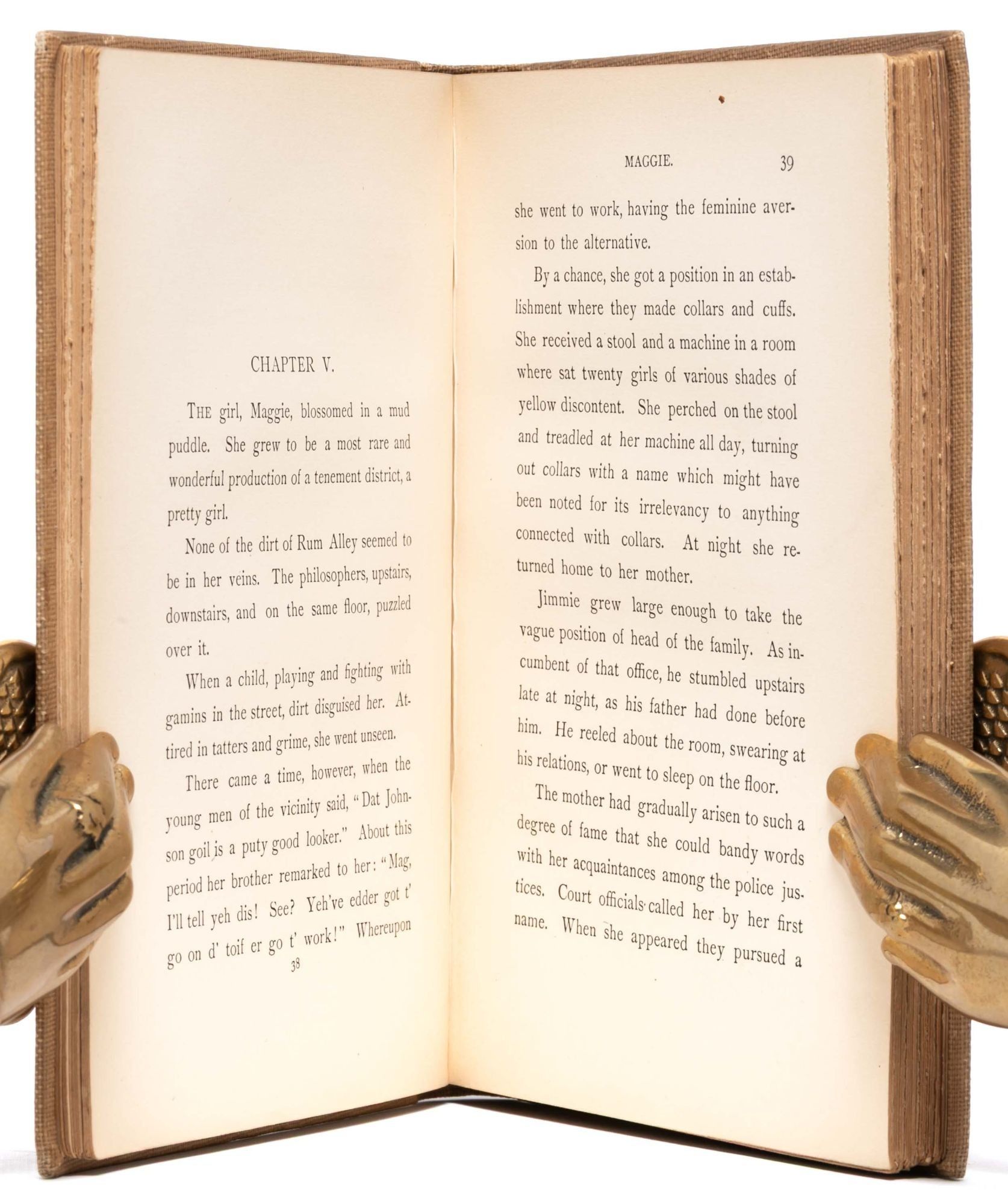
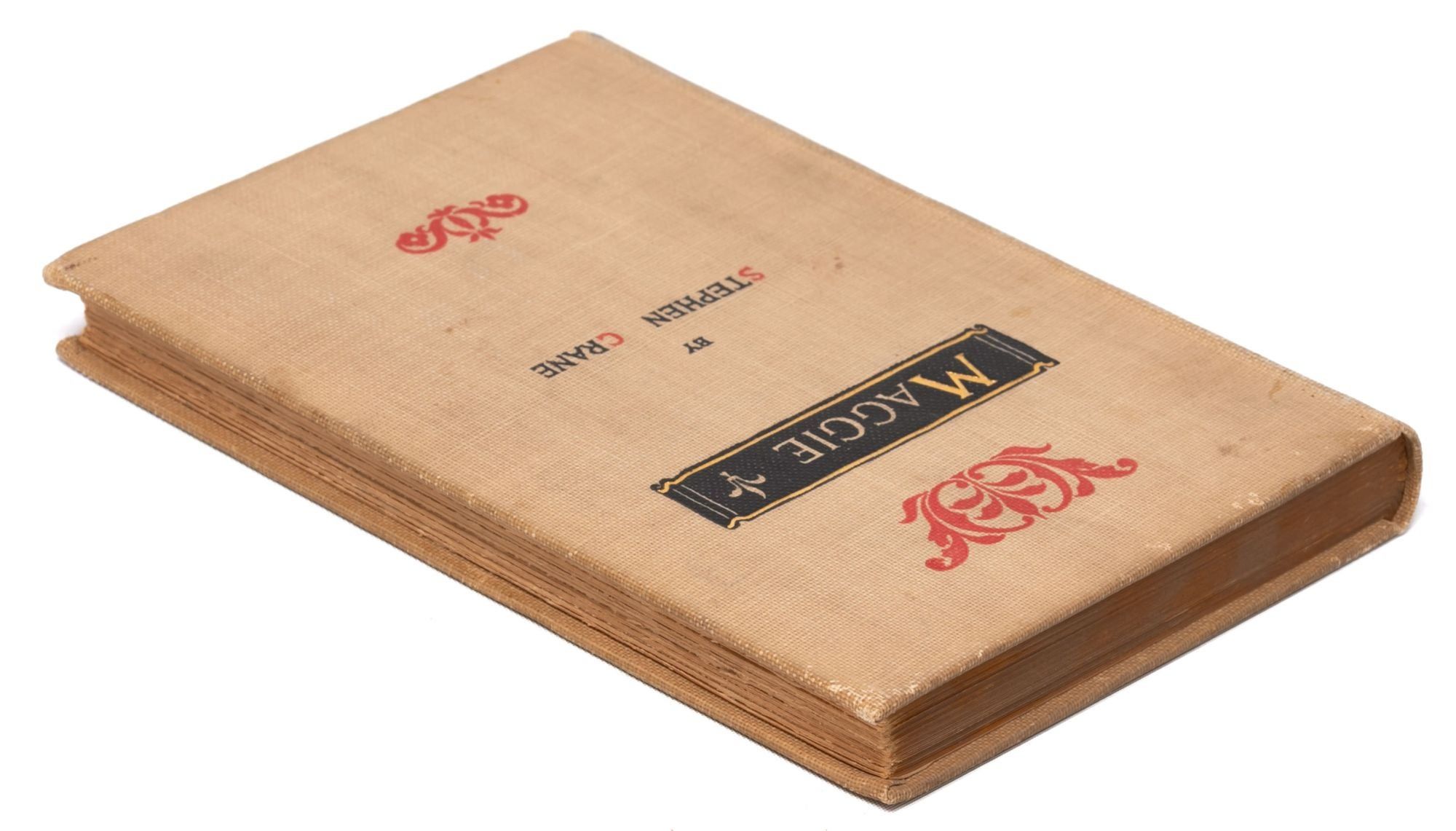
New York: D. Appleton and Company, 1896. First trade edition. Near Fine. This 1896 edition was the first to be widely available after Crane privately published the work in 1893 in wrappers (now quite scarce); also, the first edition published under Crane's real name. This copy in the first state according to BAL (title-page printed in upper and lower case letters). An attractive, Near Fine copy. Octavo. iv, 158, [12] pp. 120 x 183 pp. Publisher's buckram stamped in black, red, and gilt. Spine a bit toned and some minor dustsoiling to cloth. Remarkably clean and fresh throughout.
Maggie, a Girl of the Streets, Crane's debut novel, was unpopular upon its initial publication in 1893. After Crane was unable to find a publisher who would agree to print a novel about a prostitute, he personally funded the publication using the inheritance left to him by his mother. The novel was printed in late February or early March of 1893 by a small shop that usually printed medical books and religious tracts. Crane used the pseudonym “Johnston Smith” for this first publication, later telling friend and artist Corwin Knapp Linson that it was the “commonest name I could think of. I had an editor friend named Johnson, and put in the ‘t’, and no one could find me in the mob of Smiths.” Fewer than forty copies of the 1893 edition are now recorded (Katz).
Hamlin Garland reviewed the first edition of the work in the June 1893 issue of The Arena, calling it “the most truthful and unhackneyed study of the slums I have yet read, fragment though it is." Despite this early praise, Crane became depressed and destitute from having spent $869 for 1,100 copies of a novel that did not sell; he ended up giving a hundred copies away. He would later remember “how I looked forward to publication and pictured the sensation I thought it would make. It fell flat. Nobody seemed to notice it or care for it...Poor Maggie! She was one of my first loves.” Crane's success with The Red Badge of Courage (1895) sparked new interest in his debut novel, however, and Maggie was published in this second edition for his newfound audience.
BAL 4075, 1.
Katz, Joseph. “Maggie ... a Census,” Stephen Crane Newsletter. Near Fine.
Maggie, a Girl of the Streets, Crane's debut novel, was unpopular upon its initial publication in 1893. After Crane was unable to find a publisher who would agree to print a novel about a prostitute, he personally funded the publication using the inheritance left to him by his mother. The novel was printed in late February or early March of 1893 by a small shop that usually printed medical books and religious tracts. Crane used the pseudonym “Johnston Smith” for this first publication, later telling friend and artist Corwin Knapp Linson that it was the “commonest name I could think of. I had an editor friend named Johnson, and put in the ‘t’, and no one could find me in the mob of Smiths.” Fewer than forty copies of the 1893 edition are now recorded (Katz).
Hamlin Garland reviewed the first edition of the work in the June 1893 issue of The Arena, calling it “the most truthful and unhackneyed study of the slums I have yet read, fragment though it is." Despite this early praise, Crane became depressed and destitute from having spent $869 for 1,100 copies of a novel that did not sell; he ended up giving a hundred copies away. He would later remember “how I looked forward to publication and pictured the sensation I thought it would make. It fell flat. Nobody seemed to notice it or care for it...Poor Maggie! She was one of my first loves.” Crane's success with The Red Badge of Courage (1895) sparked new interest in his debut novel, however, and Maggie was published in this second edition for his newfound audience.
BAL 4075, 1.
Katz, Joseph. “Maggie ... a Census,” Stephen Crane Newsletter. Near Fine.