

Citizen 13660
- New York: Colubmia University Press, 1946
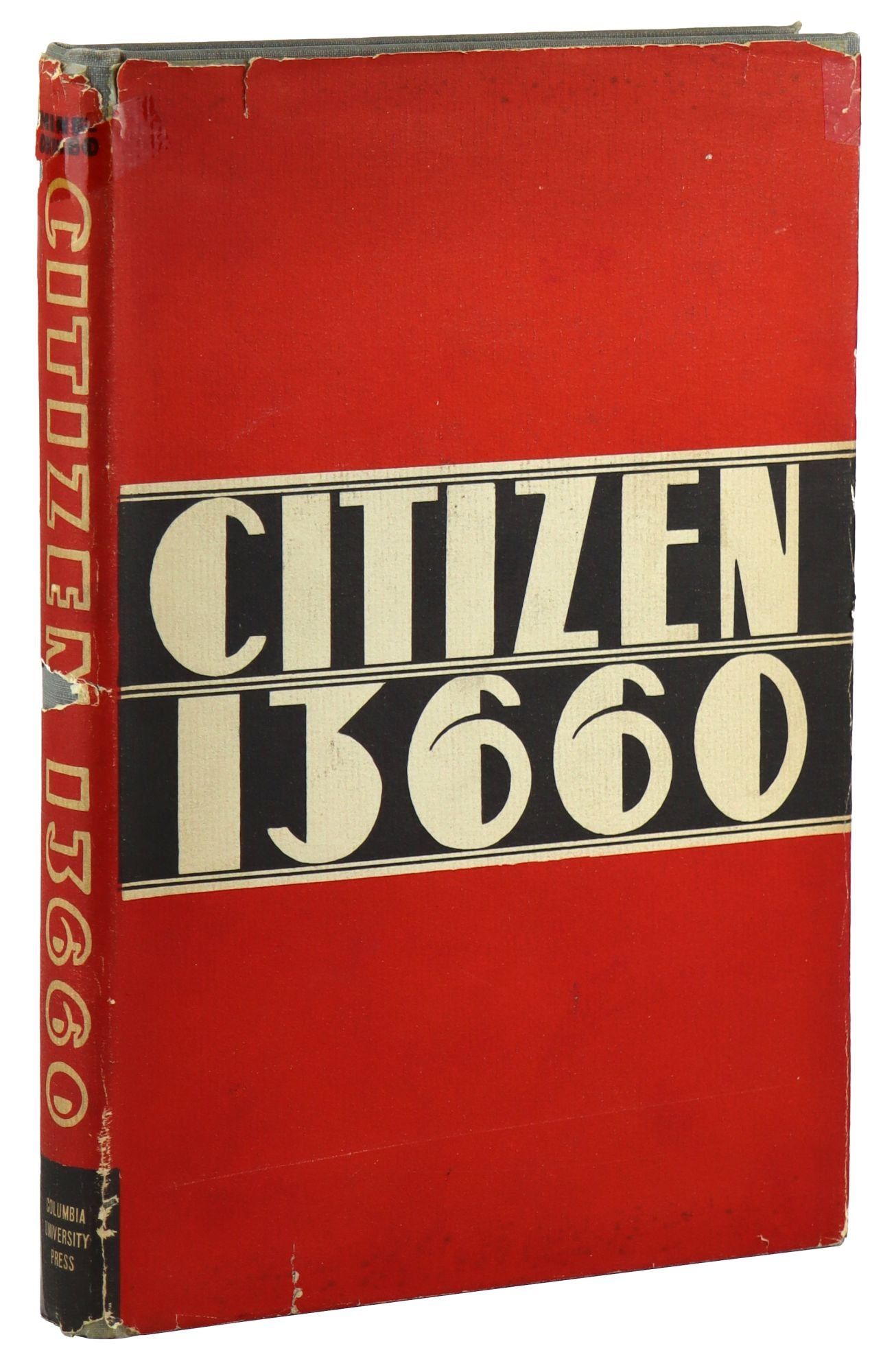
New York: Colubmia University Press, 1946. Very Good +/Very Good -. New York: Columbia University Press, 1946. First Edition. Octavo (24cm); decorative grey cloth, blue topstain, in illustrated dust jacket with $2.75 price present; [vi],209pp; illustrations throughout. Dust jacket chipped along edges and spine; general scuffing; extensive tape mending along edges, principally at verso. Boards show light shelfwear and a few nudges to extremities; binding sound; pages unmarked. Very Good or better in a Good to Very Good dust jacket.
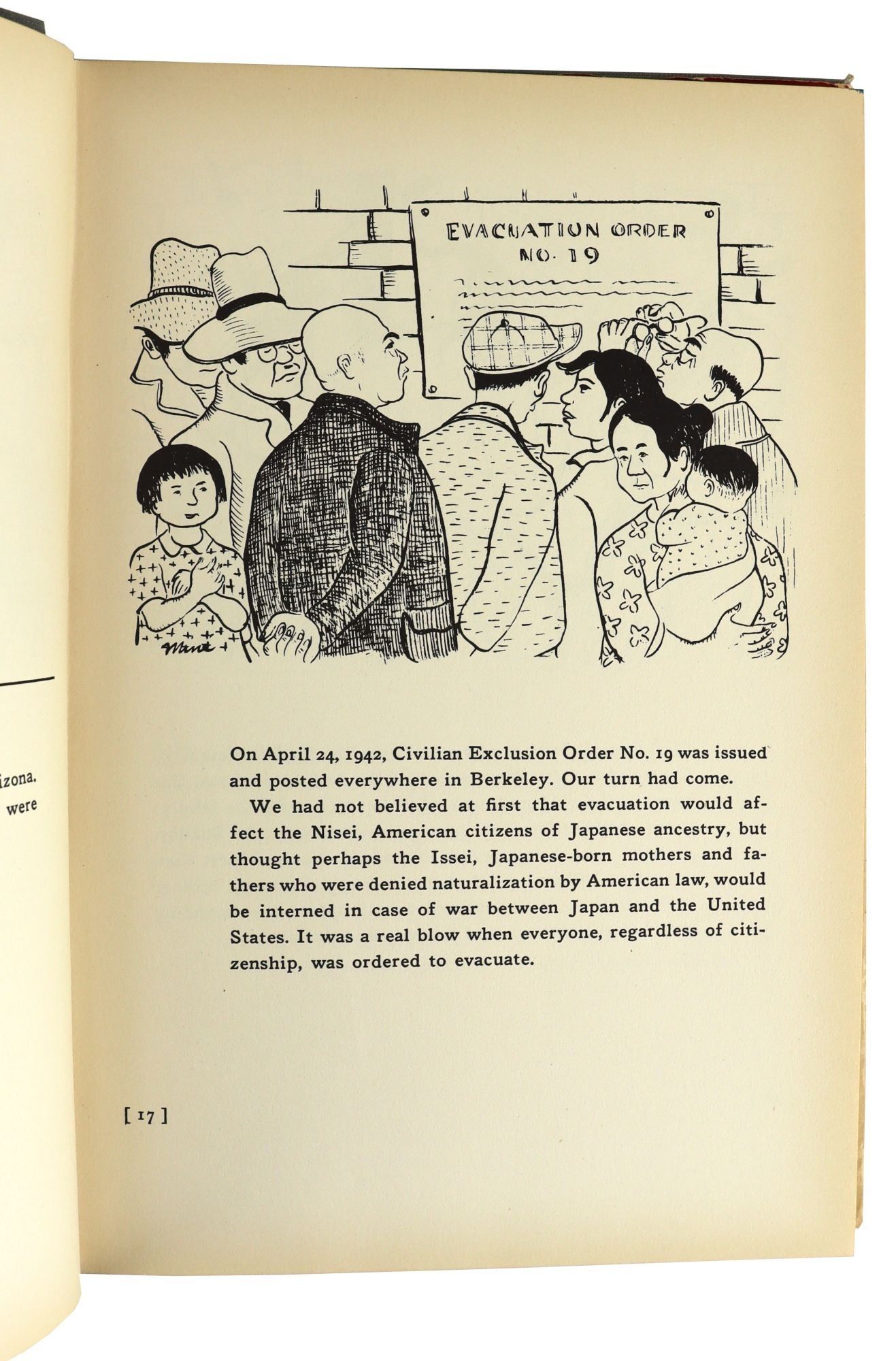
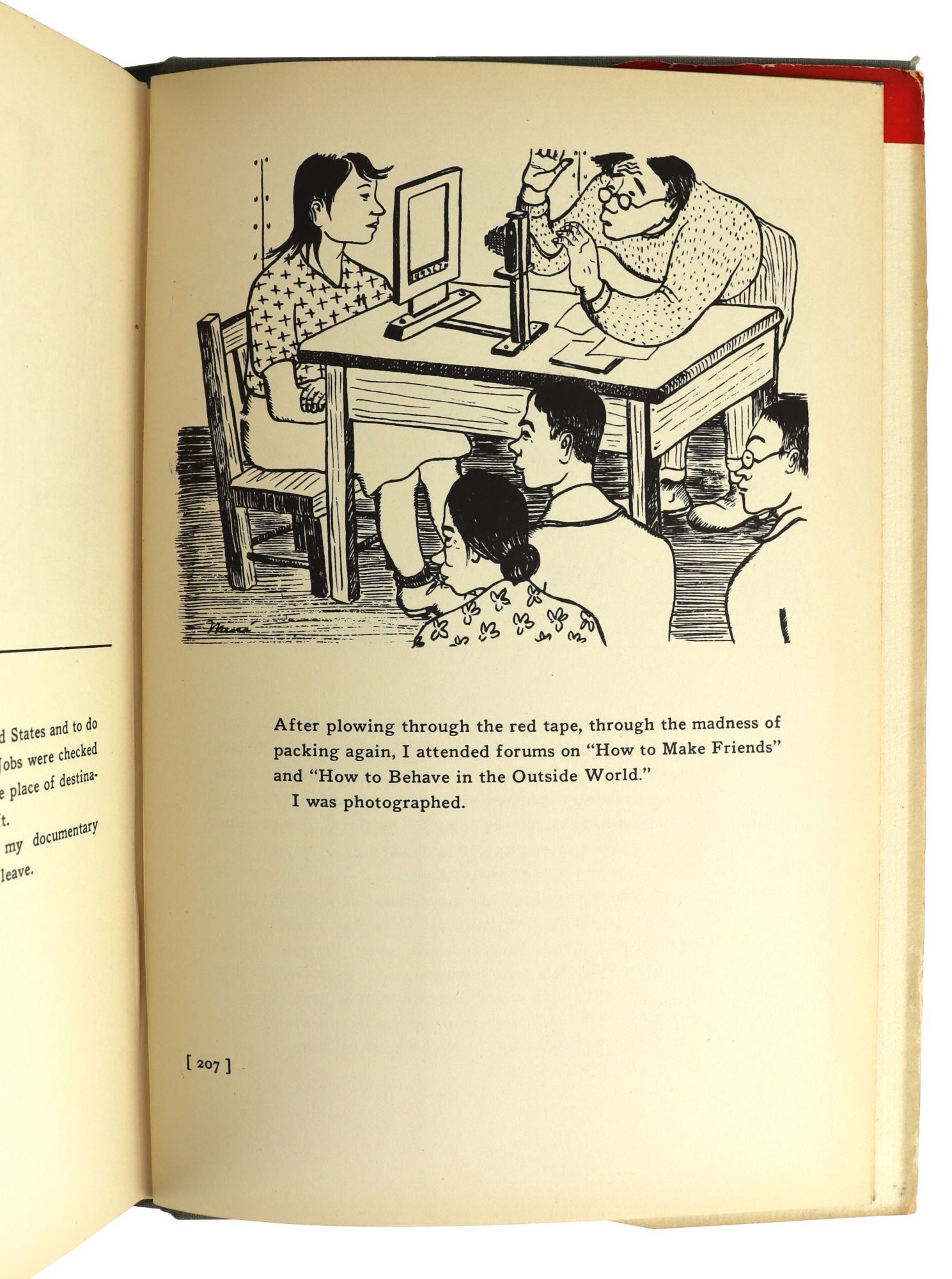
Graphic novel by the American artist and writer based on her and her brother's forced relocation to the Tanforan and then the Topaz internment camps for Americans of Japanese descent and Japanese immigrants under FDR's Executive Order 9066. A stirring and maddening document from one of the darkest times in American history, Citizen 13660 shows the dehumanizing effects of the Executive Order while Okubo builds a record of the experience (cameras were forbidden) and shows the happiness, humor, and pain of the community as they struggle to process and understand their detainment and persecution. Okubo worked as an artist and educator for the rest of her career, highlighting the importance of female artists and emphasizing the role of the artist in war.
Kristine C. Kuramitsu. "Internment and Identity in Japanese Art." American Quarterly, Vol. 47, No. 4 (Dec., 1995), pp. 619-658.
Graphic novel by the American artist and writer based on her and her brother's forced relocation to the Tanforan and then the Topaz internment camps for Americans of Japanese descent and Japanese immigrants under FDR's Executive Order 9066. A stirring and maddening document from one of the darkest times in American history, Citizen 13660 shows the dehumanizing effects of the Executive Order while Okubo builds a record of the experience (cameras were forbidden) and shows the happiness, humor, and pain of the community as they struggle to process and understand their detainment and persecution. Okubo worked as an artist and educator for the rest of her career, highlighting the importance of female artists and emphasizing the role of the artist in war.
Kristine C. Kuramitsu. "Internment and Identity in Japanese Art." American Quarterly, Vol. 47, No. 4 (Dec., 1995), pp. 619-658.