

The Private Memoirs and Confessions of a Justified Sinner
- London: Longman, Hurst, Rees, Orme, Brown, and Green, 1824
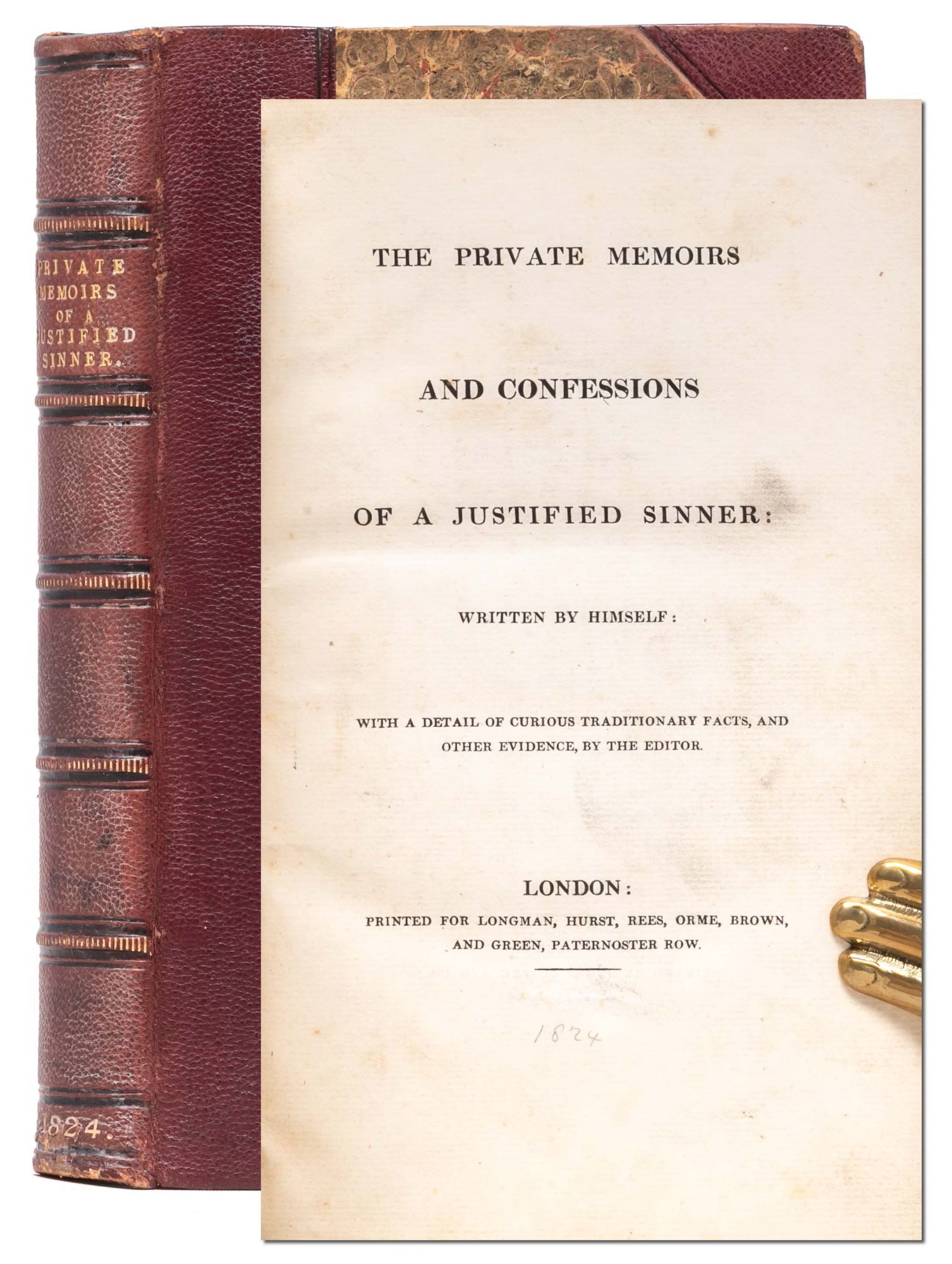
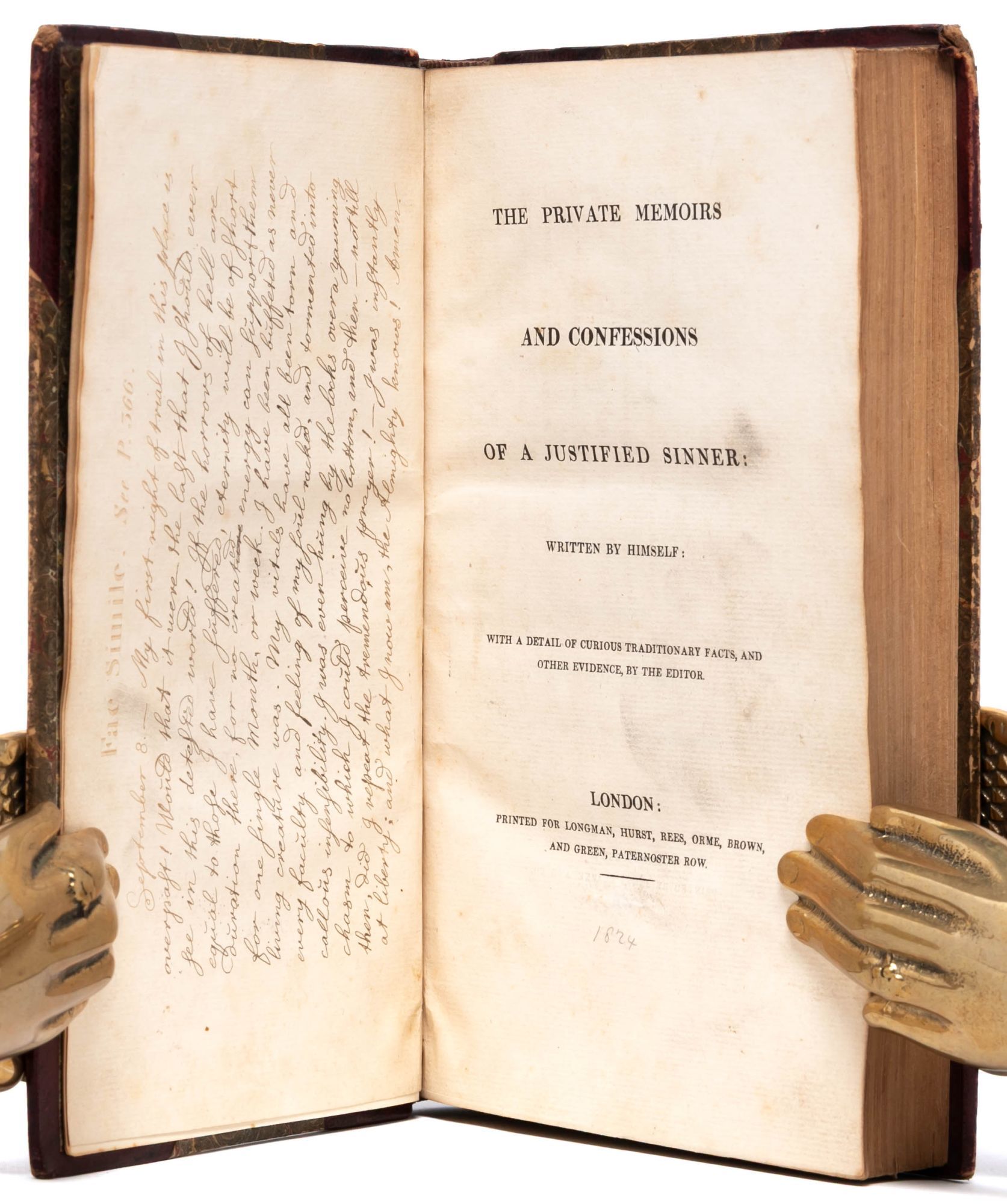
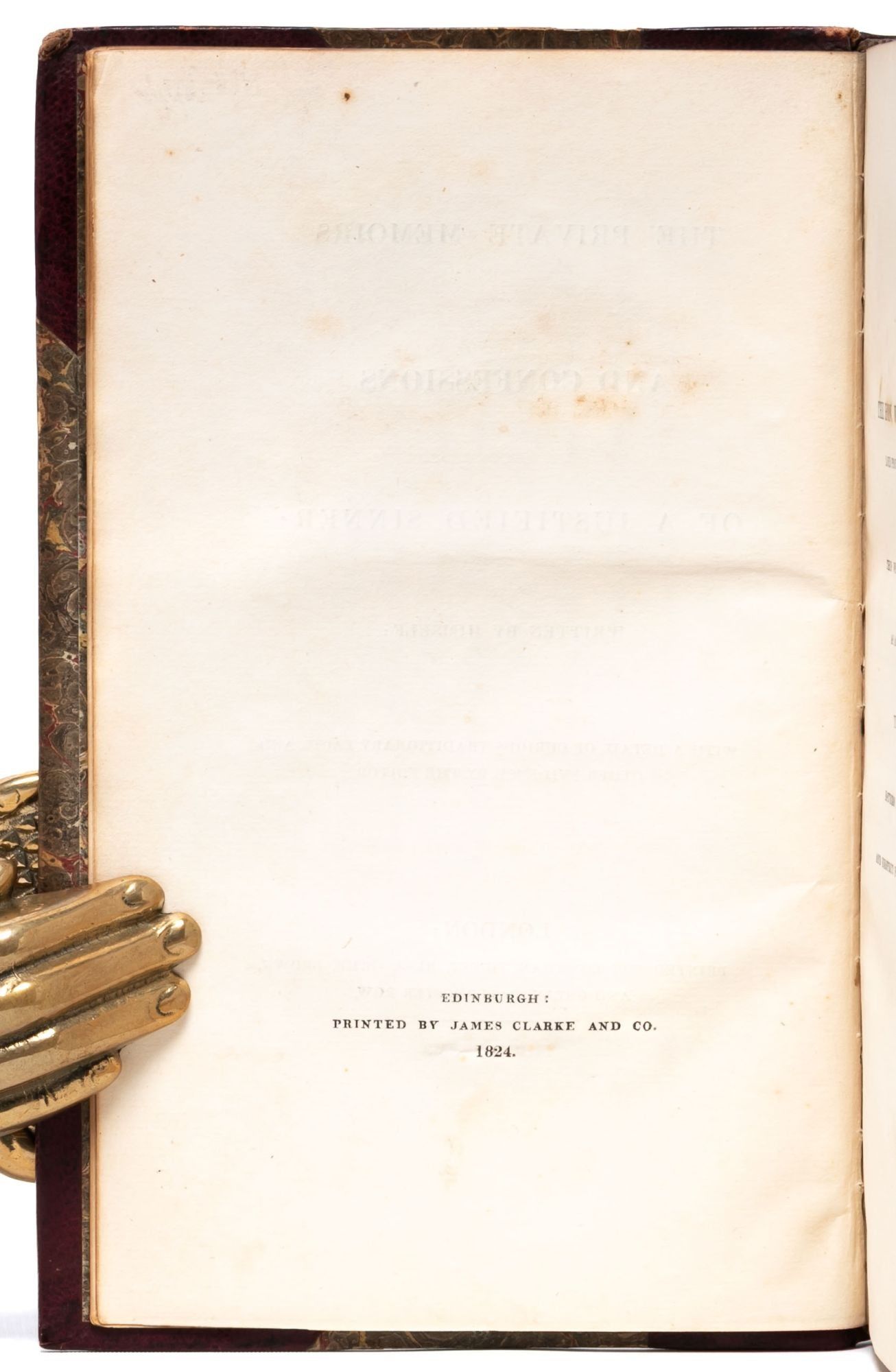
London: Longman, Hurst, Rees, Orme, Brown, and Green, 1824. First edition. First printing, one of just a thousand copies; reports indicate that fewer than three hundred actually sold. In 1828, the leftover sheets were reissued with a new title-page as The Suicide's Grave; or, Memoirs and Confessions of a Sinner, and a severely bowdlerized version was published in 1837 as volume five of Tales and Sketches by the Ettrick Shepherd. The work was not published again in unexpurgated form until 1895.
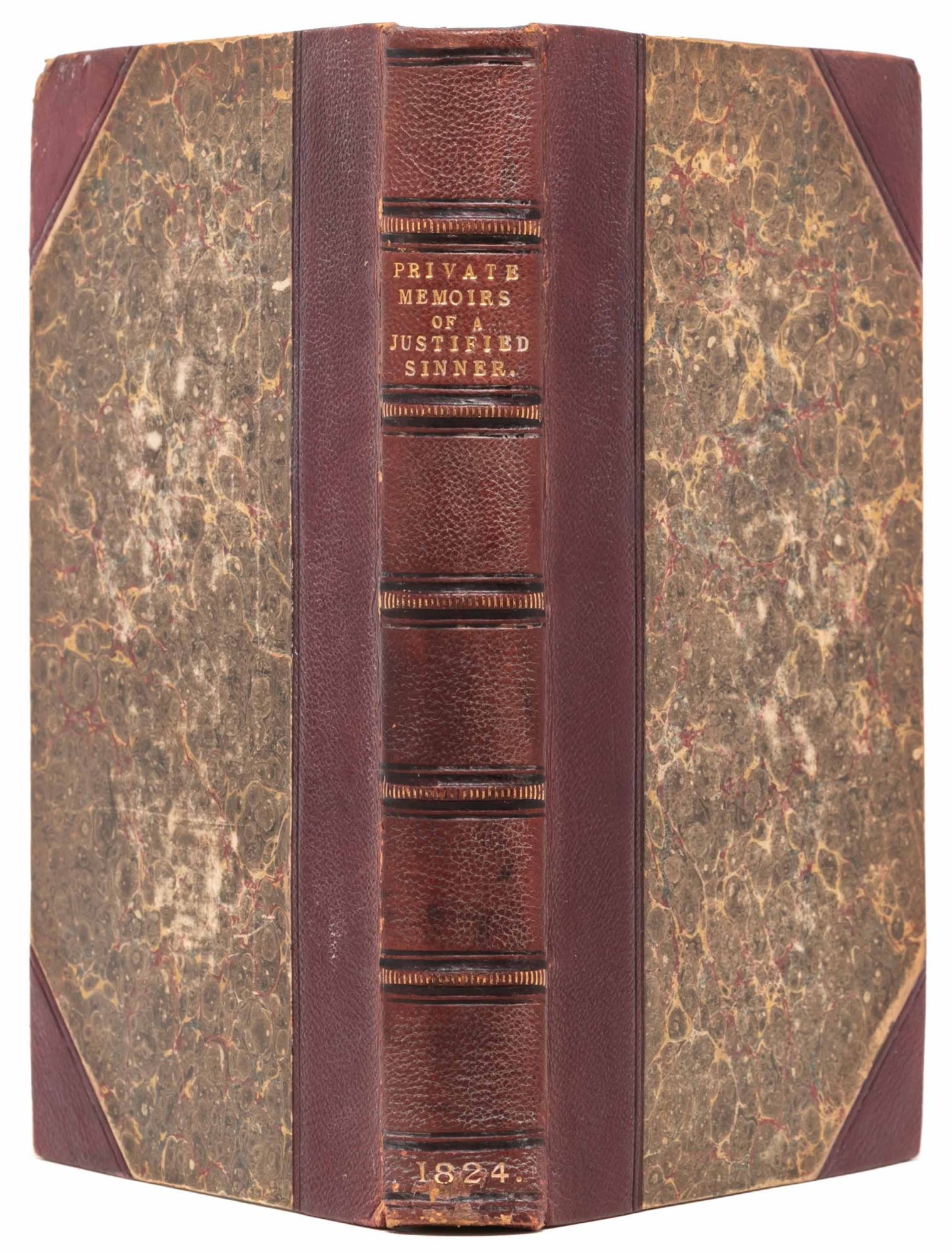
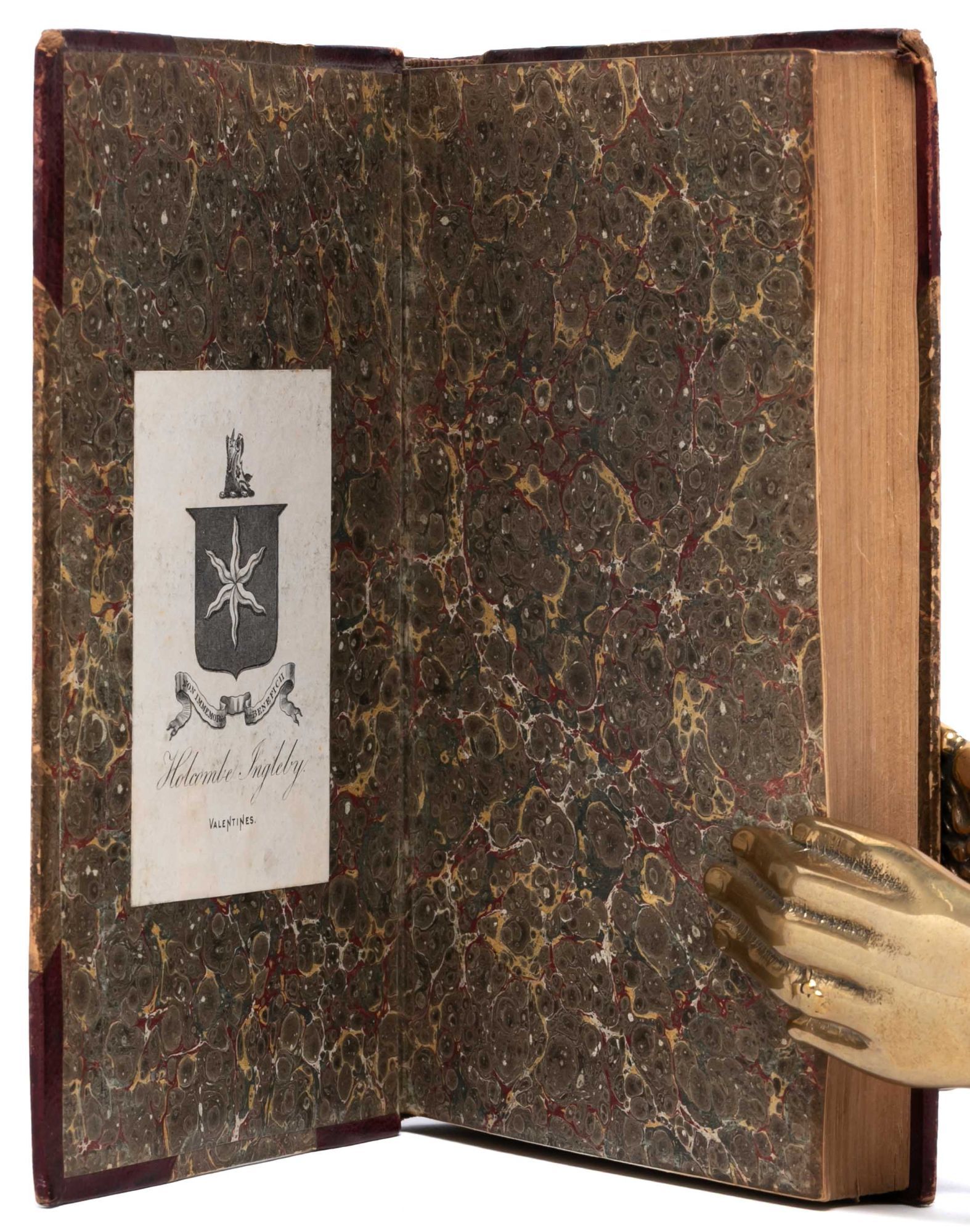
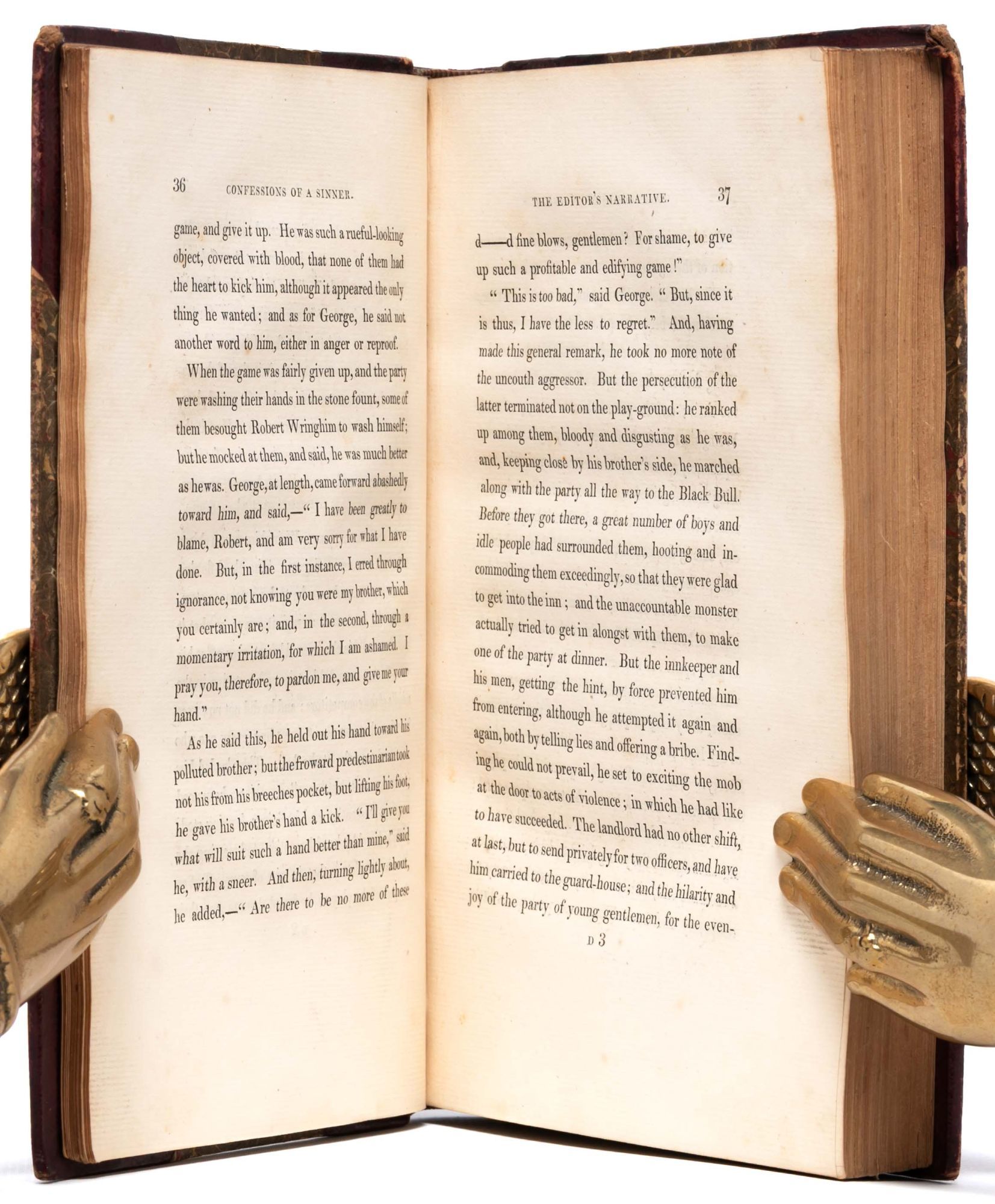
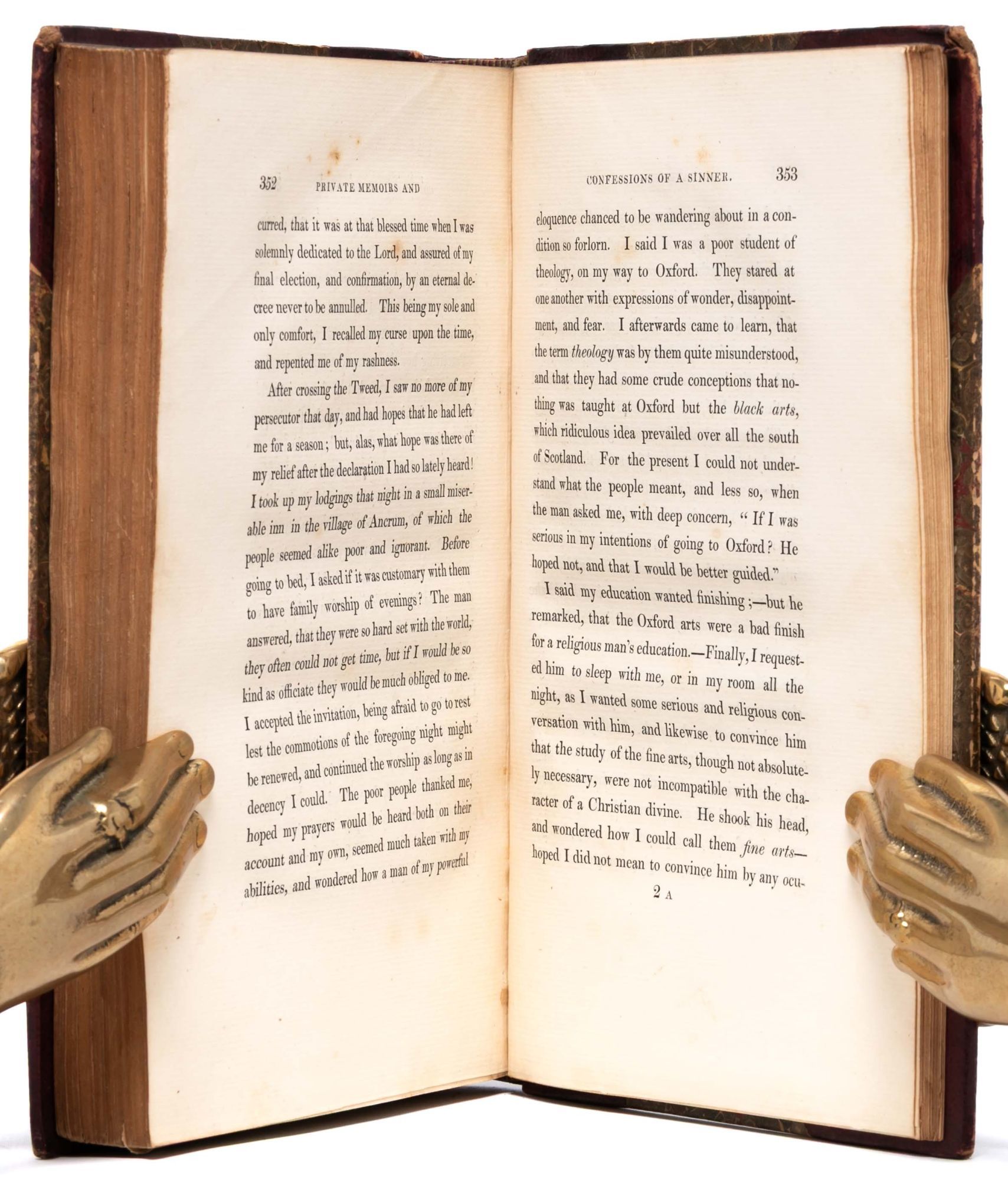
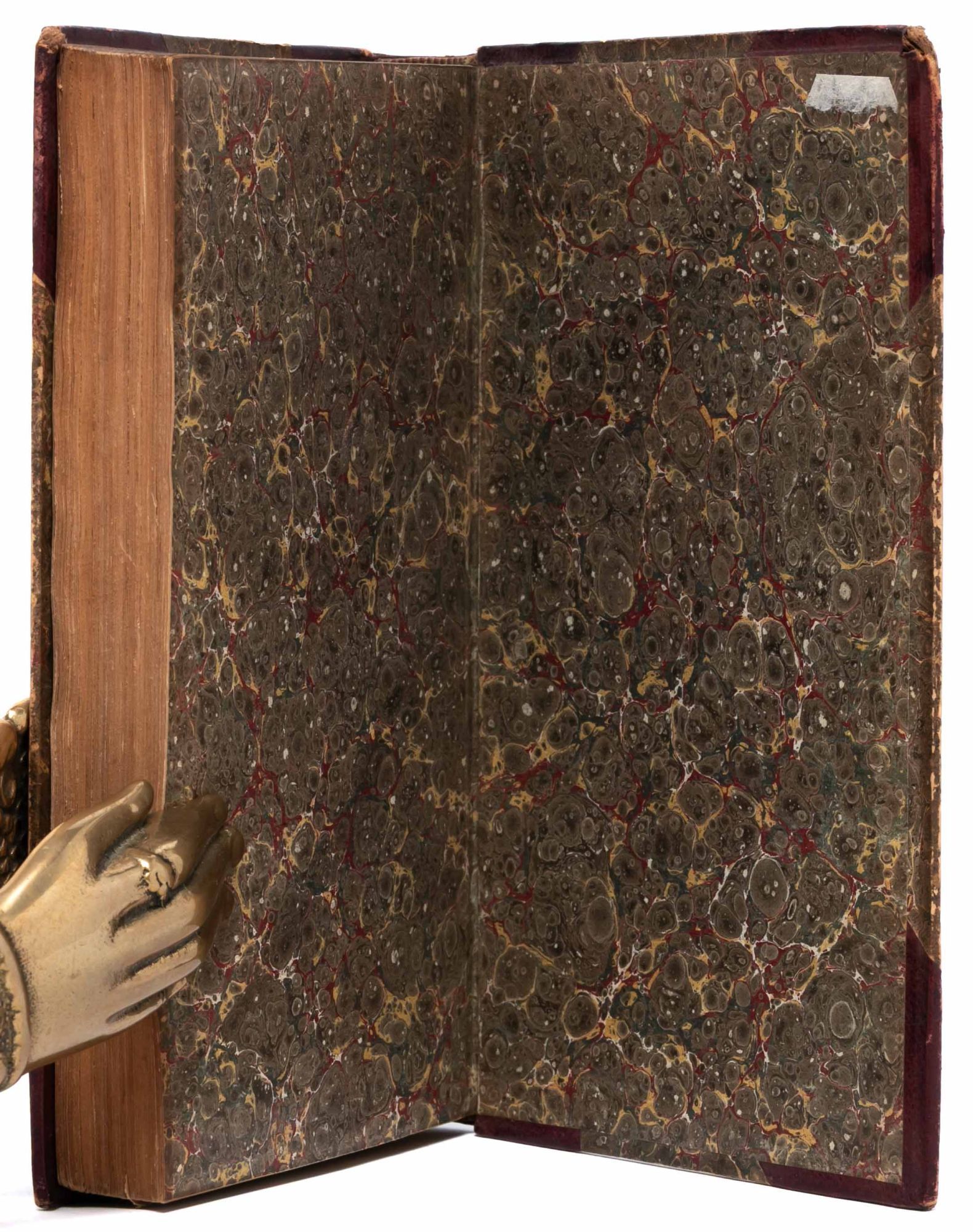
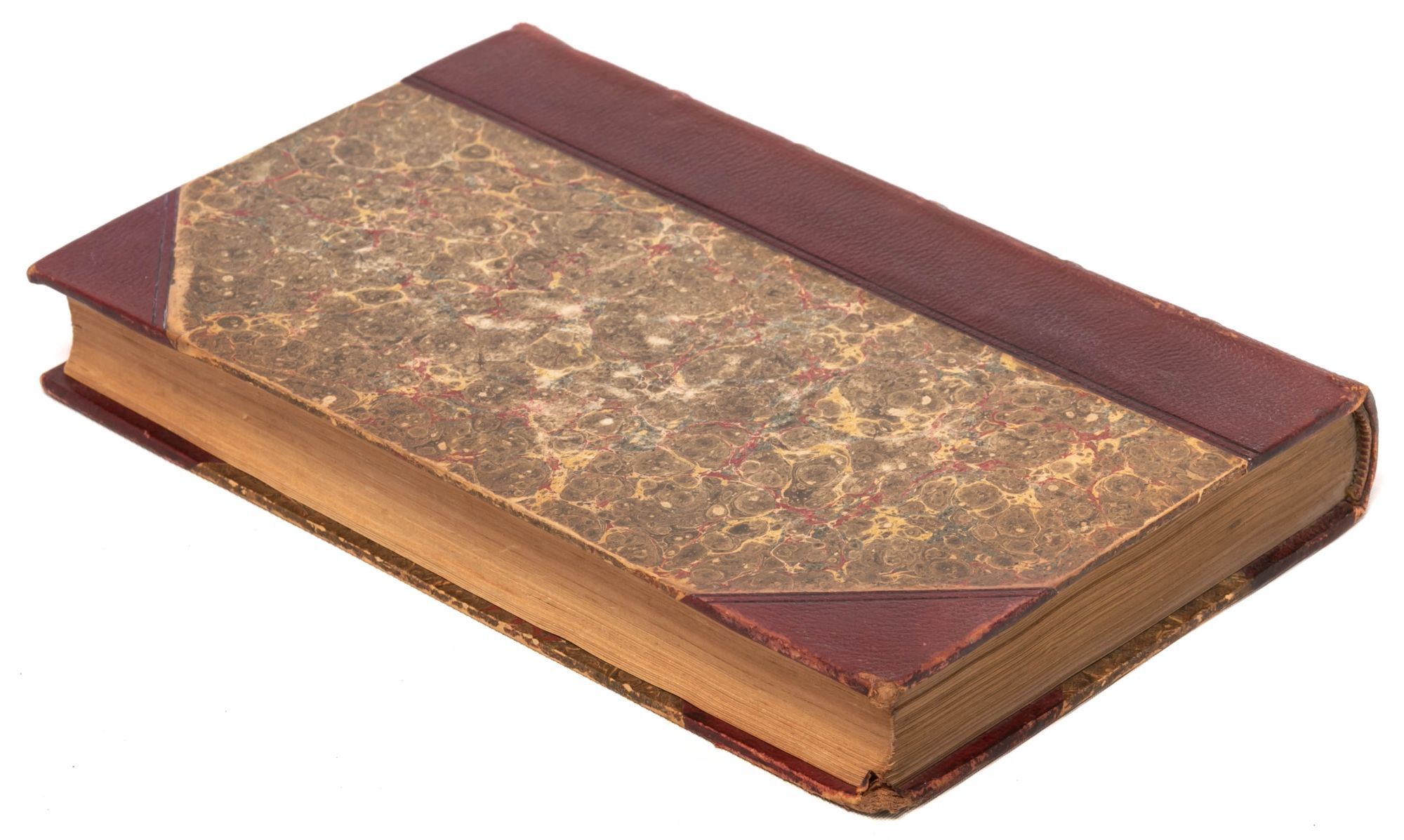
Octavo. [4], 390 pp. Mid-nineteenth-century half burgundy morocco over marbled boards. A bit of edgewear and some sunning to spine. Top edge gilt. Marbled endpapers with armorial bookplate (Holcombe Ingleby) to upper pastedown. Publication date of MDCCCXXIV at foot of title-page erased (with the paper rubbed thin) and replaced with a pencilled-in date of 1824. Light occasional foxing, but largely clean throughout. A Very Good copy of a scarce item.
Part gothic novel, part psychological mystery, and part satire, "The Private Memoirs and Confessions of a Justified Sinner is a startling tale of murder and madness set in a time of troubles like our own. Robert Wringhim is a religious fanatic: one of God’s chosen who believes himself free to disregard the strictures of morality – a view in which he is much encouraged by the elusive, peculiarly striking foreigner who becomes his dearest friend. Describing the seductive mutual dependence of these soulmates and the way – efficient at first, then increasingly intoxicated – they go about settling scores with their (and of course God’s) enemies, James Hogg presents a powerful picture of evil in the world and in the heart and mind. This work of black humor, acute psychological insight, and, in the end, deeply compassionate humanity is one of the masterpieces of literature in English" (New York Review of Books).
The novel also influenced Robert Louis Stevenson, who wrote that "the book since I read it, in black pouring weather on Tweedside, has always haunted and puzzled me...[It was] without doubt a real work of imagination, ponderated and achieved...I never read a book that went on the same road with the Sinner" (letter to George Saintsbury, May 17, 1891). Stevenson later explored that same road, however: Hogg's themes of the duality of the self and the multifaceted nature of evil were reexamined by Stevenson in both The Strange Case of Dr Jekyll and Mr Hyde (1886) and The Master of Ballantrae (1889).
Octavo. [4], 390 pp. Mid-nineteenth-century half burgundy morocco over marbled boards. A bit of edgewear and some sunning to spine. Top edge gilt. Marbled endpapers with armorial bookplate (Holcombe Ingleby) to upper pastedown. Publication date of MDCCCXXIV at foot of title-page erased (with the paper rubbed thin) and replaced with a pencilled-in date of 1824. Light occasional foxing, but largely clean throughout. A Very Good copy of a scarce item.
Part gothic novel, part psychological mystery, and part satire, "The Private Memoirs and Confessions of a Justified Sinner is a startling tale of murder and madness set in a time of troubles like our own. Robert Wringhim is a religious fanatic: one of God’s chosen who believes himself free to disregard the strictures of morality – a view in which he is much encouraged by the elusive, peculiarly striking foreigner who becomes his dearest friend. Describing the seductive mutual dependence of these soulmates and the way – efficient at first, then increasingly intoxicated – they go about settling scores with their (and of course God’s) enemies, James Hogg presents a powerful picture of evil in the world and in the heart and mind. This work of black humor, acute psychological insight, and, in the end, deeply compassionate humanity is one of the masterpieces of literature in English" (New York Review of Books).
The novel also influenced Robert Louis Stevenson, who wrote that "the book since I read it, in black pouring weather on Tweedside, has always haunted and puzzled me...[It was] without doubt a real work of imagination, ponderated and achieved...I never read a book that went on the same road with the Sinner" (letter to George Saintsbury, May 17, 1891). Stevenson later explored that same road, however: Hogg's themes of the duality of the self and the multifaceted nature of evil were reexamined by Stevenson in both The Strange Case of Dr Jekyll and Mr Hyde (1886) and The Master of Ballantrae (1889).