

The Morality of Shakespeare's Drama Illustrated



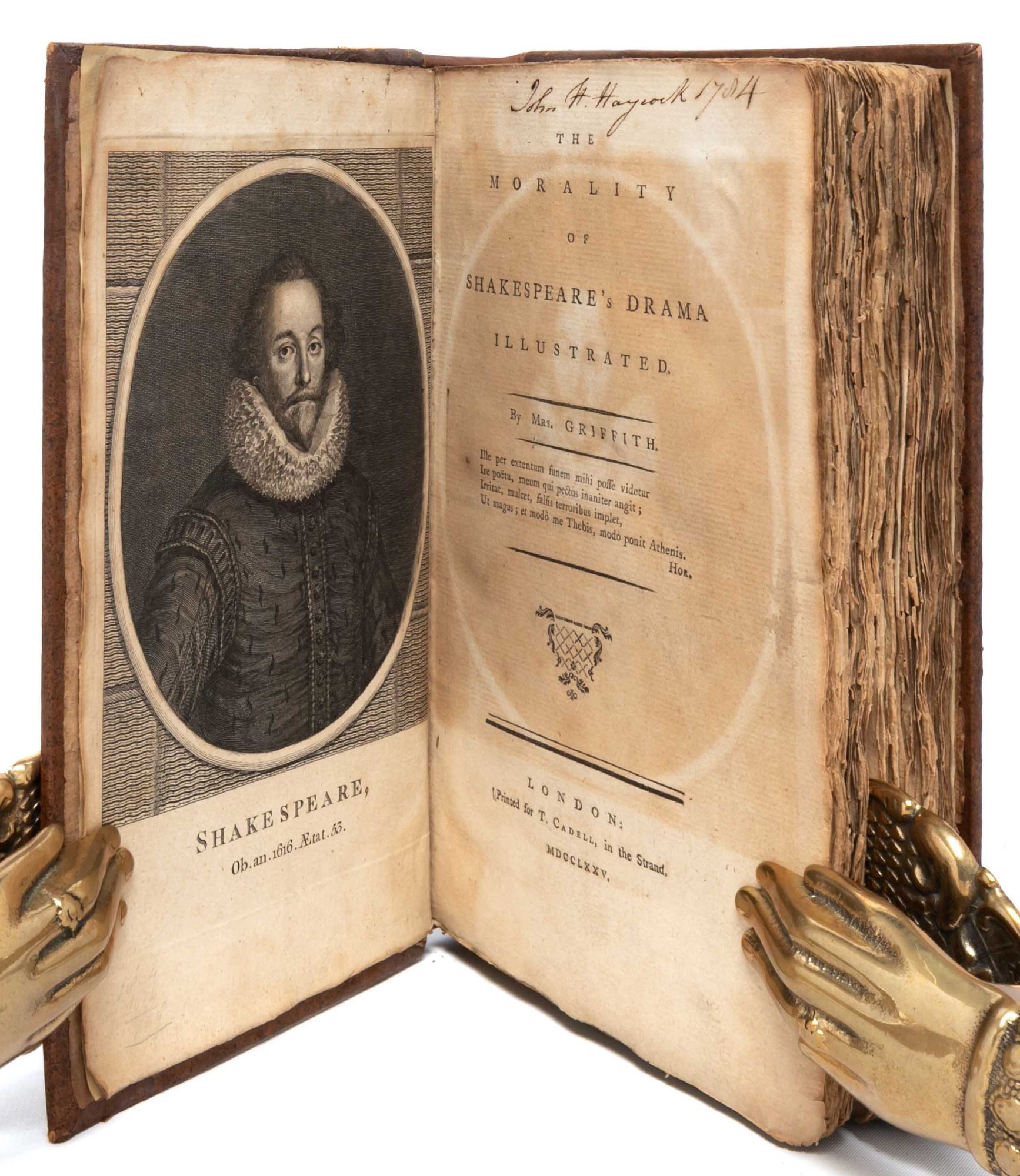
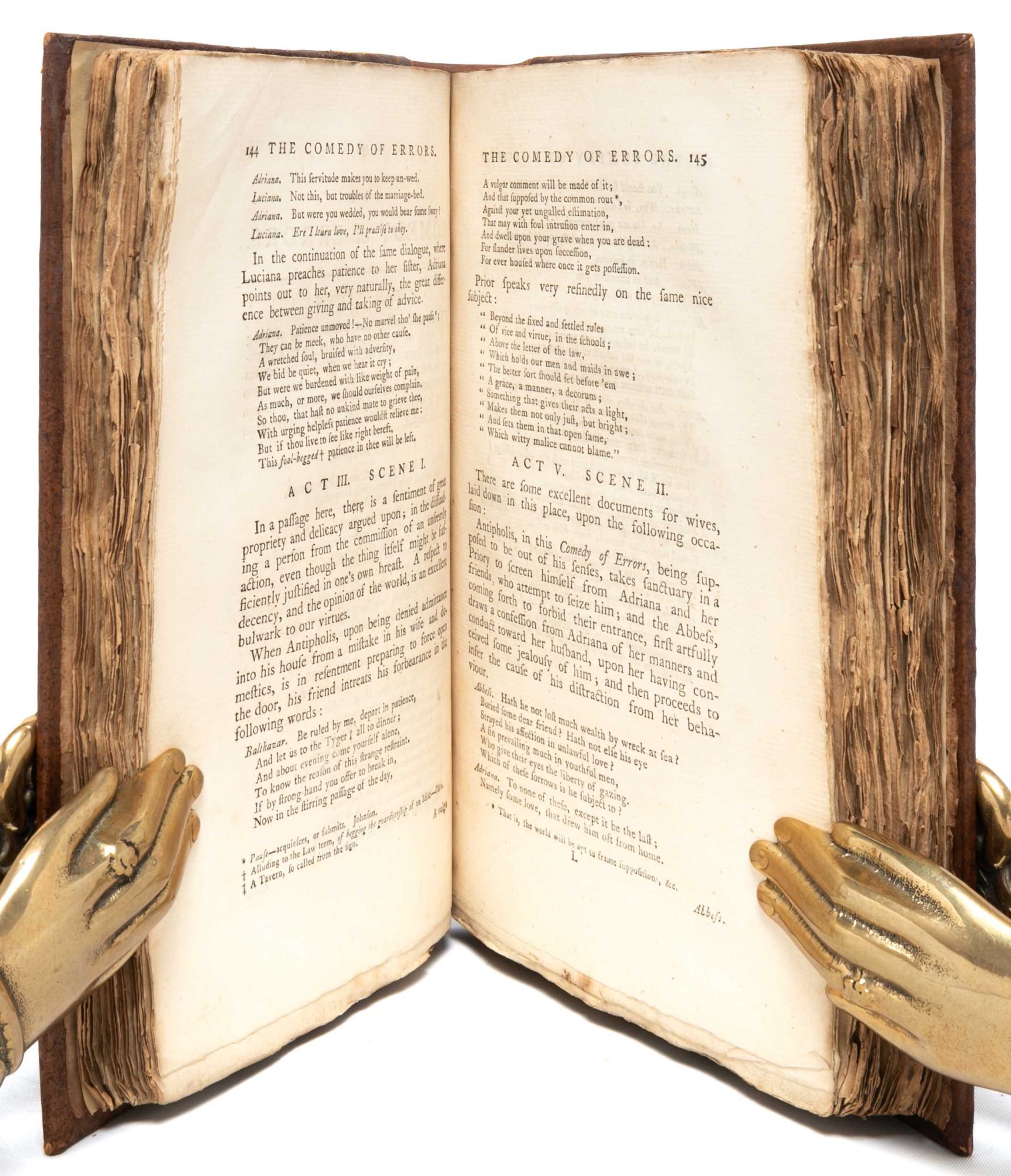
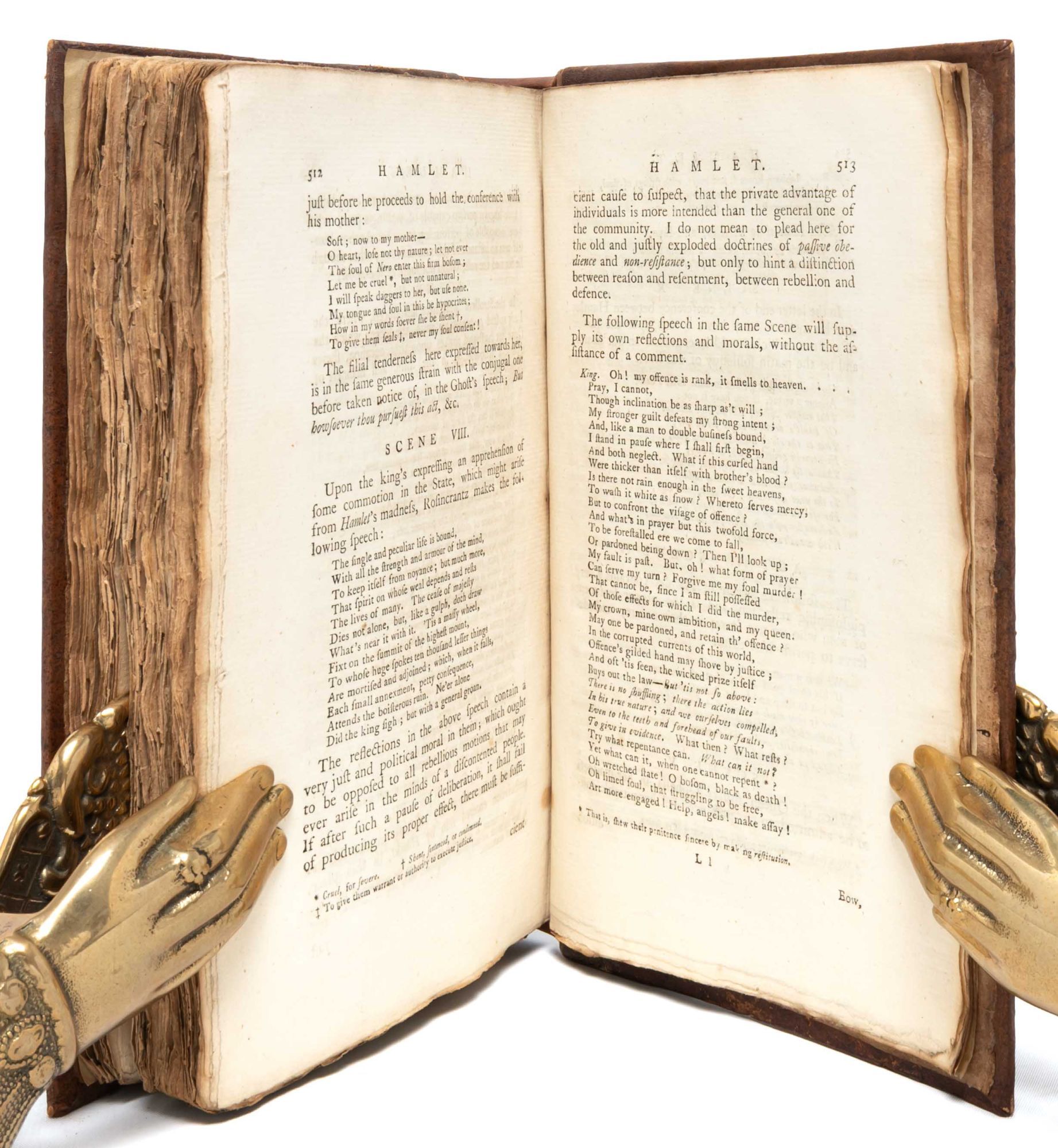

- London: T. Cadell in the Strand, 1775
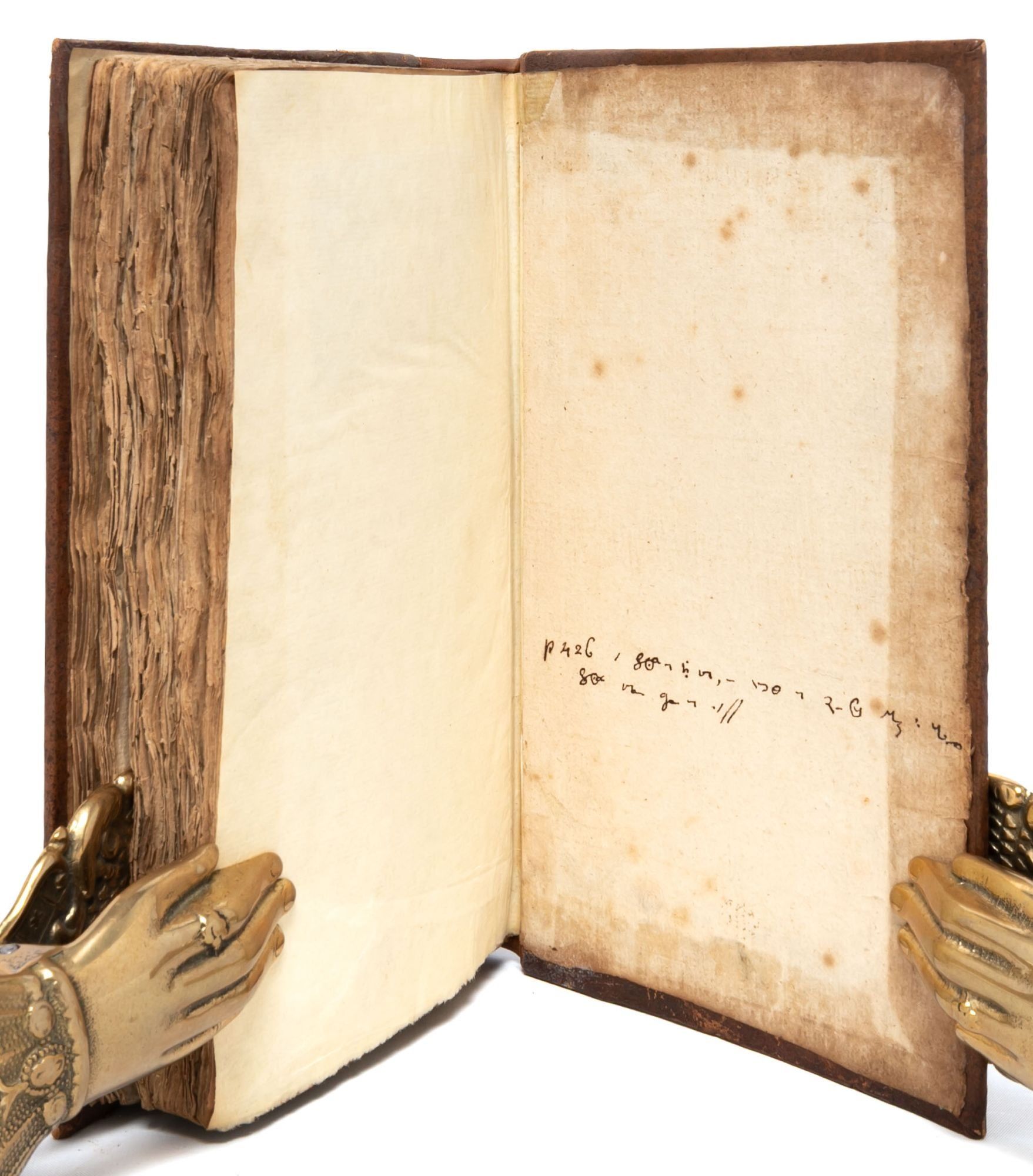
London: T. Cadell in the Strand, 1775. First edition. Very Good. Octavo. Pages measuring 135 x 220mm and collating complete including frontispiece: xiii, [3], 528 pp. Contemporary calf rebacked with new spine. A large, untrimmed copy. Some toning to first and last few leaves and offsetting to title-page from frontispiece. Contemporary ink notation to lower pastedown. Otherwise, a very clean copy of an uncommon and important work. Very Good.
At a time when Voltaire and his literati questioned the artistic value of Shakespeare's works, a group of Bluestockings rose up in his defense, positing his lasting importance. While Charlotte Lennox's three-volume Shakespeare Illustrated (1753 - 1754) laid the groundwork for female literary critics' involvement with the Bard, "Griffith's work paved the way for an emerging critical association between Shakespeare and national identity that was to gain strength and dominate literary criticism in the Romantic period and beyond" (Eger). Unlike Lennox, who tagged Shakespeare as unoriginal and lacking in rigor at times, Griffith asserts that "he is a Classic, a contemporary with all ages"; and she draws attention both to his enhancement of the English language as well as to the very British "code of morality" that he infuses into his plays. "My intention in this work was not only to propound the beauties of the Poet, but to expound the document of the Moralist...I have ever thought him by much the greatest poet of our nation...I am of an opinion that we need not surrender the British Palm either to the Grecian Bay or the Roman Laurel." Rather than privileging the classical writers of antiquity and losing sight of the contributions of their own countrymen, the British should celebrate how one of their own has shaped the world. In The Female Spectator, contemporary Eliza Haywood noted the key role women like Griffith were playing in cementing Shakespeare's place in the canon. "Some ladies indeed have shewn a truly public Spirit in rescuing the admirable yet almost forgotten Shakespeare from being totally sunk in oblivion: they have generously contributed to raise a monument to his memory...in preserving the fame of the dead Bard, they add a brightness to their own, which will shine to late posterity." In this sense, Griffith is not only promoting a long-dead male author; she is using his cultural capital to enhance her own, and to carve out space for women's voices within the field of canon-creation. Within the late eighteenth century, Griffith and her cohort were recognized and successful in their efforts. They published criticism. They urged London's theatrical managers to include Shakespeare in their repertories. They purchased copies of Shakespeare's work. "Yet Haywood's optimistic prophecy that these ladies would enjoy adequate reward for their labors in the glories of posterity has unfortunately proved mistaken. Women's contribution to 'preserving the long-dead Bard' has largely been forgotten, despite their pioneering role as agents of change in the history of his reputation" (Eger). The Morality of Shakespeare's Drama Illustrated is surviving evidence of that work. Further, the balance Griffith strikes in her book educates us about early women's methods of accomplishing public intellectual engagement while dodging extreme criticism. After all, Griffith tackles plays from Macbeth, to Cymbeline, to Othello – texts that deal in the "unfeminine" topics of regicide, incest, and miscegenation – always emphasizing how reading Shakespeare encourages national pride in ways that justify her interaction with them.
ESTC T127561. Very Good.
At a time when Voltaire and his literati questioned the artistic value of Shakespeare's works, a group of Bluestockings rose up in his defense, positing his lasting importance. While Charlotte Lennox's three-volume Shakespeare Illustrated (1753 - 1754) laid the groundwork for female literary critics' involvement with the Bard, "Griffith's work paved the way for an emerging critical association between Shakespeare and national identity that was to gain strength and dominate literary criticism in the Romantic period and beyond" (Eger). Unlike Lennox, who tagged Shakespeare as unoriginal and lacking in rigor at times, Griffith asserts that "he is a Classic, a contemporary with all ages"; and she draws attention both to his enhancement of the English language as well as to the very British "code of morality" that he infuses into his plays. "My intention in this work was not only to propound the beauties of the Poet, but to expound the document of the Moralist...I have ever thought him by much the greatest poet of our nation...I am of an opinion that we need not surrender the British Palm either to the Grecian Bay or the Roman Laurel." Rather than privileging the classical writers of antiquity and losing sight of the contributions of their own countrymen, the British should celebrate how one of their own has shaped the world. In The Female Spectator, contemporary Eliza Haywood noted the key role women like Griffith were playing in cementing Shakespeare's place in the canon. "Some ladies indeed have shewn a truly public Spirit in rescuing the admirable yet almost forgotten Shakespeare from being totally sunk in oblivion: they have generously contributed to raise a monument to his memory...in preserving the fame of the dead Bard, they add a brightness to their own, which will shine to late posterity." In this sense, Griffith is not only promoting a long-dead male author; she is using his cultural capital to enhance her own, and to carve out space for women's voices within the field of canon-creation. Within the late eighteenth century, Griffith and her cohort were recognized and successful in their efforts. They published criticism. They urged London's theatrical managers to include Shakespeare in their repertories. They purchased copies of Shakespeare's work. "Yet Haywood's optimistic prophecy that these ladies would enjoy adequate reward for their labors in the glories of posterity has unfortunately proved mistaken. Women's contribution to 'preserving the long-dead Bard' has largely been forgotten, despite their pioneering role as agents of change in the history of his reputation" (Eger). The Morality of Shakespeare's Drama Illustrated is surviving evidence of that work. Further, the balance Griffith strikes in her book educates us about early women's methods of accomplishing public intellectual engagement while dodging extreme criticism. After all, Griffith tackles plays from Macbeth, to Cymbeline, to Othello – texts that deal in the "unfeminine" topics of regicide, incest, and miscegenation – always emphasizing how reading Shakespeare encourages national pride in ways that justify her interaction with them.
ESTC T127561. Very Good.