

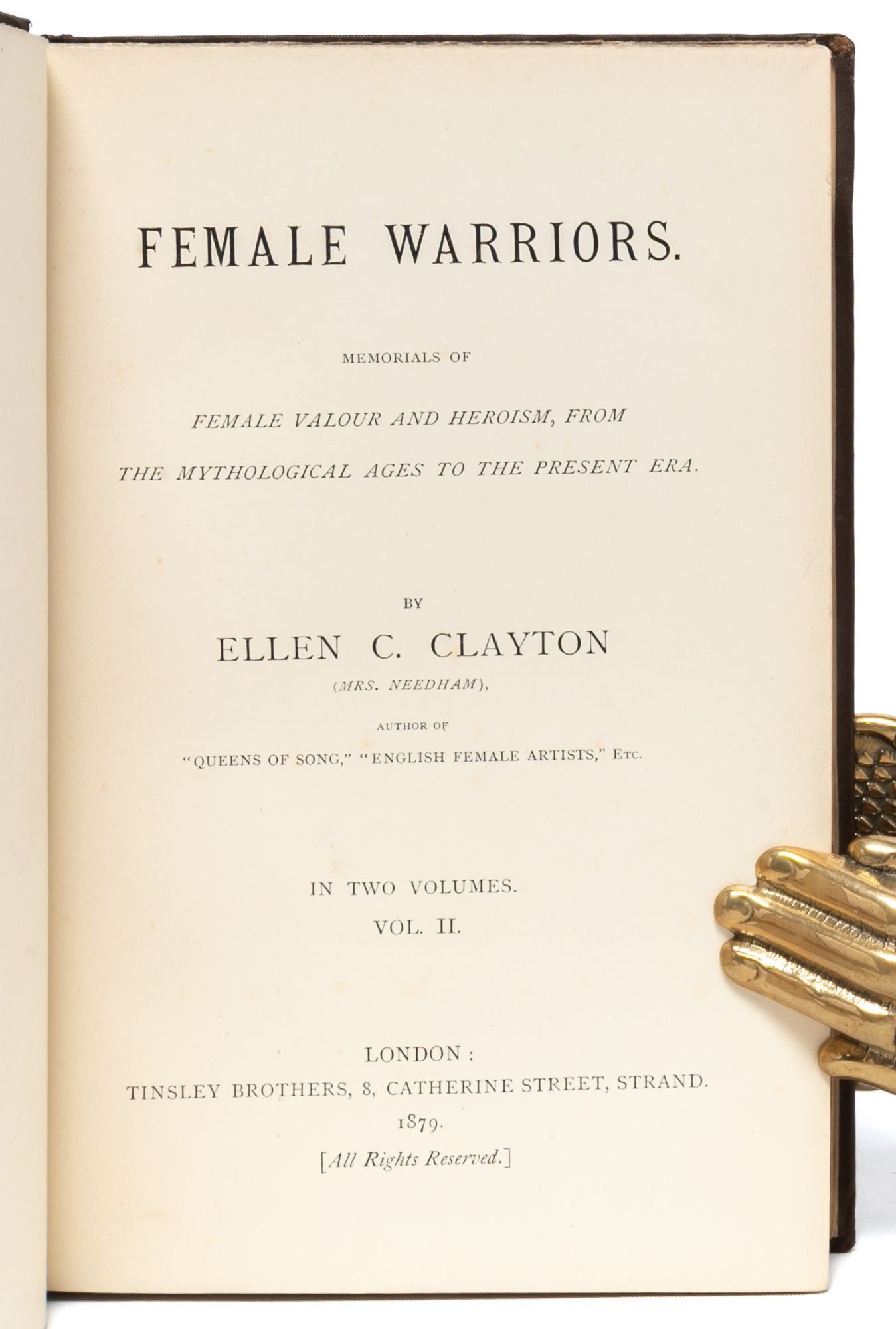
Female Warriors. Memorials of Female Valour and Heroism, from the Mythological Ages to the Present Era
- London: Tinsley Brothers, 1879
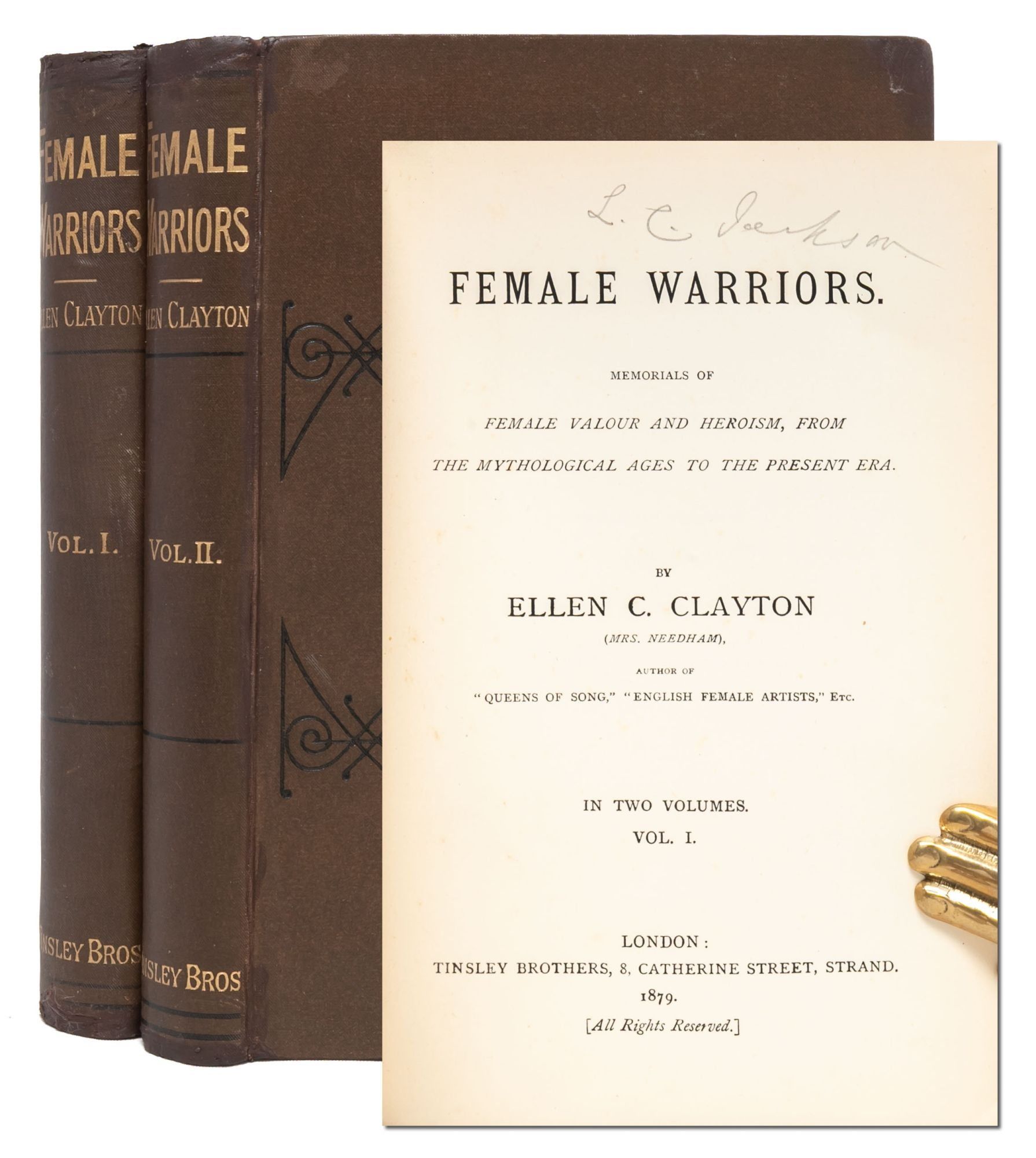
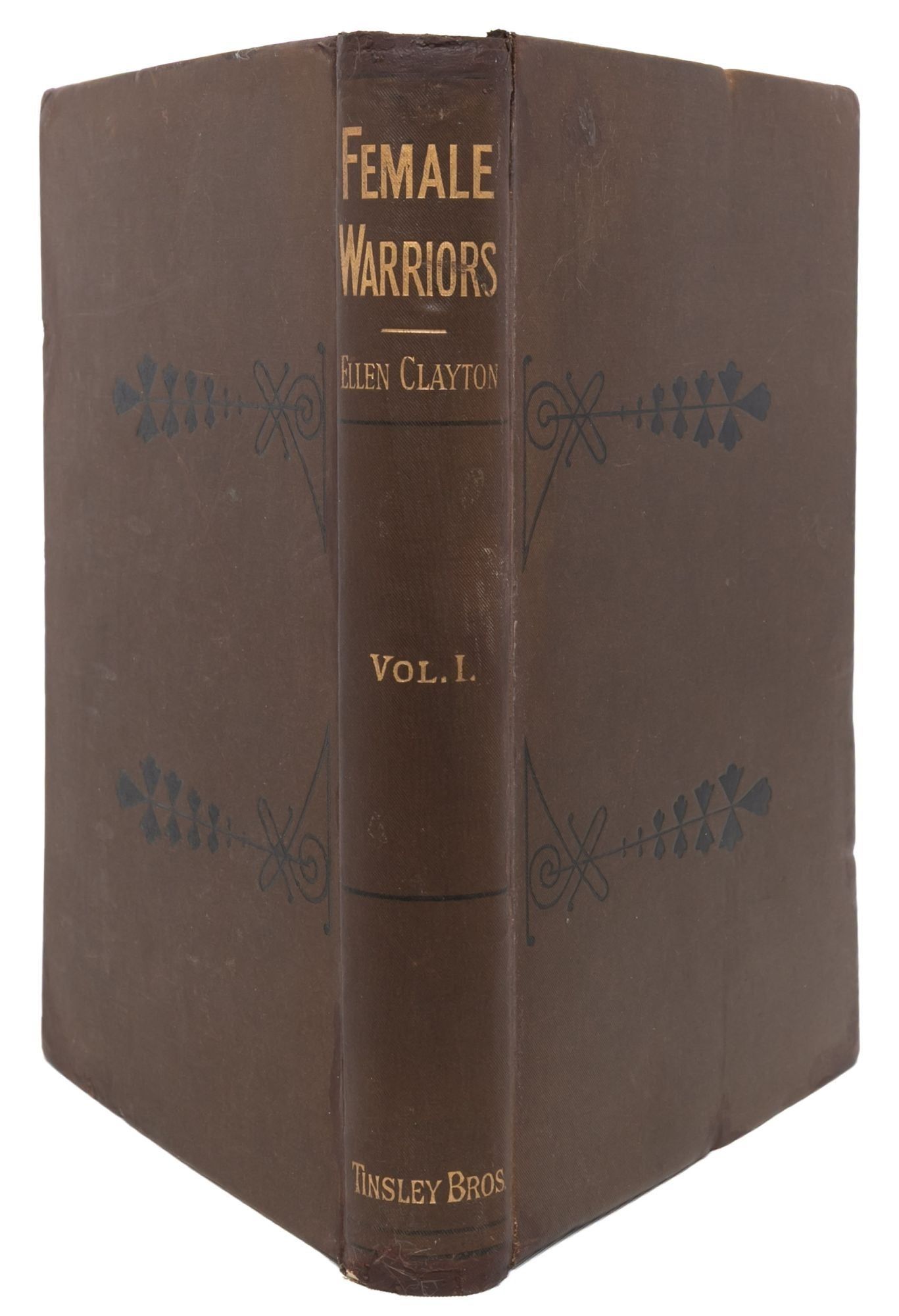
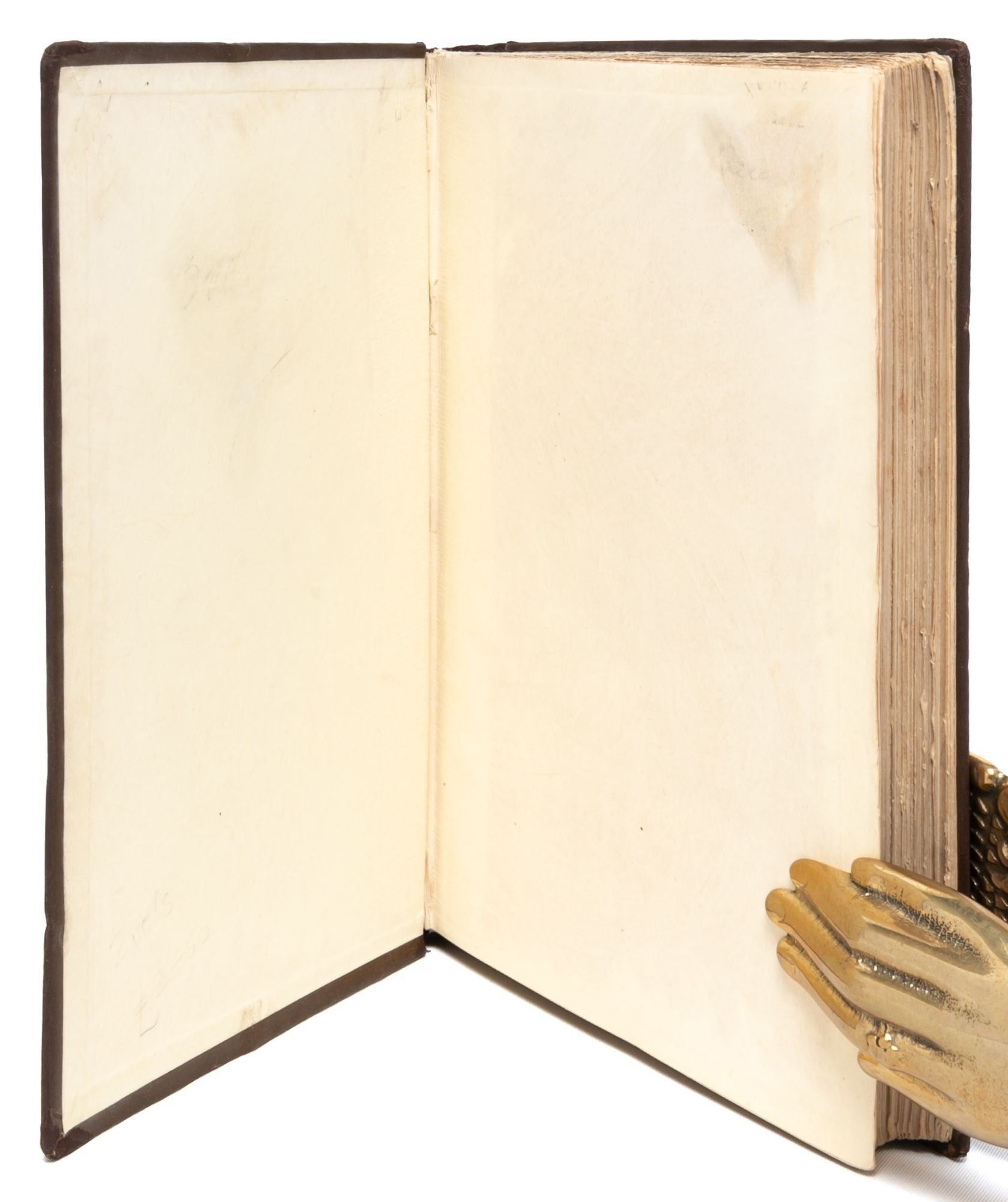
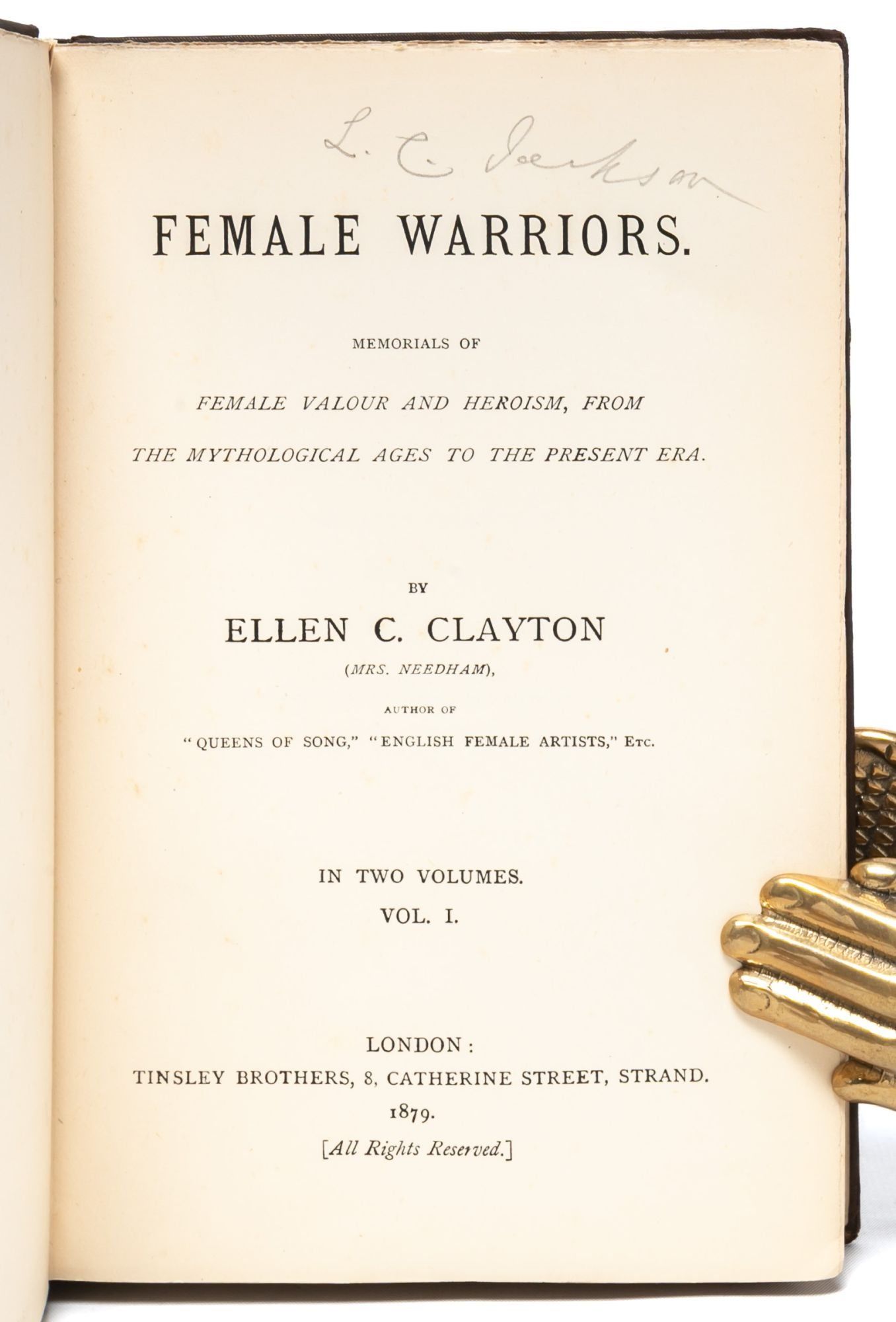
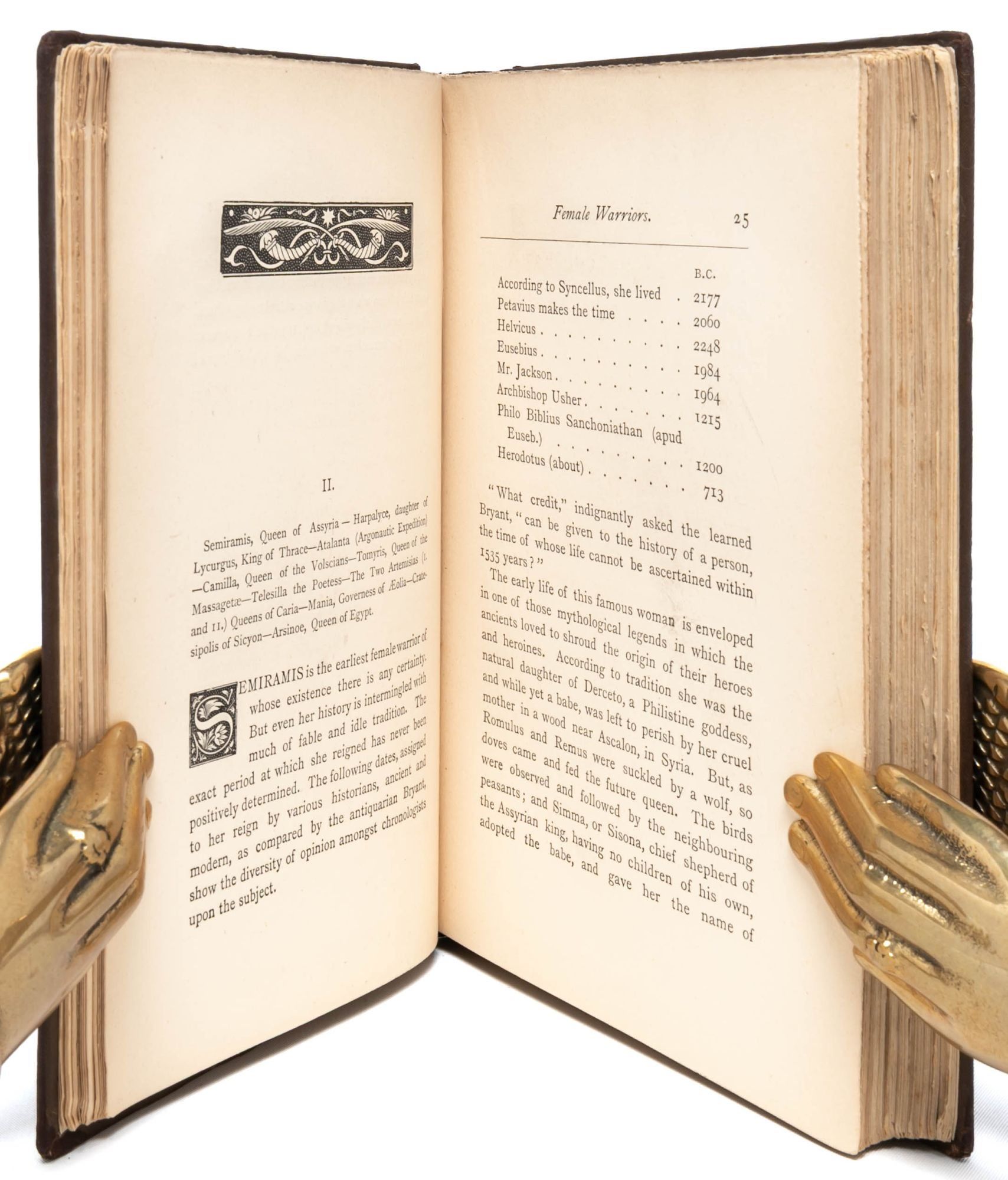
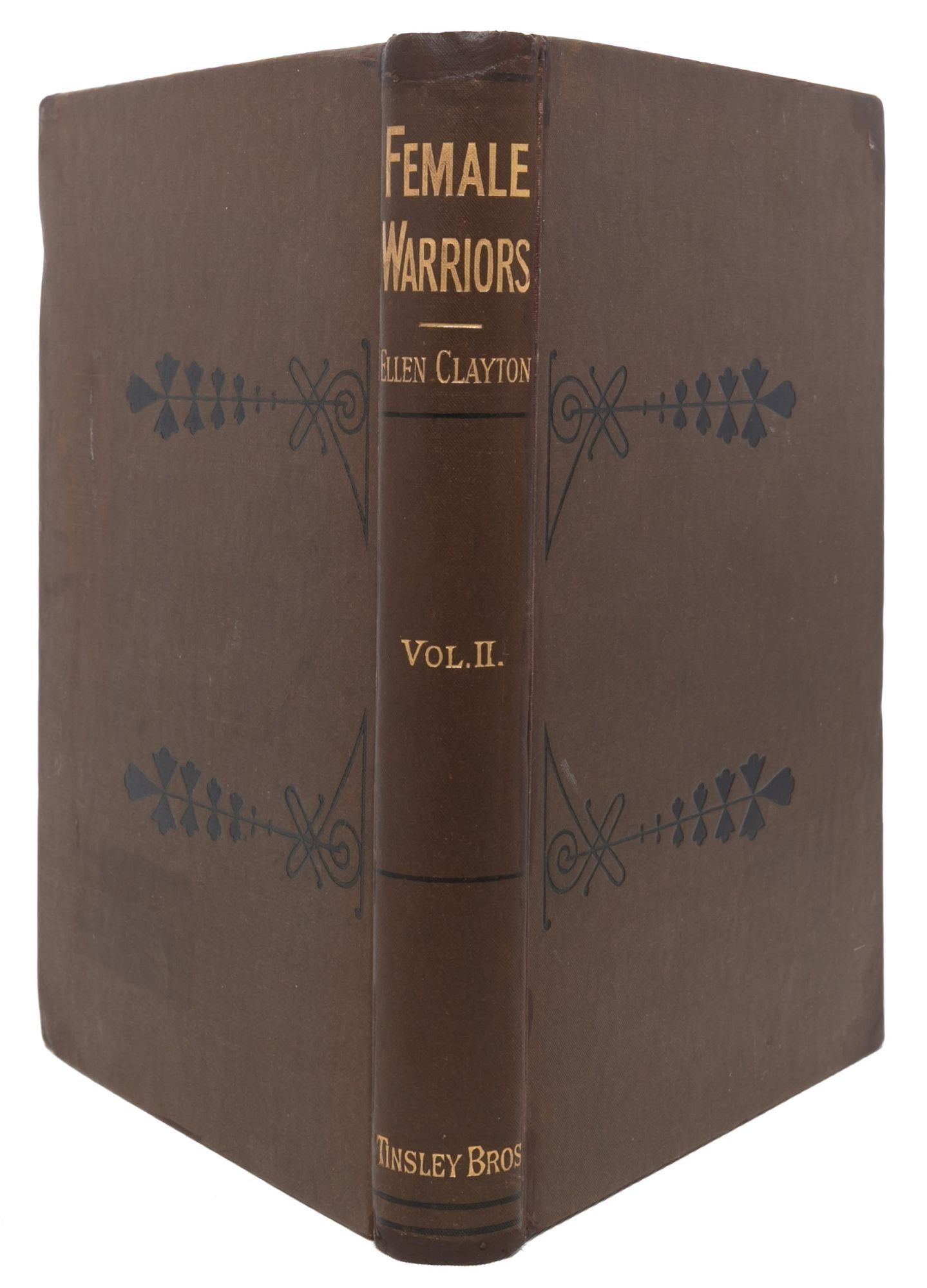
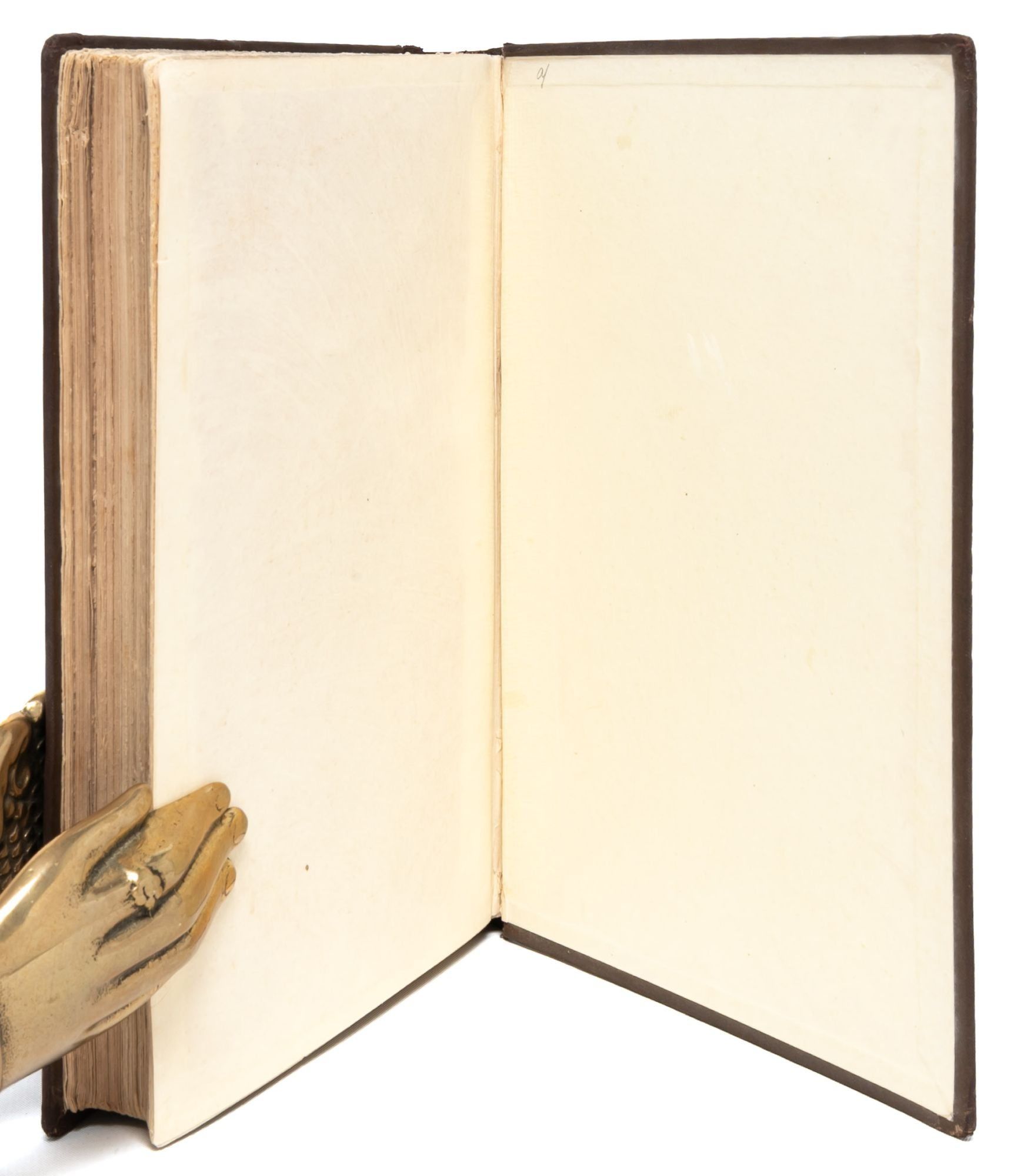
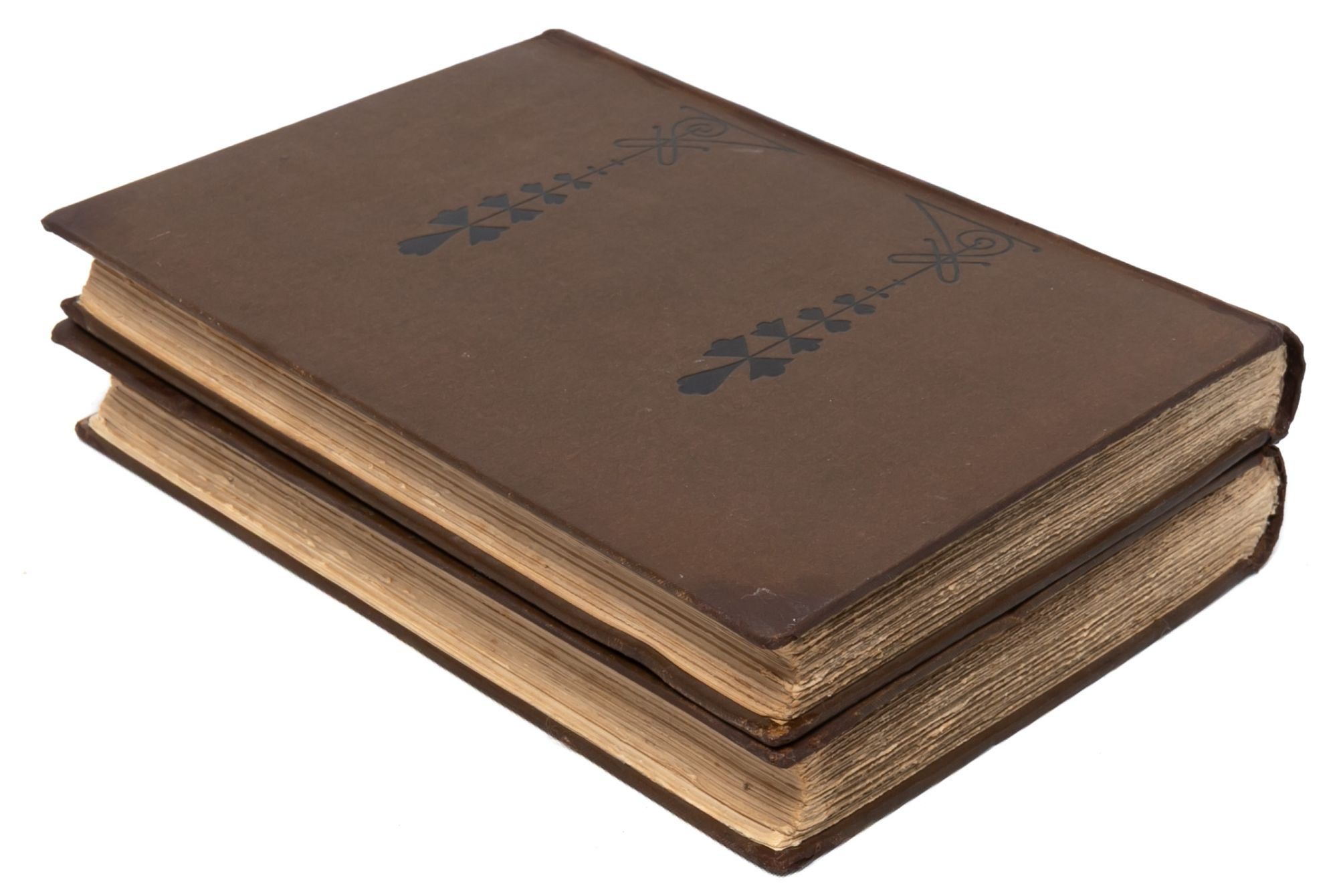
London: Tinsley Brothers, 1879. First edition. Very Good. Two volumes, octavo. xvi, 222, [4, ads]; viii, 203 pp. Publisher’s brown cloth stamped in black and titled in gilt to spine. Head and tail of each spine restored. Cracking to inner hinges but bindings still holding firm. Contemporary pencil ownership signature (L.C. Jackson) to margin of volume one title-page. A Very Good, clean example of this uncommon and unusual entry in the female biography genre.
Following in the footsteps of writers like Mary Hays, Female Warriors is an excellent example of a woman writer using the genre of female biography to reexamine history and make arguments about women’s character; Clayton, specifically, uses the histories of women leaders to imagine a future in which women in power could be commonplace. She highlights women warriors from antiquity to the mid-nineteenth century, from Judith of Abyssinia to Christian Davies and Hannah Snell; from the Amazons of classical myth to Irish, Greek, and American revolutionary fighters.
In the introductory chapter of the work, Clayton clearly expresses that she intended the work as a historical and philosophical argument for women’s equality. Notably, Clayton opines that both the social disenfranchisement and the perceived “innate” physical weakness of women are actually the result of generations of oppression. Citing Plato, she argues that “if the girls were trained like the boys, in athletic sports and warlike exercises, and were taught to endure fatigue, they would soon cease to be the weaker sex, and could not only fight as well as their lords and masters, but might take the command of armies and fleets” (p. 4). Ultimately, Clayton identifies women’s disenfranchisement as a result of social structures rather than innate characteristics, and argues that historical incidents of women’s bravery and leadership offer a roadmap to future liberation.
Ellen C. Clayton (1834 – 1900) was best known for her two-volume encyclopedia English Female Artists (1876), though she also authored Notable Women: A Book for Young Ladies (1859) and Queens of Song: Being memoirs of some of the most celebrated female vocalists... (1865). Clayton's bibliography evidences her interest in women's histories and her attempts to preserve those histories for new generations of women readers. Very Good.
Following in the footsteps of writers like Mary Hays, Female Warriors is an excellent example of a woman writer using the genre of female biography to reexamine history and make arguments about women’s character; Clayton, specifically, uses the histories of women leaders to imagine a future in which women in power could be commonplace. She highlights women warriors from antiquity to the mid-nineteenth century, from Judith of Abyssinia to Christian Davies and Hannah Snell; from the Amazons of classical myth to Irish, Greek, and American revolutionary fighters.
In the introductory chapter of the work, Clayton clearly expresses that she intended the work as a historical and philosophical argument for women’s equality. Notably, Clayton opines that both the social disenfranchisement and the perceived “innate” physical weakness of women are actually the result of generations of oppression. Citing Plato, she argues that “if the girls were trained like the boys, in athletic sports and warlike exercises, and were taught to endure fatigue, they would soon cease to be the weaker sex, and could not only fight as well as their lords and masters, but might take the command of armies and fleets” (p. 4). Ultimately, Clayton identifies women’s disenfranchisement as a result of social structures rather than innate characteristics, and argues that historical incidents of women’s bravery and leadership offer a roadmap to future liberation.
Ellen C. Clayton (1834 – 1900) was best known for her two-volume encyclopedia English Female Artists (1876), though she also authored Notable Women: A Book for Young Ladies (1859) and Queens of Song: Being memoirs of some of the most celebrated female vocalists... (1865). Clayton's bibliography evidences her interest in women's histories and her attempts to preserve those histories for new generations of women readers. Very Good.