

[artifact, microscope] New Universal Type Microscope
![[artifact, microscope] New Universal Type Microsco](https://d3525k1ryd2155.cloudfront.net/h/200/605/1717605200.0.x.jpg)
- unknown: Unknown, 1775
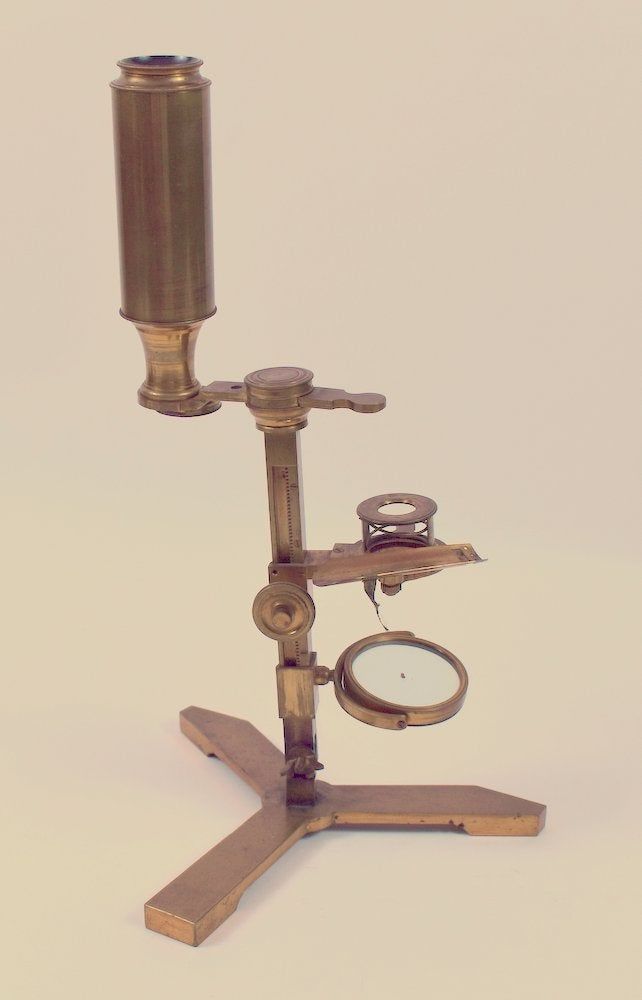
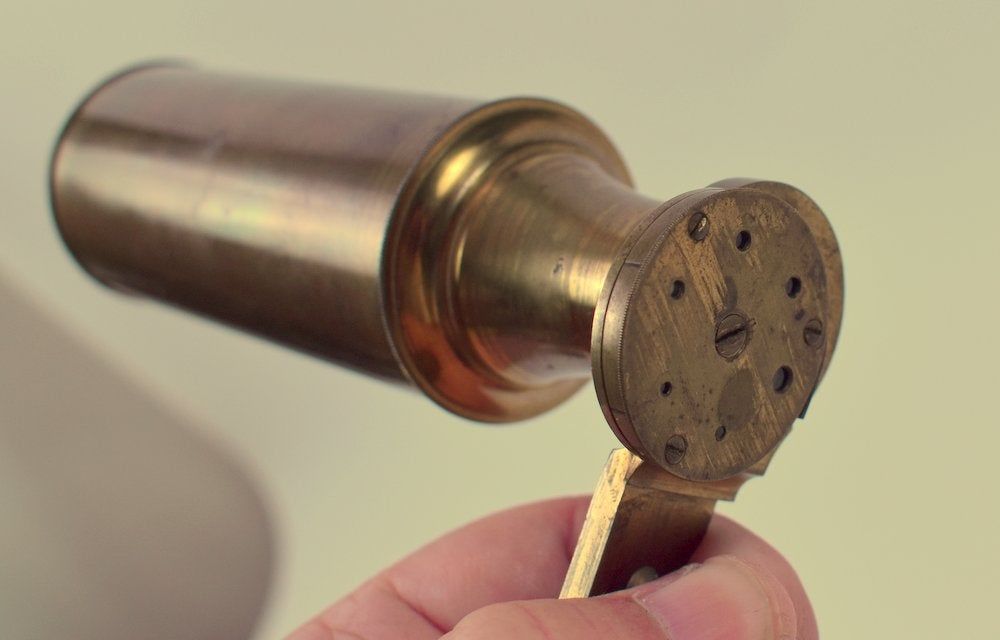
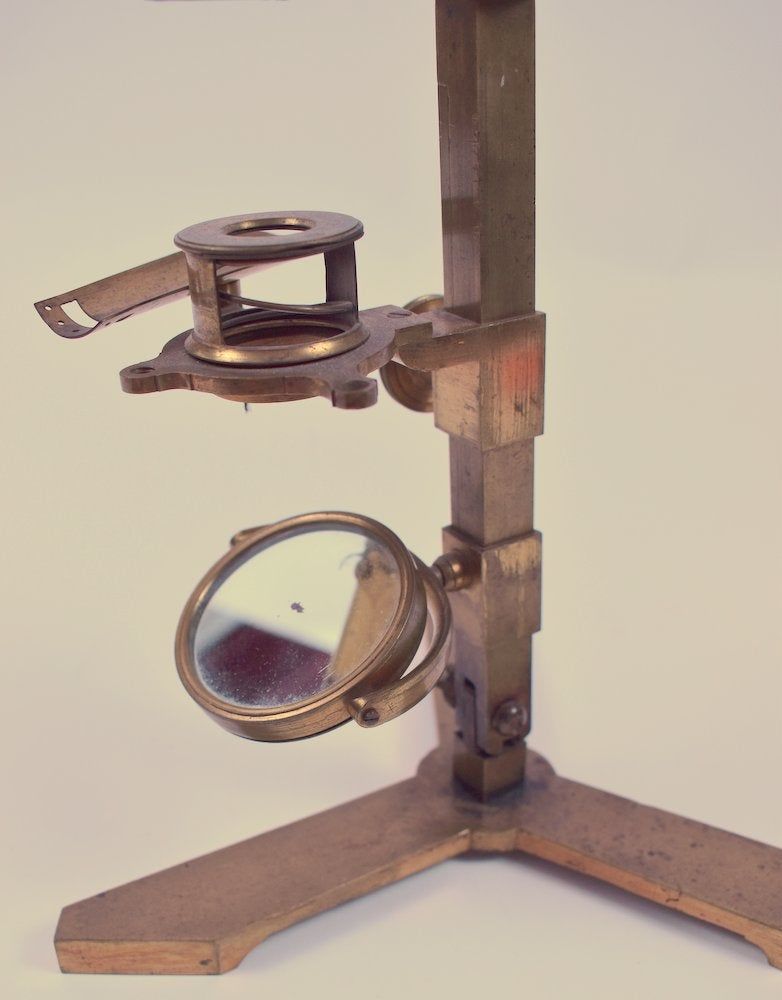
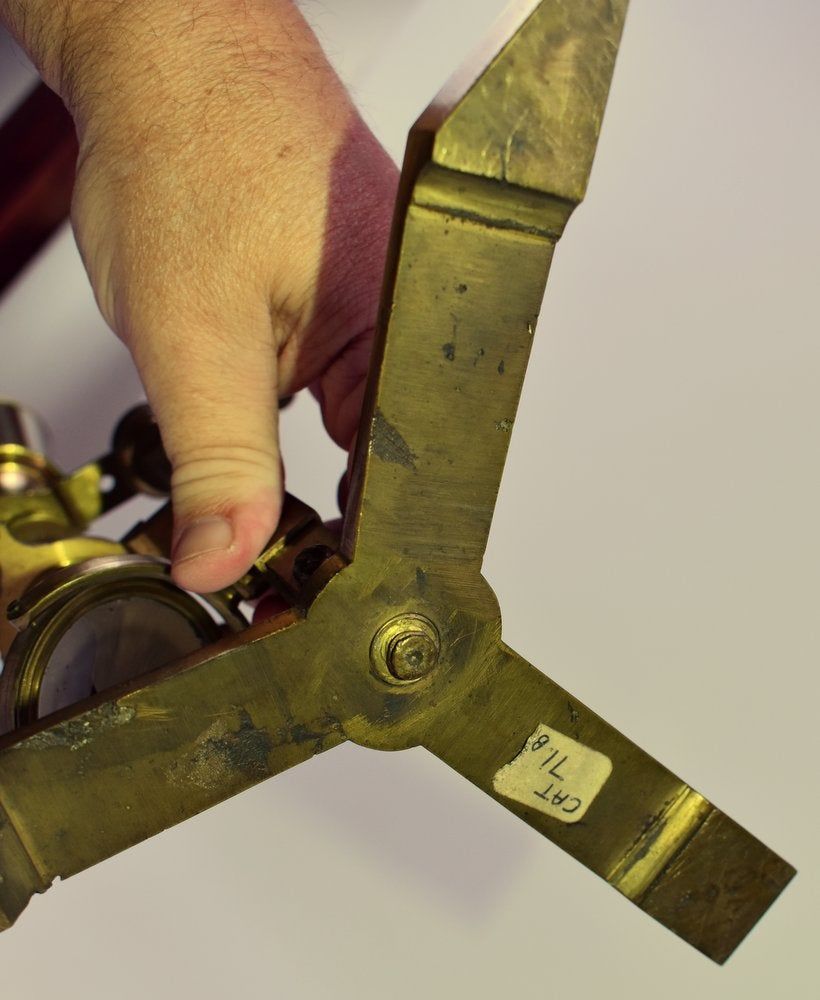
unknown: Unknown, 1775. Good. All brass and glass construction. 14 1/2 inches tall. Base legs are about 8 inches apart. Has a frog assembly (silk mostly perished). The gross focus works smoothly. One small screw missing on gross focus assembly. Patina uniform, with perhaps 20- 30% of original remaining. Paper tag on bottom: "Cat 71B". Multiple aperture lenses rotate smoothly. The top of the pillar arm assembly tightening screw works nicely allowing the top body arm to move in and out relative to the lower body of the microscope. The top body assembly also rotates 360 degrees on the lower pillar (presumably for teaching purposes). We have not tested the optics. An interesting instrument!
NOTE: SHIPPING WILL BE AT COST - IF YOU ORDER THROUGH OUR WEBSITE WE WILL ADJUST SHIPPING CHARGES APPROPRIATELY. Howard Schwartz in his catalog describes this microscope thus:
"This is a microscope of the type designed by Benjamin Martin. It contains an 'in-between' field lens in the tube and a mirror that heigtens illumination of the specimen. The stage - the support for the specimen of sluide to be examined - is a Bonanni type of spring stage..incorporating a hinge at the base ofr tilting the microscope. Six objective lenses are located in a rotating disk at the lower end of the microscope tube.
PROVENANCE: From the collection of Howard Schwartz
REFERENCES:
Schwartz, Howard, "Wonders of the Microscope!" an exhibition held at the University of Pennsylvania Libraries March 14-August 17, 2012. Illustrated on page 20.
NOTE: SHIPPING WILL BE AT COST - IF YOU ORDER THROUGH OUR WEBSITE WE WILL ADJUST SHIPPING CHARGES APPROPRIATELY. Howard Schwartz in his catalog describes this microscope thus:
"This is a microscope of the type designed by Benjamin Martin. It contains an 'in-between' field lens in the tube and a mirror that heigtens illumination of the specimen. The stage - the support for the specimen of sluide to be examined - is a Bonanni type of spring stage..incorporating a hinge at the base ofr tilting the microscope. Six objective lenses are located in a rotating disk at the lower end of the microscope tube.
PROVENANCE: From the collection of Howard Schwartz
REFERENCES:
Schwartz, Howard, "Wonders of the Microscope!" an exhibition held at the University of Pennsylvania Libraries March 14-August 17, 2012. Illustrated on page 20.