

Danebury: or The Power of Friendship. A Tale with Two Odes. By a Young Lady


- Bristol: W. Pine, 1779
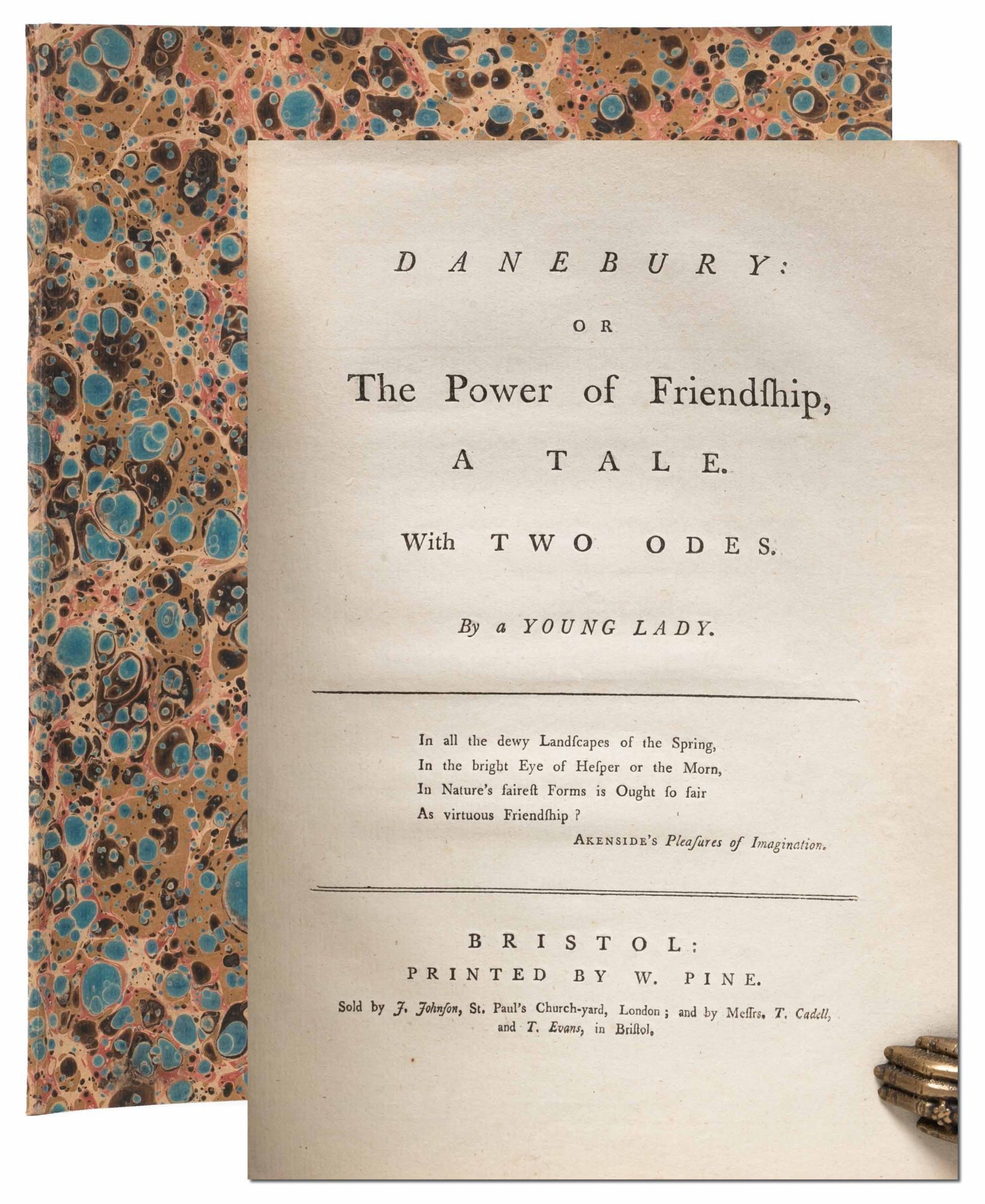
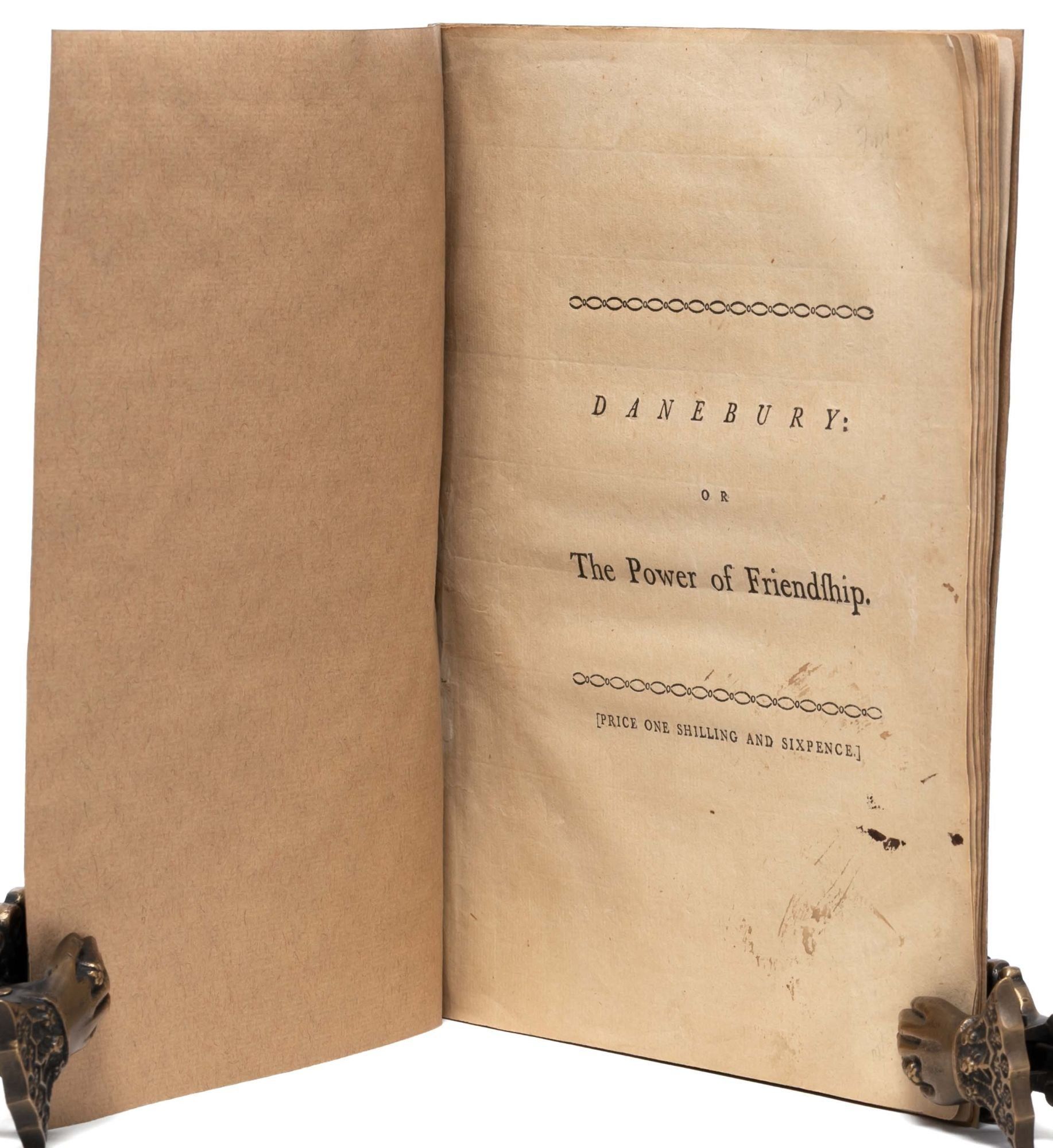
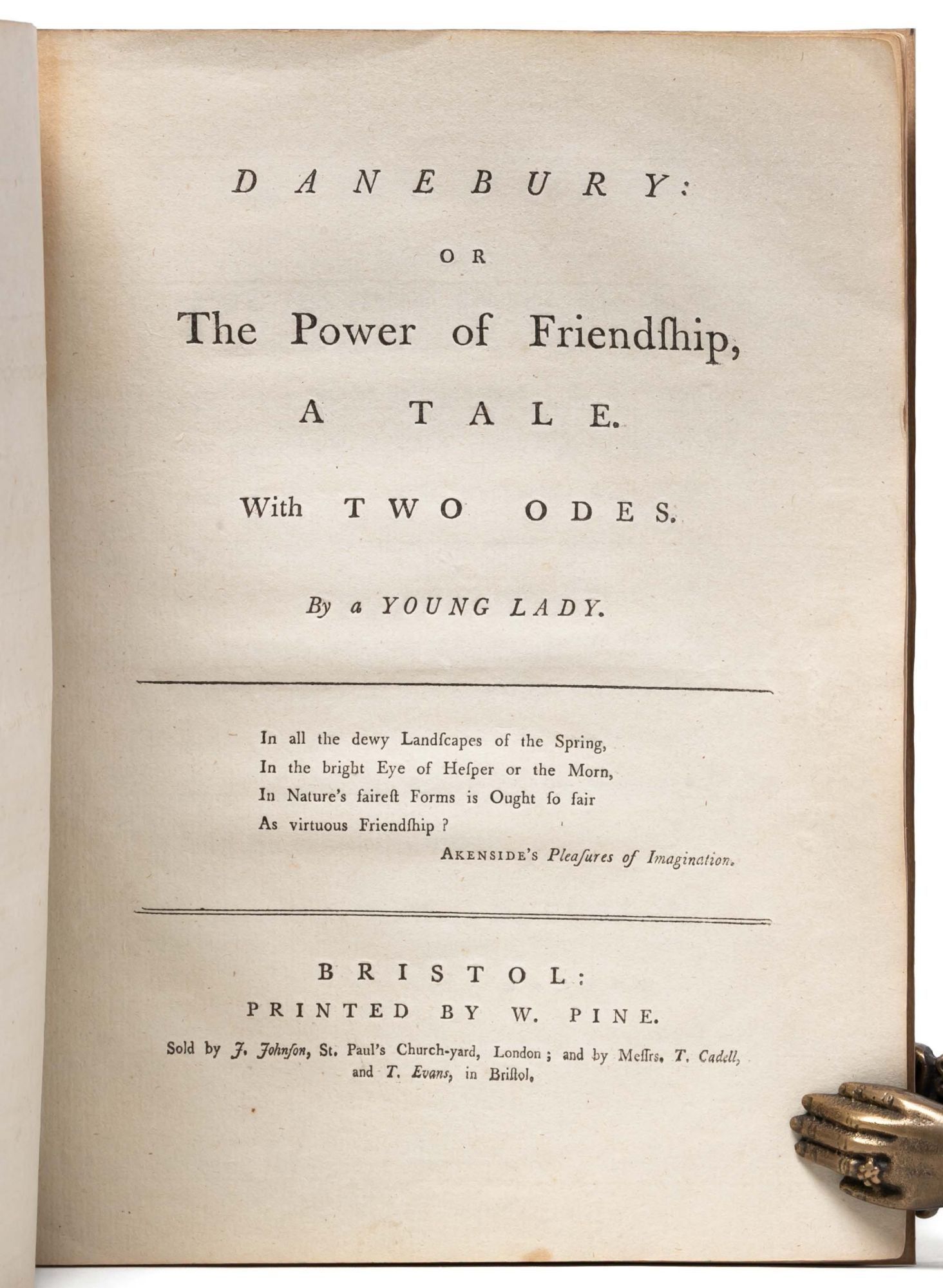
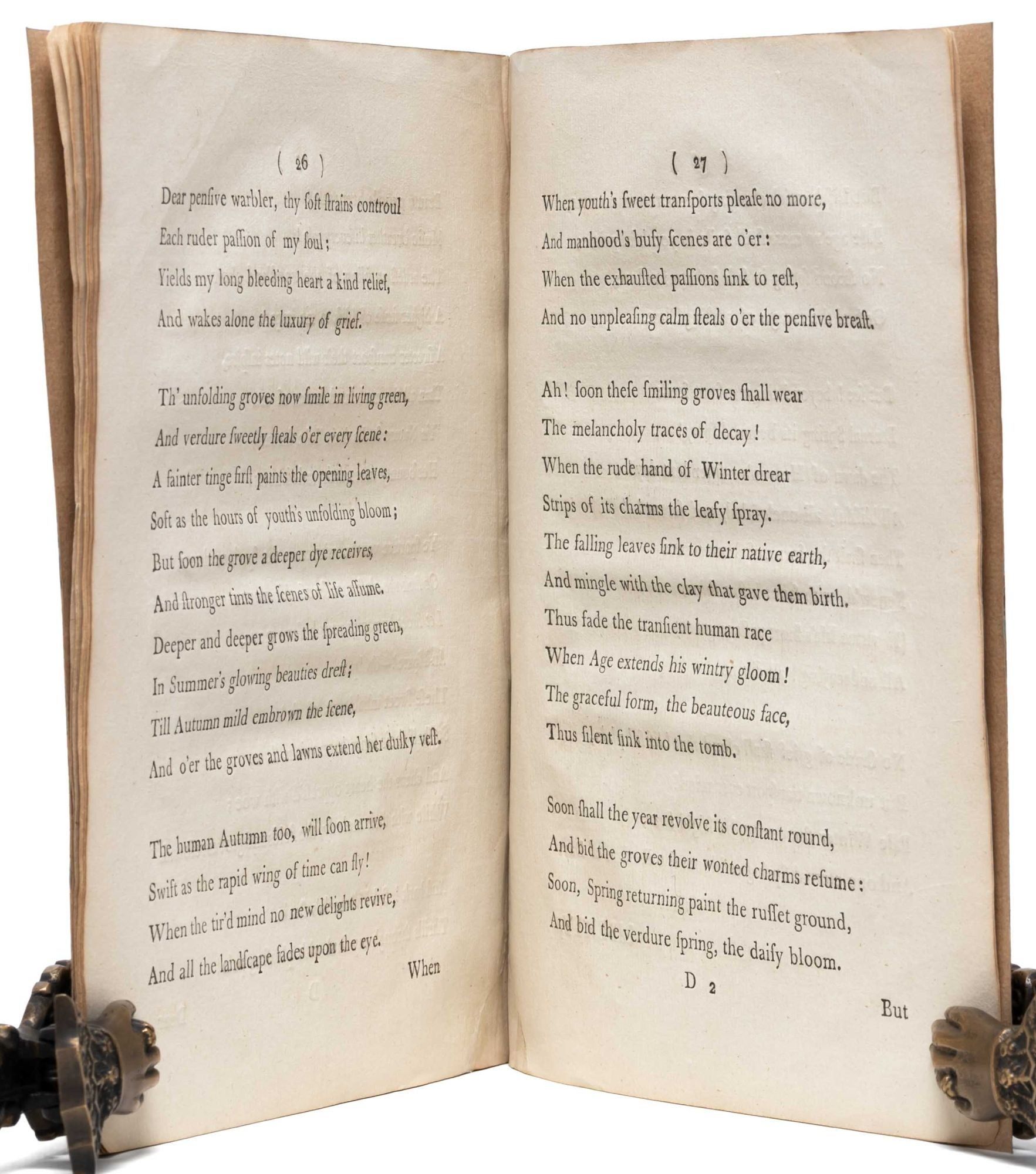
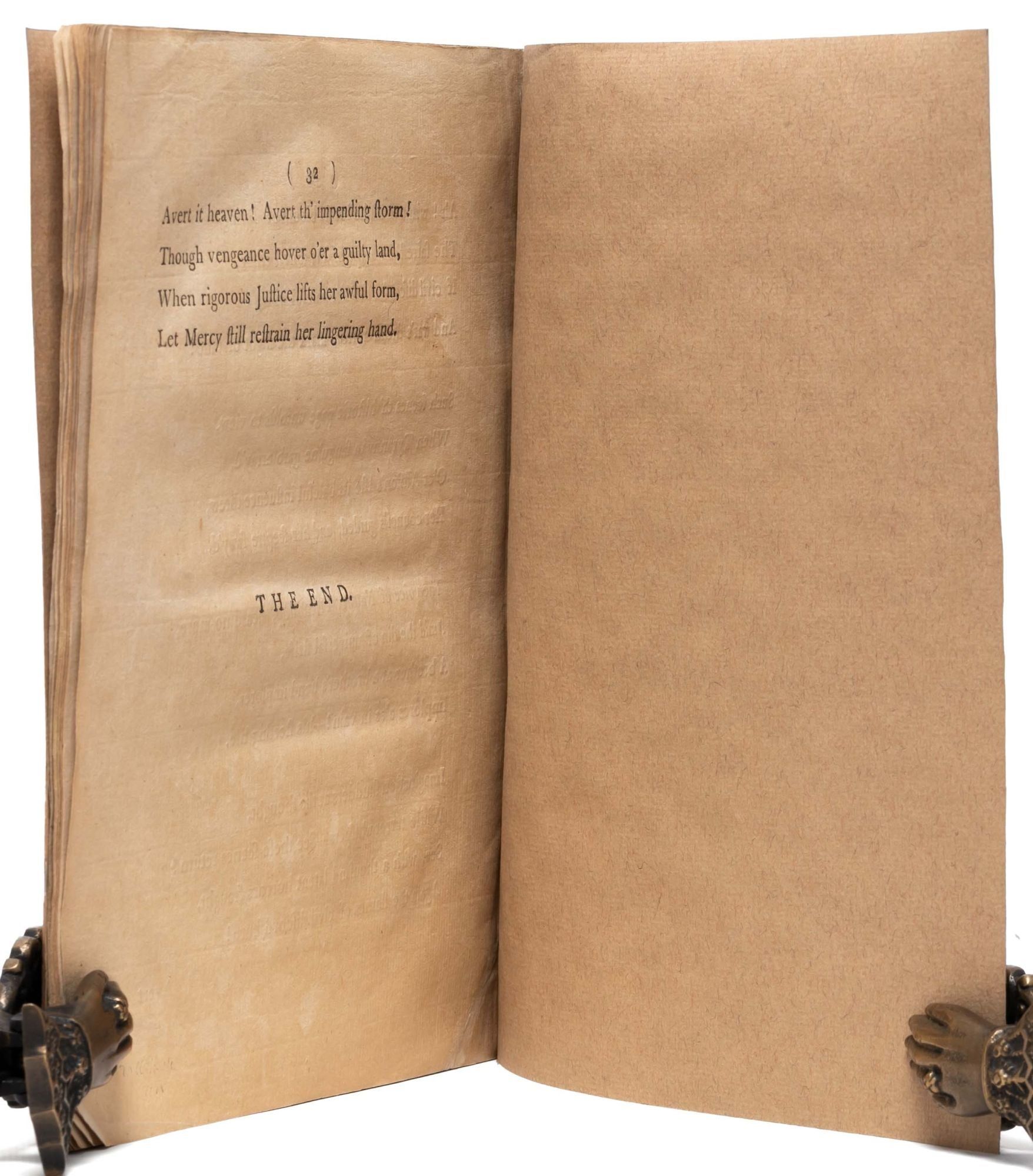
Bristol: W. Pine, 1779. First edition. Very Good +. Quarto. 32 pp. Complete, with the scarce half-tile. Rebound in nineteenth-century-style modern marbled paper wrappers. A bit of foxing to a few leaves, but remarkably clean and attractive overall. A Very Good+ copy of one of the author’s few published works. Date from Timothy Whelan and Julia B. Griffin’s Nonconformist Women Writers (2011). Note that OCLC records show various publication dates from 1775 to 1780, but the 1779 date provided by Whelan and Griffin seems to be the most rigorously documented. OCLC and ESTC record twelve copies in the United States. Scarce in commerce.
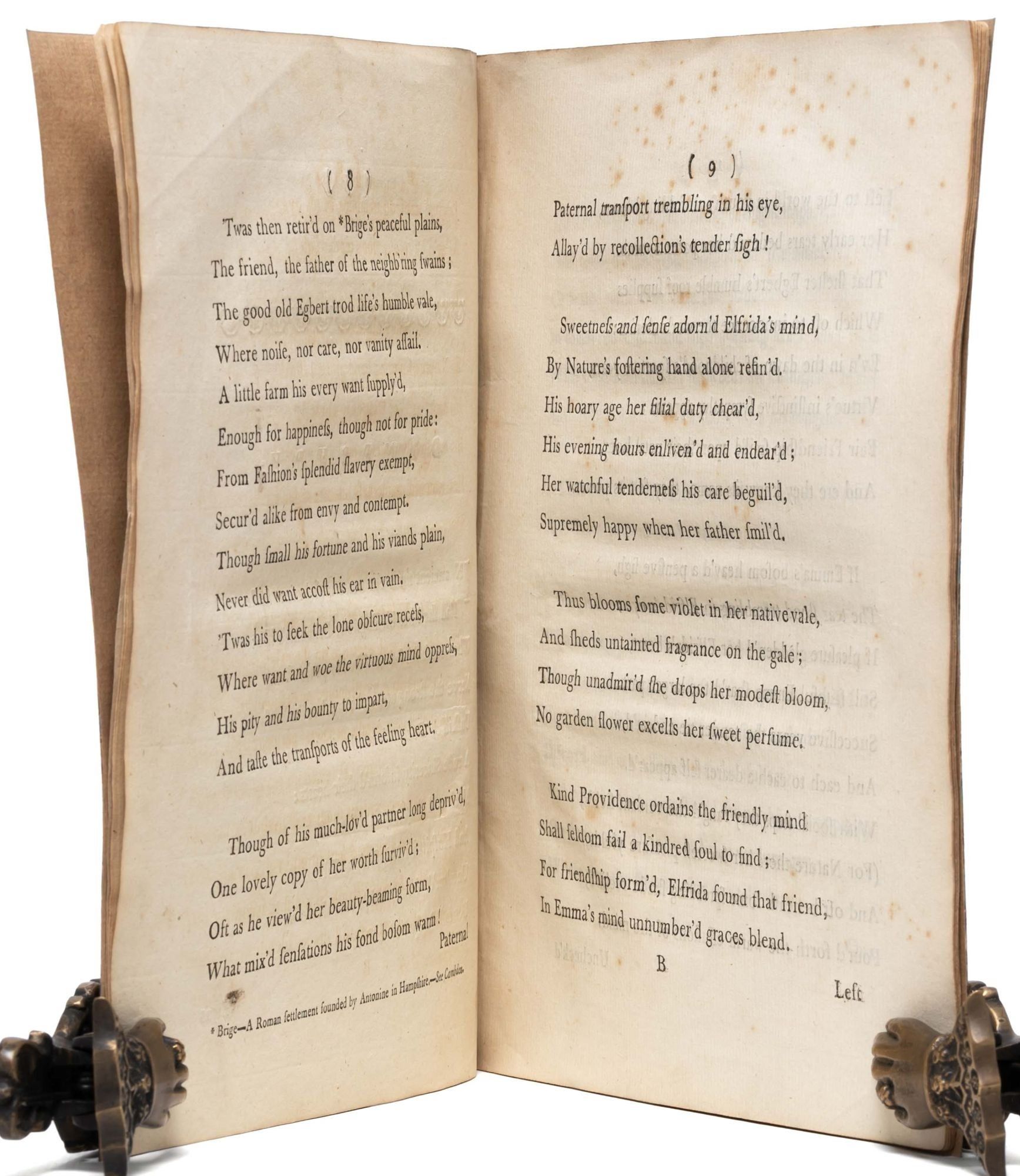
Danebury, a 250-line narrative poem in heroic couplets, is the major work of Nonconformist poet Mary Steele, later Duncombe (1753 – 1813). A manuscript collection of Steele’s poetry at Oxford contains the poem, with the annotation that she wrote it when she was only fifteen. Steele published only a few of her poems during her lifetime, and her remaining works, 139 poems and 137 letters, were not published until Steele’s inclusion in Whelan and Griffin’s Nonconformist Women Writers (2011). Steele was the niece of the influential Baptist poet Anne Steele (1717 – 1778), “one of the first British women hymn writers, and the first to become widely known” (Oxford DNB). According to Whelan, Mary was well regarded as a writer and shared “a collaborative and communal…artistic connection” with her aunt (Other British Voices, p. 24).
The title of the poem refers to Danebury Hill in Hampshire, which, according to the author’s advertisement, was the site of an ancient battle between the Danes and the West Saxons. The poem, in the words of scholar Christine L. Krueger, tells “the story of Elfrida and Emma, whose friendship restores Elfrida after she is injured in battle while trying to protect her father. Steele’s own father, significantly, is the addressee of her autobiography. Narrating her spiritual development, she credits him for teaching her about religion and for intellectual conversation.” Krueger also notes the possible significance of Steele’s poem to her broader literary and social circle: “Steele’s particular interest in local history subjects such as the battle of Danebury Hill is further evidence that women’s ‘domestic scholarship’ may have played a yet unrecognized role in the literary and philosophical organizations, antiquarian societies, and book collection groups in which nonconformists were active.”
Jackson, Romantic Poetry by Women, p. 316 (misattributed to Anne Steele); Krueger, Christine L. Marquette University English Faculty Research and Publications, v. 240; Whelan, Timothy. “Mary Steele and the Call to Poetry.” In Other British Voices (2015), p. 24. Very Good +.
Danebury, a 250-line narrative poem in heroic couplets, is the major work of Nonconformist poet Mary Steele, later Duncombe (1753 – 1813). A manuscript collection of Steele’s poetry at Oxford contains the poem, with the annotation that she wrote it when she was only fifteen. Steele published only a few of her poems during her lifetime, and her remaining works, 139 poems and 137 letters, were not published until Steele’s inclusion in Whelan and Griffin’s Nonconformist Women Writers (2011). Steele was the niece of the influential Baptist poet Anne Steele (1717 – 1778), “one of the first British women hymn writers, and the first to become widely known” (Oxford DNB). According to Whelan, Mary was well regarded as a writer and shared “a collaborative and communal…artistic connection” with her aunt (Other British Voices, p. 24).
The title of the poem refers to Danebury Hill in Hampshire, which, according to the author’s advertisement, was the site of an ancient battle between the Danes and the West Saxons. The poem, in the words of scholar Christine L. Krueger, tells “the story of Elfrida and Emma, whose friendship restores Elfrida after she is injured in battle while trying to protect her father. Steele’s own father, significantly, is the addressee of her autobiography. Narrating her spiritual development, she credits him for teaching her about religion and for intellectual conversation.” Krueger also notes the possible significance of Steele’s poem to her broader literary and social circle: “Steele’s particular interest in local history subjects such as the battle of Danebury Hill is further evidence that women’s ‘domestic scholarship’ may have played a yet unrecognized role in the literary and philosophical organizations, antiquarian societies, and book collection groups in which nonconformists were active.”
Jackson, Romantic Poetry by Women, p. 316 (misattributed to Anne Steele); Krueger, Christine L. Marquette University English Faculty Research and Publications, v. 240; Whelan, Timothy. “Mary Steele and the Call to Poetry.” In Other British Voices (2015), p. 24. Very Good +.