

Critik der reinen Vernunft
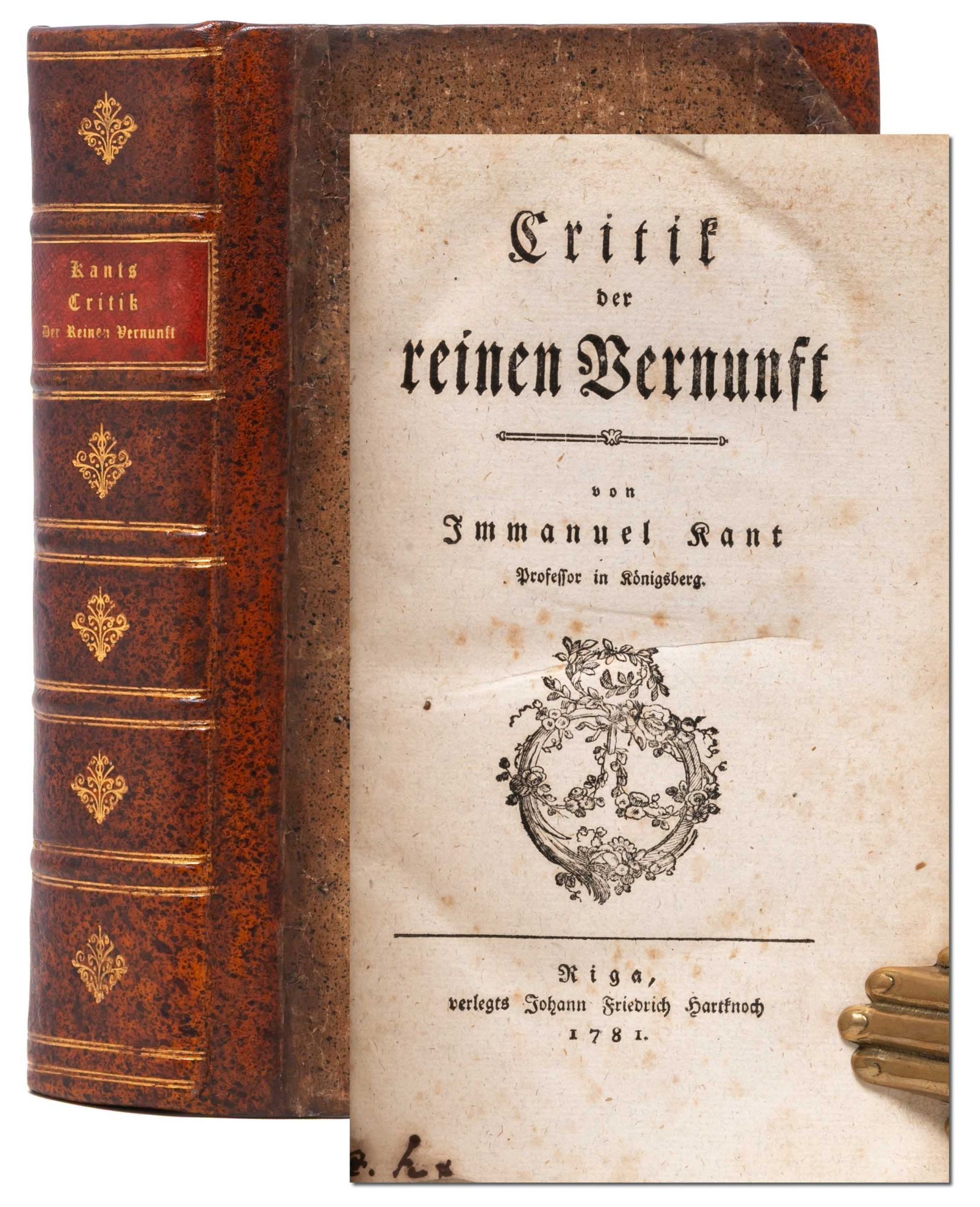
- Riga: Johann Friedrich Hartknoch, 1781
Riga: Johann Friedrich Hartknoch, 1781. First edition. Very Good +. First edition, an uncut copy, of one of the most influential philosophy books ever published: Kant himself (very modestly) judged the work as comparable with the Copernican heliocentric revolution.
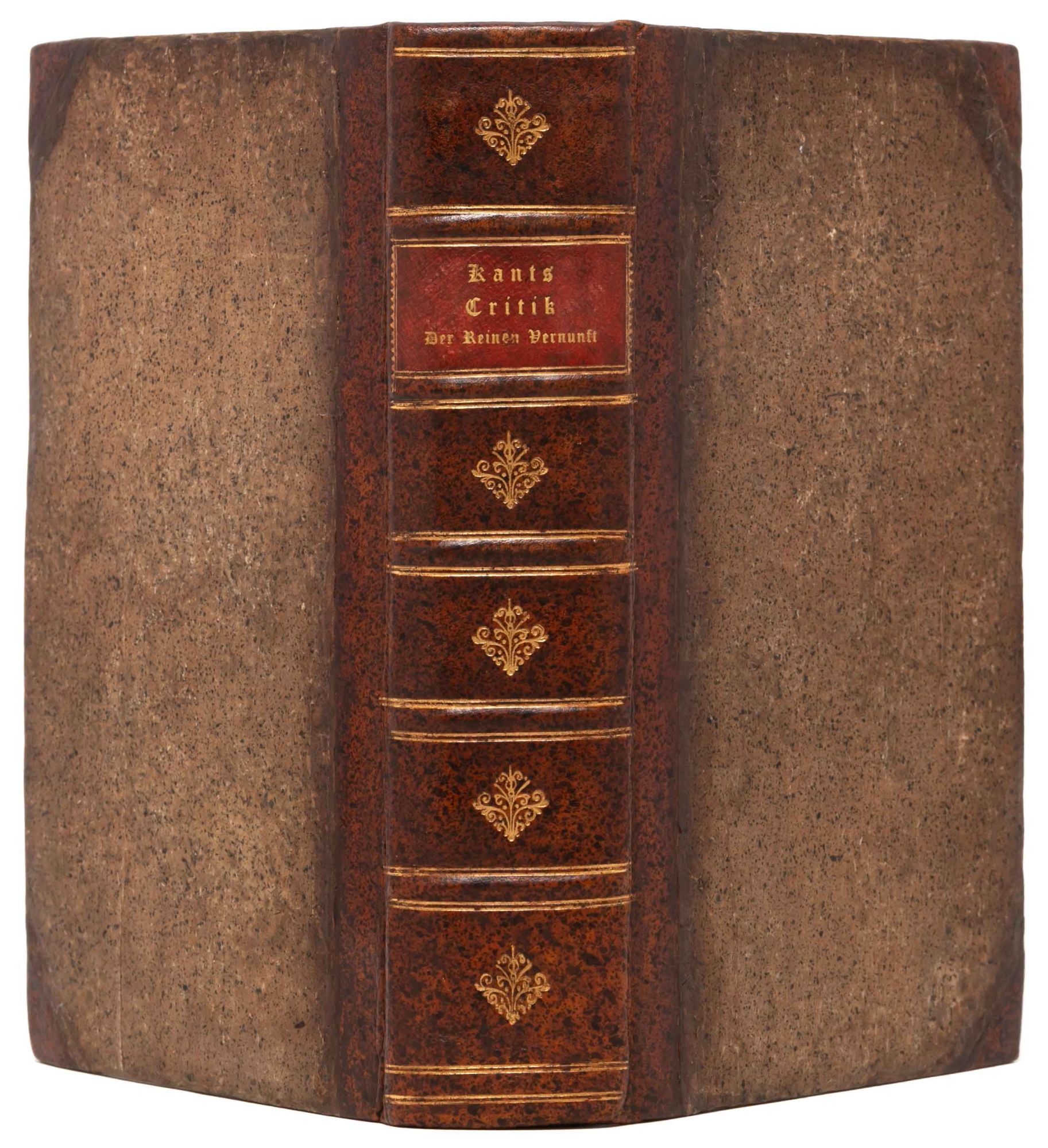
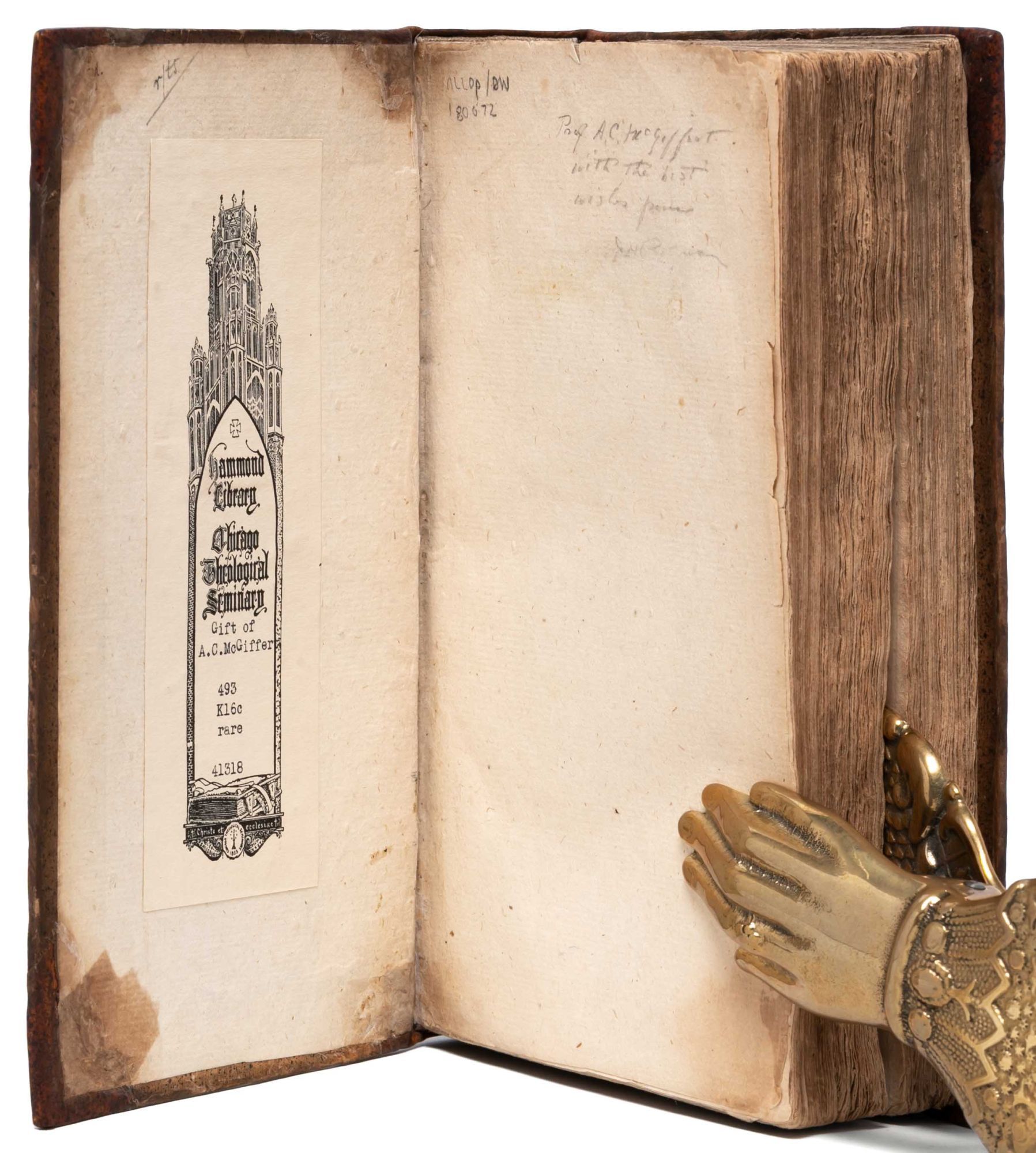
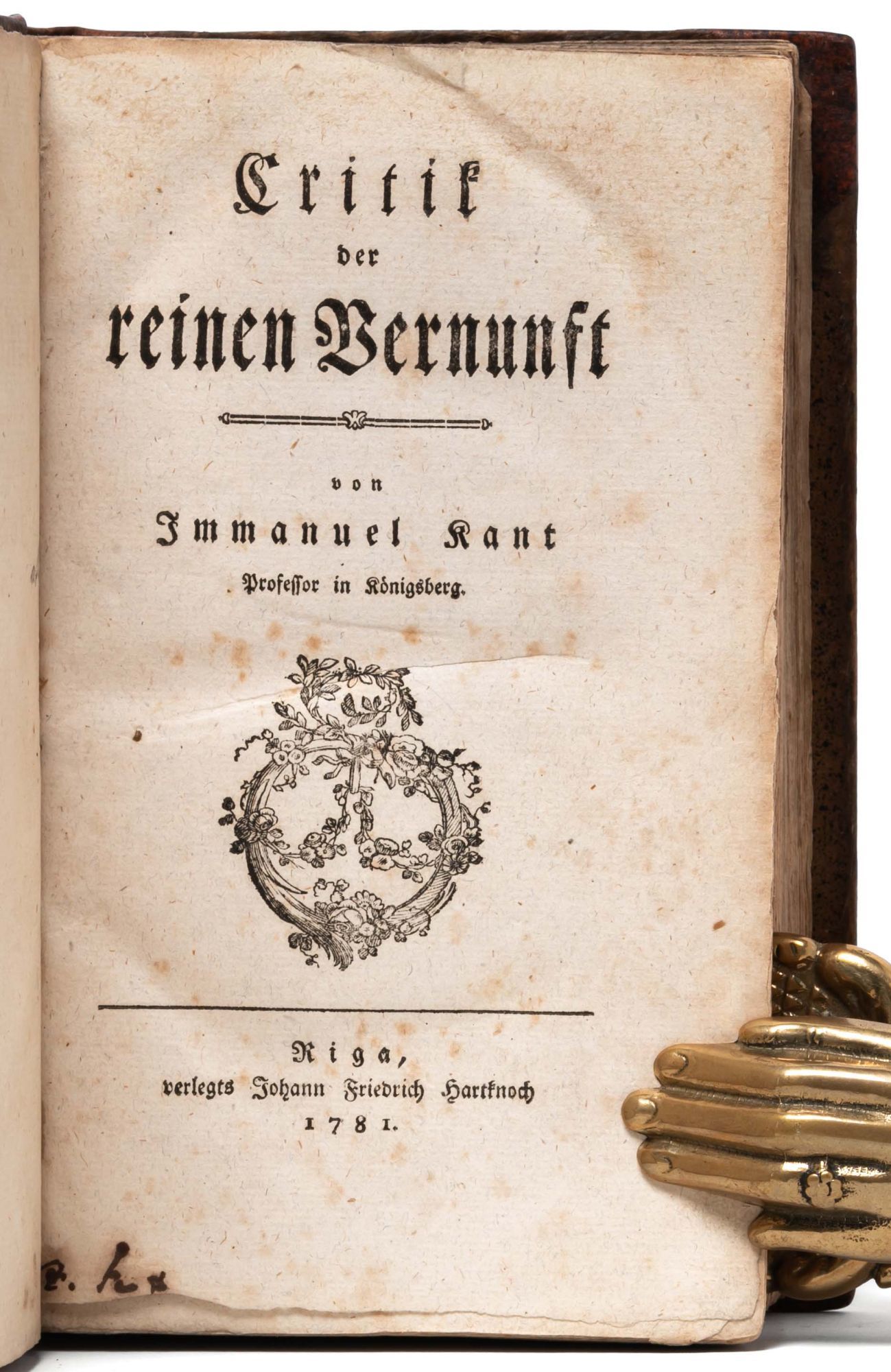
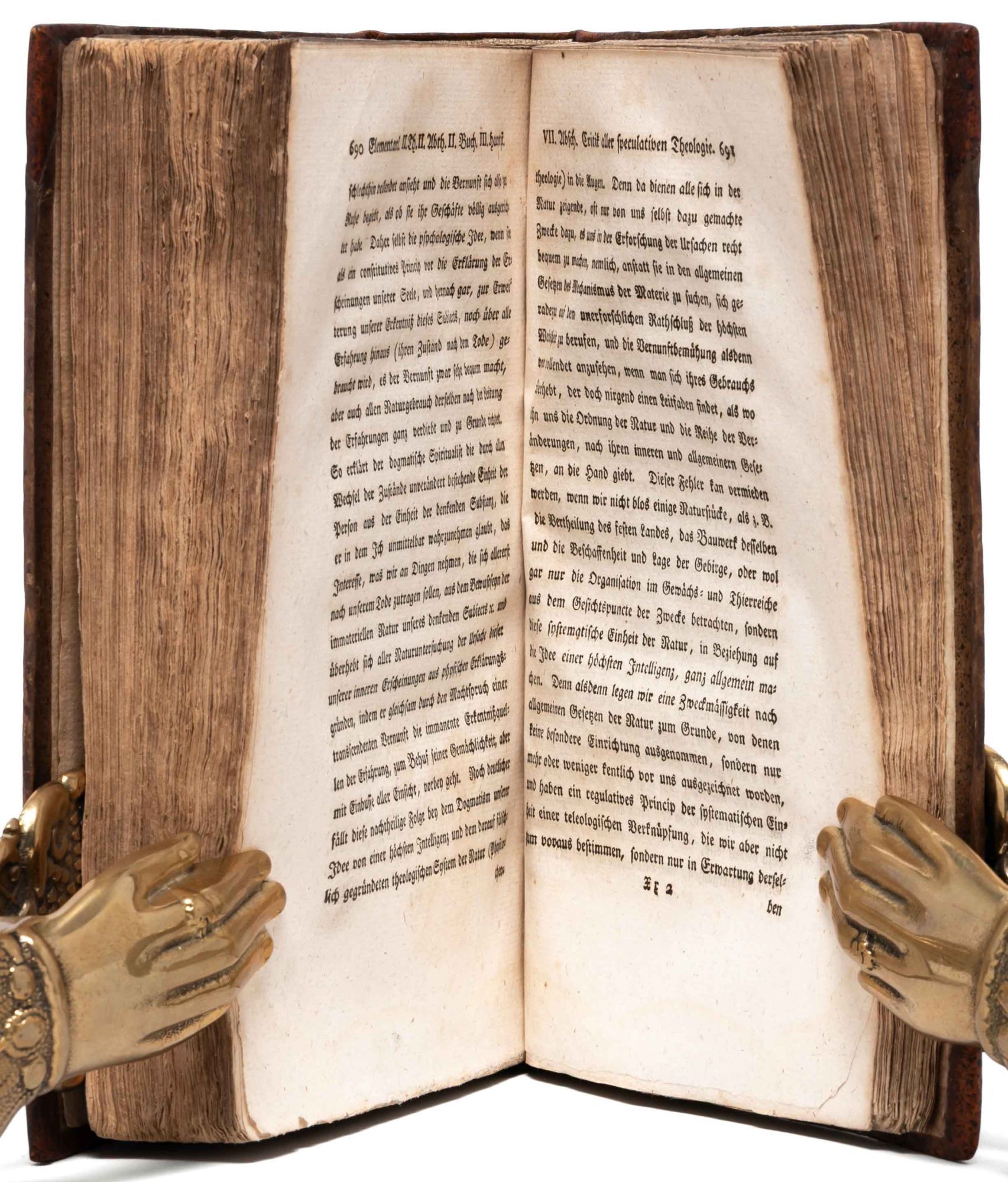
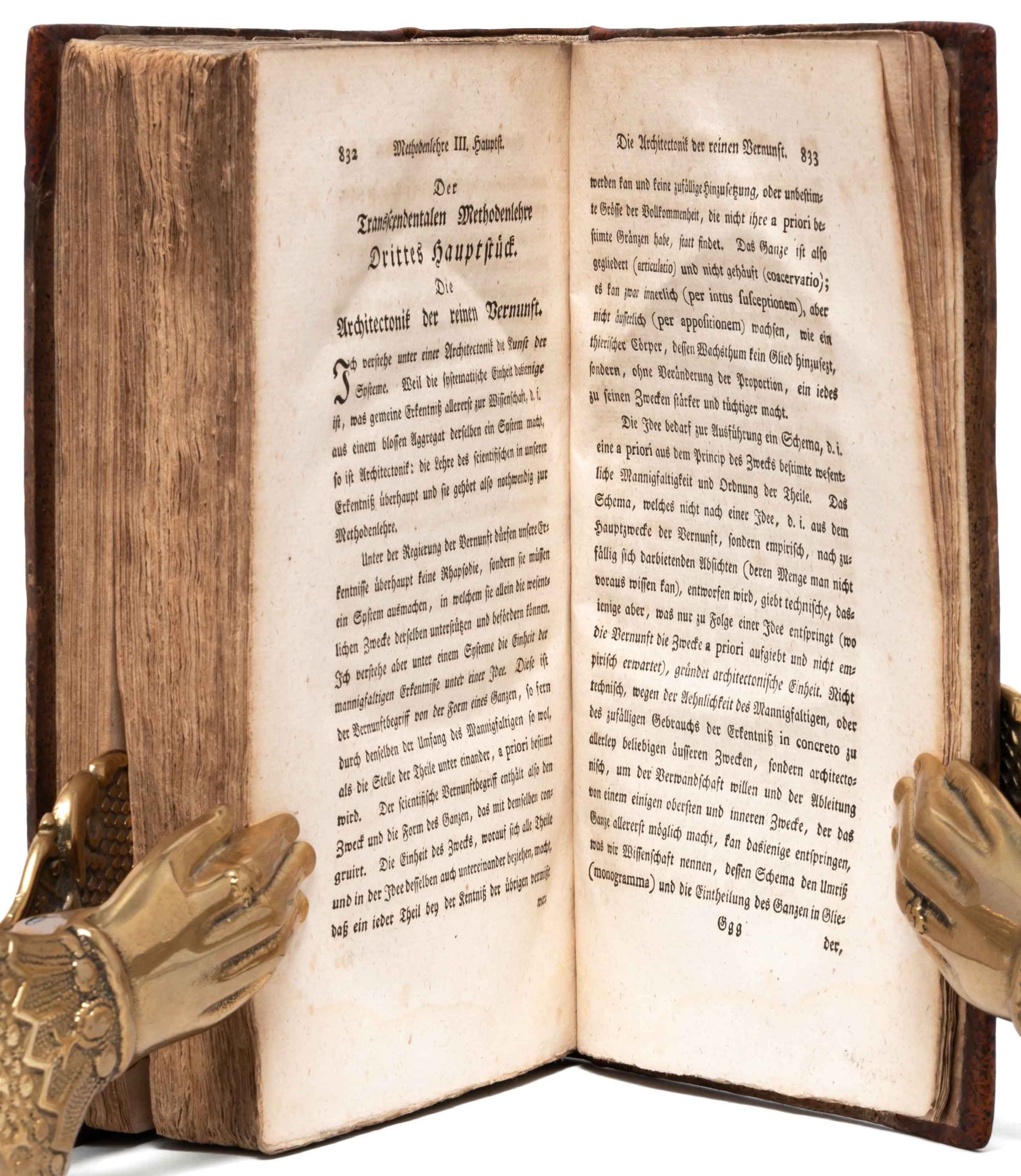
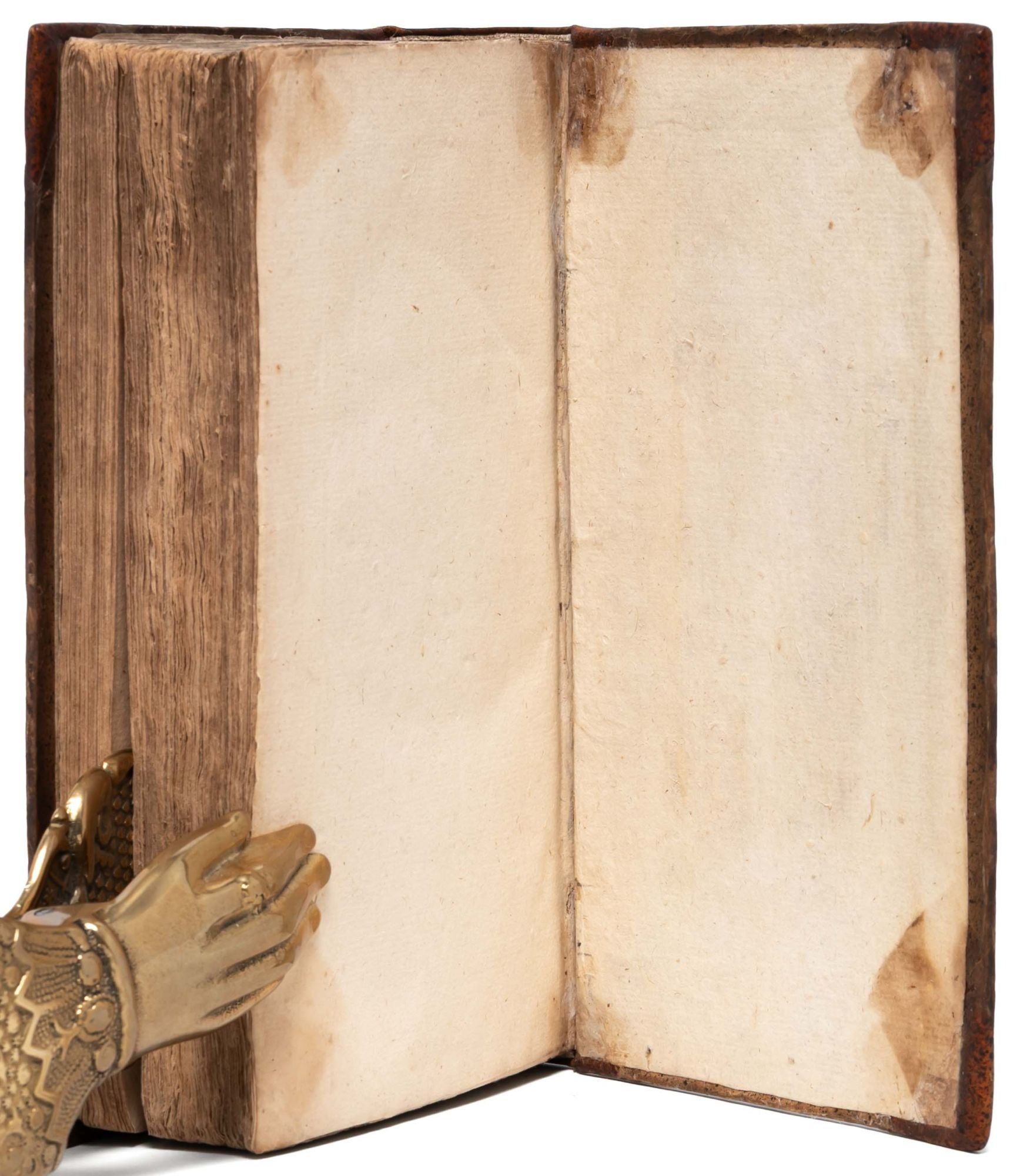
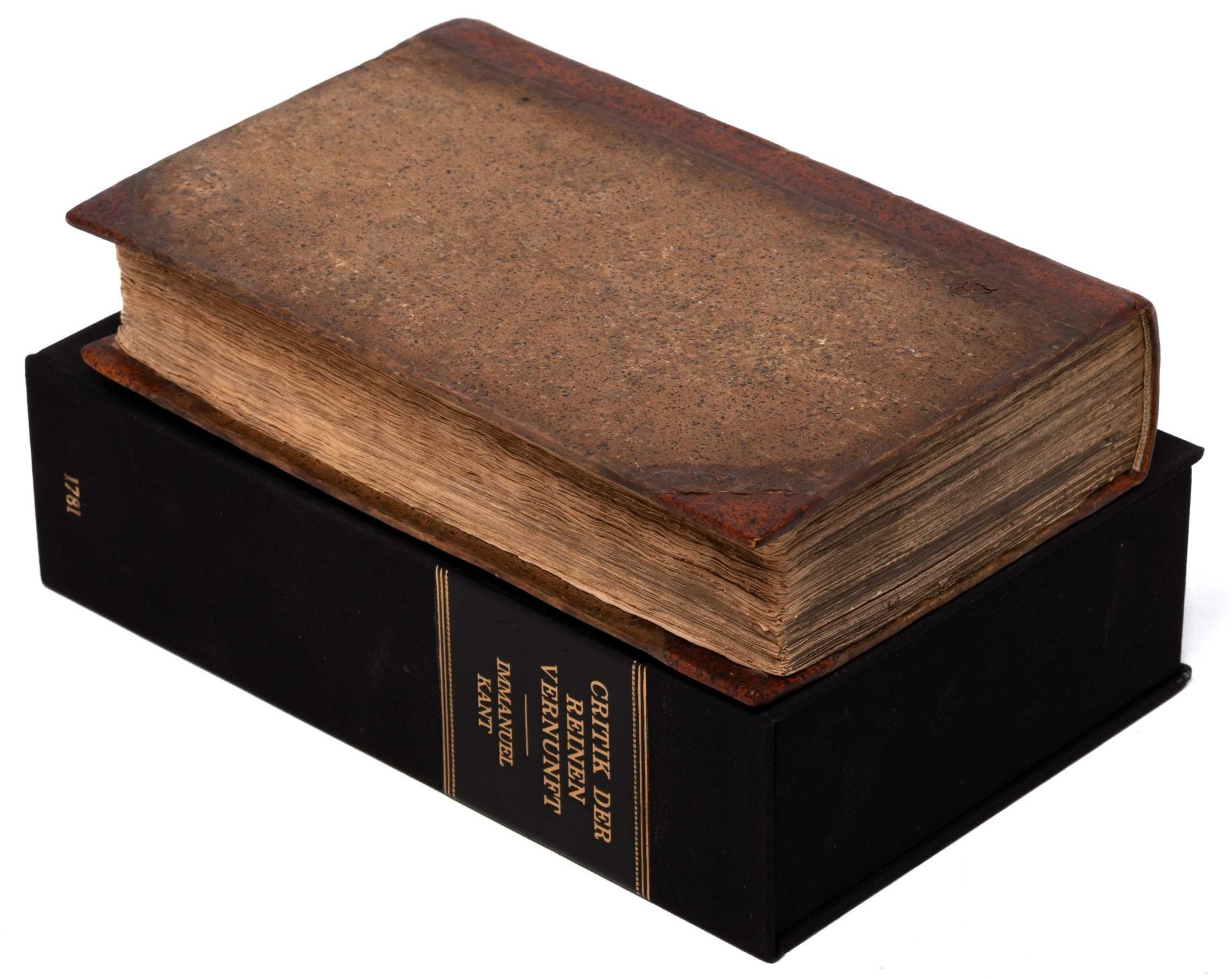
Octavo (215 x 129 mm), pp. [xxiv], 856. Wood-engraved title vignette, wood-engraved initials, head- and tailpieces. Contemporary speckled boards rebacked and recornered in sprinkled sheep, edges uncut. Housed in custom made blue cloth solander box. Contemporary notation to foot of title page; late 19th-century pencil inscription of “J. A. Robinson”, possibly the later Dean of Westminster (1858-1933), presenting this copy to Professor Arthur Cushman McGiffert (1861-1933) on front free endpaper; early 20th-century bookplate of the Chicago Theological Seminary (CTS), recording donation by his son Arthur Cushman McGiffert Jr. (1892-1993), who taught religious thought at the Seminary and red ink number stamp to p. [iii]. Minor foxing and damp-staining to contents, contents partly unopened: a Very Good+, uncut copy.
The Critik took more than a decade to write and took up so much of Kant’s thought, time, and energy that he published virtually nothing beyond lecture advertisements; the 1770s are known as his silent decade. It addresses a key concern of the Enlightenment: that mechanistic scientific reason threatened to undermine the possibility of human freedom and, by extension, traditional approaches to morality and religion. To resolve that problem, Kant develops the thesis of transcendental idealism - the argument that the structures of human thought shape our comprehension of the world around us. This allows him to demonstrate that scientific knowledge, morality, and religion are all founded on the same basis of human autonomy.
“No other thinker has been able to hold with such firmness the balance between speculative and empirical ideas. His penetrating analysis of the elements involved in synthesis, and the subjective process by which these elements are realized in the individual consciousness, demonstrated the operation of ‘pure reason’; and the simplicity and cogency of his arguments achieved immediate fame” (PMM).
Adickes 46; Hook & Norman 1197; Printing and the Mind of Man 226; Warda 59. Very Good +.
Octavo (215 x 129 mm), pp. [xxiv], 856. Wood-engraved title vignette, wood-engraved initials, head- and tailpieces. Contemporary speckled boards rebacked and recornered in sprinkled sheep, edges uncut. Housed in custom made blue cloth solander box. Contemporary notation to foot of title page; late 19th-century pencil inscription of “J. A. Robinson”, possibly the later Dean of Westminster (1858-1933), presenting this copy to Professor Arthur Cushman McGiffert (1861-1933) on front free endpaper; early 20th-century bookplate of the Chicago Theological Seminary (CTS), recording donation by his son Arthur Cushman McGiffert Jr. (1892-1993), who taught religious thought at the Seminary and red ink number stamp to p. [iii]. Minor foxing and damp-staining to contents, contents partly unopened: a Very Good+, uncut copy.
The Critik took more than a decade to write and took up so much of Kant’s thought, time, and energy that he published virtually nothing beyond lecture advertisements; the 1770s are known as his silent decade. It addresses a key concern of the Enlightenment: that mechanistic scientific reason threatened to undermine the possibility of human freedom and, by extension, traditional approaches to morality and religion. To resolve that problem, Kant develops the thesis of transcendental idealism - the argument that the structures of human thought shape our comprehension of the world around us. This allows him to demonstrate that scientific knowledge, morality, and religion are all founded on the same basis of human autonomy.
“No other thinker has been able to hold with such firmness the balance between speculative and empirical ideas. His penetrating analysis of the elements involved in synthesis, and the subjective process by which these elements are realized in the individual consciousness, demonstrated the operation of ‘pure reason’; and the simplicity and cogency of his arguments achieved immediate fame” (PMM).
Adickes 46; Hook & Norman 1197; Printing and the Mind of Man 226; Warda 59. Very Good +.