

Archive of Harry N. Morse, Old West Lawman, with Charles Shinn’s Graphic Description of Pacific Coast Outlaws: Thrilling Exploits of their Arch-Enemy Sheriff Harry N. Morse
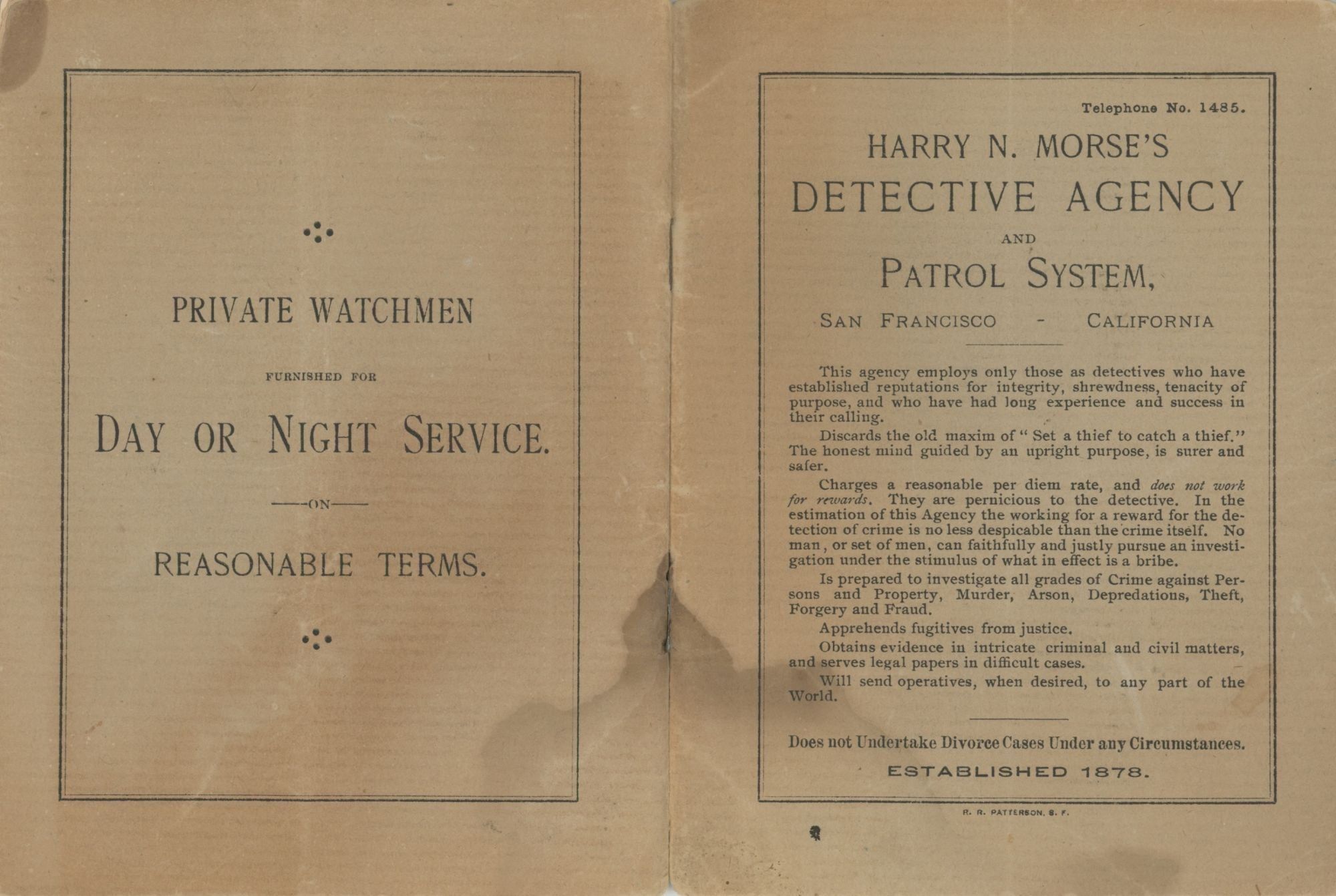
- 160 total items. Description of Pacific Coast Outlaws 32pp 8vo in cloth wraps; wraps excellent with some staining; contents very
- California and Oregon , 1921
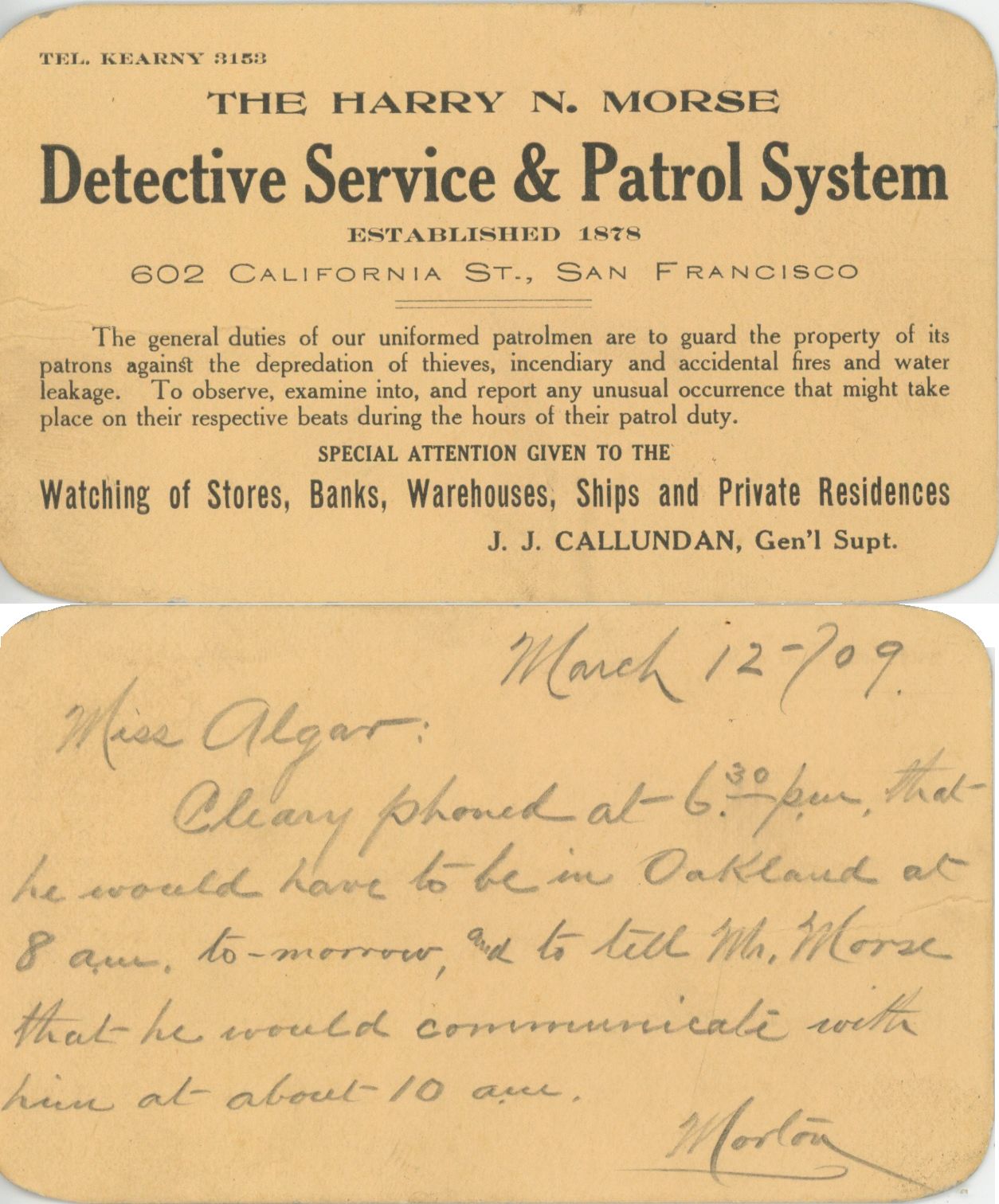
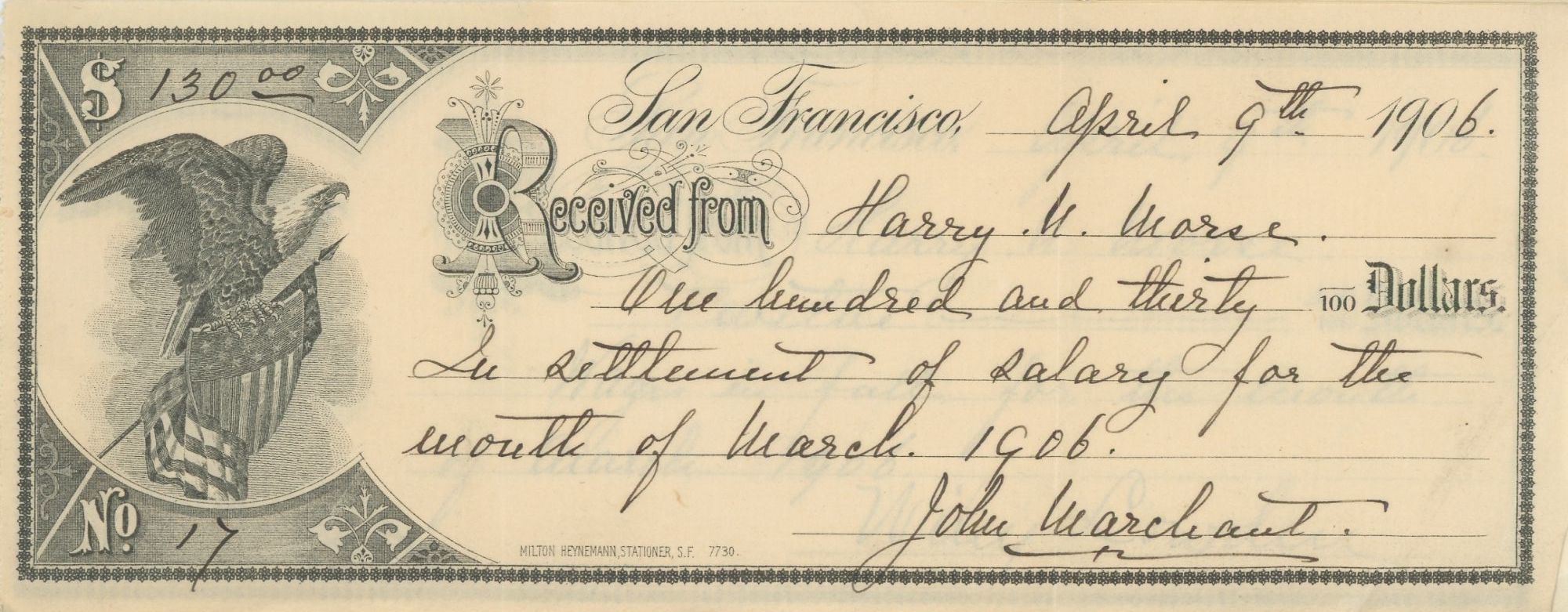
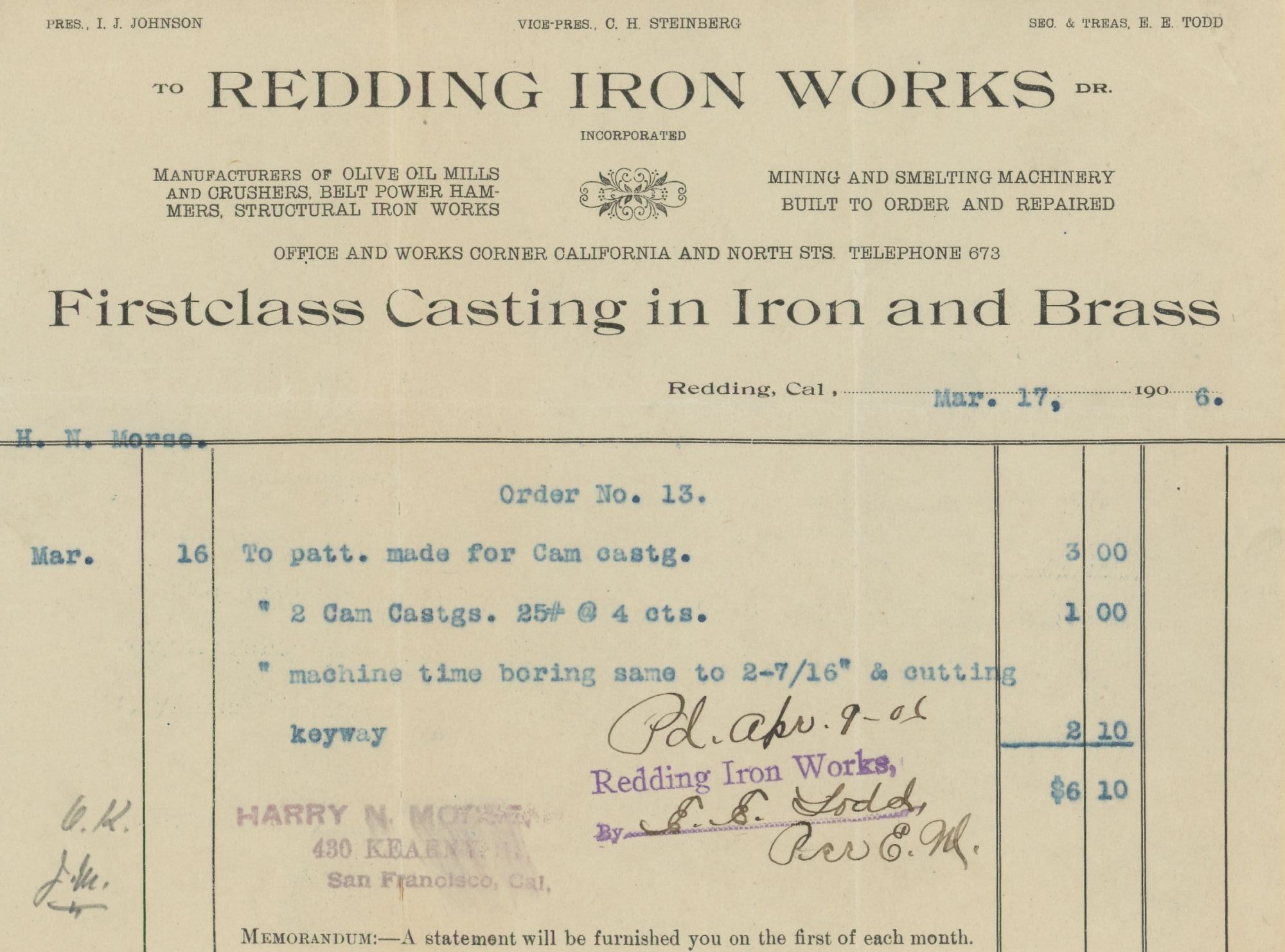
California and Oregon, 1921. 160 total items. Description of Pacific Coast Outlaws 32pp 8vo in cloth wraps; wraps excellent with some staining; contents very good to excellent with some water damage. Thirteen copies found on OCLC. Two business cards, one with manuscript notes; 106 letters dating 1906 to 1911; twenty-two mailers (circulars, shareholder solicitations, etc.); twenty-eight pieces of miscellaneous accounting records; and one Trinity Gold Dredging Company map measuring approximately 14 x 28 inches. Overall excellent.. Harry N. Morse (1835–1912) was born in New York and came to San Francisco in 1849 seeking gold. After several odd jobs he became a deputy provost marshal in Oakland in 1862, was elected Sheriff of Alameda County in 1863, and held this office for fourteen years before establishing his private detective service in San Francisco. Morse is known for the arrests and killings of numerous California outlaws, many of which Shinn’s booklet treats in great detail (though with a focus on the Mexican-American contingent to the neglect of some of Morse’s more notable successes, such as his role in the capture of Black Bart).
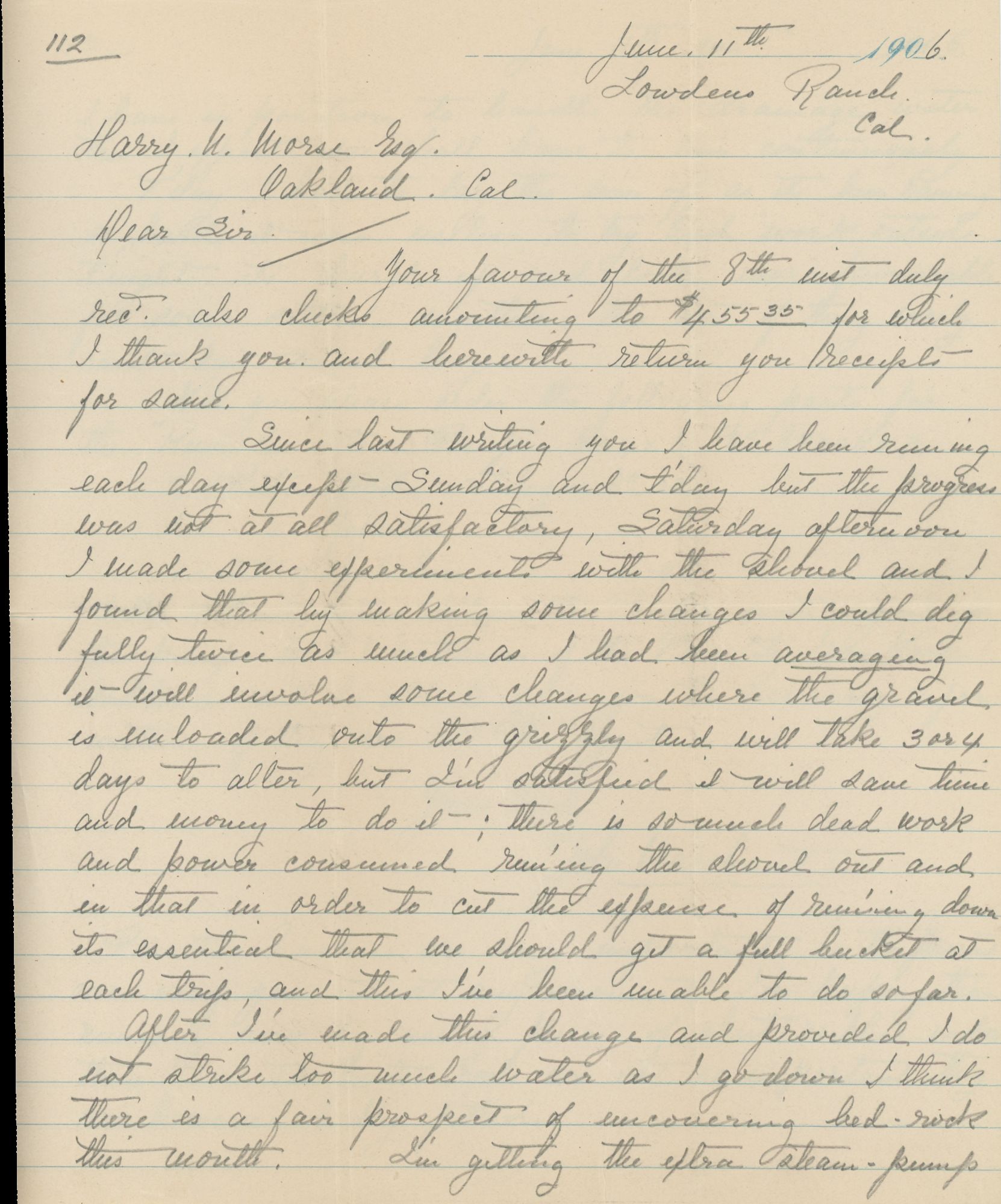
The majority of the items in this archive concern Morse’s late-career foray back into gold mining, first in Lewiston, California, and then in Applegate, Oregon. John Marchand was Morse’s foreman in Lewiston, and generally writes to him about the failures of their Lewiston enterprise. Many of the difficulties are attributed to troubles with a steam shovel, though the claim itself turns out to be a dud. Marchand informs Morse near the end of their correspondence:
“Things here I’m sorry to say have gone from bad to ‘very bad’. Y’day I got down to ‘bed-rock’, uncovered a piece 46 by 10 ft and increadible as it may read there was not 30¢ in there, some pans in fact you could not get a color.” (August 10, 1906)
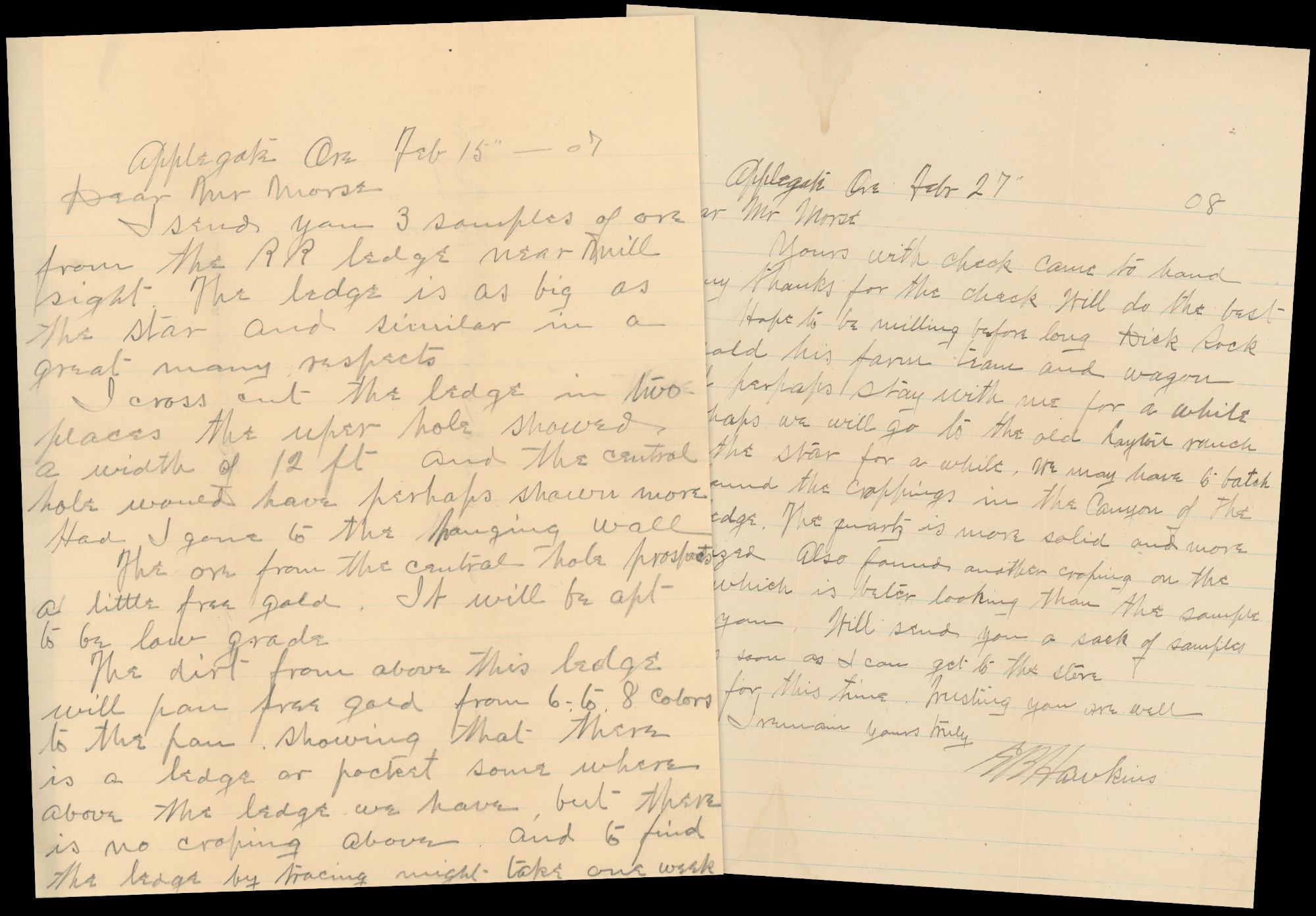
Morse then invests in a claim in Applegate, Oregon, with more success. The main setback in Applegate is that his mine is repeatedly sabotaged. His foreman, E.B. Hawkins, explains:
“I realise things from this end must appear perhaps irregular or peculiar On or about the 17” of May the mine was dynamited I did not write you at that time because I thought I could catch up the ground in two or three days. It took nearer 20, and another thing you had sickness and later death in your family so I did not write about that first offence at all On June 17” we found the Star mine dynamited again good and plenty not less than 10 lbs of powder had been used for the job. They blew the h__l out of things, blew the top off of the shaft and the gallows frame awry. I am almost certain I would have succeeded had I had only natures elements to contend with. I don’t know what in h__l will happen on the 17” of July This anarchy is beyond me. On the 17” of May I fired the distasteful element paying them off and I have fired the 17” of June element paying them off – I borrowed $50.00 from Jno. Pernoll to pay them there was 3 of them had not been working long”. (June 19, 1907)
Hawkins soon identifies the culprits:
“On June 27” Jim Rock Sr. and Dick Rock came to me and offered to square the damages done at the star mine saying that if the mine was blasted their two boys were in on it On July 2” Dick Rock came to me and said his son Roy had confessed saying there were four in it namely, Harry Gething, Chas Brown, Young Jimmy Rock and Roy Rock (Dicks son) They had all been working at the star. On July 4” Roy Rock confirmed to me same as above saying Harry Gething was leader and young Jimmy Rock was helper that they had a jig of whiskey on the ground that night Jimmy Rock furnished the whiskey Strange to say that every time I have gotten ready to take a certain good block of ore out of the star the mine has been blasted (I propose to take that block of ore out if I live and can get grub while doing it)” (July 6, 1907)
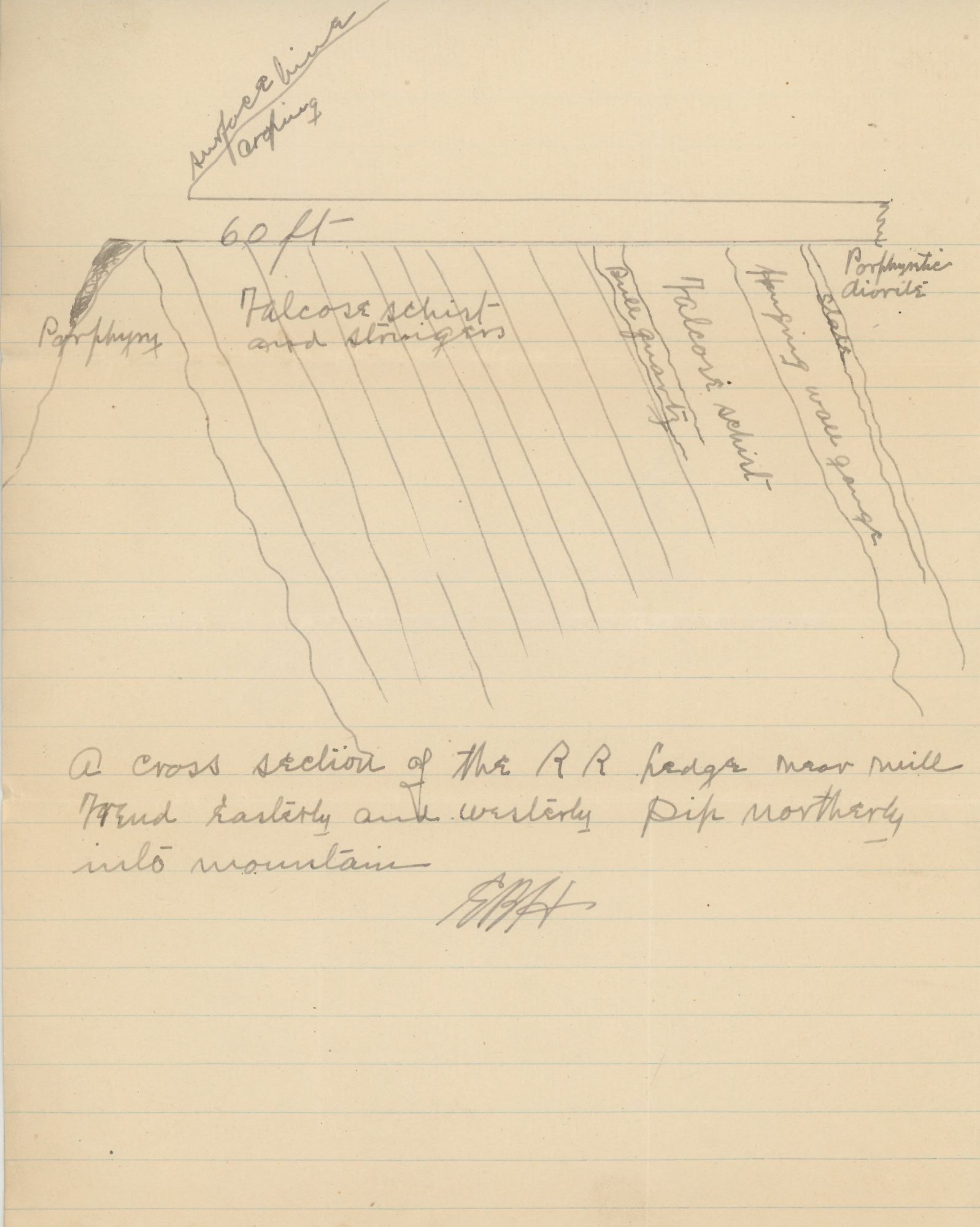
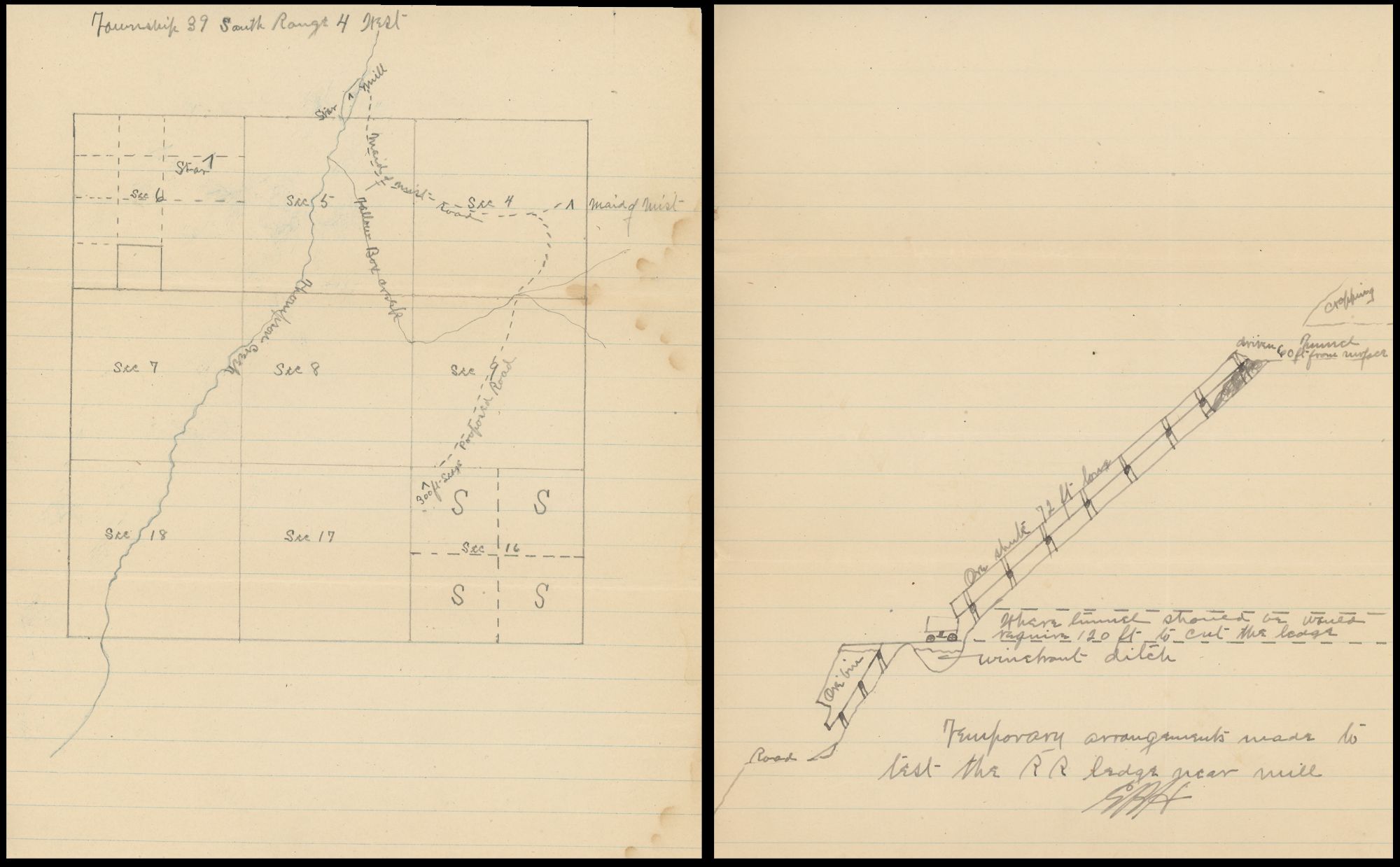
Hawkins has a few other confrontations with workers, though none this severe, and his letters are mainly providing Morse with in-depth updates on the status of the mine, including many of Hawkins’ diagrams. The Star mine is never a roaring success, and the pair consider trying cyanide mining—”the salvation of southern Oregon” (1908)—and gravel mining in British Columbia.
Of interest to historians of the post-Gold Rush west, especially gold mining therein.
The majority of the items in this archive concern Morse’s late-career foray back into gold mining, first in Lewiston, California, and then in Applegate, Oregon. John Marchand was Morse’s foreman in Lewiston, and generally writes to him about the failures of their Lewiston enterprise. Many of the difficulties are attributed to troubles with a steam shovel, though the claim itself turns out to be a dud. Marchand informs Morse near the end of their correspondence:
“Things here I’m sorry to say have gone from bad to ‘very bad’. Y’day I got down to ‘bed-rock’, uncovered a piece 46 by 10 ft and increadible as it may read there was not 30¢ in there, some pans in fact you could not get a color.” (August 10, 1906)
Morse then invests in a claim in Applegate, Oregon, with more success. The main setback in Applegate is that his mine is repeatedly sabotaged. His foreman, E.B. Hawkins, explains:
“I realise things from this end must appear perhaps irregular or peculiar On or about the 17” of May the mine was dynamited I did not write you at that time because I thought I could catch up the ground in two or three days. It took nearer 20, and another thing you had sickness and later death in your family so I did not write about that first offence at all On June 17” we found the Star mine dynamited again good and plenty not less than 10 lbs of powder had been used for the job. They blew the h__l out of things, blew the top off of the shaft and the gallows frame awry. I am almost certain I would have succeeded had I had only natures elements to contend with. I don’t know what in h__l will happen on the 17” of July This anarchy is beyond me. On the 17” of May I fired the distasteful element paying them off and I have fired the 17” of June element paying them off – I borrowed $50.00 from Jno. Pernoll to pay them there was 3 of them had not been working long”. (June 19, 1907)
Hawkins soon identifies the culprits:
“On June 27” Jim Rock Sr. and Dick Rock came to me and offered to square the damages done at the star mine saying that if the mine was blasted their two boys were in on it On July 2” Dick Rock came to me and said his son Roy had confessed saying there were four in it namely, Harry Gething, Chas Brown, Young Jimmy Rock and Roy Rock (Dicks son) They had all been working at the star. On July 4” Roy Rock confirmed to me same as above saying Harry Gething was leader and young Jimmy Rock was helper that they had a jig of whiskey on the ground that night Jimmy Rock furnished the whiskey Strange to say that every time I have gotten ready to take a certain good block of ore out of the star the mine has been blasted (I propose to take that block of ore out if I live and can get grub while doing it)” (July 6, 1907)
Hawkins has a few other confrontations with workers, though none this severe, and his letters are mainly providing Morse with in-depth updates on the status of the mine, including many of Hawkins’ diagrams. The Star mine is never a roaring success, and the pair consider trying cyanide mining—”the salvation of southern Oregon” (1908)—and gravel mining in British Columbia.
Of interest to historians of the post-Gold Rush west, especially gold mining therein.