

Scrapbook Documenting an Unconventional Marketing Campaign for The Carpetbaggers (1964) at Loew’s Metropolitan Theatre in Downtown Brooklyn
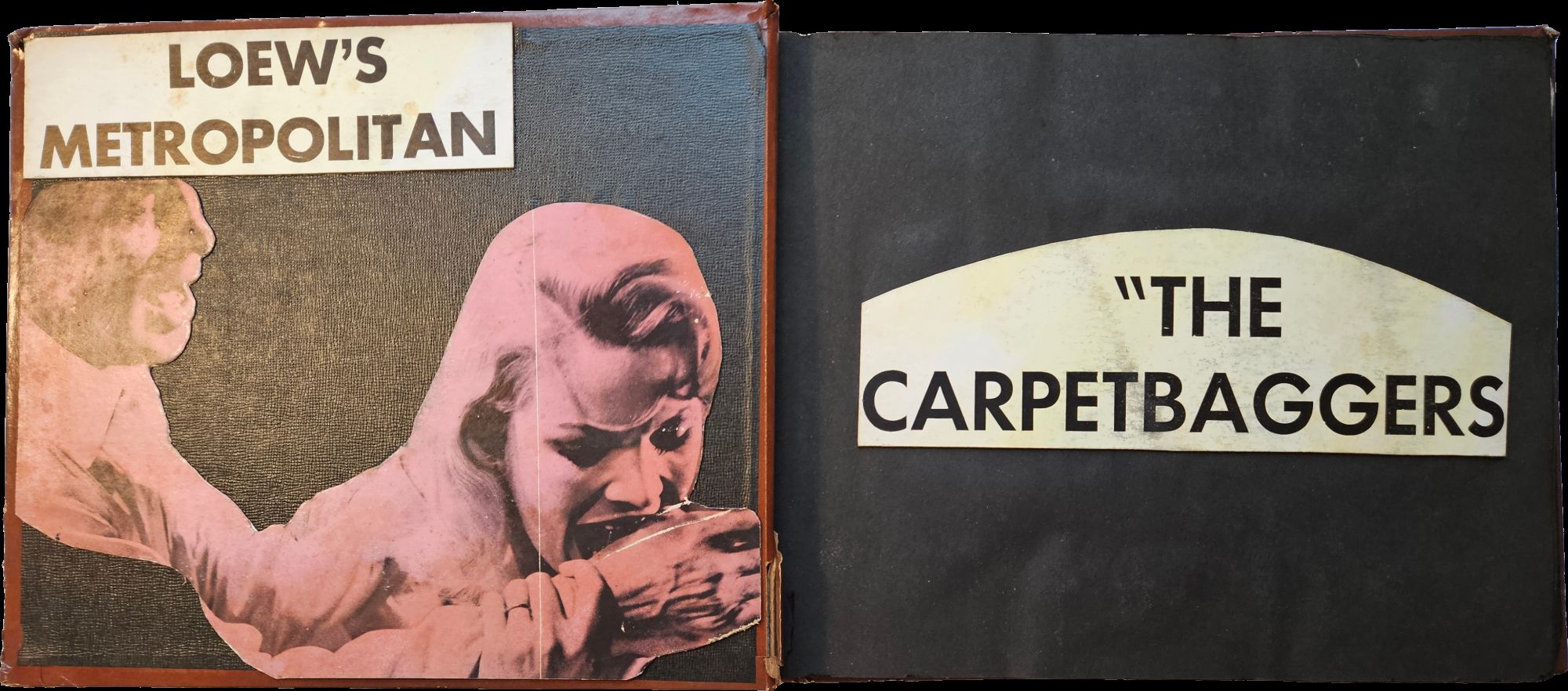
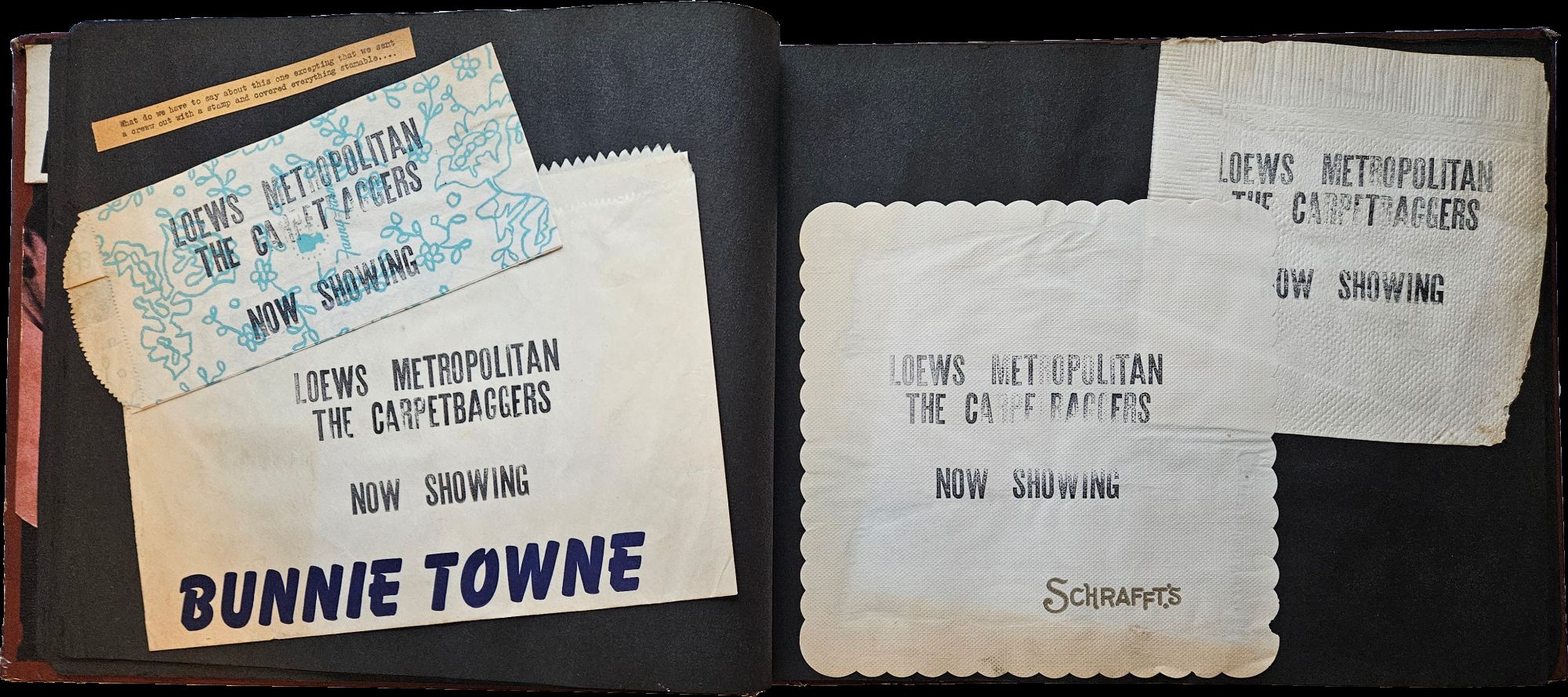
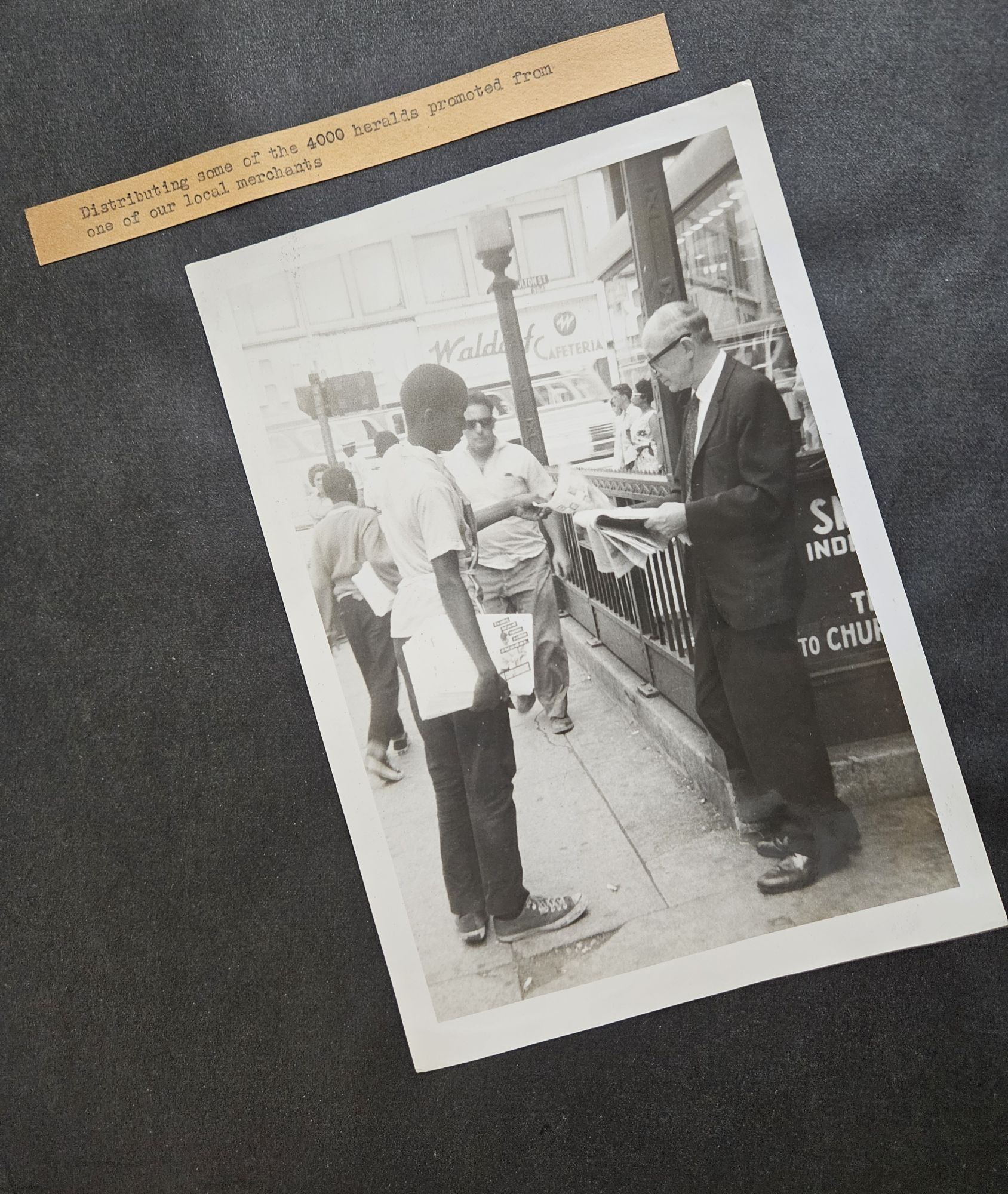
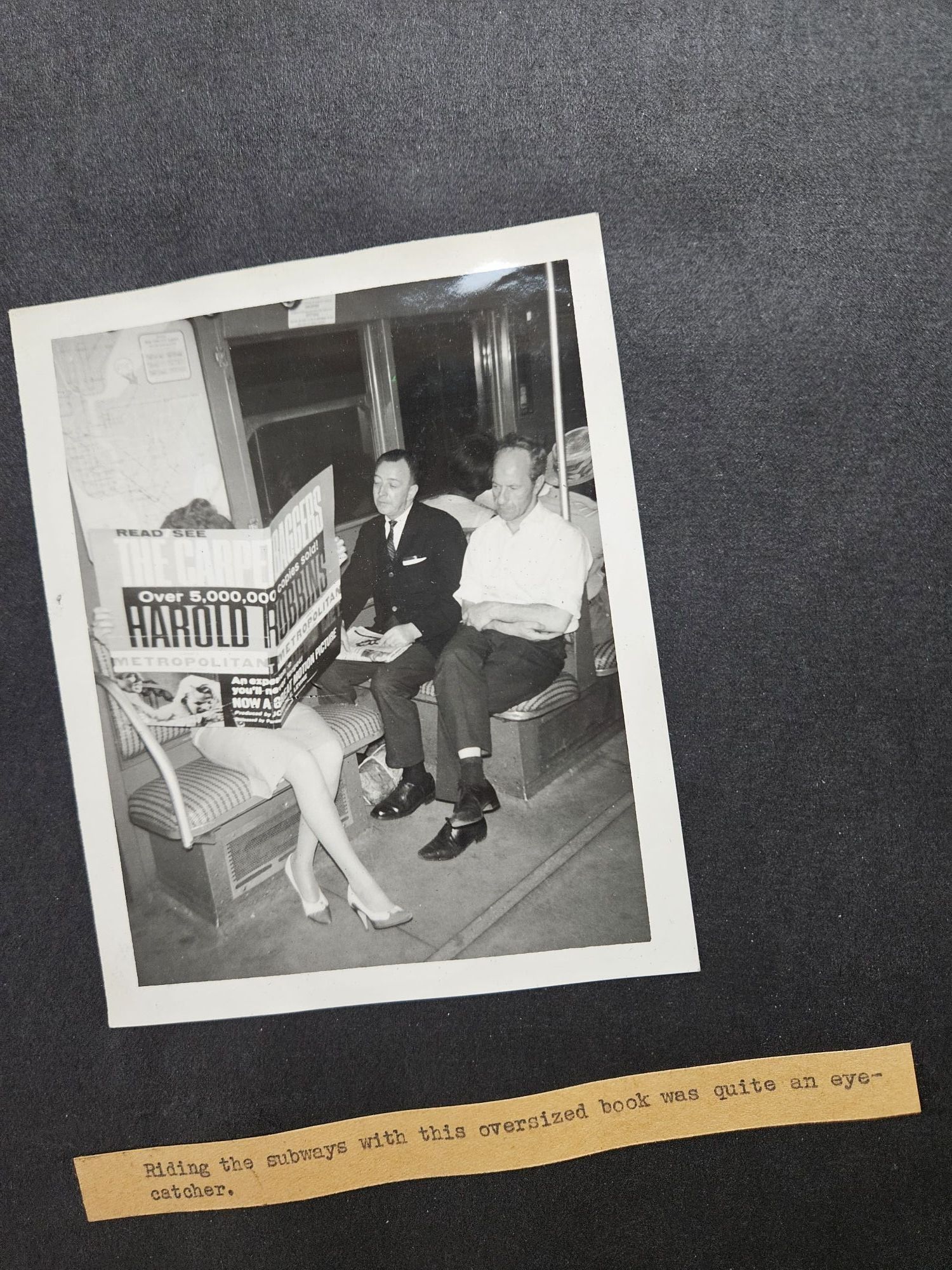
- Twenty-eight page scrapbook measuring 11 x 14 inches. Containing forty-one photographs measuring 5 x 7 inches and smaller and fi
- Brooklyn, New York , 1964
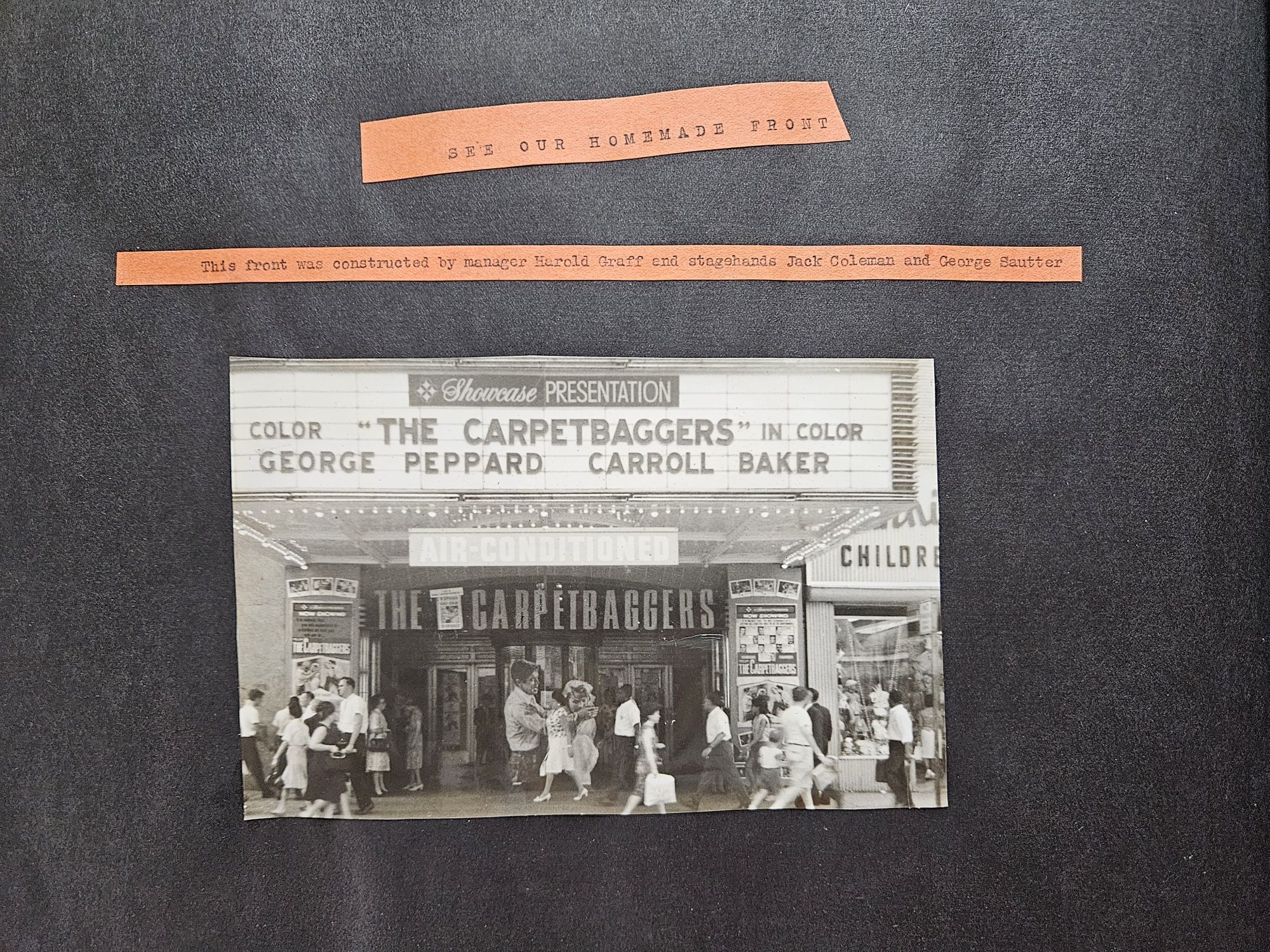
Brooklyn, New York, 1964. Twenty-eight page scrapbook measuring 11 x 14 inches. Containing forty-one photographs measuring 5 x 7 inches and smaller and fifty-eight pieces of ephemera, forty-three of which are filled-in entry slips from a contest. Cover with wear and large stain, contents generally excellent; overall very good to excellent.. The Carpetbaggers is a 1964 film directed by Edward Dmytryk, based on the controversial 1961 novel of the same name, which was banned in several US cities for its depictions of sexuality and violence.[1] Offered here is a scrapbook documenting an unconventional marketing campaign for the film’s New York run at Loew’s Metropolitan Theatre in Downtown Brooklyn. The theater’s conventional marketing tactics included contests, flyering, spraypainting sidewalks, and distributing promotional cards for stores. Less conventional ones included employees reading a gigantic “oversized book” on the subway (the “Subway ballyhoo”), erecting eight large fake telephone booths, and carrying a suitcase reading “I’M ON MY WAY TO SEE THE CARPETBAGGERS AT LOEW’S METROPOLITAN” (the “Walking ballyhoo”). The photograph of this last tactic shows a man who at least resembles Adlai Stevenson looking at the suitcase as he walks by; the caption reads: “Let’s start off with a question. . . . IS THERE ANY REASON WHY ADLAI STEVENSON OUR AMBASSADOR TO THE U N. . . . . SHOULD NOT BE ADVISED THAT THE ‘CARPETBAGGERS’ WERE AT THE LOEW’S METROPOLITAN THEATRE.” All thirty-seven of the various tactics are listed in a caption at the end of the scrapbook.
The scrapbook also acts as a document of Downtown Brooklyn in 1964, especially its then-bustling shopping area on Fulton Street. Stores include Woolworth’s, E.J. Korvette’s, Bond’s, Bunnie Towne, and more. Though mainly department store interiors, it also shows in several shots the subway entrances and cars, street scenes, smaller shops and restaurants, and the exterior and lobby of Loew’s Metropolitan. Opened in 1918, the theatre closed in 1996 and re-opened in 2002 as a church.
The Carpetbaggers received mixed reviews and its share of controversy, particularly for a nude scene which had to be cut from the US release. In response to the controversy, actress Carroll Baker, who appears in the nude scene, told the New York Times that her “children have seen things on the benches of Central Park that have never been shown in movies.”[2]
Of interest to historians of film and film marketing, and of the Downtown Brooklyn neighborhood.
[1] Dawn B. Sova, “The Carpetbaggers,” in Literature Suppressed on Sexual Grounds (Facts on File, 2006): 39–41.
[2] “Hollywood Candor; Carroll Baker Defends Her Nudity in Films,” The New York Times, June 14, 1964, 9.
The scrapbook also acts as a document of Downtown Brooklyn in 1964, especially its then-bustling shopping area on Fulton Street. Stores include Woolworth’s, E.J. Korvette’s, Bond’s, Bunnie Towne, and more. Though mainly department store interiors, it also shows in several shots the subway entrances and cars, street scenes, smaller shops and restaurants, and the exterior and lobby of Loew’s Metropolitan. Opened in 1918, the theatre closed in 1996 and re-opened in 2002 as a church.
The Carpetbaggers received mixed reviews and its share of controversy, particularly for a nude scene which had to be cut from the US release. In response to the controversy, actress Carroll Baker, who appears in the nude scene, told the New York Times that her “children have seen things on the benches of Central Park that have never been shown in movies.”[2]
Of interest to historians of film and film marketing, and of the Downtown Brooklyn neighborhood.
[1] Dawn B. Sova, “The Carpetbaggers,” in Literature Suppressed on Sexual Grounds (Facts on File, 2006): 39–41.
[2] “Hollywood Candor; Carroll Baker Defends Her Nudity in Films,” The New York Times, June 14, 1964, 9.