

1858 Austin County Assessor and Collector’s Ledger
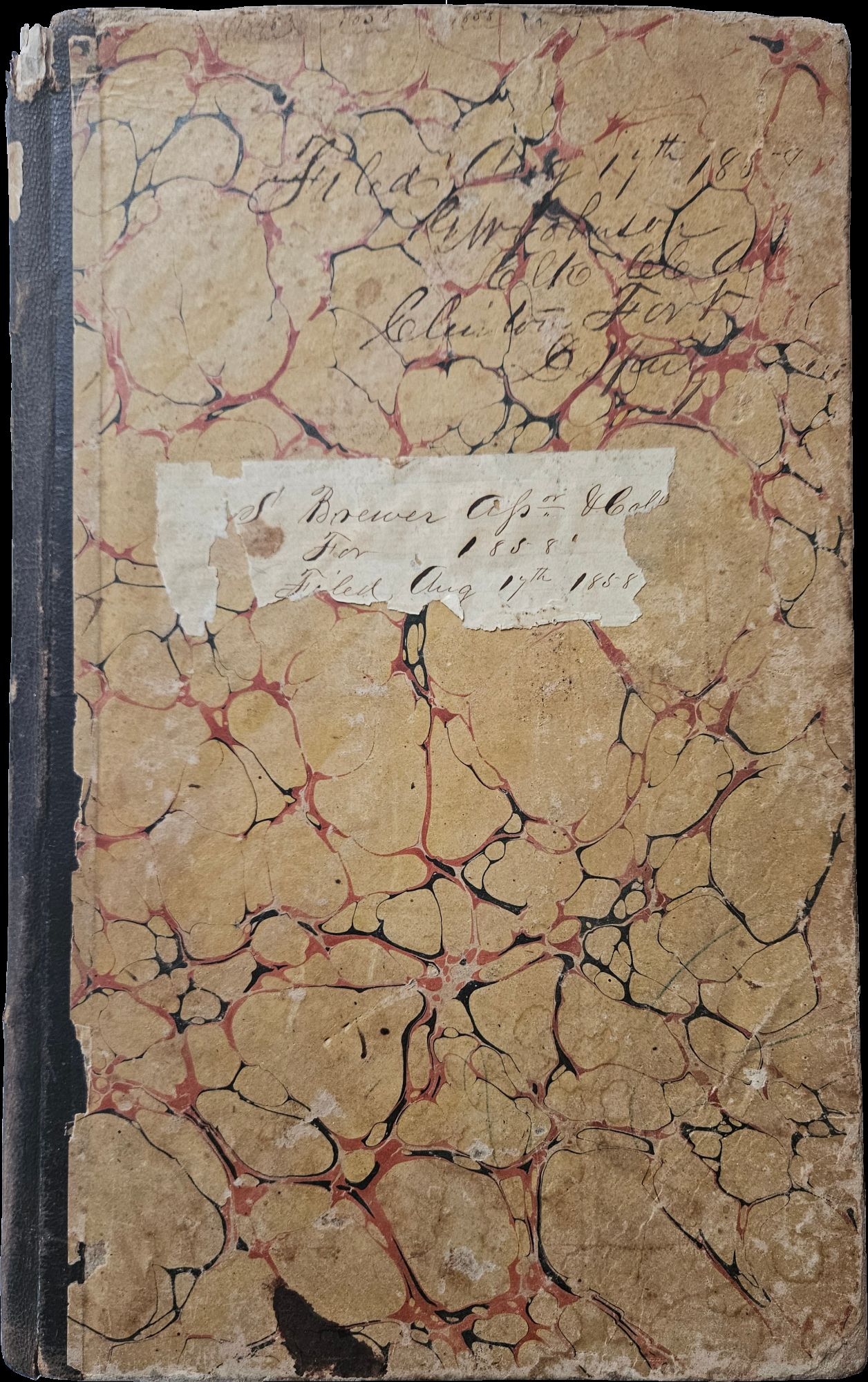
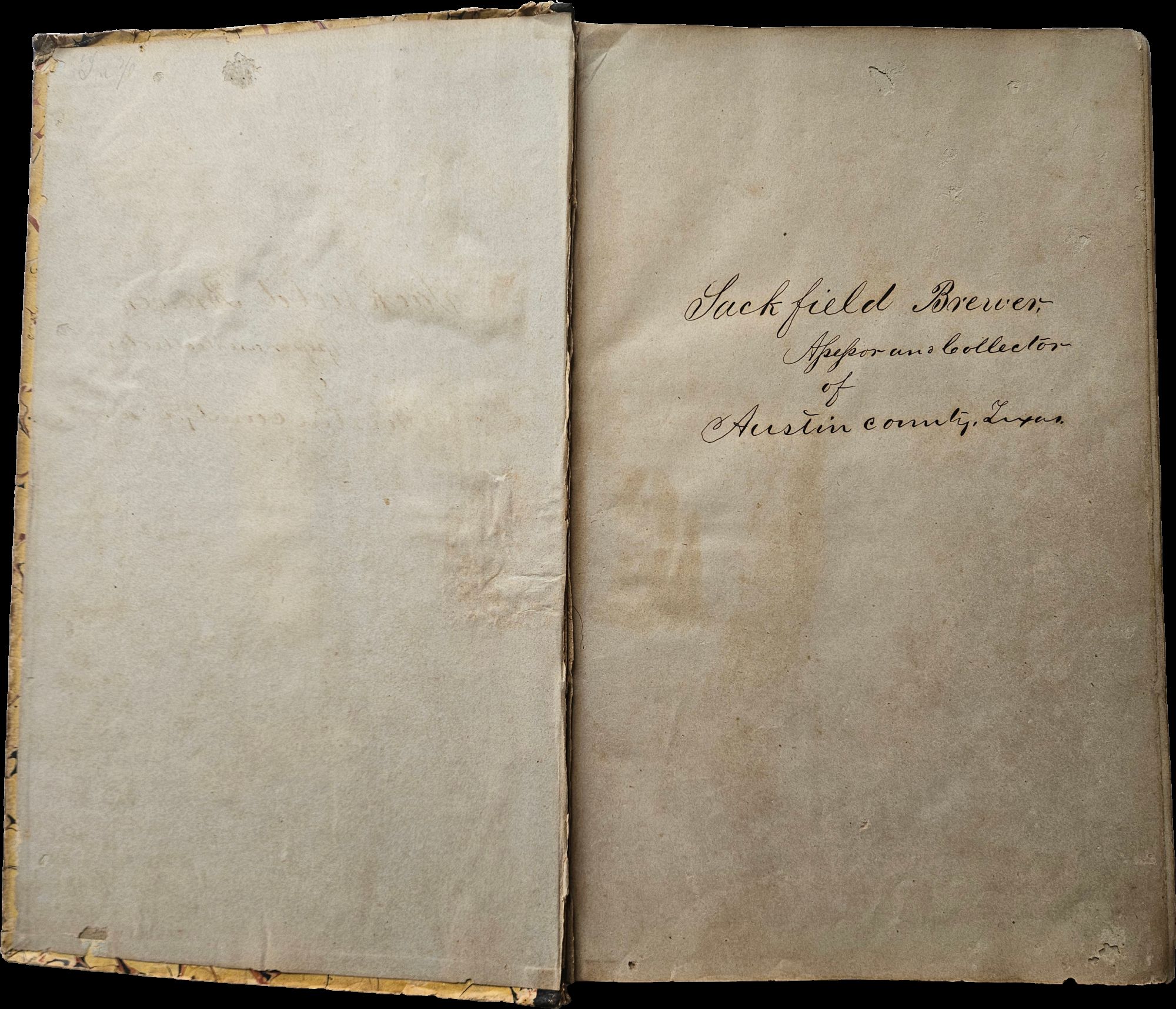
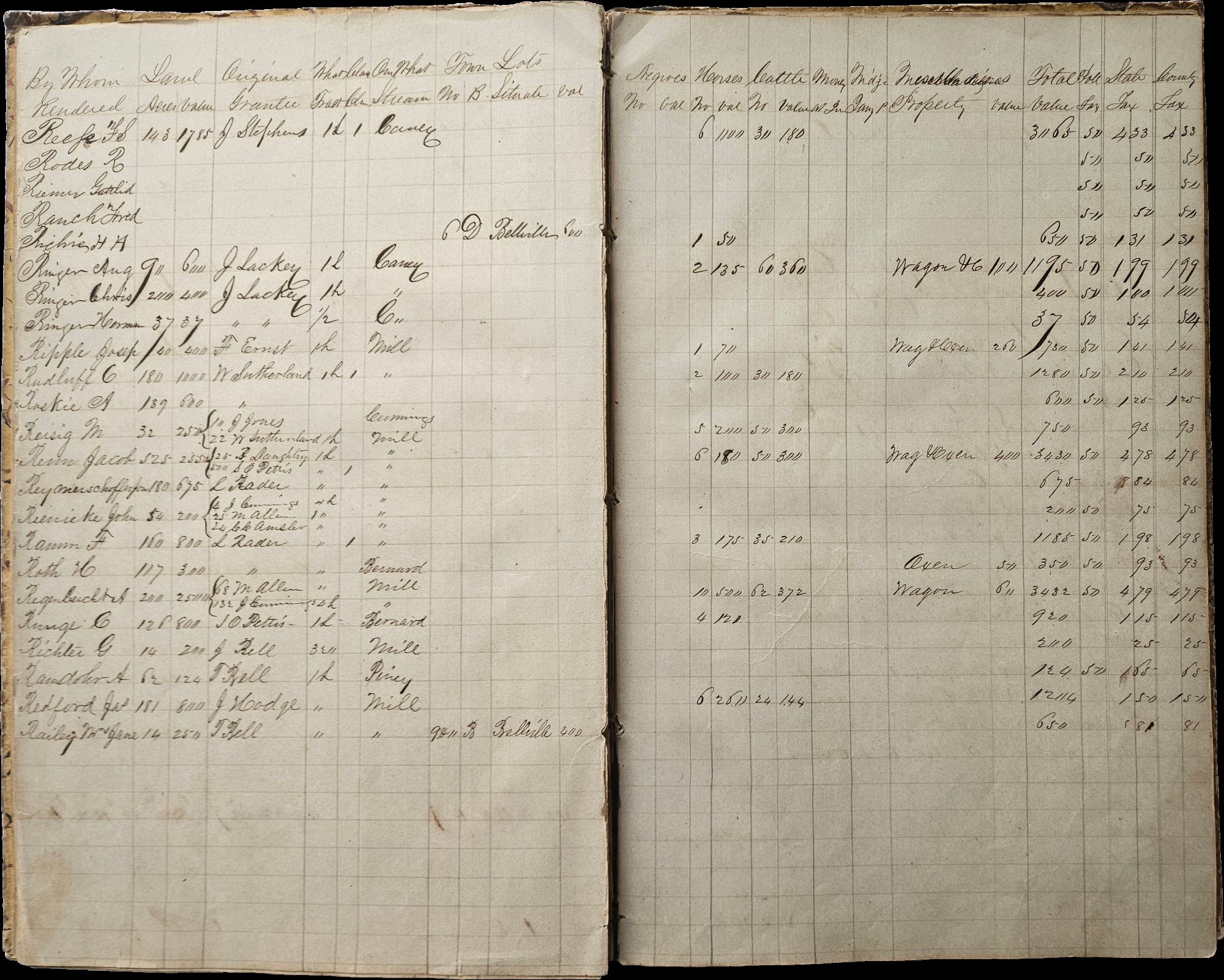
- Ledger measuring 7 ½ x 12 inches. Approximately forty-five pages filled out with remainder blank. Spine broken and some pages d
- Austin County, Texas , 1858
Austin County, Texas, 1858. Ledger measuring 7 ½ x 12 inches. Approximately forty-five pages filled out with remainder blank. Spine broken and some pages detached; pages with wear but legible; cover quite worn. Very good plus.. Austin County, Texas, was the first Anglo-American colony in Mexican Texas, founded in about 1821 by Stephen F. Austin and his “Old Three Hundred”: 297 land grantees, mainly from the Trans-Appalachian South, and many of significant wealth. The grantees received either a labor (177 acres, for farming families) around San Felipe de Austin, or a sitio (4,428 acres, for ranching families) along the Brazos River. Many of the Old Three Hundred families already owned enslaved African Americans, and by 1825, sixty-nine of the Austin colony families owned a total of 443 enslaved people, making up nearly a quarter of the colony’s population. Many of the enslaved people were concentrated with just a few families; for instance, Jared E. Groce arrived to the colony in 1822 with ninety enslaved people.
After the Texas Revolution, which established the Republic of Texas, the county’s population totaled about 1,500, rising to 2,687 by 1847 and 3,841 by 1850. Immigration from Germany surged, with Germans outnumbering American-born citizens by 1860. During this time, the expansion of cotton and other agriculture increased the enslaved population as well; in 1847, it comprised over 47% of Austin County. Meanwhile, there were nearly no free Black residents, and none by 1860.
Offered here is a tax assessment ledger for the county from 1858, prepared by County Assessor and Collector Sackfield Brewer. It contains two assessments: one for land owned within Austin County and one for land owned by Austin County residents but located in other counties. Among other information, the first assessment lists the taxpayer, their land’s original grantee and location (by town and stream), and their assets, including horses, cattle, money, and enslaved people. The second assessment contains location, acreage, and value information, and does not contain information about assets held with the outside properties.
The ledger indicates the demographic shifts in the area—with many Germanic surnames among the Anglo ones—and the concentrations of wealth and enslavement. For instance, while most taxpayers are listed as owning no enslaved people, J. E. Kirby held 120 people, valued at $60,000, on his nearly 3,700 acre ranch. By contrast, Thomas Cochran’s 5,759 acre ranch, taking up five original land grants, held seven. J. A. Kerr, next to Kirby in the ledger, claimed no land, only one $100 horse and one $100 watch.
Records from early Texas are scarce; this ledger provides detailed information about families in the county and about their assets, especially enslaved people, who made up a significant portion of the antebellum population.
After the Texas Revolution, which established the Republic of Texas, the county’s population totaled about 1,500, rising to 2,687 by 1847 and 3,841 by 1850. Immigration from Germany surged, with Germans outnumbering American-born citizens by 1860. During this time, the expansion of cotton and other agriculture increased the enslaved population as well; in 1847, it comprised over 47% of Austin County. Meanwhile, there were nearly no free Black residents, and none by 1860.
Offered here is a tax assessment ledger for the county from 1858, prepared by County Assessor and Collector Sackfield Brewer. It contains two assessments: one for land owned within Austin County and one for land owned by Austin County residents but located in other counties. Among other information, the first assessment lists the taxpayer, their land’s original grantee and location (by town and stream), and their assets, including horses, cattle, money, and enslaved people. The second assessment contains location, acreage, and value information, and does not contain information about assets held with the outside properties.
The ledger indicates the demographic shifts in the area—with many Germanic surnames among the Anglo ones—and the concentrations of wealth and enslavement. For instance, while most taxpayers are listed as owning no enslaved people, J. E. Kirby held 120 people, valued at $60,000, on his nearly 3,700 acre ranch. By contrast, Thomas Cochran’s 5,759 acre ranch, taking up five original land grants, held seven. J. A. Kerr, next to Kirby in the ledger, claimed no land, only one $100 horse and one $100 watch.
Records from early Texas are scarce; this ledger provides detailed information about families in the county and about their assets, especially enslaved people, who made up a significant portion of the antebellum population.