

Monetary Policy and Crises. A Study of Swedish Experience
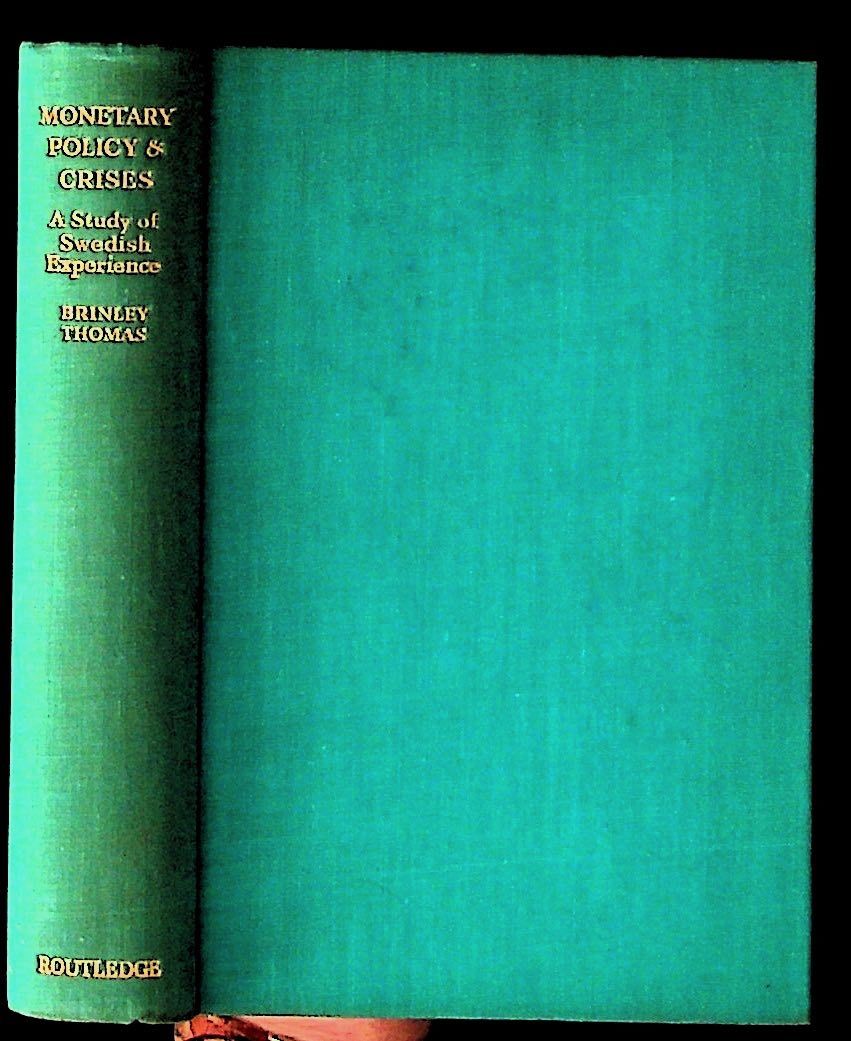
- Hardcover
- London: Routledge and Sons, Ltd, 1936
London: Routledge and Sons, Ltd, 1936. Hardcover. Fine. Hardcover. Sweden in the early 20th century was a small but highly-educated and industrialized country, as it is today. It did have leading economic theorists, although language barriers made their work less well-disseminated worldwide. During World War I, Sweden suffered a period of high inflation, which was tamed by monetary economic policy. But during the worldwide depression of the early 1930s, newer economic thinking focused on the relationship between monetary policy and the trade cycle, based largely on the theories of Gunnar Myrdal. This led to substantial government investment in public enterprises and brought Sweden's economy out of its slump, making it a model for other economies. Interestingly, the author talks about monetary policy and the "trade cycle", but does not use the term "fiscal policy", which was just becoming a part of modern economic theory through the publication of Keynes' "General Theory of Employment, Interest, and Money", which was published in 1936, the same year that this work was published. The Swedish story was a contemporary example of the important balance between monetary policy and fiscal policy in macroeconomics. Very scarce in the 1936 edition, especially in the United States. Octavo. Turquoise cloth boards with gilt title to spine. Pages are somewhat yellowed, but clean and bright interior. 247 pages. CON/012908.