

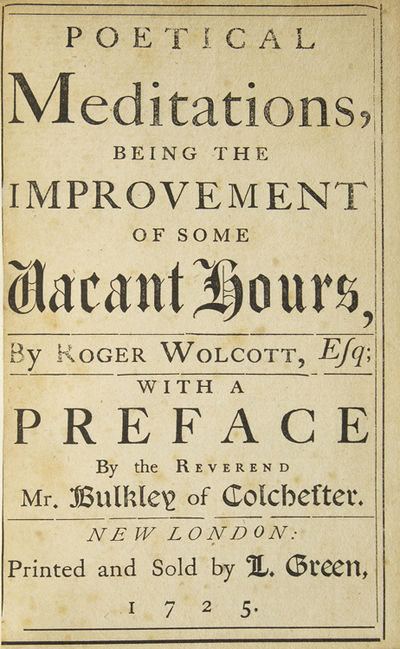
Poetical Meditations, being the Improvement of some Vacant Hours … with a Preface by the Reverend Mr. Bulkley of Colchester

- [2] ff., lvi, i, 78, [1, errata], [3, advertisement]pp. 1 vols. Small 8vo
- New London: Printed and Sold by L. Green, 1725
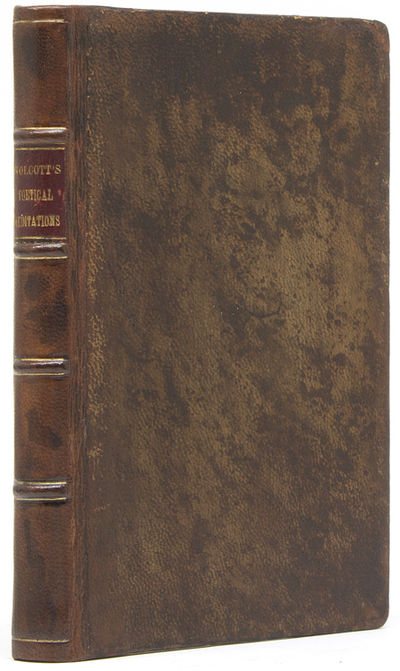
New London: Printed and Sold by L. Green, 1725. First edition. [2] ff., lvi, i, 78, [1, errata], [3, advertisement]pp. 1 vols. Small 8vo. 18th-century sheep, with later red morocco spine label, rebacked in period style. Half title and title supplied from another copy. Later bookplate of Ilion Wolcott. First edition. [2] ff., lvi, i, 78, [1, errata], [3, advertisement]pp. 1 vols. Small 8vo. “The first book of verse in Connecticut” (Evans). The author was a weaver, lawyer, and politician who would later serve as Colonial governor of Connecticut. His work's publication was funded by the clothmaker John Dewey, whose ads are included at the end.
Much of the book is taken up by a long poem on the life of Puritan leader John Winthrop, which includes verse descriptions of the landscape and an account of the Pequot War. The preface is largely a disquisition on the right of the North American Indians to their lands. As to its poetic quality, Moses Coit Tyler wrote in his History of American Literature, in reference to the subtitle: "for ourselves, we could have been content, had his hours remained vacant." Evans 2722; Trumbull 1696; Johnson 207; Wegelin 465
Much of the book is taken up by a long poem on the life of Puritan leader John Winthrop, which includes verse descriptions of the landscape and an account of the Pequot War. The preface is largely a disquisition on the right of the North American Indians to their lands. As to its poetic quality, Moses Coit Tyler wrote in his History of American Literature, in reference to the subtitle: "for ourselves, we could have been content, had his hours remained vacant." Evans 2722; Trumbull 1696; Johnson 207; Wegelin 465