

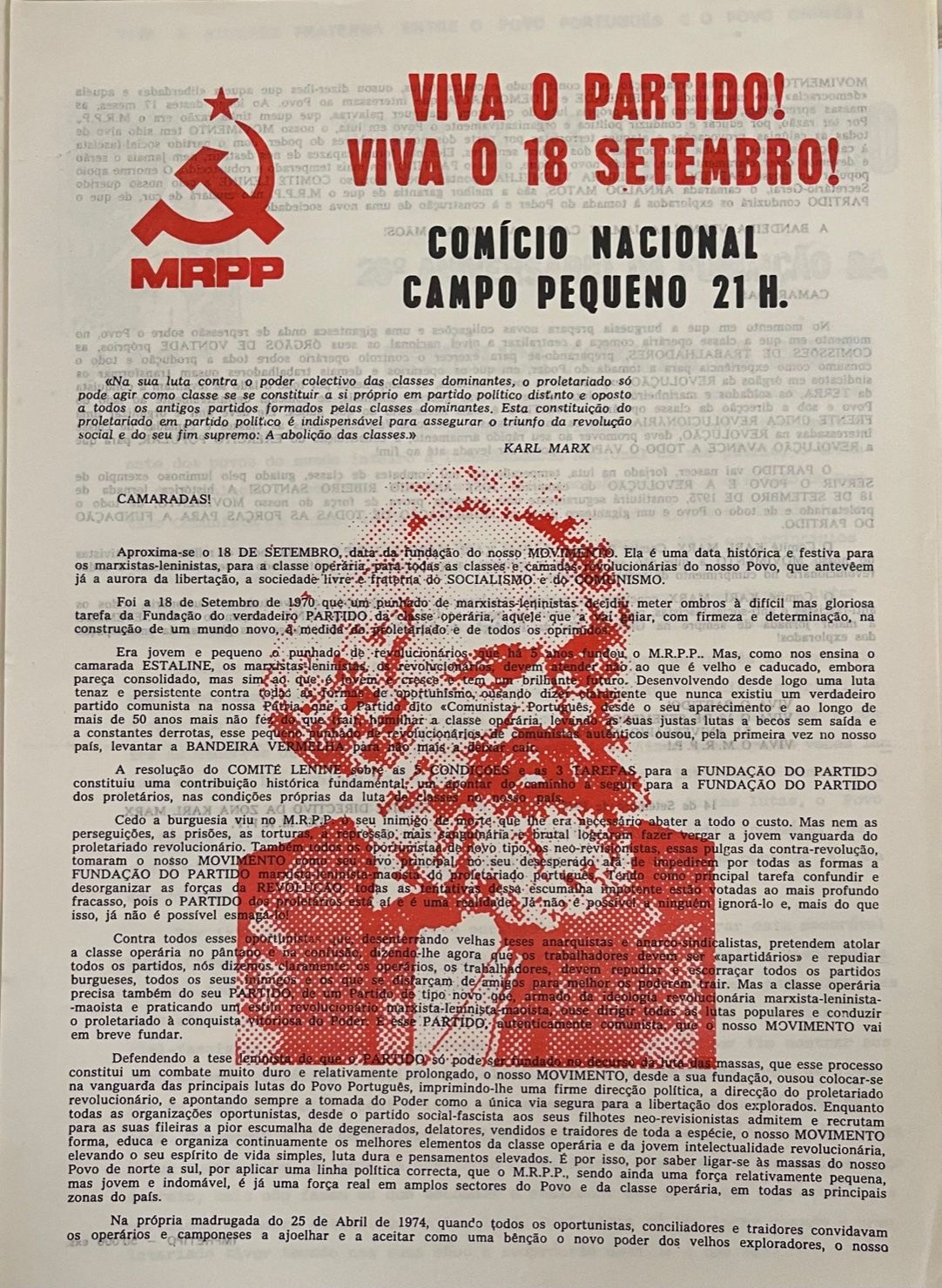
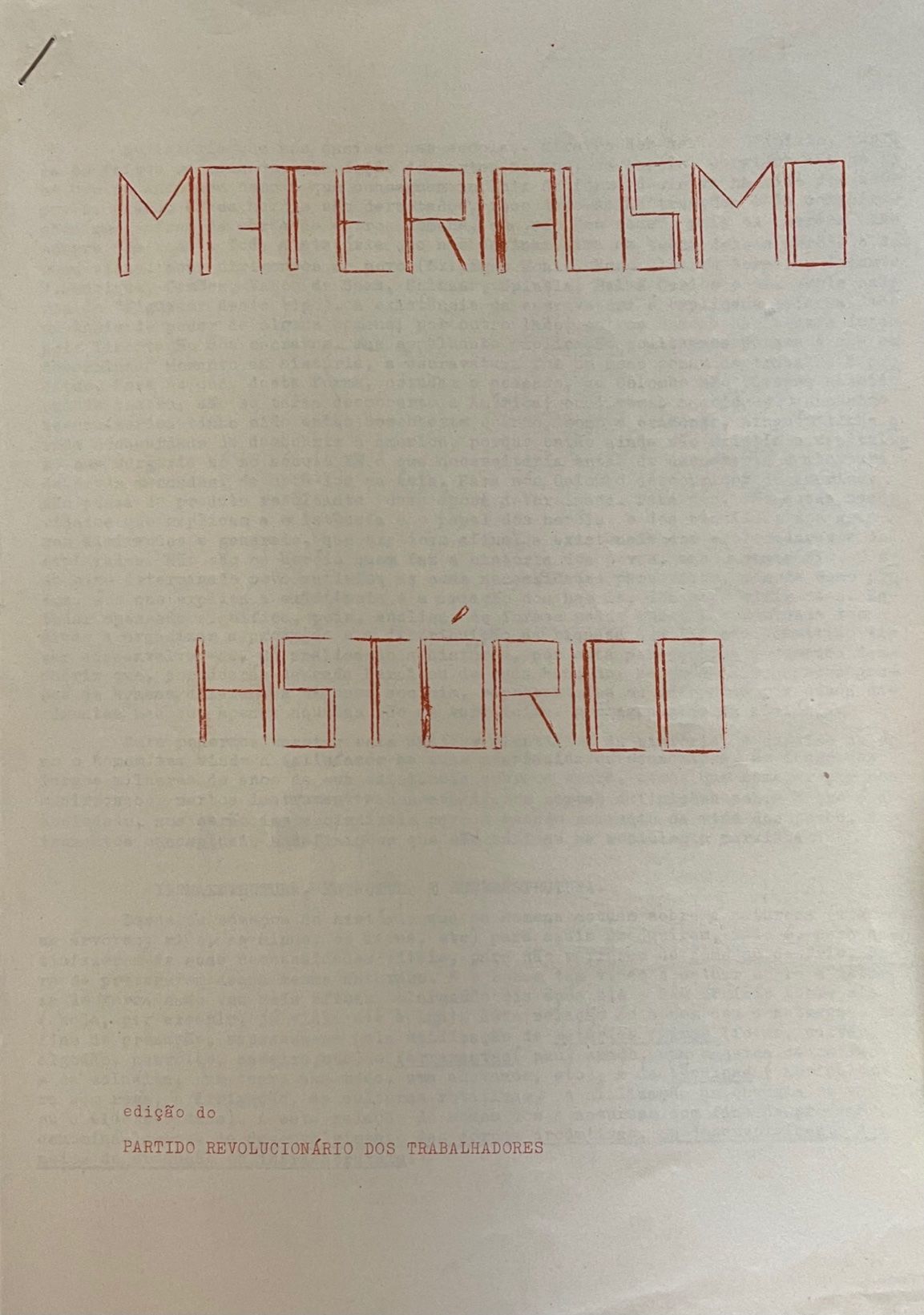
PORTUGUESE DOCUMENTS: POST-SALAZAR REGIME MISCELLANEOUS EPHEMERA: ; 1. BROCHURE: Materialismo Histórico, Ediçao do Partido Revolucionário dos Trabalhadores (PRT), c1970, (12)p., 29.5cm. Mimeographic edition staple bound containing printed essay with the methodological approach of Historical materialism of society, economics, and history based on the sociology theory of Karl Marx (1818-1883). 2. BROCHURE: História das Lógicas. "NOTA: Este texto foi tirado do livro "Lógica e Ciências Modernas" de N. Moreno" -Pages [5]. Mimeographic edition staple bound containing printed a partial text of the book "Lógica marxista y ciencias modernas" (1973) by Argentinean Nahuel Moreno, a controversial figure and an active participant of the Trotskyist International Movement and the left party in Argentina 3. FLYER: Viva o Partido! Viva o 18 de Setembro! Comício Nacional, Campo Pequeno 21 h. (Portugal), MRPP (Movimento Reconstitutivo do Partido do Proletariado), 14 de Setembro de 1975, 1 l, 30cm. Red and black 4. FLYE
- Portugal: Partido Revolucionário dos Trabalhadores (PRT); MRPP (Movimento Reconstitutivo do Partido do Proletariado), 1976
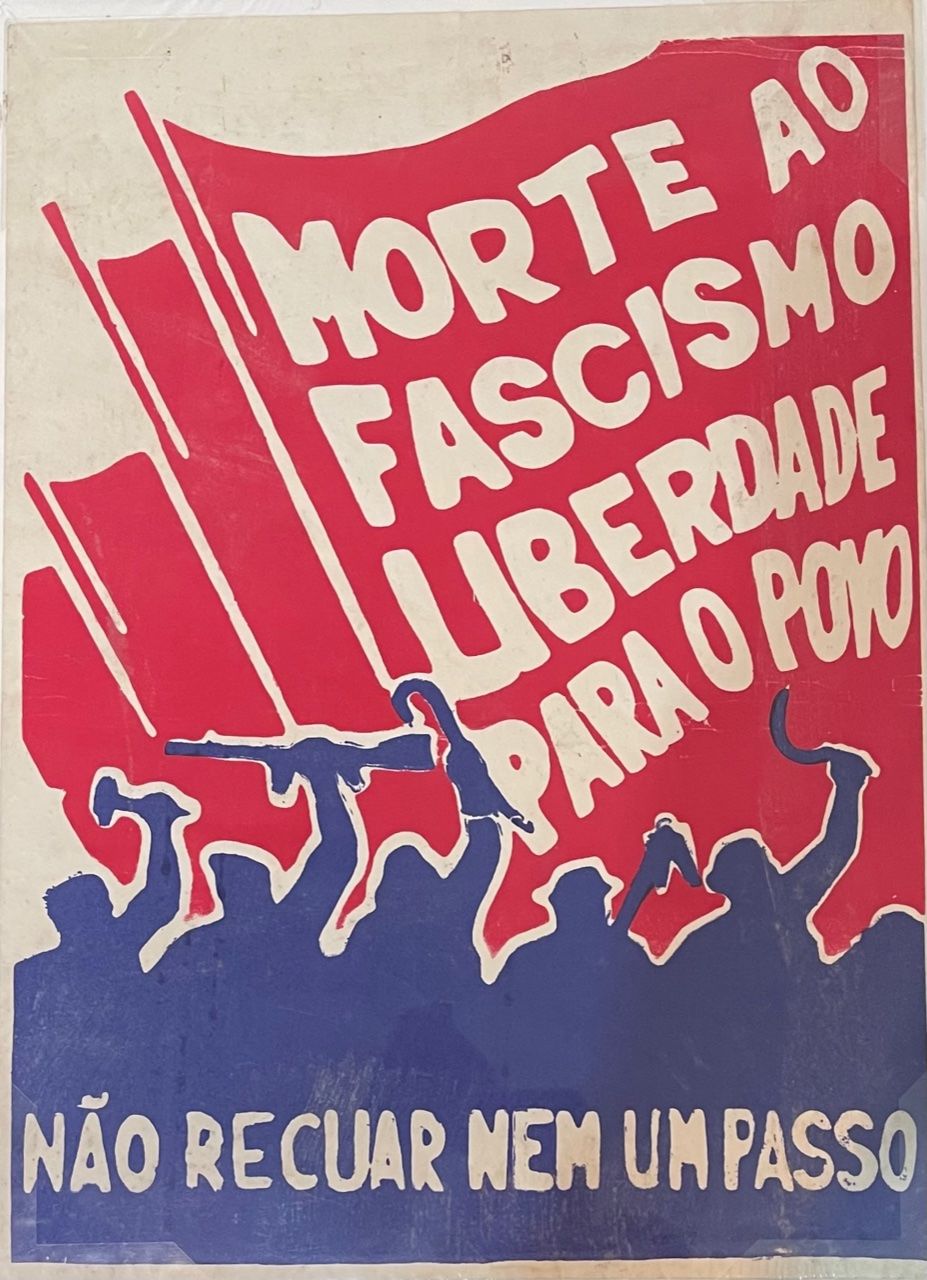
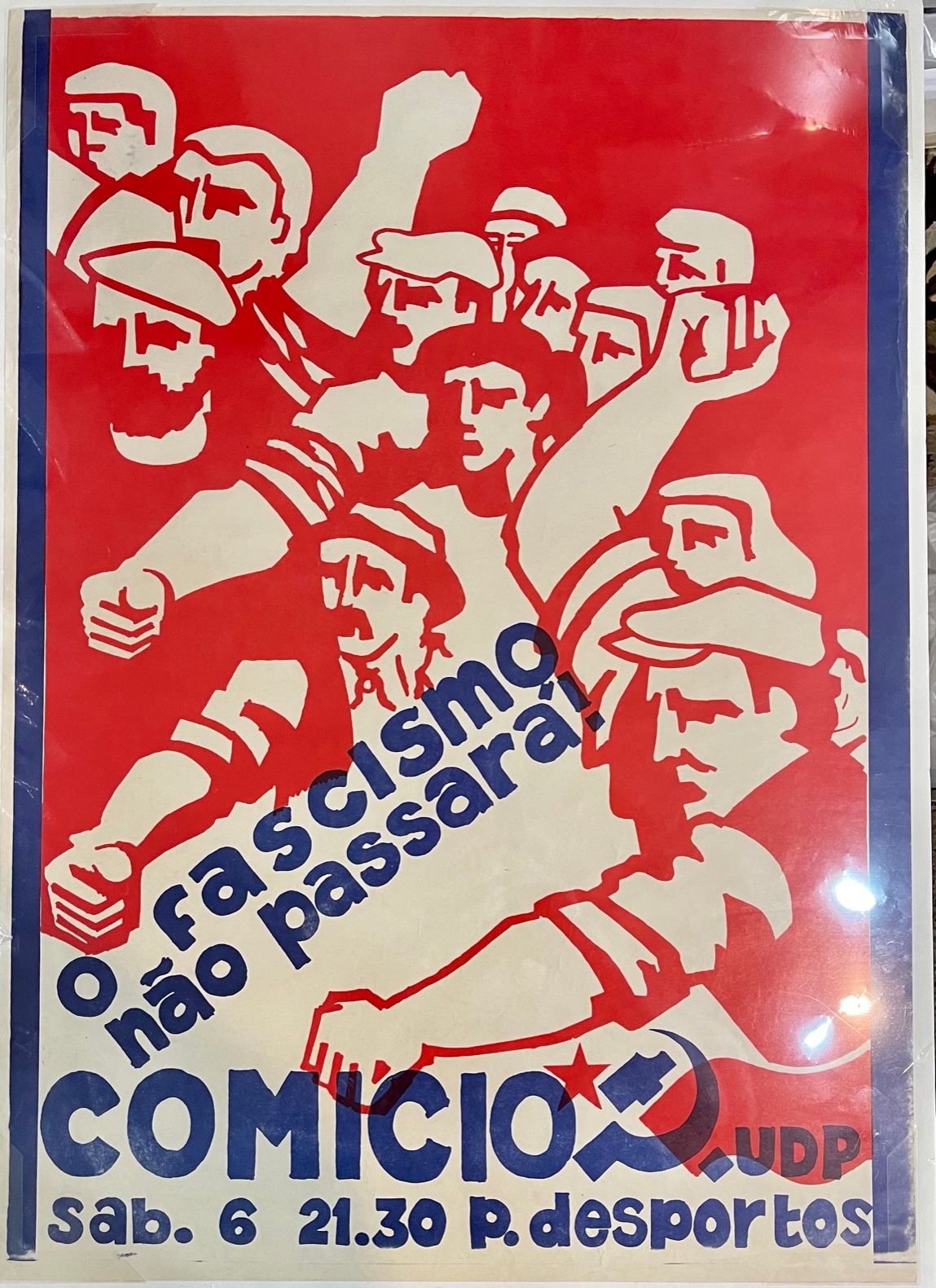
Portugal: Partido Revolucionário dos Trabalhadores (PRT); MRPP (Movimento Reconstitutivo do Partido do Proletariado), 1976. A collection of flyers, brochures and posters from Portugal's political party PRT published during the Continuing Revolutionary Process (Processo Revolucionário em Curso, or PREC) a 2-year social period marked by constant friction between liberal democratic forces and communist parties that lasted until November 1975. This process followed the bloodless Carnation Revolution (Revolução dos Cravos) a social movement against the authoritarian right-wing regime presided by dictator and President of the Council of Ministers António de Oliveira Salazar that controlled the social, economic, cultural and political life of Portugal from 1933 to 1974 . Political and Historical Context: The Portuguese revolution of April 25th, 1974-the "Carnation Revolution" (Revolução dos Cravos)-was profoundly important not only for Portugal itself but for all of Western Europe as well. By the time it ran its course, in 1976, the Revolution had ended the Salazarist Estado Novo, the longest authoritarian regime in Western Europe, and brought Portugal, one of the continent's poorest countries whose economy was controlled by a handful of industrial groups, into the mainstream of European liberal democracies. Portugal's revolution also initiated the so-called "third wave of democratization," a process that spread to Greece, Spain, and Latin America. Between April, 1974, when a small group of army officers led by Otelo Saraivo de Carvalho staged a coup and brought down the regime, and April 1976, when elections brought Mário Soares into office as head of Portugal's first constitutional government, the country passed through a period of extreme turbulence, characterized by strikes, mass demonstrations, social unrest, and threats of right-wing counter coups. For at least eighteen months, however, the trend of the revolution was strongly leftward. Workers took over some 300 factories, a great many latifundia were occupied, and working class organizations-factory and revolutionary committees, agricultural cooperatives, professional syndicates and trade unions-exerted critical influence. Political parties and movements likewise proliferated during this period. The revolution had been immediately accompanied by the end of censorship, and as in all revolutionary situations, political posters were soon ubiquitous. Sold as set.