

Correspondence Archive of Bertram D. Hulen, Author, and noted International correspondent of the New York Times
- 1950
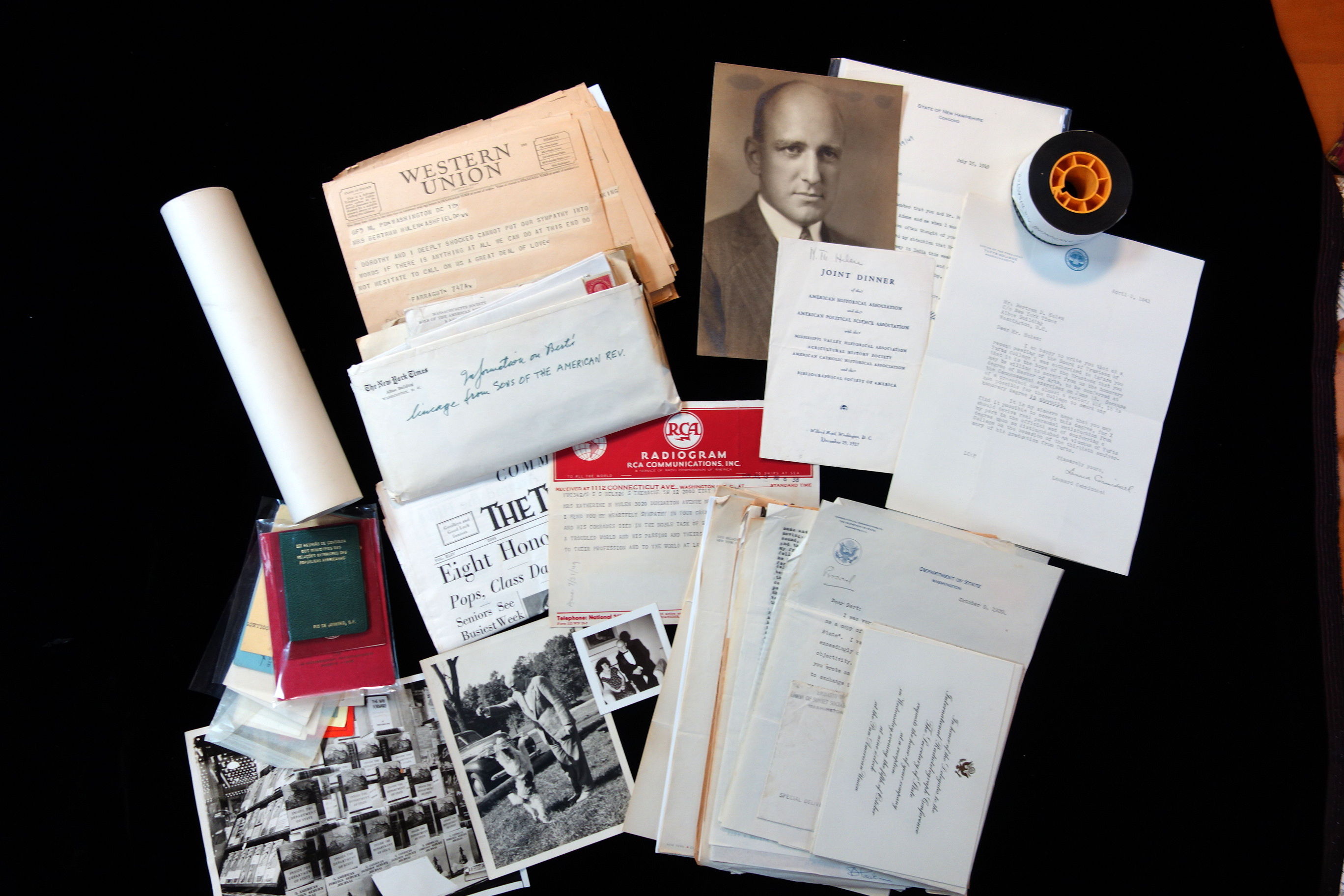
1950. Good. Toning, short tears, spotting.. Bertram Hulen, Washington Bureau correspondent at the New York Times, was known as the dean of State Department reporters. He had more than twenty-five years’ experience covering the State Department and White House and was the author of a highly regarded book, “Inside the State Department.” Hulen was killed along with a dozen other American correspondents on July 12, 1949 in a plane crash near Bombay, India. The party was returning from an inspection of Indonesia at the invitation of the Netherlands government.
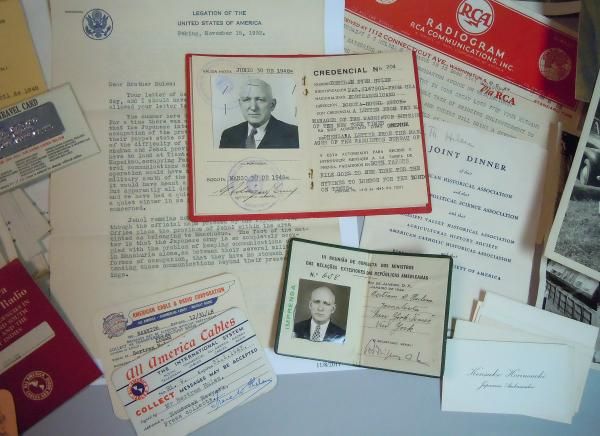
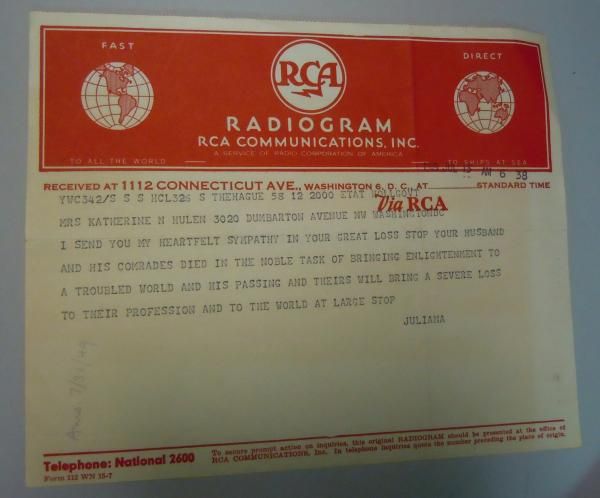
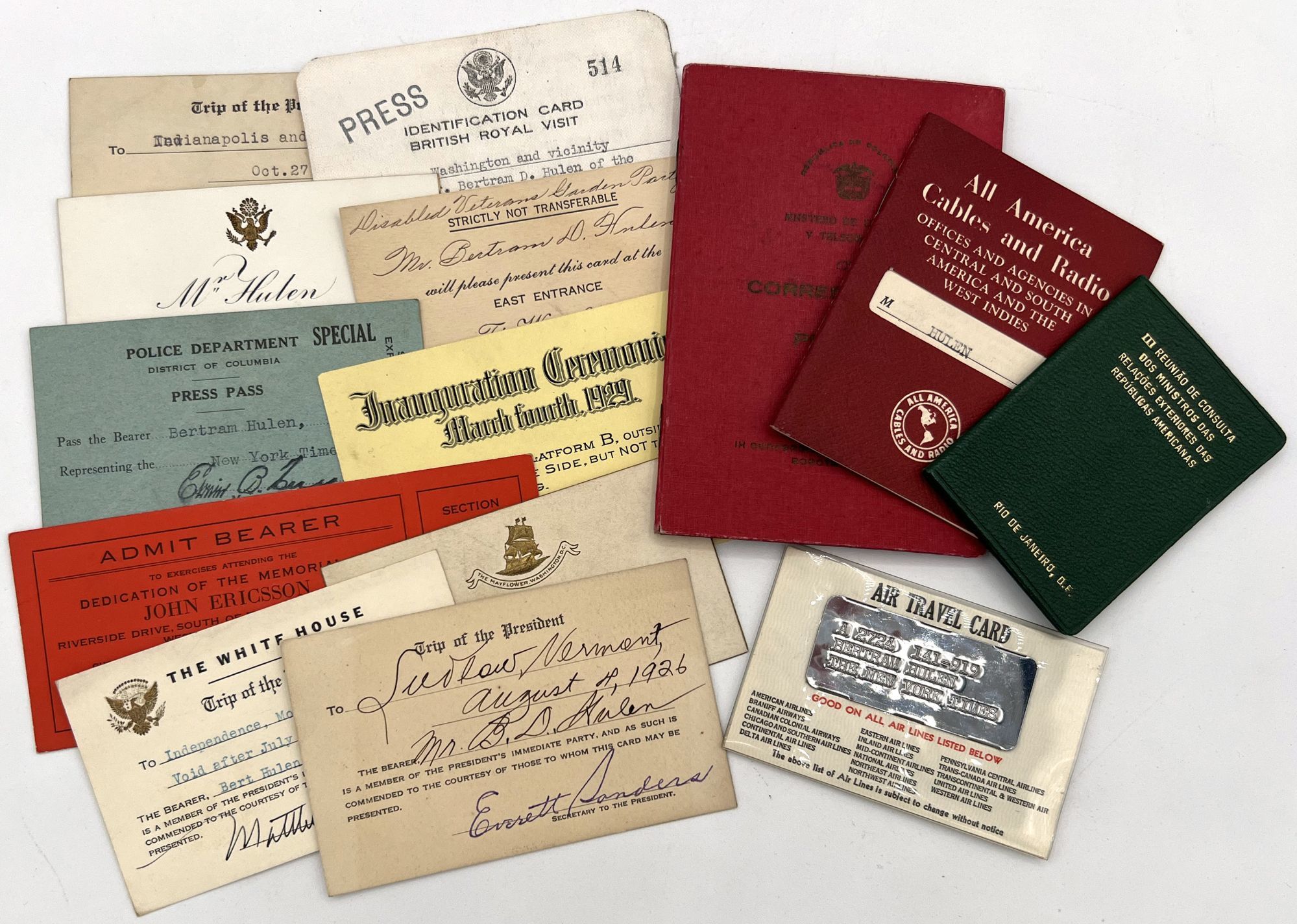
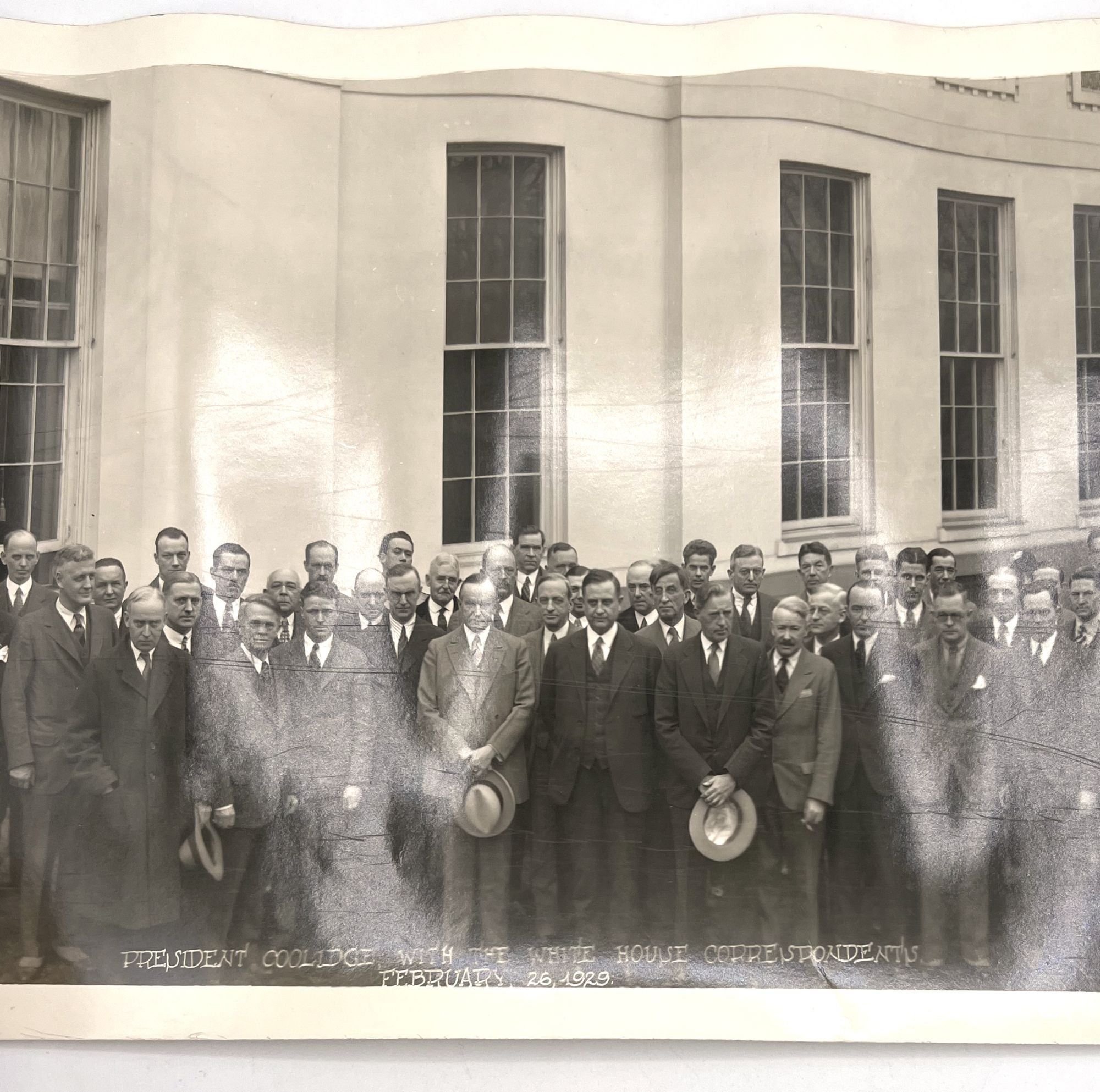
This archive consists of letters and mementos dating from the 1920s up to the immediate aftermath of his death. Highlights include: a telegram of condolence, to Mrs. Hulen, from Queen Juliana of the Netherlands; an invitation to a meeting of “The Hitler Gang”; various press identification cards and event invitations; a story by Katherine Merriam Hulen about the annual Easter Egg Roll at the White House; and a cocktail recipe sent to Hulen from the USSR Embassy in the aftermath of a reception there. There are telegrams of shock in the days immediately following Hulen’s death, many from noted New York Times reporters of the day, and dozens of letters from politicians, diplomats, journalists. Also included is a file of correspondence and records related to Hulen’s family genealogy, and photos related to his professional activities.
There are over 100 individual items and the archive takes up less than 1 linear feet of shelf space.
This archive consists of letters and mementos dating from the 1920s up to the immediate aftermath of his death. Highlights include: a telegram of condolence, to Mrs. Hulen, from Queen Juliana of the Netherlands; an invitation to a meeting of “The Hitler Gang”; various press identification cards and event invitations; a story by Katherine Merriam Hulen about the annual Easter Egg Roll at the White House; and a cocktail recipe sent to Hulen from the USSR Embassy in the aftermath of a reception there. There are telegrams of shock in the days immediately following Hulen’s death, many from noted New York Times reporters of the day, and dozens of letters from politicians, diplomats, journalists. Also included is a file of correspondence and records related to Hulen’s family genealogy, and photos related to his professional activities.
There are over 100 individual items and the archive takes up less than 1 linear feet of shelf space.