

Esquire: The Magazine for Men (December 1959)
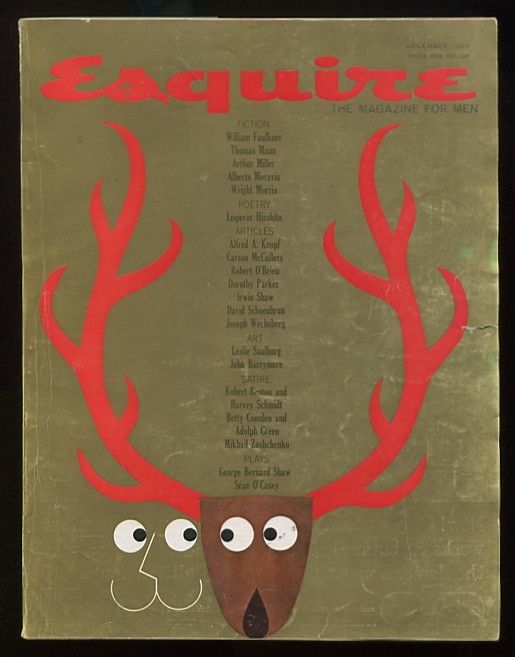
- Magazine
- Chicago: Esquire, Inc., 1959
Chicago: Esquire, Inc.. Very Good. 1959. (Vol. LII, No. 6; whole no. 313). Magazine. [rubbing to covers, small tear in right edge of front cover, another small tear and just a bit of paper loss at bottom of rear cover adjacent to spine]. (B&W/color photographs, ads, etc.) An exceptionally rich issue of this generally exceptional magazine. For starters, there are six pieces of fiction in English ("Mink Snopes" by William Faulkner; "End of a Relationship" by Alberto Moravia; "I Don't Need You Any More" by Arthur Miller; "Wake Before Bomb" by Wright Morris; "The Man Who Looked Like Jesus" by Howard Fast; "Actress with Red Garters" by Allan Seager), and another in translation: "A Revenge" by Thomas Mann (written when he was 24). Also notable: "Tribute to a Designer," about William Addison Dwiggins, by Alfred A. Knopf; "Un Petite Drame," a hitherto unpublished one-act play by George Bernard Shaw (called here "the first written" by him, dating to 1884); pictorial essays "The Comden-Green Film Festival" and "The Dark World of John Barrymore" (the latter being reproductions of a number of drawings and sketches by the actor); "Footnotes on [F. Scott] Fitzgerald" by his secretary Frances Kroll Ring; an essay by Irwin Shaw, "The Passing of the Four Seasons"; an article about Julia Moore, "The World's Worst Poet"; a short poem by Emperor Hirohito of Japan; an essay, "The Flowering Dream; notes on writing" by Carson McCullers; and book reviews by Dorothy Parker, who praises James Purdy and his latest book, "Malcolm." And there's more, 382 pages in all, weighing in at just over 2-1/2 pounds. .